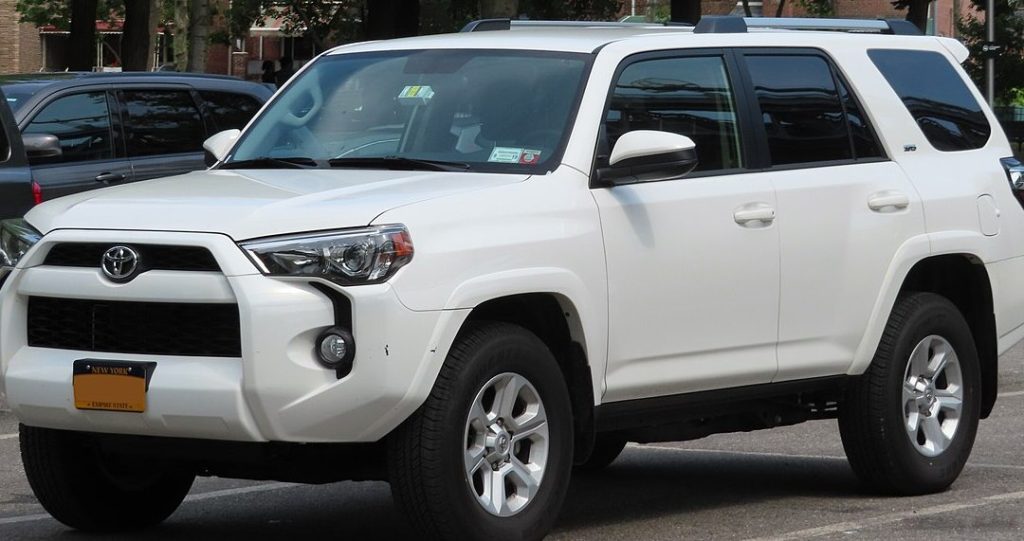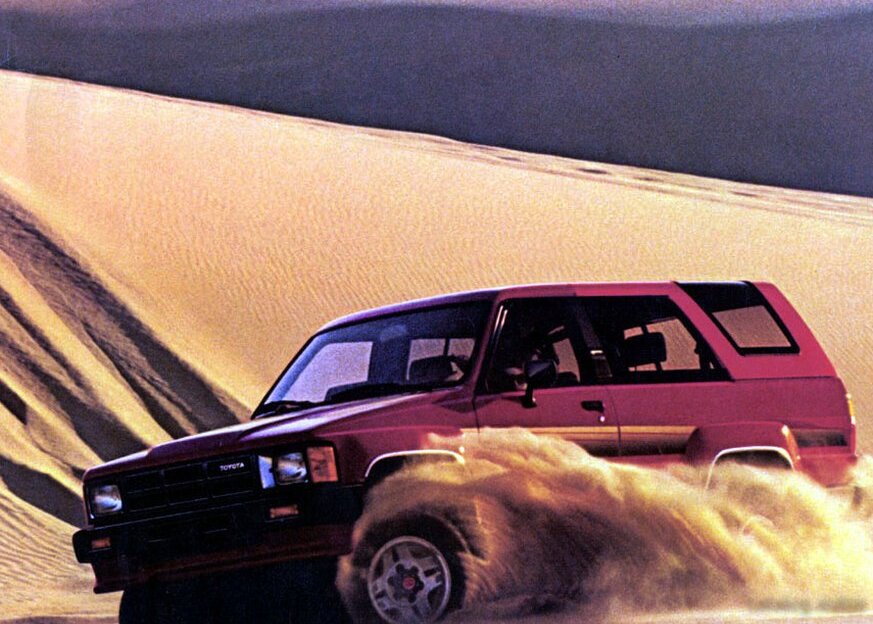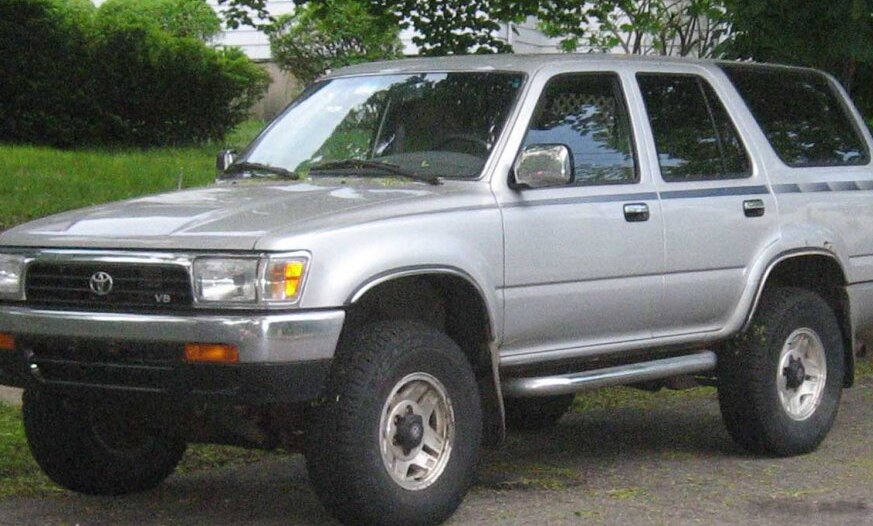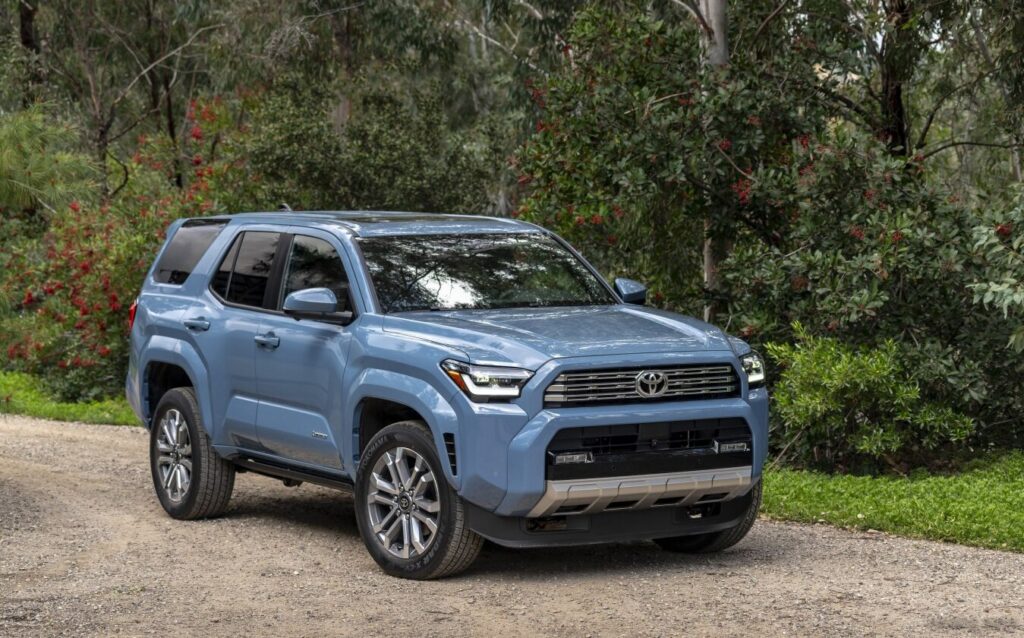
The Toyota 4Runner VI 2.4 i-FORCE MAX Hybrid 4WD ECT-i, introduced in December 2024, represents a significant evolution for Toyota’s iconic SUV. This variant combines a 2.4-liter turbocharged four-cylinder engine with a hybrid electric system, delivering a total system output of 326 horsepower and 630 Nm (464.66 lb-ft) of torque. Positioned as a premium offering within the sixth-generation 4Runner lineup, it aims to provide enhanced fuel efficiency and performance compared to the traditional gasoline-only models, while maintaining the 4Runner’s renowned off-road capability. The 4Runner VI builds upon the established foundation of the 4Runner series, known for its body-on-frame construction and rugged durability, and integrates modern hybrid technology to appeal to a broader range of buyers.
Technical Specifications
| Brand | Toyota |
| Model | 4Runner |
| Generation | 4Runner VI |
| Type | 2.4 i-FORCE MAX (326 Hp) Hybrid 4WD ECT-i |
| Start of production | December, 2024 |
| Powertrain Architecture | FHEV (Full Hybrid Electric Vehicle) |
| Body type | SUV |
| Seats | 5 |
| Doors | 5 |
| Fuel consumption (urban) | 10.2 l/100 km (23.1 US mpg, 27.7 UK mpg, 9.8 km/l) |
| Fuel consumption (extra urban) | 9.8 l/100 km (24 US mpg, 28.8 UK mpg, 10.2 km/l) |
| Fuel consumption (combined) | 10.2 l/100 km (23.1 US mpg, 27.7 UK mpg, 9.8 km/l) |
| Fuel Type | Petrol (Gasoline) |
| Weight-to-power ratio | 7.3 kg/Hp, 137.6 Hp/tonne |
| Weight-to-torque ratio | 3.8 kg/Nm, 265.8 Nm/tonne |
| Gross battery capacity | 1.87 kWh |
| Battery voltage | 288 V |
| Battery technology | Nickel-metal hydride (NiMH) |
| Battery location | Under the trunk |
| Electric motor power | 48 Hp |
| Electric motor Torque | 250 Nm (184.39 lb.-ft.) |
| Electric motor type | Synchronous |
| System power | 326 Hp @ 6000 rpm |
| System torque | 630 Nm @ 1700 rpm (464.66 lb.-ft. @ 1700 rpm) |
| Engine Power | 278 Hp @ 6000 rpm |
| Power per litre | 116.2 Hp/l |
| Engine Torque | 430 Nm @ 1700 rpm (317.15 lb.-ft. @ 1700 rpm) |
| Engine layout | Front, Longitudinal |
| Engine Model/Code | Dynamic Force / T24A-FTS |
| Engine displacement | 2393 cm3 (146.03 cu. in.) |
| Number of cylinders | 4 |
| Engine configuration | Inline |
| Cylinder Bore | 87.5 mm (3.44 in.) |
| Piston Stroke | 99.5 mm (3.92 in.) |
| Compression ratio | 11:1 |
| Number of valves per cylinder | 4 |
| Fuel injection system | Direct injection and Multi-port manifold injection |
| Engine aspiration | Twin-scroll turbo, Intercooler |
| Valvetrain | DOHC, Dual VVT-i |
| Engine oil capacity | 5.6 l (5.92 US qt | 4.93 UK qt) |
| Kerb Weight | 2370 kg (5224.96 lbs.) |
| Max. weight | 2951 kg (6505.84 lbs.) |
| Max load | 581 kg (1280.89 lbs.) |
| Trunk (boot) space – minimum | 1206 l (42.59 cu. ft.) |
| Trunk (boot) space – maximum | 2339 l (82.6 cu. ft.) |
| Fuel tank capacity | 72 l (19.02 US gal | 15.84 UK gal) |
| Permitted trailer load with brakes (12%) | 2722 kg (6000.98 lbs.) |
| Length | 4950 mm (194.88 in.) |
| Width | 1979 mm (77.91 in.) |
| Height | 1869 mm (73.58 in.) |
| Wheelbase | 2850 mm (112.2 in.) |
| Front track | 1676 mm (65.98 in.) |
| Rear (Back) track | 1679 mm (66.1 in.) |
| Ride height (ground clearance) | 231 mm (9.09 in.) |
| Minimum turning circle (turning diameter) | 12 m (39.37 ft.) |
| Approach angle | 19° |
| Departure angle | 24° |
| Ramp-over (brakeover) angle | 24° |
| Drivetrain Architecture | The Internal combustion engine (ICE) and the electric motor permanently drive the rear wheels of the vehicle, capable of running in full electric or mixed mode, and if necessary through the electrically or mechanically controlled clutch, the front wheels are driven. |
| Drive wheel | All wheel drive (4×4) |
| Number of gears and type of gearbox | 8 gears, automatic transmission ECT-i |
| Front suspension | Coil spring, Double wishbone, Transverse stabilizer |
| Rear suspension | Rigid axle suspension, Transverse stabilizer, Coil spring |
| Front brakes | Ventilated discs, 340 mm |
| Rear brakes | Ventilated discs, 335 mm |
| Assisting systems | ABS (Anti-lock braking system) |
| Steering type | Steering rack and pinion |
| Power steering | Electric Steering |
| Tires size | 265/70 R18 |
| Wheel rims size | 18 |
Powertrain & Engine Architecture
At the heart of the 4Runner i-FORCE MAX lies Toyota’s Dynamic Force 2.4-liter turbocharged inline-four engine (T24A-FTS). This engine utilizes a combination of direct injection and multi-port fuel injection to optimize combustion efficiency and power delivery. The engine also features a twin-scroll turbocharger with an intercooler, which minimizes turbo lag and enhances responsiveness. The engine produces 278 horsepower and 430 Nm (317.15 lb-ft) of torque. Integrated with this engine is a 48-horsepower electric motor powered by a 1.87 kWh nickel-metal hydride (NiMH) battery pack located under the trunk floor. The hybrid system allows for electric-only driving at low speeds and provides supplemental power during acceleration. The powertrain is managed by an 8-speed automatic transmission (ECT-i) designed for smooth and efficient operation. The drivetrain is configured to primarily drive the rear wheels, with the ability to engage four-wheel drive when needed, utilizing an electrically or mechanically controlled clutch to send power to the front wheels.
Driving Characteristics
The 4Runner i-FORCE MAX offers a noticeable improvement in acceleration and responsiveness compared to the standard gasoline-powered 4Runner. The electric motor provides instant torque, filling in gaps in the turbocharger’s boost curve and resulting in a more linear power delivery. While the 8-speed automatic transmission shifts smoothly, it is tuned for efficiency rather than outright performance. The hybrid system contributes to improved fuel economy, particularly in urban driving conditions. The added weight of the hybrid components does slightly impact handling, but the robust suspension and all-wheel-drive system maintain the 4Runner’s off-road prowess. The combination of the turbocharger and electric motor provides a more refined and powerful driving experience than the older V6 engine options.
Equipment & Trim Levels
The 4Runner i-FORCE MAX typically comes standard with a comprehensive suite of features, including Toyota Safety Sense 3.0, which encompasses pre-collision system with pedestrian detection, lane departure alert with steering assist, full-speed range dynamic radar cruise control, and road sign assist. Interior features include an 8-inch touchscreen infotainment system with Apple CarPlay and Android Auto compatibility, a premium audio system, and comfortable seating. Higher trim levels offer upgrades such as leather upholstery, heated and ventilated front seats, a larger touchscreen display, and a panoramic sunroof. Optional extras may include a premium JBL audio system, a rear-seat entertainment system, and advanced off-road features like Multi-Terrain Select and Crawl Control.
Chassis & Braking
The 4Runner VI retains the traditional body-on-frame construction, providing a robust and durable platform for both on-road and off-road driving. The suspension system consists of a double-wishbone setup at the front and a rigid axle suspension with coil springs at the rear. Both ends feature transverse stabilizers to reduce body roll. The braking system utilizes ventilated discs on all four wheels, with diameters of 340 mm at the front and 335 mm at the rear. The system is equipped with ABS (Anti-lock Braking System) and electronic brake-force distribution to ensure optimal stopping performance.
Market Reception & Comparison
The 4Runner i-FORCE MAX Hybrid has been generally well-received by automotive critics, who praise its improved fuel efficiency and enhanced performance. Compared to the standard gasoline-powered 4Runner, the hybrid variant offers a more refined driving experience and reduced emissions. However, the hybrid system adds to the vehicle’s overall weight and cost. Compared to competitors like the Jeep Grand Cherokee and Ford Explorer, the 4Runner i-FORCE MAX stands out for its rugged durability and off-road capability, but may fall short in terms of on-road comfort and interior refinement. Fuel economy figures of 23.1 US mpg combined are competitive within its class, offering a significant improvement over the non-hybrid models.
Legacy
The 2.4 i-FORCE MAX powertrain represents a significant step forward for the Toyota 4Runner, bringing modern hybrid technology to a traditionally conservative platform. While long-term reliability data is still emerging, Toyota’s reputation for building durable and dependable vehicles suggests that this powertrain will prove to be robust and long-lasting. On the used car market, the 4Runner i-FORCE MAX is expected to hold its value well, due to its combination of fuel efficiency, performance, and off-road capability. As the automotive industry continues to shift towards electrification, the 4Runner i-FORCE MAX Hybrid positions Toyota to remain a competitive force in the mid-size SUV segment.