
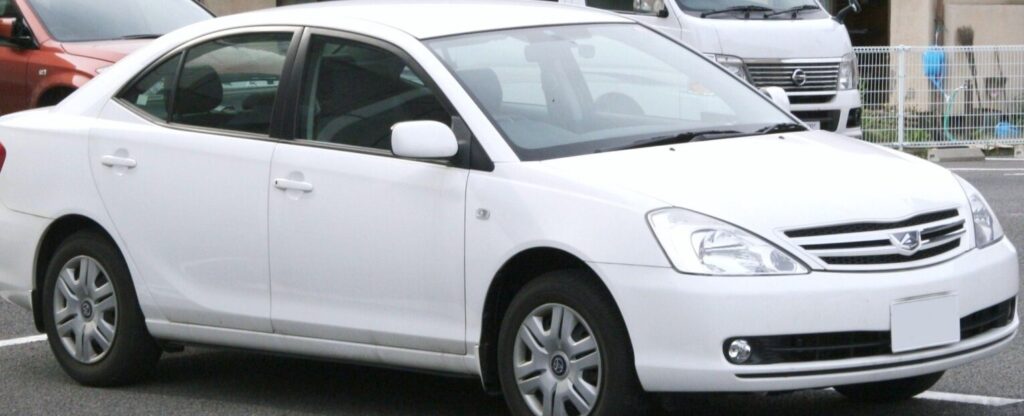
The Toyota Allion 1.8 16V (132 Hp) ECT was a compact sedan produced by Toyota from 2001 to 2004. Positioned as a slightly more upscale offering than the Corolla, the Allion aimed to provide a comfortable and refined driving experience for Japanese domestic market (JDM) buyers. It was part of the broader Allion lineage, representing a generation focused on interior space and ease of use. This particular variant, equipped with the 1ZZ-FE engine and an electronically controlled transmission (ECT), occupied a mid-range position within the Allion lineup, offering a balance between performance and fuel efficiency. It was primarily sold in Japan, with limited exports to other markets.
Technical Specifications
| Brand | Toyota |
| Model | Allion |
| Generation | Allion |
| Type (Engine) | 1.8 16V (132 Hp) ECT |
| Start of production | 2001 |
| End of production | 2004 |
| Powertrain Architecture | Internal Combustion engine |
| Body type | Sedan |
| Seats | 5 |
| Doors | 4 |
| Fuel consumption (urban) | 10.5 l/100 km (22.4 US mpg) |
| Fuel consumption (extra urban) | 6.5 l/100 km (36.2 US mpg) |
| Fuel Type | Petrol (Gasoline) |
| Maximum speed | 200 km/h (124.27 mph) |
| Weight-to-power ratio | 8.9 kg/Hp |
| Weight-to-torque ratio | 6.8 kg/Nm |
| Power | 132 Hp @ 6000 rpm |
| Power per litre | 73.6 Hp/l |
| Torque | 171 Nm @ 4200 rpm (126.12 lb.-ft. @ 4200 rpm) |
| Engine layout | Front, Transverse |
| Engine Model/Code | 1ZZ-FE |
| Engine displacement | 1794 cm3 (109.48 cu. in.) |
| Number of cylinders | 4 |
| Engine configuration | Inline |
| Cylinder Bore | 79 mm (3.11 in.) |
| Piston Stroke | 91.5 mm (3.6 in.) |
| Compression ratio | 10:1 |
| Number of valves per cylinder | 4 |
| Fuel injection system | Multi-port manifold injection |
| Engine aspiration | Naturally aspirated engine |
| Valvetrain | DOHC |
| Engine oil capacity | 3.7 l (3.91 US qt | 3.26 UK qt) |
| Coolant capacity | 6.9 l (7.29 US qt | 6.07 UK qt) |
| Kerb Weight | 1170 kg (2579.41 lbs.) |
| Max. weight | 1445 kg (3185.68 lbs.) |
| Max load | 275 kg (606.27 lbs.) |
| Fuel tank capacity | 60 l (15.85 US gal | 13.2 UK gal) |
| Length | 4600 mm (181.1 in.) |
| Width | 1695 mm (66.73 in.) |
| Height | 1470 mm (57.87 in.) |
| Wheelbase | 2700 mm (106.3 in.) |
| Front track | 1480 mm (58.27 in.) |
| Rear track | 1460 mm (57.48 in.) |
| Ride height (ground clearance) | 160 mm (6.3 in.) |
| Minimum turning circle | 10.6 m (34.78 ft.) |
| Drivetrain Architecture | Front wheel drive |
| Number of gears | 4 |
| Gearbox type | automatic transmission ECT |
| Front suspension | Spring Strut |
| Rear suspension | Suspension with traction connecting levers |
| Front brakes | Ventilated discs |
| Rear brakes | Drum |
| Assisting systems | ABS (Anti-lock braking system) |
| Steering type | Steering rack and pinion |
| Power steering | Hydraulic Steering |
| Tires size | 185/70 R14 |
| Wheel rims size | 6J x 14 |
Powertrain & Engine Architecture
The heart of the Allion 1.8 ECT was the 1ZZ-FE engine, a 1.8-liter (1794 cc) inline-four cylinder gasoline engine. This engine was a member of Toyota’s ZZ engine family, known for its lightweight aluminum block and cylinder head, and its use of multi-port fuel injection. The 1ZZ-FE featured a double overhead camshaft (DOHC) valvetrain with four valves per cylinder, contributing to its relatively high output for its displacement. The engine produced 132 horsepower at 6000 rpm and 171 Nm (126 lb-ft) of torque at 4200 rpm. Paired with this engine was a four-speed automatic transmission, designated as “ECT” (Electronically Controlled Transmission). This transmission offered smooth shifting and was designed to optimize fuel efficiency. The ECT system allowed the transmission to adapt to driving conditions and driver input, selecting the most appropriate gear for the situation.
Driving Characteristics
The 1.8L automatic Allion offered a comfortable and predictable driving experience. While not particularly sporty, the engine provided adequate power for everyday driving situations. Acceleration was reasonable, but not brisk, with the four-speed automatic transmission prioritizing smooth operation over aggressive shifting. Compared to the manual transmission versions of the Allion, the automatic offered less driver engagement and slightly reduced fuel economy. The automatic’s gear ratios were tuned for fuel efficiency and comfort, resulting in a less responsive feel than the manual. However, the ECT system did offer a “hold” function, allowing the driver to prevent upshifts during spirited driving, though it didn’t transform the car into a performance machine. The front-wheel-drive configuration provided predictable handling, but lacked the all-weather capability of an all-wheel-drive system.
Equipment & Trim Levels
The Allion 1.8 ECT typically came equipped with a reasonable level of standard features. Interior appointments included cloth upholstery, power windows, power door locks, and a basic audio system. Air conditioning was standard. Higher trim levels offered upgrades such as alloy wheels, a more sophisticated audio system, and optional features like a sunroof and woodgrain interior trim. The specific trim level determined the level of exterior chrome accents and interior detailing. The Allion was designed with a focus on interior space and comfort, offering ample legroom for passengers in both the front and rear seats.
Chassis & Braking
The Allion 1.8 utilized a relatively conventional chassis design. The front suspension consisted of MacPherson strut springs, while the rear suspension employed a torsion beam setup with traction connecting levers. This configuration provided a comfortable ride, but wasn’t particularly sporty. The braking system featured ventilated discs on the front wheels and drum brakes on the rear. Anti-lock braking system (ABS) was standard, enhancing safety by preventing wheel lockup during hard braking. The steering system was a rack-and-pinion setup with hydraulic power assistance, providing light and easy steering feel.
Market Reception & Comparison
The Toyota Allion 1.8 ECT was generally well-received in the Japanese market as a practical and comfortable family sedan. Critics praised its spacious interior, smooth ride, and fuel efficiency. However, some reviewers noted that the engine lacked significant power and the automatic transmission wasn’t as responsive as some competitors. Compared to other trims in the Allion lineup, the 1.8L automatic offered a balance between price and features. The more powerful 2.0L versions provided more spirited performance, while the smaller 1.5L models were more affordable but offered less power. Against competitors like the Nissan Sentra and Honda Civic, the Allion offered a competitive package with a reputation for reliability.
Legacy
The 1ZZ-FE engine, while generally reliable, is known to have some potential issues with oil consumption as it ages. Regular oil changes and monitoring of oil levels are crucial for maintaining the engine’s longevity. The ECT automatic transmission is also generally durable, but proper maintenance, including fluid changes, is essential. Today, the Allion 1.8 ECT can be found on the used car market, often at very affordable prices. It remains a viable option for buyers seeking a reliable and economical compact sedan, particularly those who prioritize comfort and ease of use over sporty performance. Its reputation for dependability and relatively low maintenance costs contribute to its continued appeal.
