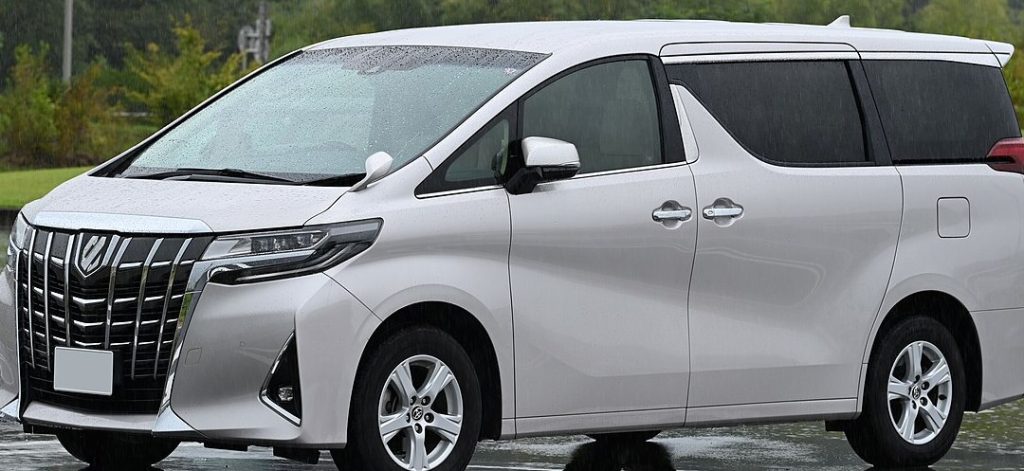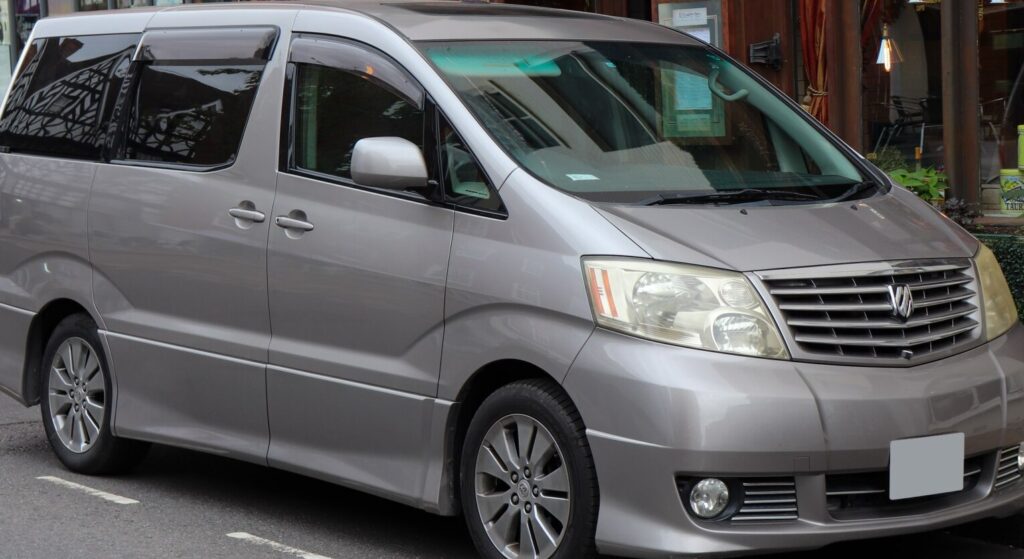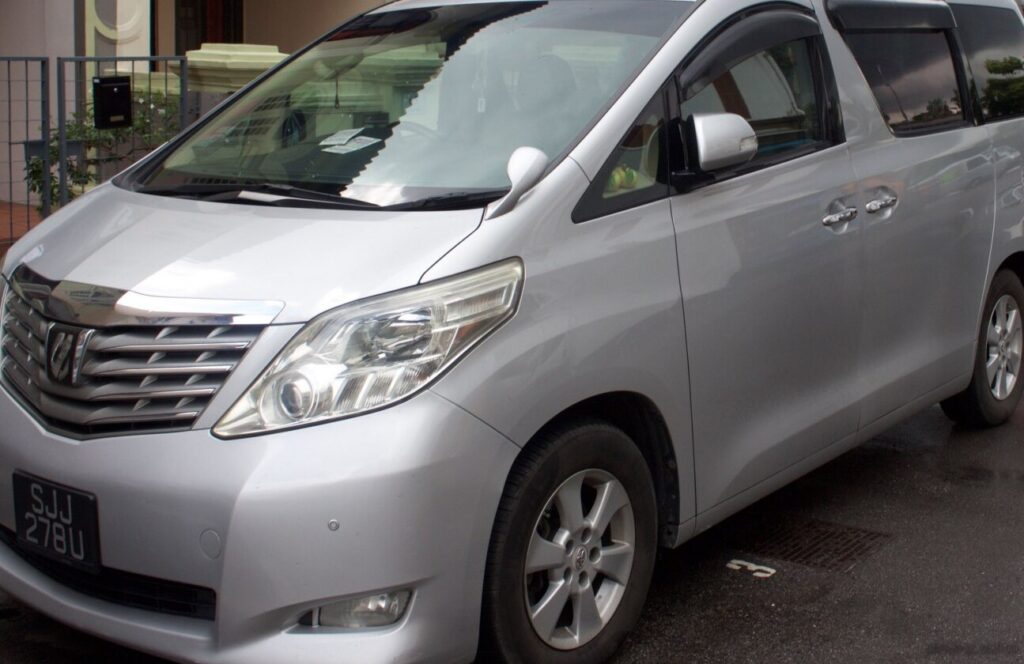
The Toyota Alphard, launched in 1997, quickly became a dominant force in the Japanese luxury minivan segment. The first generation, designated the Alphard I (XH10/MH10 series), was notable for its spacious interior, comfortable ride, and available all-wheel drive. A significant facelift arrived in 2005, bringing revised styling, updated features, and refinements to the powertrain. This article focuses specifically on the 2.4 i (159 hp) 4WD variant produced between 2005 and 2008, examining its technical specifications, performance, and market positioning.
Technical Specifications
| Brand | Toyota |
| Model | Alphard |
| Generation | Alphard I (facelift 2005) |
| Type | 2.4 i (159 Hp) 4WD |
| Start of production | 2005 |
| End of production | 2008 |
| Powertrain Architecture | Internal Combustion engine |
| Body type | Minivan |
| Seats | 7 |
| Doors | 5 |
| Fuel Type | Petrol (Gasoline) |
| Power | 159 Hp @ 5600 rpm |
| Power per litre | 67.3 Hp/l |
| Torque | 220 Nm @ 4000 rpm / 162.26 lb.-ft. @ 4000 rpm |
| Engine layout | Front, Transverse |
| Engine Model/Code | 2AZ-FE |
| Engine displacement | 2362 cm3 / 144.14 cu. in. |
| Number of cylinders | 4 |
| Engine configuration | Inline |
| Number of valves per cylinder | 4 |
| Fuel injection system | Multi-port manifold injection |
| Engine aspiration | Naturally aspirated engine |
| Valvetrain | DOHC |
| Engine oil capacity | 4.3 l / 4.54 US qt | 3.78 UK qt |
| Coolant capacity | 8 l / 8.45 US qt | 7.04 UK qt |
| Fuel tank capacity | 70 l / 18.49 US gal | 15.4 UK gal |
| Length | 4865 mm / 191.54 in. |
| Width | 1830 mm / 72.05 in. |
| Height | 1935 mm / 76.18 in. |
| Wheelbase | 2900 mm / 114.17 in. |
| Front track | 1560 mm / 61.42 in. |
| Rear track | 1540 mm / 60.63 in. |
| Drive wheel | All wheel drive (4×4) |
| Number of gears | 4 |
| Gearbox type | Automatic transmission |
| Front suspension | Spring Strut |
| Rear suspension | Coil spring |
| Front brakes | Ventilated discs |
| Rear brakes | Disc |
| Tires size | 225/55 R17 |
Introduction
The 2005 facelift of the Toyota Alphard I represented a significant update to an already popular vehicle. The 2.4 i 4WD variant occupied a middle ground within the Alphard lineup, offering a balance between performance, fuel efficiency, and affordability. Positioned above the base 2.4L front-wheel drive model, but below the more powerful 3.0L variants, it catered to families and individuals seeking a comfortable and practical luxury minivan with the added security of all-wheel drive. The Alphard, in general, was primarily marketed in Japan, where large, luxurious minivans are highly sought after, but also found a niche following in other Asian markets and through grey imports.
Powertrain & Engine Architecture
The heart of the Alphard 2.4 i 4WD is the 2AZ-FE engine, a 2.4-liter (2362 cc) inline-four cylinder gasoline engine. This engine is part of Toyota’s AZ series, known for its reliability and relatively smooth operation. The 2AZ-FE utilizes a double overhead camshaft (DOHC) valvetrain with four valves per cylinder, contributing to its respectable power output. Fuel delivery is managed by a multi-port fuel injection system, ensuring efficient combustion. The engine produces 159 horsepower at 5600 rpm and 220 Nm (162.26 lb-ft) of torque at 4000 rpm.
The engine is paired with a four-speed automatic transmission. While not as sophisticated as some of the transmissions available in contemporary vehicles, this unit was known for its durability and smooth shifting characteristics. The all-wheel drive system is a part-time system, typically operating in front-wheel drive under normal conditions and engaging the rear wheels when traction is lost. This system enhances stability and control, particularly in inclement weather or on slippery surfaces.
Driving Characteristics
The Alphard 2.4 i 4WD offers a comfortable and relaxed driving experience. The 159 hp engine provides adequate power for everyday driving, but it’s not particularly sporty. Acceleration is linear and predictable, and the four-speed automatic transmission shifts smoothly, though it can sometimes feel a bit dated compared to more modern transmissions with more gears. The all-wheel drive system provides enhanced traction, making the vehicle feel more stable and secure, especially in wet or snowy conditions. Compared to the higher-output 3.0L Alphard variants, the 2.4 i feels noticeably less powerful, particularly when fully loaded with passengers and luggage. However, the 2.4 i offers better fuel economy than its larger-engined siblings.
Equipment & Trim Levels
The 2005 facelift Alphard 2.4 i 4WD typically came well-equipped, reflecting its luxury minivan status. Standard features often included power windows, power locks, air conditioning, a high-quality audio system, and comfortable seating for seven passengers. Interior upholstery was typically cloth, though leather options were available as upgrades. The dashboard layout was functional and user-friendly, with a focus on ease of use. Optional extras could include features like a navigation system, rear entertainment system, sunroof, and upgraded audio components. The trim level often dictated the availability of these options, with higher trims offering more standard features and a wider range of customization possibilities.
Chassis & Braking
The Alphard I utilizes a conventional suspension setup, with MacPherson strut springs in the front and coil springs in the rear. This configuration provides a comfortable ride, absorbing bumps and imperfections in the road effectively. The 2.4 i 4WD variant features ventilated disc brakes in the front and solid disc brakes in the rear, providing adequate stopping power for its weight class. The steering is power-assisted, making it easy to maneuver in tight spaces. Stabilizer bars are present on both the front and rear axles, helping to reduce body roll during cornering.
Market Reception & Comparison
The Alphard 2.4 i 4WD was generally well-received by critics and consumers alike. It was praised for its spacious interior, comfortable ride, and practical features. However, some reviewers noted that the engine could feel underpowered when the vehicle was fully loaded. Compared to the 3.0L Alphard variants, the 2.4 i offered a more affordable entry point into the Alphard lineup, but at the expense of performance. In terms of fuel economy, the 2.4 i outperformed the 3.0L models, making it a more economical choice for those who prioritize fuel efficiency. Reliability was also a strong point, with the 2AZ-FE engine and the four-speed automatic transmission proving to be durable and long-lasting.
Legacy
The Toyota Alphard I, including the 2.4 i 4WD variant, has established a strong reputation for reliability and practicality. The 2AZ-FE engine is known to be a robust and dependable unit, capable of high mileage with proper maintenance. Today, used examples of the Alphard I are still relatively common, particularly in Japan and other Asian markets. While not as technologically advanced as newer minivans, the Alphard I remains a popular choice for those seeking a spacious, comfortable, and reliable family vehicle. The 2.4 i 4WD variant, in particular, offers a good balance of features, performance, and affordability, making it a compelling option in the used car market.