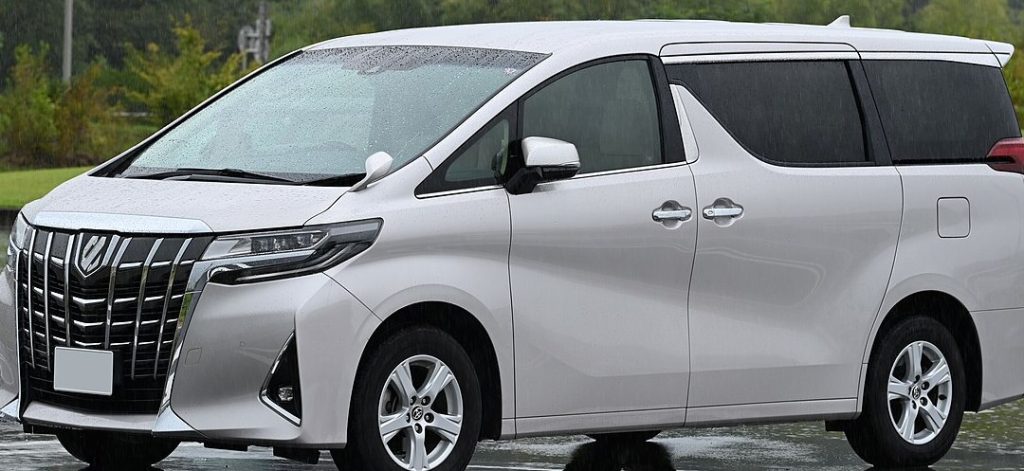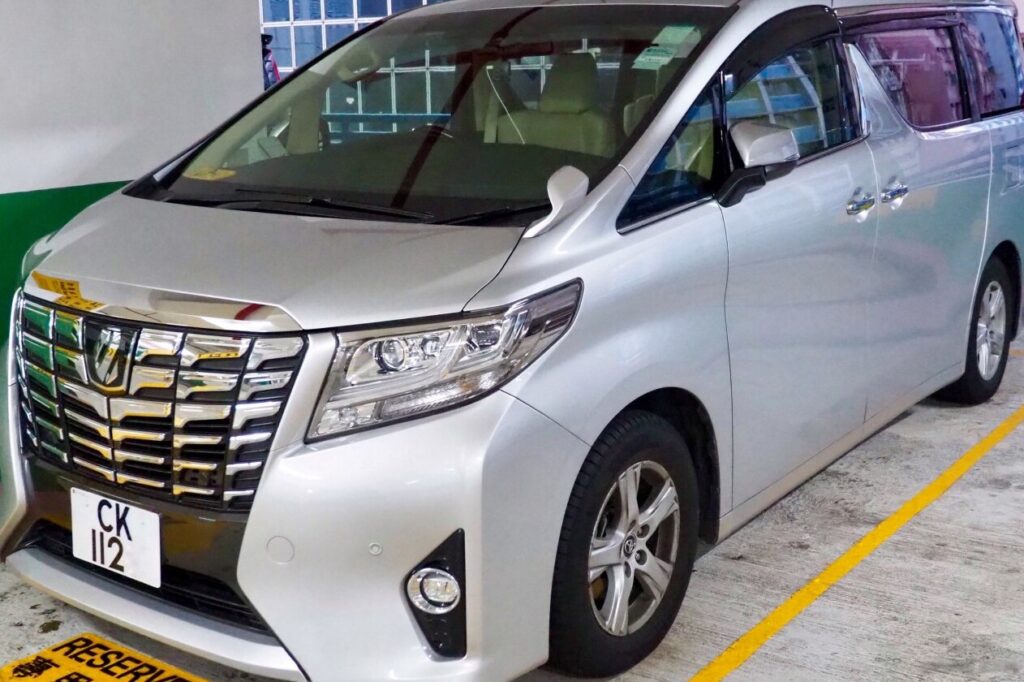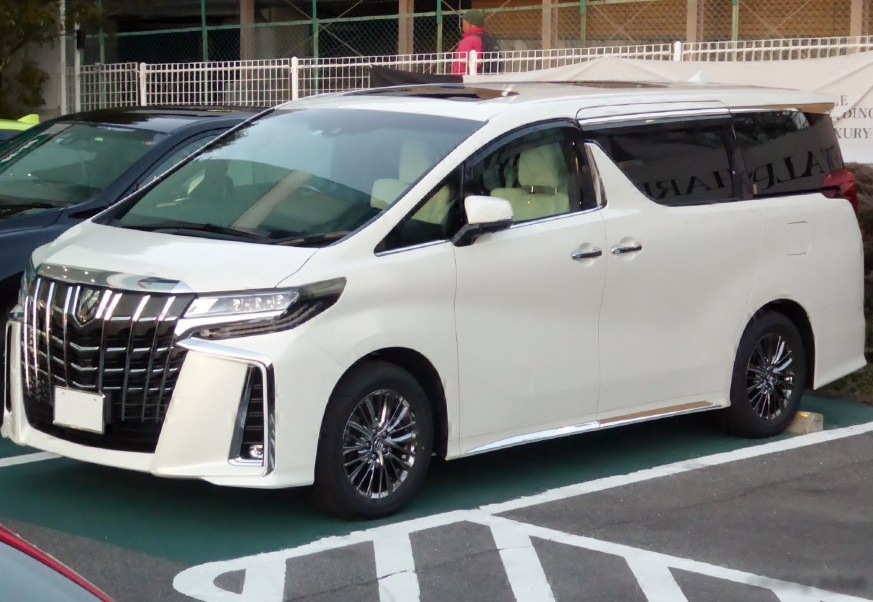
The Toyota Alphard III, specifically the facelifted model released in January 2018 and continuing through June 2023, represents a significant iteration of Toyota’s luxury minivan. This variant, designated as the 2.5 (152 Hp) Hybrid E-Four e-CVT, was primarily aimed at the Japanese domestic market (JDM) and other Asian countries where large, comfortable, and technologically advanced minivans are highly sought after. Positioned as a mid-range offering within the Alphard III lineup, it balanced fuel efficiency with a respectable level of performance and all-wheel-drive capability. The Alphard III, built on the XV40 platform, continued Toyota’s tradition of providing spacious and well-equipped people carriers.
Technical Specifications
| Brand | Toyota |
| Model | Alphard |
| Generation | Alphard III (facelift 2018) |
| Type (Engine) | 2.5 (152 Hp) Hybrid E-Four e-CVT |
| Start of production | January, 2018 |
| End of production | June, 2023 |
| Powertrain Architecture | FHEV (Full Hybrid Electric Vehicle) |
| Body type | Minivan |
| Seats | 7 |
| Doors | 5 |
| Fuel consumption (combined) | 5.4 l/100 km (43.6 US mpg, 52.3 UK mpg, 18.5 km/l) |
| Fuel Type | Petrol (Gasoline) |
| Weight-to-power ratio | 13.9 kg/Hp, 72 Hp/tonne |
| Weight-to-torque ratio | 10.2 kg/Nm, 97.6 Nm/tonne |
| Battery technology | Nickel-metal hydride (NiMH) |
| Electric motor power (1) | 143 Hp |
| Electric motor torque (1) | 270 Nm (199.14 lb.-ft.) |
| Electric motor model/code (1) | 2JM |
| Electric motor type (1) | Synchronous |
| Electric motor power (2) | 68 Hp |
| Electric motor torque (2) | 139 Nm (102.52 lb.-ft.) |
| Electric motor model/code (2) | 2FM |
| Electric motor type (2) | Synchronous |
| Power | 152 Hp @ 5700 rpm |
| Power per litre | 61 Hp/l |
| Torque | 206 Nm @ 4400-4800 rpm (151.94 lb.-ft. @ 4400-4800 rpm) |
| Engine layout | Front, Transverse |
| Engine Model/Code | 2AR-FXE |
| Engine displacement | 2493 cm3 (152.13 cu. in.) |
| Number of cylinders | 4 |
| Engine configuration | Inline |
| Cylinder Bore | 90 mm (3.54 in.) |
| Piston Stroke | 98 mm (3.86 in.) |
| Number of valves per cylinder | 4 |
| Fuel injection system | Direct injection |
| Engine aspiration | Naturally aspirated engine |
| Engine oil capacity | 4.4 l (4.65 US qt | 3.87 UK qt) |
| Coolant capacity | 9.3 l (9.83 US qt | 8.18 UK qt) |
| Kerb Weight | 2110 kg (4651.75 lbs.) |
| Max. weight | 2495 kg (5500.53 lbs.) |
| Max load | 385 kg (848.78 lbs.) |
| Fuel tank capacity | 65 l (17.17 US gal | 14.3 UK gal) |
| Length | 4945 mm (194.69 in.) |
| Width | 1850 mm (72.83 in.) |
| Height | 1950 mm (76.77 in.) |
| Wheelbase | 3000 mm (118.11 in.) |
| Front track | 1600 mm (62.99 in.) |
| Rear track | 1595 mm (62.8 in.) |
| Ride height (ground clearance) | 165 mm (6.5 in.) |
| Minimum turning circle | 11.2 m (36.75 ft.) |
| Drivetrain Architecture | ICE drives front wheels, electric motors drive front and rear wheels. Full electric or mixed mode operation. |
| Drive wheel | All wheel drive (4×4) |
| Number of gears/gearbox type | automatic transmission e-CVT |
| Front suspension | Independent, McPherson with coil spring and anti-roll bar |
| Rear suspension | Independent multi-link with stabilizer |
| Front brakes | Ventilated discs |
| Rear brakes | Ventilated discs |
| Assisting systems | ABS (Anti-lock braking system) |
| Steering type | Steering rack and pinion |
| Power steering | Electric |
| Tires size | 215/65 R16; 225/60 R17 |
| Wheel rims size | 6.5J x 16; 6.5J x 17 |
Powertrain & Engine Architecture
The heart of the Alphard 2.5 Hybrid E-Four is Toyota’s 2AR-FXE 2.5-liter inline-four gasoline engine. This engine utilizes Toyota’s D-4S direct injection system, combining direct and port injection to optimize combustion efficiency and power delivery. The engine produces 152 horsepower at 5700 rpm and 206 Nm (151.94 lb-ft) of torque between 4400 and 4800 rpm. Crucially, this engine isn’t solely responsible for propulsion. It works in conjunction with Toyota’s Hybrid Synergy Drive system. This system incorporates two electric motors – a primary motor (2JM) delivering 143 hp and 270 Nm of torque, and a secondary motor (2FM) producing 68 hp and 139 Nm of torque. The electric motors are powered by a Nickel-metal hydride (NiMH) battery pack. The e-CVT (electronically controlled continuously variable transmission) seamlessly blends power from the engine and electric motors, optimizing for fuel economy or performance as needed. The E-Four system utilizes the rear electric motor to provide on-demand all-wheel drive, enhancing traction and stability.
Driving Characteristics
The 2.5L Hybrid E-Four Alphard offers a comfortable and refined driving experience. While not designed for sporty performance, the combined output of the engine and electric motors provides adequate power for everyday driving and highway cruising. The e-CVT contributes to smooth acceleration, although it can sometimes feel less responsive than a traditional automatic transmission. The all-wheel-drive system provides enhanced grip in inclement weather conditions. Compared to the more powerful 3.5-liter V6 versions of the Alphard, this hybrid variant prioritizes fuel efficiency over outright speed. The 2.5L also offers a quieter cabin experience, particularly at lower speeds, due to the electric motors assisting with propulsion. The gear ratios are optimized for fuel economy, meaning that while acceleration is sufficient, it isn’t particularly brisk.
Equipment & Trim Levels
The 2.5 Hybrid E-Four trim typically included features such as automatic climate control, power-adjustable seats, a touchscreen infotainment system, and a comprehensive suite of safety features including Toyota Safety Sense. Interior upholstery was generally cloth or a combination of cloth and synthetic leather, depending on optional packages. Higher trim levels within the 2.5 Hybrid range offered upgrades like leather seats, wood trim, a premium sound system, and advanced driver-assistance systems like adaptive cruise control and lane-keeping assist. Optional extras included a rear-seat entertainment system, power-sliding doors, and a panoramic sunroof.
Chassis & Braking
The Alphard III utilizes an independent suspension setup, with McPherson struts at the front and a multi-link system at the rear. This configuration provides a comfortable ride quality, absorbing bumps and imperfections in the road effectively. Stabilizer bars are fitted to both axles to reduce body roll during cornering. Braking duties are handled by ventilated discs on all four wheels, providing ample stopping power. The inclusion of ABS (Anti-lock Braking System) is standard, enhancing safety and control during emergency braking situations. The chassis is designed to accommodate the weight of the hybrid powertrain and the spacious cabin, prioritizing comfort and stability over sporty handling.
Market Reception & Comparison
The Alphard 2.5 Hybrid E-Four was well-received in its target markets, particularly in Japan, where it was praised for its fuel efficiency, spaciousness, and comfortable ride. Critics noted that while the 2.5L engine wasn’t as powerful as the V6 options, it provided a good balance of performance and economy for everyday use. Compared to the 3.5L models, the hybrid variant offered significantly better fuel economy, making it an attractive option for drivers who prioritize running costs. The E-Four all-wheel-drive system was also a selling point, providing added confidence in challenging weather conditions. Reliability was generally high, consistent with Toyota’s reputation for building durable vehicles.
Legacy
The Toyota Alphard III 2.5 Hybrid E-Four has proven to be a reliable and durable vehicle. The Hybrid Synergy Drive system has a strong track record for longevity, and the 2AR-FXE engine is known for its robustness. In the used car market, these Alphards hold their value relatively well, particularly those that have been well-maintained. The combination of fuel efficiency, spaciousness, and all-wheel-drive capability continues to make this variant a popular choice for families and those seeking a comfortable and practical minivan. The Alphard III, and this variant specifically, cemented Toyota’s position as a leader in the luxury minivan segment.