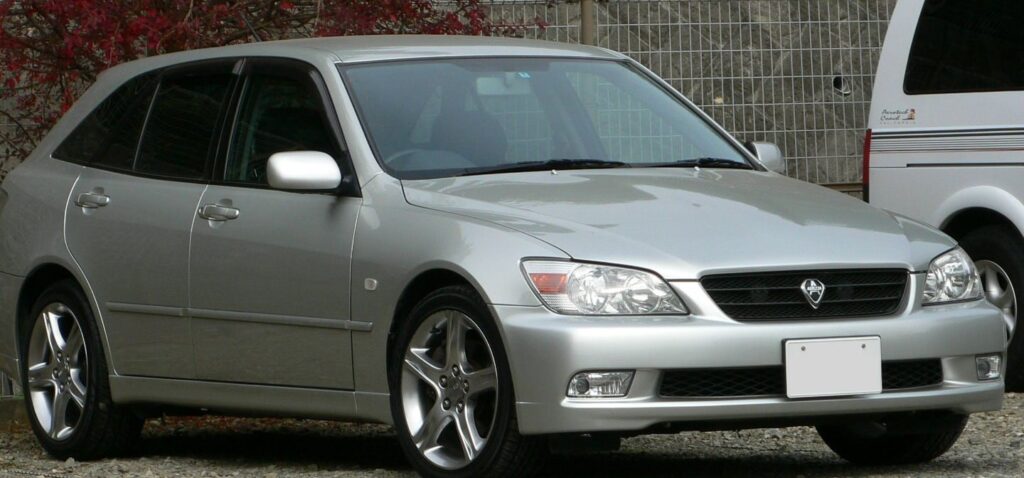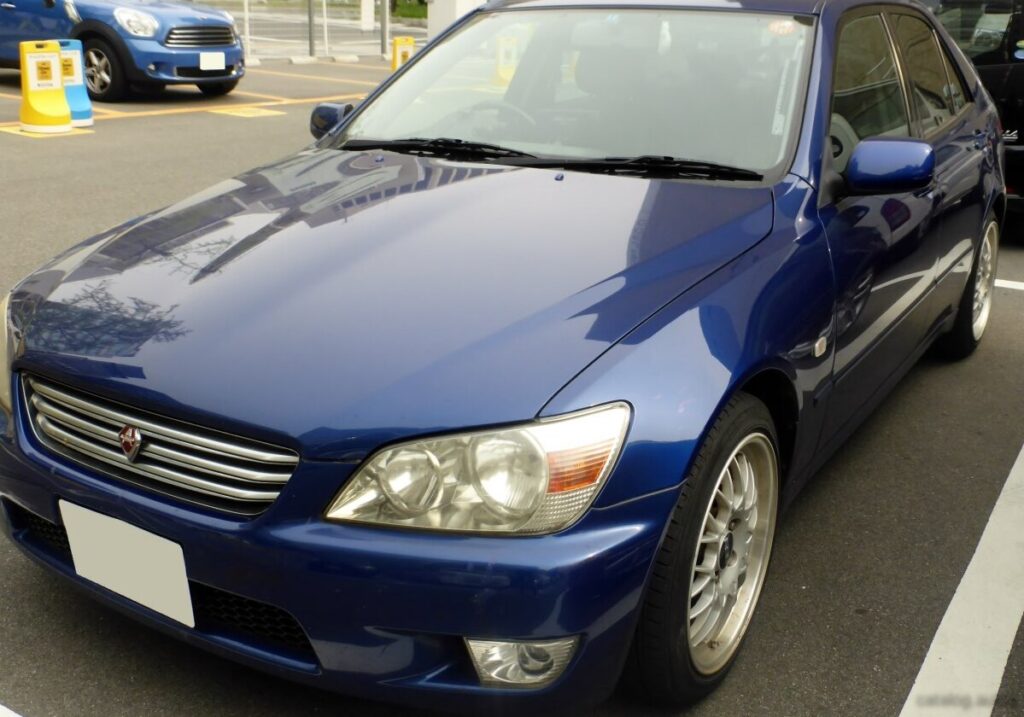
The Toyota Altezza 2.0 i 24V Automatic, produced between 1998 and 2005, represents a significant entry point into the Altezza (also known as the Lexus IS in export markets) lineage. Positioned as a sporting sedan aimed at a younger demographic, the 2.0i variant offered a balance between performance and affordability within the broader Altezza range. This model was primarily sold in Japan, catering to a market that appreciated rear-wheel-drive dynamics and a more engaging driving experience than many of its front-wheel-drive competitors. It served as a stepping stone for buyers who desired the Altezza’s styling and handling but didn’t require the higher performance or price tag of the RS200 variant.
Technical Specifications
| Brand | Toyota |
| Model | Altezza |
| Type | 2.0 i 24V (160 Hp) Automatic |
| Start of production | 1998 |
| End of production | 2005 |
| Powertrain Architecture | Internal Combustion engine |
| Body type | Sedan |
| Seats | 5 |
| Doors | 4 |
| Fuel consumption (urban) | 14 l/100 km (16.8 US mpg) |
| Fuel consumption (extra urban) | 8 l/100 km (29.4 US mpg) |
| Fuel Type | Petrol (Gasoline) |
| Maximum speed | 180 km/h (111.85 mph) |
| Weight-to-power ratio | 8.3 kg/Hp |
| Weight-to-torque ratio | 6.7 kg/Nm |
| Power | 160 Hp @ 6200 rpm |
| Power per litre | 80.5 Hp/l |
| Torque | 200 Nm @ 4400 rpm (147.51 lb.-ft. @ 4400 rpm) |
| Engine layout | Front, Longitudinal |
| Engine Model/Code | 1G-FE |
| Engine displacement | 1988 cm3 (121.32 cu. in.) |
| Number of cylinders | 6 |
| Engine configuration | Inline |
| Cylinder Bore | 75 mm (2.95 in.) |
| Piston Stroke | 75 mm (2.95 in.) |
| Compression ratio | 10:1 |
| Number of valves per cylinder | 4 |
| Fuel injection system | Multi-port manifold injection |
| Engine aspiration | Naturally aspirated engine |
| Valvetrain | DOHC |
| Engine oil capacity | 3.6 l (3.8 US qt | 3.17 UK qt) |
| Coolant capacity | 6.6 l (6.97 US qt | 5.81 UK qt) |
| Kerb Weight | 1330 kg (2932.15 lbs.) |
| Max. weight | 1605 kg (3538.42 lbs.) |
| Max load | 275 kg (606.27 lbs.) |
| Trunk (boot) space | 400 l (14.13 cu. ft.) |
| Fuel tank capacity | 60 l (15.85 US gal | 13.2 UK gal) |
| Length | 4400 mm (173.23 in.) |
| Width | 1720 mm (67.72 in.) |
| Height | 1410 mm (55.51 in.) |
| Wheelbase | 2670 mm (105.12 in.) |
| Front track | 1495 mm (58.86 in.) |
| Rear track | 1485 mm (58.46 in.) |
| Ride height | 135 mm (5.31 in.) |
| Minimum turning circle | 10.2 m (33.46 ft.) |
| Drivetrain | Rear wheel drive |
| Number of gears | 4 |
| Gearbox type | Automatic transmission |
| Front suspension | Coil spring, Double wishbone |
| Rear suspension | Double wishbone, Coil spring |
| Front brakes | Ventilated discs |
| Rear brakes | Disc |
| Assisting systems | ABS (Anti-lock braking system) |
| Steering type | Steering rack and pinion |
| Power steering | Hydraulic |
| Tires size | 195/65 R15 |
| Wheel rims size | 6.5J x 15 |
INTRODUCTION
The Toyota Altezza 2.0i Automatic, launched in 1998, was a key component of Toyota’s strategy to appeal to a more youthful and driving-enthusiast audience. Built on the 1HX0/A3 platform (shared with the Lexus IS), the Altezza aimed to provide a sporty and stylish alternative to more conventional Japanese sedans. The 2.0i Automatic trim level was positioned as the entry-level offering, providing a comfortable and accessible way to experience the Altezza’s rear-wheel-drive platform and distinctive design. It was a popular choice for buyers who prioritized ease of use and fuel efficiency over outright performance.
Powertrain & Engine Architecture
At the heart of the Altezza 2.0i Automatic lies the 1G-FE engine, a 1.998-liter (2.0L) inline-six cylinder naturally aspirated powerplant. This engine, a staple in Toyota’s lineup for many years, is known for its reliability and smooth operation. The 1G-FE utilizes a multi-port fuel injection system and a double overhead camshaft (DOHC) valvetrain, contributing to its relatively efficient power delivery. The engine produces 160 horsepower at 6,200 rpm and 200 Nm (147.51 lb-ft) of torque at 4,400 rpm. Paired with this engine is a four-speed automatic transmission, designed for smooth shifts and ease of driving. This transmission, while not offering the sportiness of a manual gearbox, was a key selling point for buyers seeking a more relaxed driving experience. The engine code, 1G-FE, is crucial for identifying specific parts and maintenance requirements.
Driving Characteristics
The Altezza 2.0i Automatic delivers a comfortable and predictable driving experience. While not as exhilarating as the higher-performance RS200 variant with its Yamaha-tuned engine and six-speed manual transmission, the 2.0i provides adequate power for everyday driving. The four-speed automatic transmission is tuned for fuel efficiency and smooth transitions, but it can feel somewhat sluggish during quick acceleration or overtaking maneuvers. The rear-wheel-drive configuration provides a balanced feel and predictable handling, making it more engaging than many front-wheel-drive competitors. The gear ratios are optimized for cruising, making it a pleasant vehicle for highway driving. Compared to the manual transmission versions of the 2.0i, the automatic sacrifices some responsiveness but gains in convenience.
Equipment & Trim Levels
The Altezza 2.0i Automatic typically came equipped with standard features such as power windows, power locks, air conditioning, and a basic audio system. Interior upholstery was generally cloth, with options for leather available as upgrades. Dashboard configuration was relatively straightforward, prioritizing functionality over elaborate design. Optional extras included alloy wheels, a sunroof, and upgraded audio systems. The trim level often dictated the availability of these options, with higher sub-trims offering more standard features. The focus was on providing a well-equipped, comfortable interior without the premium price tag of the RS200.
Chassis & Braking
The Altezza 2.0i Automatic features a coil spring, double wishbone suspension setup at both the front and rear, providing a comfortable ride and decent handling characteristics. Front brakes are ventilated discs, offering good stopping power, while rear brakes are solid discs. An Anti-lock Braking System (ABS) was standard, enhancing safety. The chassis is relatively lightweight, contributing to the car’s nimble handling. Stabilizer bars are present at both the front and rear, helping to reduce body roll during cornering. The suspension tuning is geared towards comfort, but it still provides a reasonably controlled driving experience.
Market Reception & Comparison
The Altezza 2.0i Automatic was generally well-received in the Japanese market. Critics praised its stylish design, comfortable interior, and engaging driving dynamics. However, some reviewers noted that the four-speed automatic transmission felt dated compared to newer transmissions with more gears. Fuel economy was considered good for a vehicle of its class. Compared to the RS200, the 2.0i Automatic offered a more affordable and accessible entry point into the Altezza lineup, appealing to a broader range of buyers. Compared to other Japanese sedans of the era, the Altezza stood out with its rear-wheel-drive configuration and sporty styling.
Legacy
The Toyota Altezza 2.0i Automatic has proven to be a relatively reliable vehicle over the long term. The 1G-FE engine is known for its durability, and the automatic transmission, while not particularly sophisticated, is generally dependable. Today, the Altezza is gaining popularity among enthusiasts as a classic Japanese sports sedan. Well-maintained examples are becoming increasingly sought after, particularly those with low mileage and original features. While not as highly valued as the RS200, the 2.0i Automatic offers a more affordable way to experience the Altezza’s unique blend of style, handling, and reliability. Its enduring appeal lies in its simple, yet effective design and its ability to provide a rewarding driving experience.