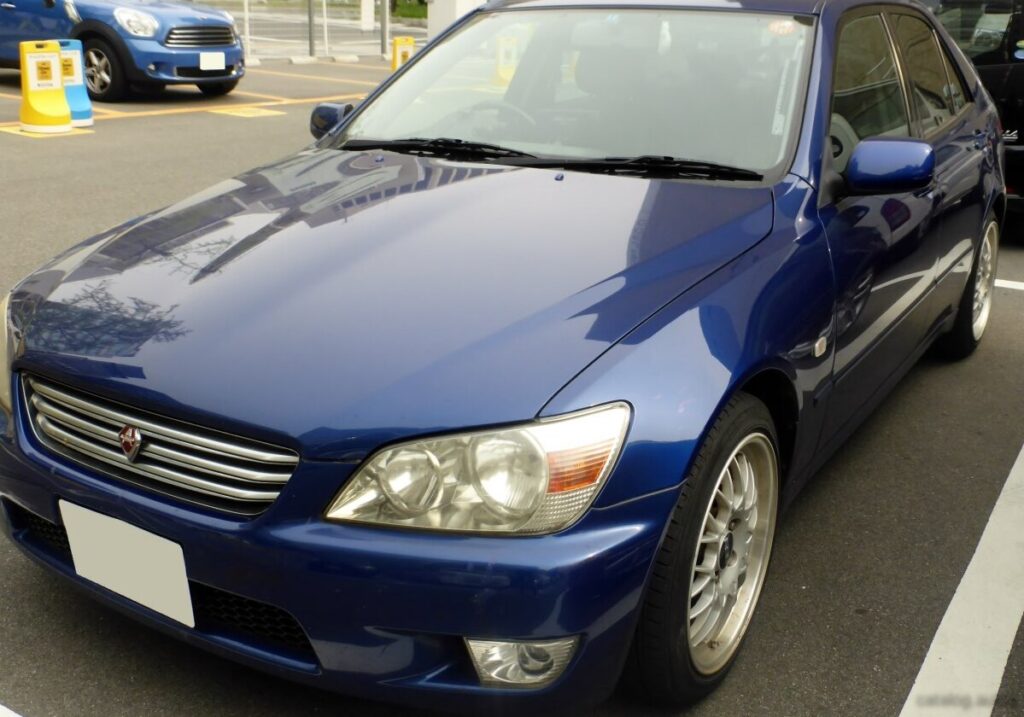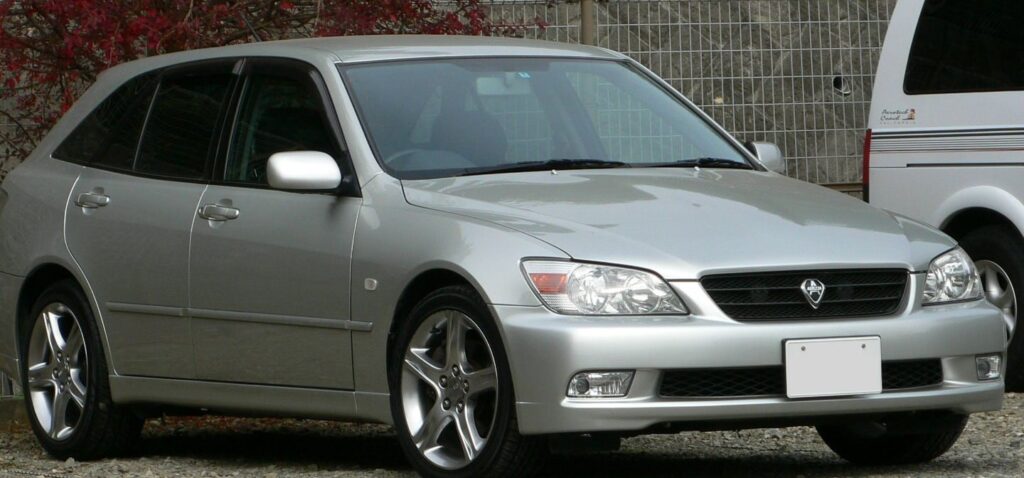
The Toyota Altezza Gita 2.0 i 24V, produced between 2001 and 2005, represents a unique offering within the broader Altezza (and Lexus IS) family. Positioned as the station wagon (estate) variant, the Gita aimed to provide a more practical and versatile option compared to the coupe and sedan body styles. It was primarily marketed in Japan, leveraging the Altezza’s sporty image with the added benefit of increased cargo capacity. This particular 2.0-liter, 160 horsepower configuration occupied a mid-range position in the Altezza Gita lineup, offering a balance between performance and fuel efficiency. It sat below the more powerful RS 200 models, and above any potential base engine options.
Technical Specifications
| Brand | Toyota |
| Model | Altezza |
| Generation | Altezza Gita |
| Type (Engine) | 2.0 i 24V (160 Hp) |
| Start of production | 2001 |
| End of production | 2005 |
| Powertrain Architecture | Internal Combustion engine |
| Body type | Station wagon (estate) |
| Seats | 5 |
| Doors | 5 |
| Fuel consumption (urban) | 14 l/100 km (16.8 US mpg) |
| Fuel consumption (extra urban) | 8 l/100 km (29.4 US mpg) |
| Fuel Type | Petrol (Gasoline) |
| Maximum speed | 180 km/h (111.85 mph) |
| Weight-to-power ratio | 8.4 kg/Hp |
| Weight-to-torque ratio | 6.8 kg/Nm |
| Power | 160 Hp @ 6200 rpm |
| Power per litre | 80.5 Hp/l |
| Torque | 200 Nm @ 4400 rpm (147.51 lb.-ft. @ 4400 rpm) |
| Engine layout | Front, Longitudinal |
| Engine Model/Code | 1G-FE |
| Engine displacement | 1988 cm3 (121.32 cu. in.) |
| Number of cylinders | 6 |
| Engine configuration | Inline |
| Cylinder Bore | 75 mm (2.95 in.) |
| Piston Stroke | 75 mm (2.95 in.) |
| Compression ratio | 10:1 |
| Number of valves per cylinder | 4 |
| Fuel injection system | Multi-port manifold injection |
| Engine aspiration | Naturally aspirated engine |
| Valvetrain | DOHC |
| Engine oil capacity | 3.8 l (4.02 US qt | 3.34 UK qt) |
| Coolant capacity | 6.9 l (7.29 US qt | 6.07 UK qt) |
| Kerb Weight | 1350 kg (2976.24 lbs.) |
| Max. weight | 1625 kg (3582.51 lbs.) |
| Max load | 275 kg (606.27 lbs.) |
| Trunk (boot) space – minimum | 400 l (14.13 cu. ft.) |
| Trunk (boot) space – maximum | 620 l (21.9 cu. ft.) |
| Fuel tank capacity | 60 l (15.85 US gal | 13.2 UK gal) |
| Length | 4505 mm (177.36 in.) |
| Width | 1725 mm (67.91 in.) |
| Height | 1420 mm (55.91 in.) |
| Wheelbase | 2670 mm (105.12 in.) |
| Front track | 1495 mm (58.86 in.) |
| Rear track | 1475 mm (58.07 in.) |
| Ride height (ground clearance) | 135 mm (5.31 in.) |
| Minimum turning circle | 10.2 m (33.46 ft.) |
| Drivetrain | Rear wheel drive |
| Number of gears | 6 |
| Gearbox type | Manual transmission |
| Front suspension | Coil spring, Double wishbone |
| Rear suspension | Double wishbone, Coil spring |
| Front brakes | Ventilated discs |
| Rear brakes | Disc |
| Assisting systems | ABS (Anti-lock braking system) |
| Steering type | Steering rack and pinion |
| Power steering | Hydraulic Steering |
| Tires size | 195/65 R15 |
| Wheel rims size | 6.5J x 15 |
INTRODUCTION
The Toyota Altezza Gita, introduced in 2001, expanded the Altezza model range to include a practical station wagon body style. Built on the same 1HX0/A3 platform as the coupe and sedan, the Gita aimed to appeal to buyers needing more cargo space without sacrificing the Altezza’s sporty character. The 2.0 i 24V variant, powered by the 1G-FE engine, was a key component of the Gita lineup, offering a balance of performance and economy. It was designed to be a comfortable and reliable daily driver, appealing to families and individuals who valued practicality alongside Toyota’s reputation for quality.
Powertrain & Engine Architecture
The heart of the Altezza Gita 2.0 i 24V is the 1G-FE inline-six engine. This 1.988-liter (121.32 cubic inches) engine utilizes a naturally aspirated configuration and a multi-port fuel injection system. The 1G-FE is known for its relatively simple design and robust construction. It features a double overhead camshaft (DOHC) valvetrain with four valves per cylinder, contributing to its respectable power output. The engine produces 160 horsepower at 6200 rpm and 200 Nm (147.51 lb.-ft.) of torque at 4400 rpm. This power is delivered to the rear wheels through a six-speed manual transmission. The transmission’s gear ratios are tuned for a blend of acceleration and fuel efficiency, prioritizing smooth operation over outright performance. The 1G-FE engine is known for its smooth power delivery and relatively quiet operation.
Driving Characteristics
The Altezza Gita 2.0 i 24V with the manual transmission offers a reasonably engaging driving experience. While not as overtly sporty as the RS 200 models, it provides sufficient power for everyday driving and occasional spirited runs. The six-speed manual gearbox allows for precise control and helps to keep the engine in its optimal power band. Acceleration is adequate, but not particularly brisk. Compared to the higher-output RS 200, the 2.0 i feels noticeably less powerful, especially at higher speeds. The manual transmission provides a more connected feel than the optional automatic, offering greater driver involvement. The rear-wheel-drive layout contributes to balanced handling, although the Gita’s added weight compared to the coupe can be felt in corners.
Equipment & Trim Levels
The Altezza Gita 2.0 i 24V typically came equipped with a reasonable level of standard features. Interior appointments included cloth upholstery, power windows, power locks, and air conditioning. The dashboard layout was functional and straightforward, prioritizing usability over luxury. Optional extras included alloy wheels, a sunroof, upgraded audio systems, and leather upholstery. Trim levels varied depending on the specific market and package selected, but generally focused on enhancing comfort and convenience. The Gita aimed to provide a well-equipped and practical vehicle without the premium price tag of the higher-spec RS models.
Chassis & Braking
The Altezza Gita’s chassis utilizes a coil spring, double wishbone suspension setup at both the front and rear. This suspension design provides a good balance of ride comfort and handling. The Gita’s weight, being a station wagon, is higher than the coupe, which slightly impacts handling agility. Braking duties are handled by ventilated discs at the front and solid discs at the rear. An Anti-lock Braking System (ABS) was standard, enhancing safety and control during emergency braking situations. The steering system is a rack and pinion setup with hydraulic power assistance, providing precise and responsive steering feel.
Market Reception & Comparison
The Altezza Gita 2.0 i 24V was generally well-received in the Japanese market as a practical and stylish alternative to traditional station wagons. Critics praised its comfortable ride, spacious interior, and Toyota’s reputation for reliability. However, some reviewers noted that the 2.0-liter engine lacked the punch of the RS 200 models. Fuel economy was considered to be good, particularly on the highway. Compared to the RS 200, the 2.0 i offered a lower purchase price and lower running costs, making it an attractive option for budget-conscious buyers. The 1.8L models, if available, offered even greater fuel economy but at the expense of performance.
Legacy
The Toyota Altezza Gita 2.0 i 24V, while not as iconic as the coupe version, has developed a following among enthusiasts who appreciate its practicality and reliability. The 1G-FE engine is known for its durability and relatively low maintenance requirements. Today, well-maintained examples are becoming increasingly sought after, particularly by those looking for a unique and affordable Japanese classic. Parts availability is generally good, although some specific trim pieces may be difficult to find. The Gita’s rear-wheel-drive layout and manual transmission option make it a rewarding car to drive, and its spacious interior makes it a practical choice for everyday use. It remains a testament to Toyota’s ability to create well-engineered and reliable vehicles.