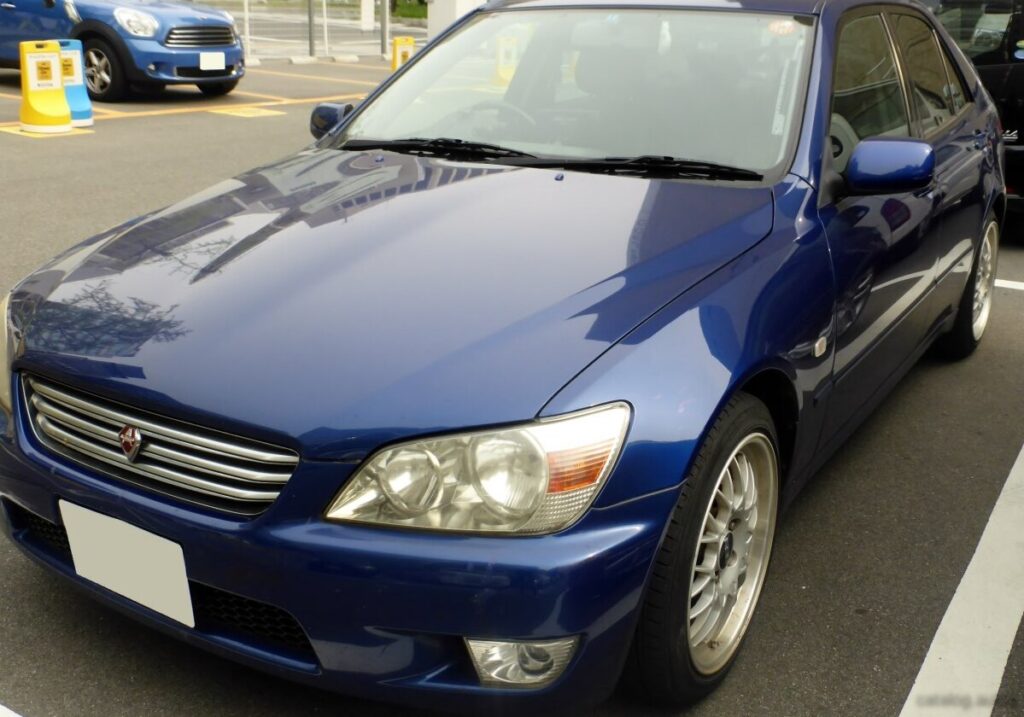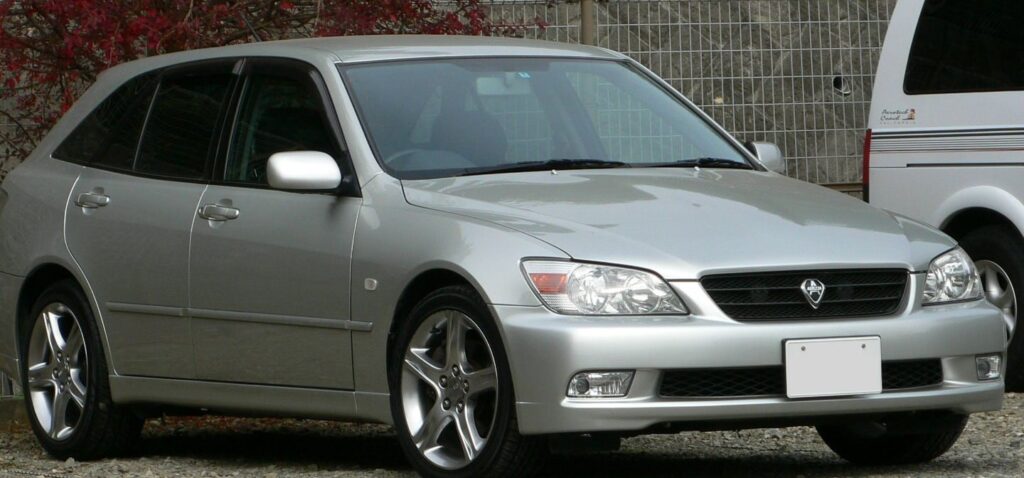
The Toyota Altezza Gita 3.0 i 24V, produced between 2001 and 2005, represents a unique offering within the Altezza (and Lexus IS) lineage. Positioned as the wagon (estate) variant of the popular compact executive car, the Gita aimed to provide a more practical and family-oriented alternative to the coupe and sedan body styles. This particular configuration, featuring the 2JZ-GE 3.0-liter inline-six engine paired with a four-speed automatic transmission and all-wheel drive, was a mid-range offering within the Gita lineup, balancing performance with usability. The Altezza, and by extension the Gita, was primarily a Japan-market vehicle, though examples have been imported to other regions, including the United States, through grey market channels.
Technical Specifications
| Brand | Toyota |
| Model | Altezza |
| Generation | Altezza Gita |
| Type | 3.0 i 24V (220 Hp) 4WD 4 Automatic |
| Start of production | 2001 |
| End of production | 2005 |
| Powertrain Architecture | Internal Combustion engine |
| Body type | Station wagon (estate) |
| Seats | 5 |
| Doors | 5 |
| Fuel consumption (urban) | 16 l/100 km (14.7 US mpg) |
| Fuel consumption (extra urban) | 8 l/100 km (29.4 US mpg) |
| Fuel Type | Petrol (Gasoline) |
| Acceleration 0 – 100 km/h | 8.5 sec |
| Acceleration 0 – 62 mph | 8.5 sec |
| Acceleration 0 – 60 mph | 8.1 sec |
| Maximum speed | 230 km/h (142.92 mph) |
| Weight-to-power ratio | 7 kg/Hp |
| Weight-to-torque ratio | 5.2 kg/Nm |
| Power | 220 Hp @ 5800 rpm |
| Torque | 294 Nm @ 3800 rpm (216.84 lb.-ft. @ 3800 rpm) |
| Engine layout | Front, Longitudinal |
| Engine Model/Code | 2JZ-GE |
| Engine displacement | 2997 cm3 (182.89 cu. in.) |
| Number of cylinders | 6 |
| Engine configuration | Inline |
| Cylinder Bore | 86 mm (3.39 in.) |
| Piston Stroke | 86 mm (3.39 in.) |
| Compression ratio | 10.5:1 |
| Number of valves per cylinder | 4 |
| Fuel injection system | Multi-port manifold injection |
| Engine aspiration | Naturally aspirated engine |
| Valvetrain | DOHC |
| Engine oil capacity | 5.5 l (5.81 US qt | 4.84 UK qt) |
| Coolant capacity | 7.5 l (7.93 US qt | 6.6 UK qt) |
| Kerb Weight | 1540 kg (3395.12 lbs.) |
| Max. weight | 1815 kg (4001.39 lbs.) |
| Max load | 275 kg (606.27 lbs.) |
| Trunk (boot) space – minimum | 400 l (14.13 cu. ft.) |
| Trunk (boot) space – maximum | 620 l (21.9 cu. ft.) |
| Fuel tank capacity | 60 l (15.85 US gal | 13.2 UK gal) |
| Length | 4505 mm (177.36 in.) |
| Width | 1725 mm (67.91 in.) |
| Height | 1435 mm (56.5 in.) |
| Wheelbase | 2670 mm (105.12 in.) |
| Front track | 1490 mm (58.66 in.) |
| Rear track | 1480 mm (58.27 in.) |
| Minimum turning circle | 11.2 m (36.75 ft.) |
| Drivetrain | All wheel drive (4×4) |
| Number of gears | 4 |
| Gearbox type | Automatic transmission |
| Front suspension | Coil spring, Double wishbone |
| Rear suspension | Double wishbone, Coil spring |
| Front brakes | Ventilated discs |
| Rear brakes | Disc |
| Assisting systems | ABS (Anti-lock braking system) |
| Steering type | Steering rack and pinion |
| Power steering | Hydraulic Steering |
| Tires size | 215/45 17 |
| Wheel rims size | 7J x 17 |
INTRODUCTION
The Toyota Altezza Gita 3.0 i 24V, launched in 2001, was a key addition to the Altezza family, offering a station wagon body style that broadened the car’s appeal. Built on the same 1HX0/A3 platform as the coupe and sedan, the Gita aimed to capture buyers seeking a more versatile vehicle without sacrificing the Altezza’s sporty character. The 3.0-liter engine and four-speed automatic transmission combination represented a comfortable middle ground in the Gita range, providing adequate performance for everyday driving while offering the convenience of an automatic gearbox and the added traction of all-wheel drive. This variant was positioned as a step up from the 2.0-liter models, appealing to those who desired more power and refinement.
Powertrain & Engine Architecture
At the heart of the Altezza Gita 3.0 i 24V lies the 2JZ-GE, a 3.0-liter (2997 cc) inline-six cylinder engine. This engine is a naturally aspirated, dual overhead camshaft (DOHC) design with four valves per cylinder. It utilizes a multi-port fuel injection system for precise fuel delivery. The 2JZ-GE is known for its smoothness and reliability, characteristics that contributed to Toyota’s reputation for quality. The engine produces 220 horsepower at 5800 rpm and 294 Nm (216.84 lb-ft) of torque at 3800 rpm. Paired with this engine is a four-speed automatic transmission, designed for smooth and relatively quick shifts. While not as sporty as a manual transmission, the automatic offered ease of use, particularly in urban driving conditions. The all-wheel-drive system is a permanent system, distributing power to all four wheels for enhanced grip and stability, especially in inclement weather.
Driving Characteristics
The 3.0-liter engine and automatic transmission combination in the Altezza Gita delivered a balanced driving experience. Acceleration from 0-60 mph was achieved in approximately 8.1 seconds, and the car had a top speed of 230 km/h (142.92 mph). The automatic transmission, while providing convenience, did result in some power loss compared to the manual transmission options. Gear ratios were tuned for a blend of fuel efficiency and responsiveness. The all-wheel-drive system provided confident handling in various conditions, enhancing cornering stability and traction. Compared to the 2.0-liter Gita models, the 3.0-liter version offered noticeably more power and torque, resulting in quicker acceleration and more effortless cruising. However, it wasn’t as focused on outright performance as the sportier coupe variants.
Equipment & Trim Levels
The Altezza Gita 3.0 i 24V typically came equipped with a reasonable level of standard features. Interior upholstery was generally cloth, though leather options were available. Standard amenities included power windows, power locks, air conditioning, and a basic audio system. Optional extras could include a sunroof, upgraded audio systems, navigation systems, and leather upholstery. The dashboard layout was functional and driver-focused, with clear instrumentation. The Gita’s wagon body style provided ample cargo space, making it a practical choice for families or those needing to transport larger items.
Chassis & Braking
The Altezza Gita featured a MacPherson strut front suspension and a double wishbone rear suspension, providing a comfortable ride and good handling characteristics. The suspension was tuned to balance ride comfort with stability. Braking duties were handled by ventilated discs at the front and solid discs at the rear. An Anti-lock Braking System (ABS) was standard, enhancing braking performance and safety. Steering was rack and pinion with hydraulic power assistance, providing precise and responsive steering feel. The Gita 3.0 i 24V typically came equipped with 215/45 R17 tires mounted on 7J x 17 inch alloy wheels.
Market Reception & Comparison
The Altezza Gita, and specifically the 3.0-liter variant, was generally well-received in the Japanese market. Critics praised its practicality, comfortable ride, and refined engine. However, some noted that the automatic transmission wasn’t as engaging as a manual. Compared to the 2.0-liter Gita models, the 3.0-liter version offered superior performance but at a higher price point. Fuel economy was reasonable for a 3.0-liter engine, averaging around 16 l/100 km in urban driving and 8 l/100 km on the highway. Reliability was generally excellent, consistent with Toyota’s reputation.
Legacy
The Toyota Altezza Gita 3.0 i 24V has developed a modest following among enthusiasts. The 2JZ-GE engine is known for its durability and potential for modification. While not as highly sought after as the coupe variants, the Gita offers a unique combination of practicality and performance. In the used car market, these vehicles are generally well-maintained and can be found in good condition, though finding one outside of Japan can be challenging. The 4WD system and robust engine contribute to its continued appeal as a reliable and capable vehicle.