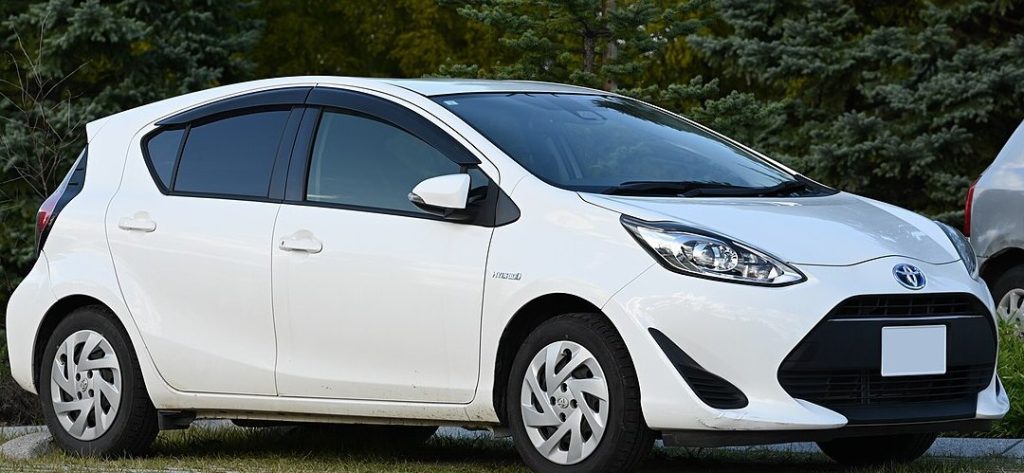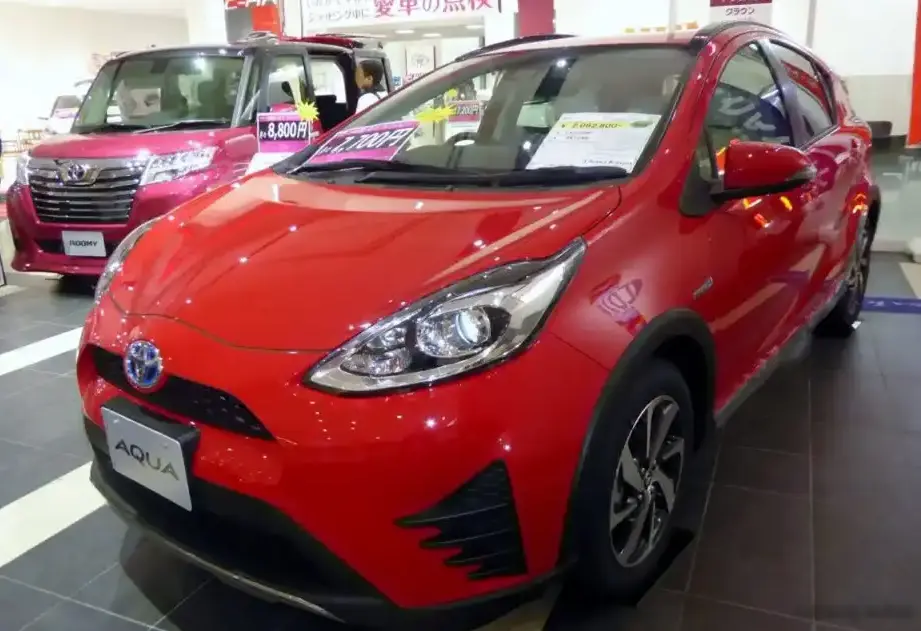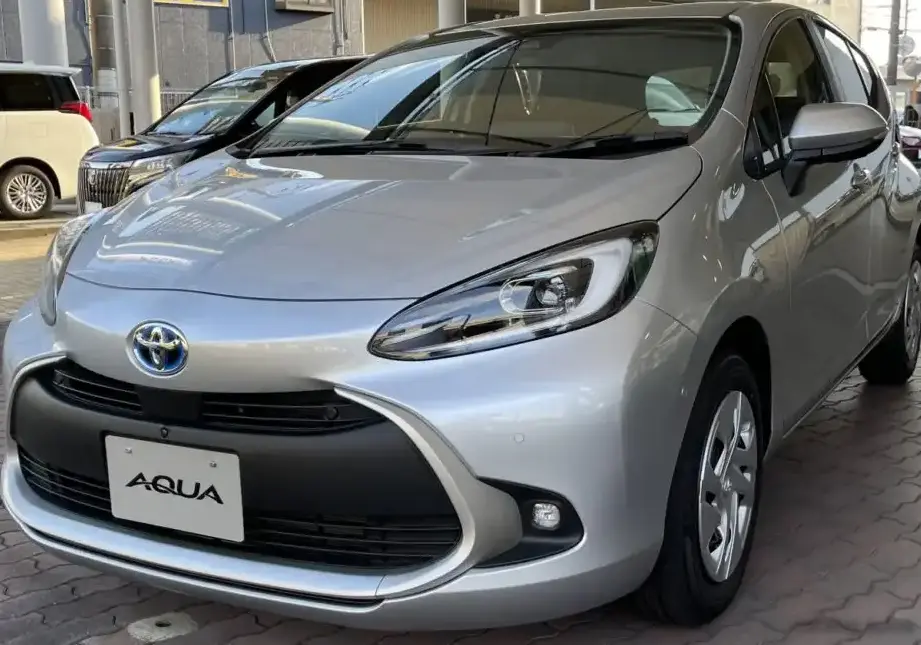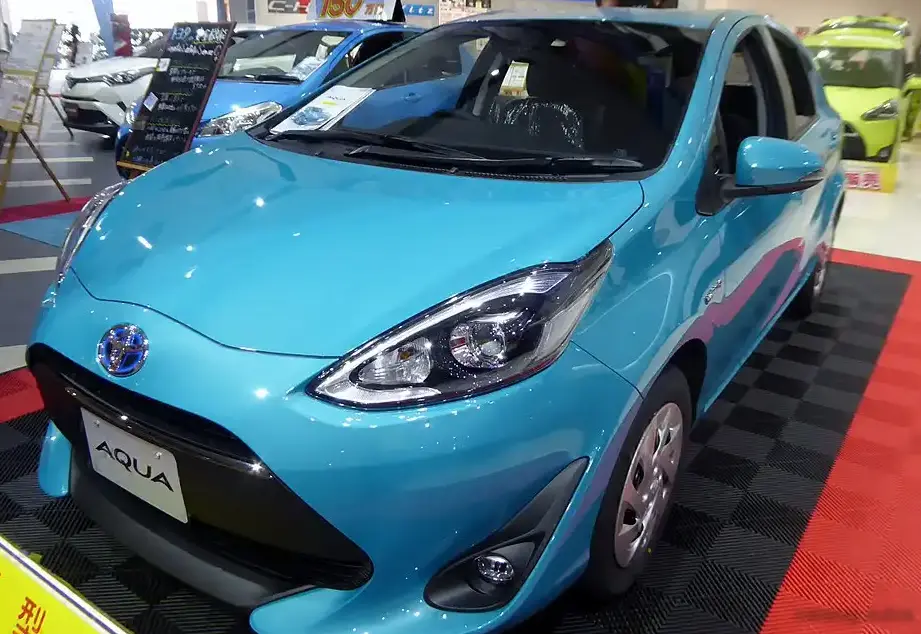
The Toyota Aqua, marketed as the Prius c in North America, is a subcompact hybrid hatchback produced by Toyota Motor Corporation. The first generation, designated Aqua I, was introduced in 2011, with a significant facelift arriving in 2017. This article focuses specifically on the 2017-2021 facelifted Aqua I variant equipped with the 1.5-liter gasoline engine paired with an e-CVT transmission, producing 74 horsepower. This configuration represented a core offering within the Aqua lineup, positioned as an efficient and affordable entry point into Toyota’s hybrid technology. Production of this variant continued until July 2021, when it was superseded by the second-generation Aqua.
Technical Specifications
| Brand | Toyota |
| Model | Aqua |
| Generation | Aqua I (facelift 2017) |
| Type (Engine) | 1.5 (74 Hp) e-CVT |
| Start of production | 2017 |
| End of production | July, 2021 |
| Powertrain Architecture | FHEV (Full Hybrid Electric Vehicle) |
| Body type | Hatchback |
| Seats | 5 |
| Doors | 5 |
| Fuel consumption (combined) | 2.6-2.9 l/100 km (90.5 – 81.1 US mpg, 108.6 – 97.4 UK mpg, 38.5 – 34.5 km/l) |
| Fuel Type | Petrol (Gasoline) |
| Weight-to-power ratio | 14.3 kg/Hp, 69.8 Hp/tonne |
| Weight-to-torque ratio | 9.5 kg/Nm, 104.7 Nm/tonne |
| Battery technology | Nickel-metal hydride (NiMH) |
| Electric motor power | 61 Hp |
| Electric motor Torque | 169 Nm (124.65 lb.-ft.) |
| Electric motor model/code | 1LM |
| Electric motor type | Synchronous |
| Power | 74 Hp @ 4800 rpm |
| Power per litre | 49.5 Hp/l |
| Torque | 111 Nm @ 3600-4400 rpm (81.87 lb.-ft. @ 3600-4400 rpm) |
| Engine layout | Front, Transverse |
| Engine Model/Code | 1NZ-FXE |
| Engine displacement | 1496 cm3 (91.29 cu. in.) |
| Number of cylinders | 4 |
| Engine configuration | Inline |
| Cylinder Bore | 75 mm (2.95 in.) |
| Piston Stroke | 84.7 mm (3.33 in.) |
| Number of valves per cylinder | 4 |
| Fuel injection system | Multi-port manifold injection |
| Engine aspiration | Naturally aspirated engine |
| Valvetrain | VVT |
| Engine oil capacity | 3.7 l (3.91 US qt | 3.26 UK qt) |
| Coolant | 4.5 l (4.76 US qt | 3.96 UK qt) |
| Kerb Weight | 1060-1090 kg (2336.9 – 2403.04 lbs.) |
| Max. weight | 1335-1365 kg (2943.17 – 3009.31 lbs.) |
| Max load | 275 kg (606.27 lbs.) |
| Fuel tank capacity | 36 l (9.51 US gal | 7.92 UK gal) |
| Length | 4050 mm (159.45 in.) |
| Width | 1695 mm (66.73 in.) |
| Height | 1455 mm (57.28 in.) |
| Wheelbase | 2550 mm (100.39 in.) |
| Front track | 1470 mm (57.87 in.) |
| Rear (Back) track | 1460 mm (57.48 in.) |
| Ride height (ground clearance) | 140 mm (5.51 in.) |
| Minimum turning circle (turning diameter) | 9.6 m (31.5 ft.) |
| Drivetrain Architecture | Front wheel drive. FHEV. ICE and electric motor drive front wheels in full electric or mixed mode. |
| Drive wheel | Front wheel drive |
| Number of gears and type of gearbox | automatic transmission e-CVT |
| Front suspension | Independent type McPherson |
| Rear suspension | Torsion |
| Front brakes | Ventilated discs |
| Rear brakes | Drum |
| Assisting systems | ABS (Anti-lock braking system) |
| Steering type | Steering rack and pinion |
| Power steering | Electric Steering |
| Tires size | 185/60 R15 |
| Wheel rims size | 5.5J x 15 |
INTRODUCTION
The 2017 facelift of the Toyota Aqua I represented a refinement of the original model launched in 2011. Designed primarily for the Japanese domestic market (JDM), the Aqua quickly gained popularity for its fuel efficiency and compact size, perfectly suited for navigating crowded urban environments. The 1.5L e-CVT variant was a mainstay of the lineup, offering a balance between affordability and Toyota’s renowned hybrid technology. It was also sold in other markets, including North America as the Prius c, and Australia as the Yaris Hybrid. The facelift brought subtle styling updates, improved interior materials, and enhanced safety features, solidifying the Aqua’s position as a leading subcompact hybrid.
Powertrain & Engine Architecture
At the heart of the Aqua 1.5 e-CVT lies the 1NZ-FXE 1.5-liter inline-four cylinder gasoline engine. This engine is part of Toyota’s NZ engine family, known for its reliability and fuel efficiency. It utilizes a multi-port fuel injection system and Variable Valve Timing (VVT) to optimize performance and economy. The engine produces 74 horsepower at 4800 rpm and 111 Nm (81.87 lb-ft) of torque between 3600-4400 rpm. Crucially, this engine doesn’t directly drive the wheels. Instead, it’s coupled with Toyota’s Hybrid Synergy Drive system. This system incorporates a 61 horsepower electric motor (model 1LM) powered by a nickel-metal hydride (NiMH) battery pack. The e-CVT (electronically controlled continuously variable transmission) seamlessly blends the power from both the engine and the electric motor, providing smooth and efficient acceleration. The e-CVT doesn’t have fixed gears; instead, it uses a planetary gearset to continuously adjust the gear ratio, maximizing efficiency.
Driving Characteristics
The 1.5L e-CVT Aqua delivers a driving experience focused on efficiency rather than outright performance. Acceleration is adequate for city driving, but it’s not particularly brisk. The combined output of the engine and electric motor provides sufficient power for merging onto highways, but passing maneuvers require planning. The e-CVT contributes to a smooth, linear acceleration feel, lacking the distinct gear changes of a traditional automatic transmission. Compared to higher-output versions of the Aqua (not typically available with the e-CVT), this variant offers a more relaxed and economical driving experience. Manual transmission versions, when available in other markets, provided a more engaging driving experience but sacrificed some fuel economy. The e-CVT prioritizes maximizing fuel efficiency, and the car frequently operates in electric-only mode at lower speeds, contributing to its impressive fuel economy figures.
Equipment & Trim Levels
The 2017 facelifted Aqua 1.5 e-CVT typically came standard with features such as air conditioning, power windows, power door locks, and a basic audio system. Safety features included ABS (Anti-lock Braking System) and airbags. Higher trim levels, often denoted with suffixes like “S” or “G”, added features like alloy wheels, a touchscreen infotainment system, automatic climate control, and keyless entry. Interior upholstery was typically cloth, with higher trims offering upgraded fabric or partial leather options. Optional extras included navigation systems, parking sensors, and a rearview camera.
Chassis & Braking
The Aqua I utilizes a front-wheel-drive layout with an independent McPherson strut suspension in the front and a torsion beam suspension in the rear. This suspension setup provides a comfortable ride quality, well-suited for urban roads. The front brakes are ventilated discs, offering good stopping power, while the rear brakes are drums, a cost-saving measure common in this class of vehicle. The steering is rack and pinion with electric power steering, providing light and easy maneuverability. The standard tire size is 185/60 R15, mounted on 5.5J x 15 inch wheels.
Market Reception & Comparison
The Toyota Aqua 1.5 e-CVT was generally well-received by critics for its exceptional fuel economy and practicality. It was praised as an ideal city car, offering low running costs and easy maneuverability. However, some reviewers noted its lack of performance and relatively basic interior. Compared to other trims in the Aqua lineup, the 1.5L e-CVT offered the best fuel economy but the least amount of power. It was positioned as the entry-level hybrid option, appealing to budget-conscious buyers prioritizing efficiency over performance. Competitors included other subcompact hybrids like the Honda Fit Hybrid, but the Aqua consistently stood out for its fuel economy and Toyota’s reputation for reliability.
Legacy
The Toyota Aqua I (facelift 2017) 1.5 e-CVT has proven to be a remarkably reliable vehicle. The Hybrid Synergy Drive system is known for its durability, and the 1NZ-FXE engine is a robust and long-lasting unit. In the used car market, these Aquas are highly sought after for their fuel efficiency and low maintenance costs. While battery replacement may eventually be required, the NiMH battery packs are generally durable and relatively affordable to replace. The Aqua’s success paved the way for the second-generation model and solidified Toyota’s position as a leader in hybrid technology. Its enduring popularity demonstrates the appeal of a practical, efficient, and reliable subcompact hybrid.