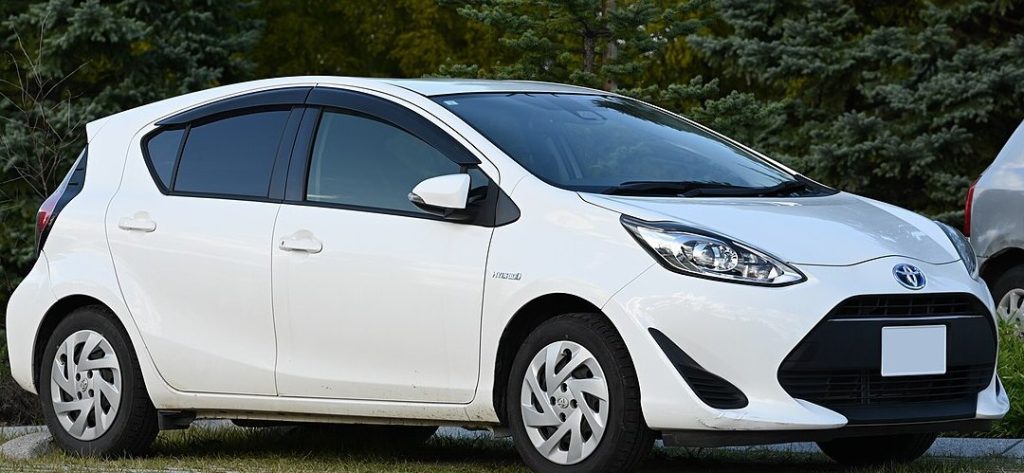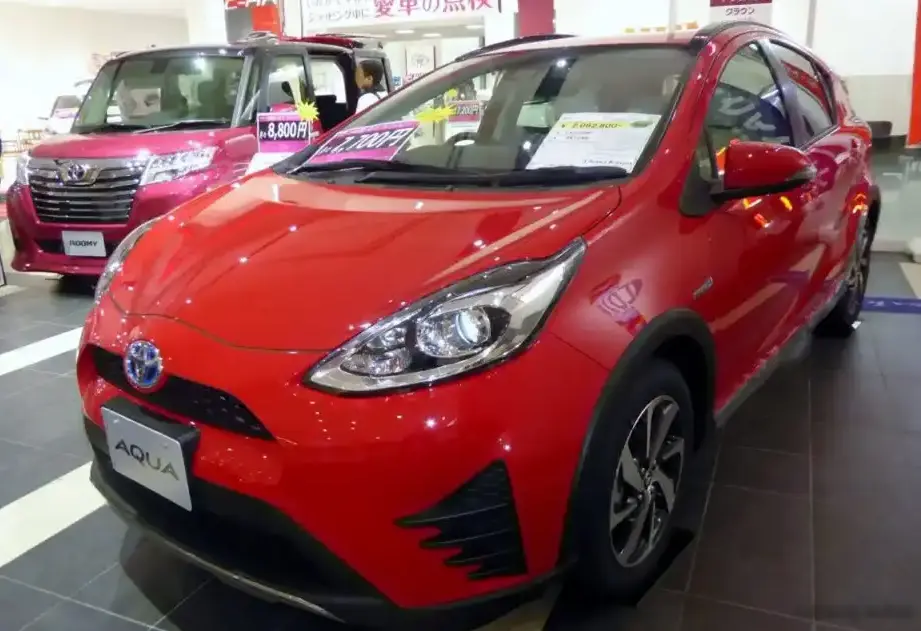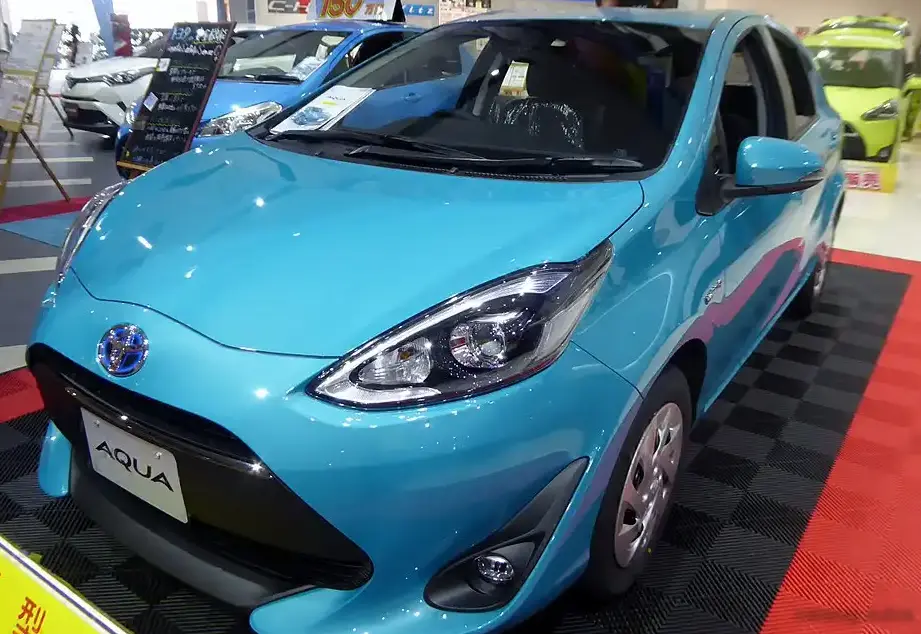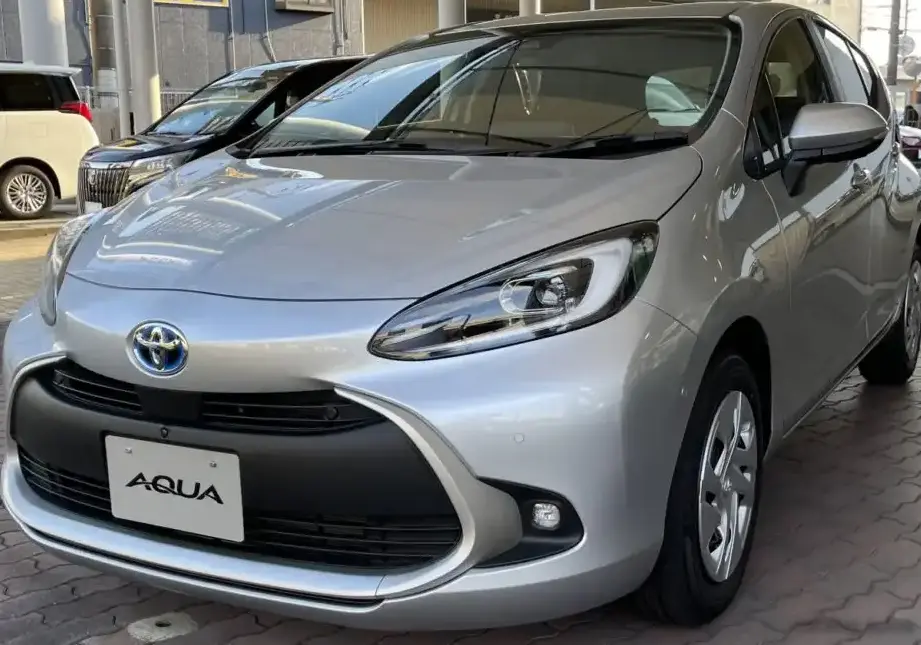
The Toyota Aqua II, specifically the 1.5L (116 Hp) Hybrid e-CVT model, represents a significant evolution in Toyota’s compact hybrid offerings. Introduced in July 2021 and continuing through September 2025, this variant occupies a central position within the second generation Aqua (XP210) lineup. Designed primarily for the Japanese domestic market (JDM) and other Asia-Pacific regions, the Aqua II aimed to provide an affordable and highly fuel-efficient transportation solution, capitalizing on Toyota’s established hybrid technology. This particular configuration, combining a 1.5-liter gasoline engine with an electric motor and an electronically controlled continuously variable transmission (e-CVT), became a popular choice for urban commuters seeking low running costs and environmental responsibility.
Technical Specifications
| Brand | Toyota |
| Model | Aqua |
| Generation | Aqua II |
| Type (Engine) | 1.5L (116 Hp) Hybrid e-CVT |
| Start of production | July, 2021 |
| End of production | September, 2025 |
| Powertrain Architecture | FHEV (Full Hybrid Electric Vehicle) |
| Body type | Hatchback |
| Seats | 5 |
| Doors | 5 |
| Fuel consumption (urban) | 2.73-2.95 l/100 km (86.2 – 79.7 US mpg) |
| Fuel consumption (extra urban) | 2.53-2.77 l/100 km (93 – 84.9 US mpg) |
| Fuel Type | Petrol (Gasoline) |
| Weight-to-power ratio | 9.3 kg/Hp, 107.4 Hp/tonne |
| Weight-to-torque ratio | 9 kg/Nm, 111.1 Nm/tonne |
| Battery technology | Nickel-metal hydride (NiMH) |
| Electric motor power | 80 Hp |
| Electric motor Torque | 141 Nm (104 lb.-ft.) |
| Electric motor model/code | 1NM |
| Electric motor location | Integrated into the transmission |
| Electric motor type | Synchronous |
| System power | 116 Hp |
| Power | 91 Hp @ 5500 rpm |
| Torque | 120 Nm @ 3800-4800 rpm (88.51 lb.-ft. @ 3800-4800 rpm) |
| Engine layout | Front, Transverse |
| Engine Model/Code | M15A-FXE |
| Engine displacement | 1490 cm3 (90.93 cu. in.) |
| Number of cylinders | 3 |
| Engine configuration | Inline |
| Cylinder Bore | 80.5 mm (3.17 in.) |
| Piston Stroke | 97.6 mm (3.84 in.) |
| Fuel injection system | Multi-port manifold injection |
| Engine aspiration | Naturally aspirated engine |
| Kerb Weight | 1080-1130 kg (2380.99 – 2491.22 lbs.) |
| Max. weight | 1405 kg (3097.49 lbs.) |
| Max load | 275-325 kg (606.27 – 716.5 lbs.) |
| Fuel tank capacity | 36 l (9.51 US gal | 7.92 UK gal) |
| Length | 4050 mm (159.45 in.) |
| Width | 1695 mm (66.73 in.) |
| Height | 1485 mm (58.46 in.) |
| Wheelbase | 2600 mm (102.36 in.) |
| Front track | 1480-1490 mm (58.27 – 58.66 in.) |
| Rear (Back) track | 1475-1485 mm (58.07 – 58.46 in.) |
| Ride height (ground clearance) | 140 mm (5.51 in.) |
| Minimum turning circle (turning diameter) | 10.4 m (34.12 ft.) |
| Drivetrain Architecture | Front wheel drive. FHEV. ICE and electric motor drive front wheels. |
| Number of gears and type of gearbox | automatic transmission e-CVT |
| Front suspension | Independent type McPherson |
| Rear suspension | Torsion |
| Front brakes | Ventilated discs |
| Rear brakes | Drum |
| Assisting systems | ABS (Anti-lock braking system) |
| Steering type | Steering rack and pinion |
| Power steering | Electric Steering |
| Tires size | 175/70 R14; 185/65 R15; 195/55 R16 |
| Wheel rims size | 5.5J x 14; 6J x 15; 6J x 16 |
Powertrain & Engine Architecture
At the heart of the Aqua II 1.5L Hybrid lies the M15A-FXE engine, a 1.5-liter inline-3 cylinder gasoline engine. This Atkinson-cycle engine is specifically designed for hybrid applications, prioritizing thermal efficiency over outright power. It utilizes multi-port fuel injection and features a relatively high compression ratio to maximize fuel economy. The engine produces 91 horsepower at 5500 rpm and 120 Nm (88.51 lb.-ft.) of torque between 3800 and 4800 rpm. Crucially, this engine doesn’t directly drive the wheels; it primarily functions as a generator to charge the Nickel-metal hydride (NiMH) battery pack and power the electric motor. The electric motor itself contributes 80 horsepower and 141 Nm (104 lb.-ft.) of torque. The combined system output is 116 horsepower. The e-CVT (electronically controlled continuously variable transmission) seamlessly blends the power from both the engine and the electric motor, providing smooth and efficient acceleration. Unlike traditional CVTs with belts and pulleys, Toyota’s e-CVT uses a planetary gearset to achieve variable ratios, enhancing durability and responsiveness.
Driving Characteristics
The 1.5L Hybrid e-CVT Aqua II delivers a driving experience focused on efficiency and ease of use. Acceleration is adequate for city driving, but not particularly brisk. The e-CVT prioritizes fuel economy, resulting in a somewhat “rubber band” feel during hard acceleration, where engine RPMs rise without a corresponding immediate increase in speed. Compared to potential higher-output variants (not widely available in most markets), this version offers a more relaxed and economical driving experience. The electric motor provides instant torque at low speeds, making it ideal for stop-and-go traffic. The hybrid system automatically switches between electric-only, gasoline-only, and combined modes, optimizing fuel consumption based on driving conditions. The steering is light and precise, making it easy to maneuver in tight urban environments. The suspension is tuned for comfort, absorbing bumps and imperfections in the road reasonably well.
Equipment & Trim Levels
The Aqua II 1.5L Hybrid e-CVT typically came equipped with a respectable array of standard features. These generally included air conditioning, power windows and locks, a touchscreen infotainment system with Bluetooth connectivity, and basic safety features like ABS (Anti-lock Braking System) and airbags. Higher trim levels, often denoted with suffixes like “S” or “Z”, added features such as alloy wheels, a more advanced infotainment system with navigation, automatic climate control, and additional safety technologies like lane departure alert and adaptive cruise control. Interior upholstery was typically cloth, with higher trims offering partial leather options. Optional extras included a pre-collision safety system, parking assist sensors, and a premium audio system.
Chassis & Braking
The Aqua II utilizes a front-wheel-drive layout with an independent McPherson strut suspension in the front and a torsion beam suspension in the rear. This configuration provides a good balance between ride comfort and handling. The front brakes are ventilated discs, offering adequate stopping power, while the rear brakes are drums, a cost-saving measure common in this segment. The electric power steering system provides light and responsive steering feel. The vehicle’s relatively low weight, ranging from 1080 to 1130 kg (2380.99 – 2491.22 lbs.), contributes to its fuel efficiency and nimble handling.
Market Reception & Comparison
The Toyota Aqua II 1.5L Hybrid e-CVT was generally well-received by critics and consumers alike, particularly in markets where fuel efficiency and affordability are paramount. It was praised for its exceptional fuel economy, comfortable ride, and reliable hybrid technology. Compared to other compact hatchbacks in its class, the Aqua II stood out for its superior fuel efficiency and lower emissions. While its performance wasn’t particularly exciting, it was considered adequate for its intended purpose. The NiMH battery technology, while less energy-dense than newer lithium-ion batteries, proved to be durable and reliable. Some critics noted the somewhat basic interior materials and the “rubber band” feel of the e-CVT during hard acceleration.
Legacy
The Toyota Aqua II 1.5L Hybrid e-CVT has established a reputation for long-term reliability and durability. The hybrid powertrain, particularly the e-CVT, has proven to be remarkably robust with proper maintenance. In the used car market, these models continue to be sought after for their fuel efficiency and low running costs. The Aqua II played a significant role in popularizing hybrid technology and demonstrating Toyota’s commitment to environmentally friendly vehicles. Its success paved the way for future generations of Toyota hybrids and helped to establish the brand as a leader in the hybrid vehicle segment.