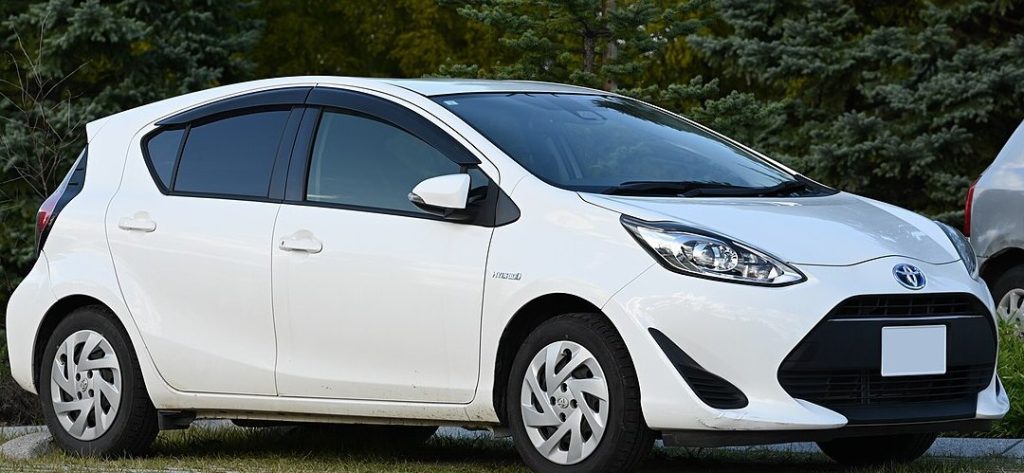
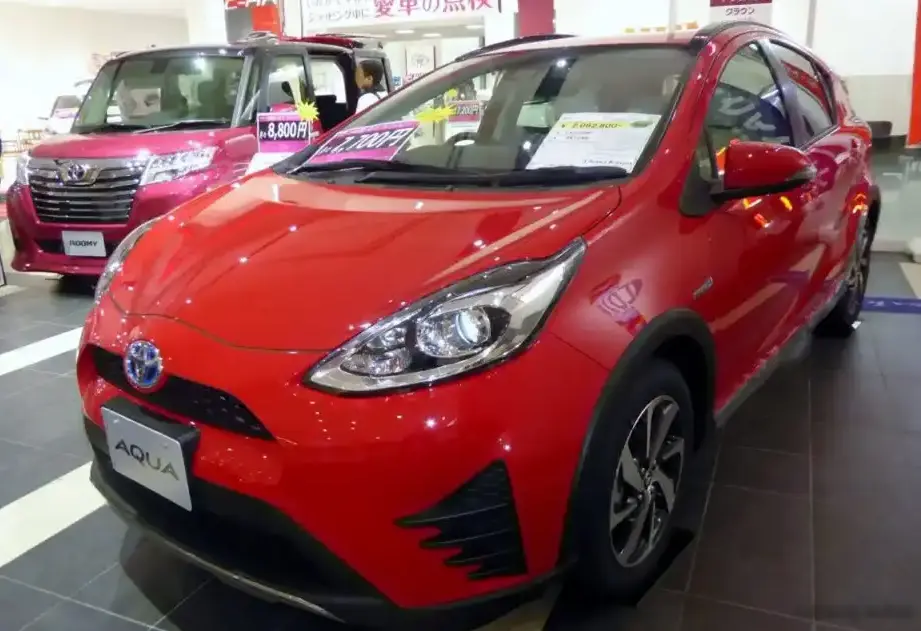
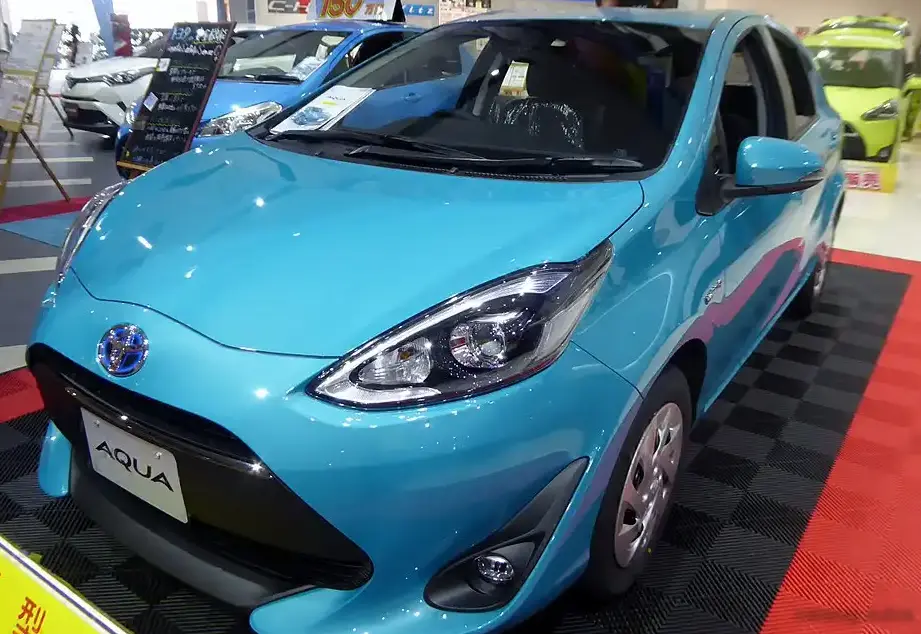
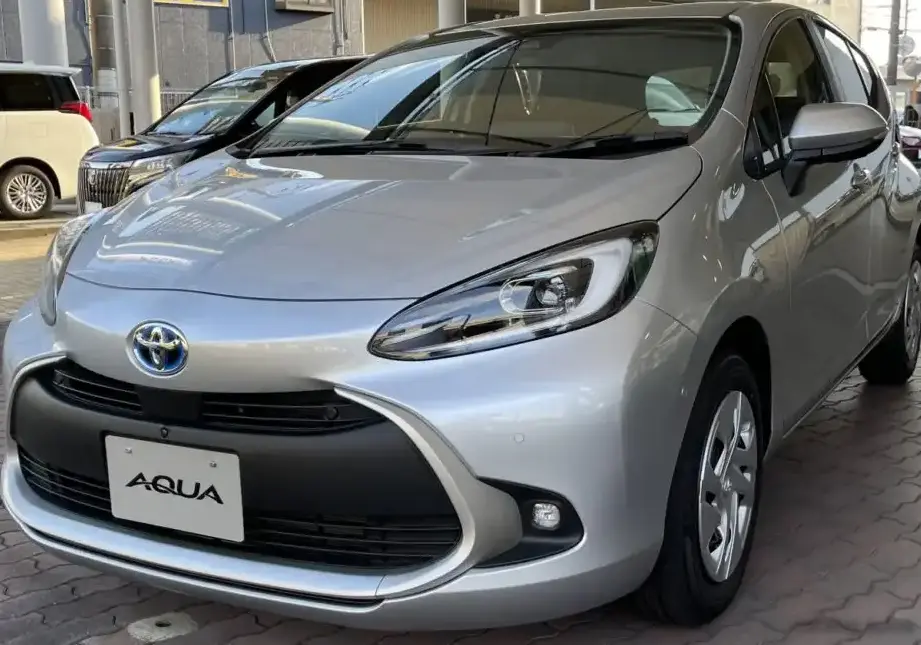
The Toyota Aqua II, specifically the facelift model introduced in September 2025, represents the latest iteration of Toyota’s popular subcompact hybrid hatchback. Positioned as an entry-level offering within the Aqua lineup, the 1.5L (116 Hp) Hybrid E-CVT variant is designed for fuel efficiency and urban practicality. This model builds upon the foundation of the second-generation Aqua (XP210), incorporating styling updates and refinements to the established hybrid powertrain. The Aqua, known as the Prius c in North America during its initial run, has consistently been a strong seller in Japan and other Asian markets, prized for its compact size, low running costs, and Toyota’s reputation for reliability.
Technical Specifications
| Brand | Toyota |
| Model | Aqua |
| Generation | Aqua II (facelift 2025) |
| Type (Engine) | 1.5L (116 Hp) Hybrid E-CVT |
| Start of production | September, 2025 |
| Powertrain Architecture | FHEV (Full Hybrid Electric Vehicle) |
| Body type | Hatchback |
| Seats | 5 |
| Doors | 5 |
| Fuel consumption (urban) | 2.8-2.9 l/100 km (84 – 81.1 US mpg) |
| Fuel consumption (extra urban) | 2.6-2.7 l/100 km (90.5 – 87.1 US mpg) |
| Fuel Type | Petrol (Gasoline) |
| Weight-to-power ratio | 9.7 kg/Hp |
| Weight-to-torque ratio | 9.3 kg/Nm |
| Battery technology | Nickel-metal hydride (NiMH) |
| Battery location | Under the trunk |
| Electric motor power | 80 Hp |
| Electric motor Torque | 141 Nm (104 lb.-ft.) |
| Electric motor model/code | 1NM |
| Electric motor location | Integrated into the transmission |
| Electric motor type | Synchronous |
| System power | 116 Hp |
| Engine Power | 91 Hp @ 5500 rpm |
| Engine Torque | 120 Nm @ 3800-4800 rpm (88.51 lb.-ft. @ 3800-4800 rpm) |
| Engine layout | Front, Transverse |
| Engine Model/Code | M15A-FXE |
| Engine displacement | 1490 cm3 (90.93 cu. in.) |
| Number of cylinders | 3 |
| Engine configuration | Inline |
| Cylinder Bore | 80.5 mm (3.17 in.) |
| Piston Stroke | 97.6 mm (3.84 in.) |
| Fuel injection system | Multi-port manifold injection |
| Engine aspiration | Naturally aspirated engine |
| Kerb Weight | 1120-1140 kg (2469.18 – 2513.27 lbs.) |
| Max. weight | 1415 kg (3119.54 lbs.) |
| Max load | 275-295 kg (606.27 – 650.36 lbs.) |
| Fuel tank capacity | 36 l (9.51 US gal | 7.92 UK gal) |
| Length | 4080 mm (160.63 in.) |
| Width | 1695 mm (66.73 in.) |
| Height | 1485 mm (58.46 in.) |
| Wheelbase | 2600 mm (102.36 in.) |
| Front track | 1480 mm (58.27 in.) |
| Rear track | 1475 mm (58.07 in.) |
| Ride height (ground clearance) | 140 mm (5.51 in.) |
| Minimum turning circle | 10.4 m (34.12 ft.) |
| Drivetrain Architecture | Front wheel drive. FHEV. ICE and electric motor drive front wheels. |
| Number of gears and type of gearbox | automatic transmission E-CVT |
| Front suspension | Coil spring, Independent type McPherson |
| Rear suspension | Coil spring, Torsion |
| Front brakes | Ventilated discs |
| Rear brakes | Drum |
| Steering type | Steering rack and pinion |
| Power steering | Electric Steering |
| Tires size | 195/55 R16 |
| Wheel rims size | 6J x 16 |
INTRODUCTION
The 2025 Toyota Aqua II 1.5L Hybrid E-CVT is a five-door hatchback designed primarily for urban commuting and fuel-conscious drivers. It represents a facelift of the second-generation Aqua, which debuted in 2014 (as the XP210 platform). This update includes revised exterior styling, interior enhancements, and subtle refinements to the hybrid system. The Aqua occupies a crucial position in Toyota’s lineup, offering a more affordable and compact alternative to the Prius, while still delivering the brand’s renowned hybrid technology. It’s a particularly popular choice in Japan, where its small footprint is well-suited to crowded city streets and limited parking spaces.
Powertrain & Engine Architecture
At the heart of the Aqua II 1.5L Hybrid is Toyota’s 1.5-liter M15A-FXE inline-three cylinder gasoline engine. This engine utilizes a multi-port fuel injection system and operates on the Atkinson cycle, prioritizing fuel efficiency over outright power. The engine produces 91 horsepower at 5500 rpm and 120 Nm (88.51 lb-ft) of torque between 3800 and 4800 rpm. Crucially, this engine is paired with Toyota’s Hybrid Synergy Drive system, which incorporates an 80-horsepower electric motor and a nickel-metal hydride (NiMH) battery pack located under the trunk floor. The E-CVT (Electronically controlled Continuously Variable Transmission) seamlessly blends power from the engine and electric motor, optimizing fuel economy and providing smooth acceleration. The system allows for all-electric driving at low speeds and assists the gasoline engine during acceleration and uphill climbs. The battery is charged through regenerative braking and by the engine itself.
Driving Characteristics
The 1.5L Hybrid E-CVT configuration of the Aqua II prioritizes fuel efficiency over sporty performance. Acceleration is adequate for city driving, but it won’t provide the briskness of higher-powered variants. The E-CVT transmission contributes to a smooth and seamless driving experience, with no noticeable gear changes. The electric motor provides instant torque, which helps with initial acceleration from a standstill. In typical urban driving conditions, the Aqua can frequently operate in electric-only mode, further enhancing fuel economy. Compared to a manual transmission version (not typically offered in this configuration), the E-CVT provides greater ease of use, particularly in stop-and-go traffic. However, it lacks the driver engagement and control offered by a manual gearbox. The suspension is tuned for comfort, absorbing bumps and imperfections in the road reasonably well, but it’s not particularly sporty.
Equipment & Trim Levels
The 2025 Aqua II 1.5L Hybrid E-CVT typically comes standard with features such as air conditioning, power windows, power locks, and a basic audio system. Safety features generally include ABS (Anti-lock Braking System), Vehicle Stability Control, and multiple airbags. Higher trim levels may add features like alloy wheels, a touchscreen infotainment system with smartphone integration (Apple CarPlay and Android Auto), a rearview camera, and advanced safety technologies like lane departure alert and automatic emergency braking. Interior upholstery is typically cloth, with options for upgraded materials on higher trims. The dashboard layout is functional and straightforward, prioritizing ease of use.
Chassis & Braking
The Aqua II utilizes a front-wheel-drive layout with a coil spring, independent McPherson strut suspension in the front and a coil spring, torsion beam suspension in the rear. The front brakes are ventilated discs, providing adequate stopping power, while the rear brakes are drums, a cost-saving measure common in this segment. The electric power steering provides light and easy steering feel, making it maneuverable in tight spaces. The relatively lightweight construction of the vehicle (1120-1140 kg / 2469.18 – 2513.27 lbs.) contributes to its fuel efficiency and nimble handling.
Market Reception & Comparison
The Toyota Aqua has consistently received positive reviews for its fuel efficiency, reliability, and practicality. Critics often praise its compact size and ease of parking, making it ideal for urban environments. Compared to other subcompact hybrids, the Aqua stands out for its Toyota’s reputation for long-term durability. While its performance isn’t thrilling, it’s sufficient for most daily driving needs. The E-CVT transmission is generally well-regarded for its smoothness and efficiency. Fuel economy figures of 2.8-2.9 l/100 km (84 – 81.1 US mpg) are highly competitive in its class. Compared to a larger hybrid like the Prius, the Aqua offers a lower price point and a more manageable size, but with less interior space and cargo capacity.
Legacy
The Toyota Aqua, and specifically the 1.5L Hybrid E-CVT variant, has established a strong reputation for reliability and longevity. Toyota’s hybrid technology has proven to be exceptionally durable, and the Aqua is known for requiring minimal maintenance. On the used car market, well-maintained Aqua models hold their value relatively well, due to their fuel efficiency and Toyota’s brand reputation. The powertrain is generally considered to be robust and capable of handling high mileage with proper servicing. The Aqua’s success has demonstrated the demand for affordable and fuel-efficient hybrid vehicles, paving the way for Toyota to expand its hybrid offerings in the subcompact segment.