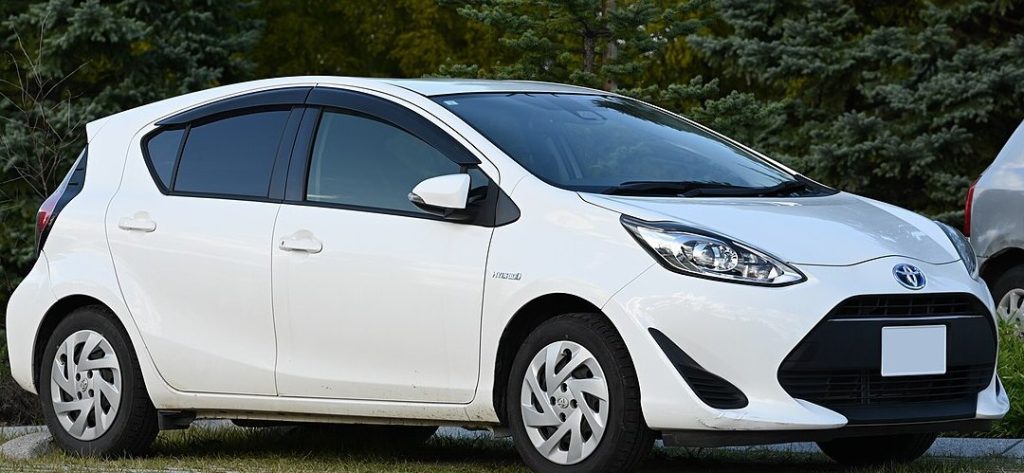
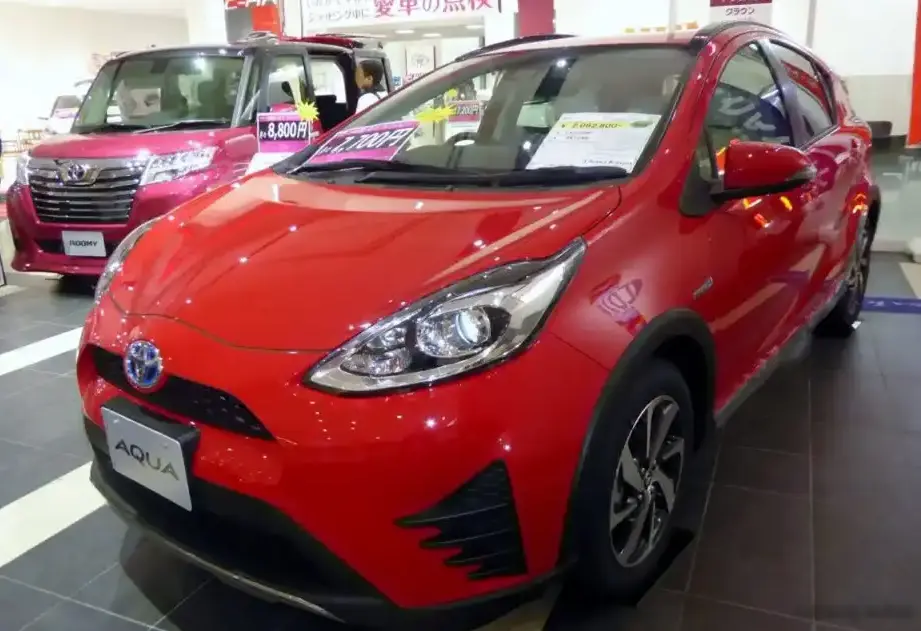
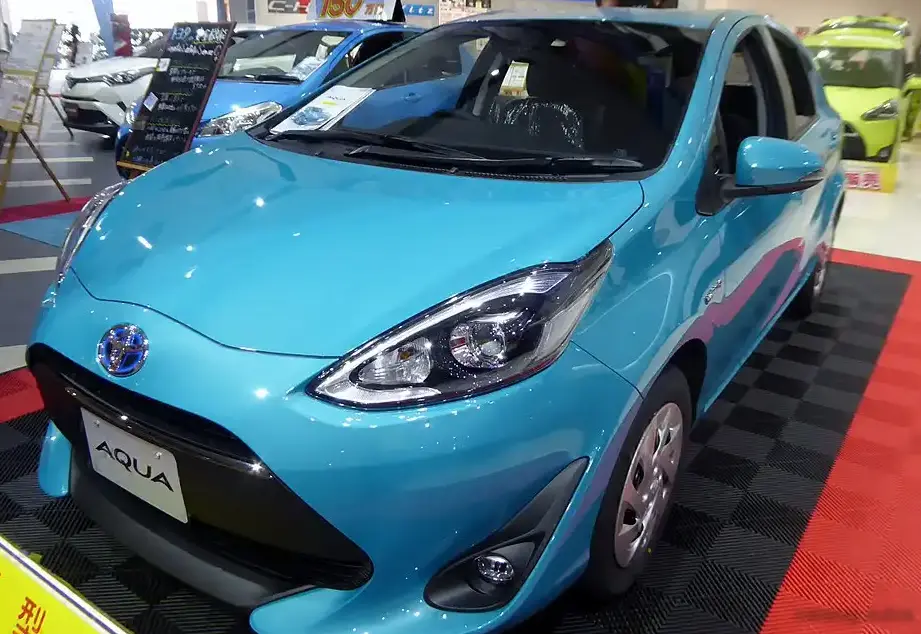
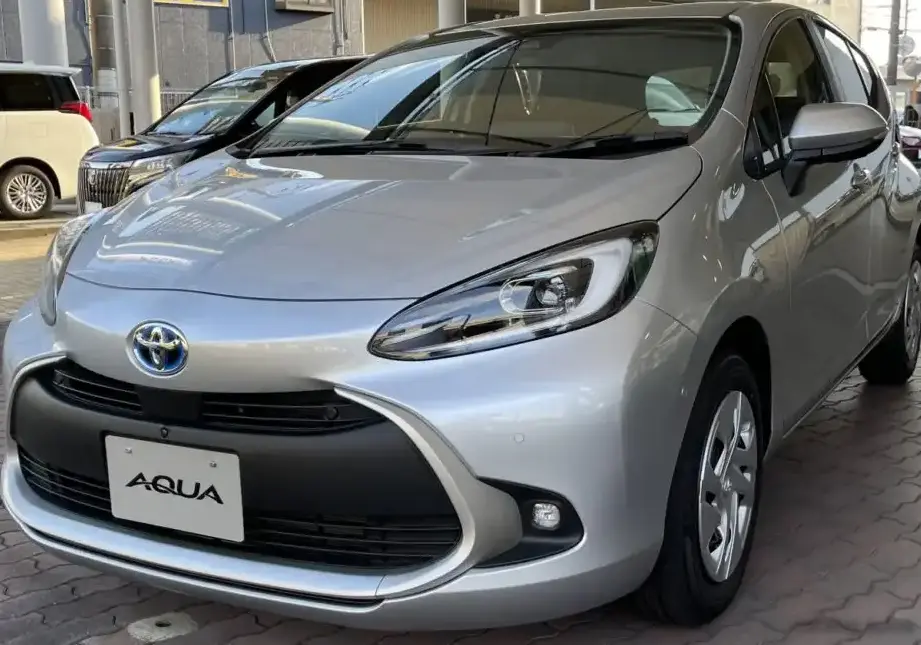
The Toyota Aqua II (facelift, released in September 2025) represents the latest iteration of Toyota’s popular subcompact hybrid hatchback, marketed globally but with a particularly strong presence in the Asian market, including Japan where it’s known as the Aqua. This version builds upon the success of the second-generation Aqua (XP210), offering updated styling, enhanced technology, and a refined powertrain. The 1.5L (116 Hp) Hybrid E-Four E-CVT variant occupies a mid-range position within the Aqua II lineup, offering all-wheel drive capability and improved fuel efficiency compared to the base models, while remaining more accessible than higher-spec trims. It’s designed to appeal to buyers seeking a practical, economical, and technologically advanced urban vehicle.
Technical Specifications
| Brand | Toyota |
| Model | Aqua |
| Generation | Aqua II (facelift 2025) |
| Type (Engine) | 1.5L (116 Hp) Hybrid E-Four E-CVT |
| Start of production | September, 2025 |
| Powertrain Architecture | FHEV (Full Hybrid Electric Vehicle) |
| Body type | Hatchback |
| Seats | 5 |
| Doors | 5 |
| Fuel consumption (economy) – urban (WLTC) | 3.1 l/100 km (75.9 US mpg, 91.1 UK mpg, 32.3 km/l) |
| Fuel consumption (economy) – extra urban (WLTC) | 3.2 l/100 km (73.5 US mpg, 88.3 UK mpg, 31.3 km/l) |
| Fuel Type | Petrol (Gasoline) |
| Weight-to-power ratio | 10.5 kg/Hp, 95.1 Hp/tonne |
| Weight-to-torque ratio | 10.2 kg/Nm, 98.4 Nm/tonne |
| Battery technology | Nickel-metal hydride (NiMH) |
| Battery location | Under the trunk |
| Electric motor power (1) | 80 Hp |
| Electric motor Torque (1) | 141 Nm (104 lb.-ft.) |
| Electric motor model/code (1) | 1NM |
| Electric motor location (1) | Integrated into the transmission |
| Electric motor type (1) | Synchronous |
| Electric motor power (2) | 6.4 Hp |
| Electric motor Torque (2) | 52 Nm (38.35 lb.-ft.) |
| Electric motor model/code (2) | 1MM |
| Electric motor location (2) | Rear axle, Transverse |
| Electric motor type (2) | Asynchronous |
| System power | 116 Hp |
| Power | 91 Hp @ 5500 rpm |
| Power per litre | 61.1 Hp/l |
| Torque | 120 Nm @ 3800-4800 rpm (88.51 lb.-ft. @ 3800-4800 rpm) |
| Engine layout | Front, Transverse |
| Engine Model/Code | M15A-FXE |
| Engine displacement | 1490 cm3 (90.93 cu. in.) |
| Number of cylinders | 3 |
| Engine configuration | Inline |
| Cylinder Bore | 80.5 mm (3.17 in.) |
| Piston Stroke | 97.6 mm (3.84 in.) |
| Fuel injection system | Multi-port manifold injection |
| Engine aspiration | Naturally aspirated engine |
| Kerb Weight | 1220-1230 kg (2689.64 – 2711.69 lbs.) |
| Max. weight | 1505 kg (3317.96 lbs.) |
| Max load | 275-285 kg (606.27 – 628.32 lbs.) |
| Fuel tank capacity | 36 l (9.51 US gal | 7.92 UK gal) |
| Length | 4080 mm (160.63 in.) |
| Width | 1695 mm (66.73 in.) |
| Height | 1505 mm (59.25 in.) |
| Wheelbase | 2600 mm (102.36 in.) |
| Front track | 1480 mm (58.27 in.) |
| Rear (Back) track | 1485 mm (58.46 in.) |
| Ride height (ground clearance) | 155 mm (6.1 in.) |
| Minimum turning circle (turning diameter) | 10.4 m (34.12 ft.) |
| Drivetrain Architecture | An Internal combustion engine (ICE) drives the front wheels, one electric motor drives the front wheels, one electric motor drives the rear wheels. There is an ability for running in full electric or mixed mode. |
| Drive wheel | All wheel drive (4×4) |
| Number of gears and type of gearbox | automatic transmission E-CVT |
| Front suspension | Coil spring, Independent type McPherson |
| Rear suspension | Double wishbone |
| Front brakes | Ventilated discs |
| Rear brakes | Drum |
| Assisting systems | ABS (Anti-lock braking system) |
| Steering type | Steering rack and pinion |
| Power steering | Electric Steering |
| Tires size | 195/55 R16 |
| Wheel rims size | 6J x 16 |
Powertrain & Engine Architecture
The Aqua II 1.5L Hybrid E-Four utilizes Toyota’s fourth-generation Hybrid Synergy Drive system. The core of the powertrain is the M15A-FXE 1.5-liter three-cylinder Atkinson-cycle gasoline engine. This engine is known for its thermal efficiency, prioritizing fuel economy over outright power. It produces 91 horsepower at 5500 rpm and 120 Nm of torque between 3800 and 4800 rpm. The engine employs multi-port fuel injection for precise fuel delivery. Supplementing the gasoline engine are two electric motors. The primary motor (1NM) is integrated with the E-CVT (Electronically controlled Continuously Variable Transmission) and delivers 80 horsepower and 141 Nm of torque. A second, smaller electric motor (1MM) located on the rear axle provides on-demand all-wheel drive capability, adding 6.4 horsepower and 52 Nm of torque. The combined system output is 116 horsepower. The Nickel-metal hydride (NiMH) battery pack is positioned under the trunk floor, minimizing impact on passenger space. The E-CVT, a key component of Toyota’s hybrid system, provides seamless and efficient power delivery without fixed gear ratios.
Driving Characteristics
The 1.5L Hybrid E-Four offers a comfortable and efficient driving experience, particularly well-suited for urban environments. The E-CVT provides smooth acceleration, although it lacks the responsiveness of a traditional automatic transmission. The all-wheel-drive system enhances traction in inclement weather conditions, providing added confidence. While 116 horsepower isn’t substantial, the electric motors provide instant torque, making the Aqua feel surprisingly lively around town. Compared to the front-wheel-drive Aqua variants, the E-Four model experiences a slight weight increase due to the rear motor and associated components, which marginally impacts acceleration. The focus is clearly on fuel economy; the Aqua II achieves impressive figures of 3.1 l/100 km urban and 3.2 l/100 km extra-urban (WLTC cycle). It doesn’t offer the sporty driving dynamics of some competitors, but prioritizes practicality and efficiency.
Equipment & Trim Levels
The 1.5L Hybrid E-Four trim typically includes standard features such as automatic climate control, a touchscreen infotainment system with smartphone integration (Apple CarPlay and Android Auto), Toyota Safety Sense (a suite of advanced driver-assistance systems including pre-collision system, lane departure alert, and adaptive cruise control), and power windows/locks. Interior upholstery is typically cloth, with options for upgraded materials available. Optional extras often include a premium audio system, navigation system, and keyless entry. The facelifted 2025 model incorporates updated interior trim and potentially revised infotainment software compared to earlier Aqua II versions.
Chassis & Braking
The Aqua II utilizes a front McPherson strut suspension and a rear double-wishbone suspension, providing a comfortable ride quality. The E-Four variant may feature slightly stiffer spring rates to compensate for the added weight of the rear electric motor. Front brakes are ventilated discs, providing adequate stopping power, while rear brakes are drums, a cost-saving measure common in this vehicle segment. The electric power steering offers light and precise steering feel. The vehicle’s relatively low curb weight (1220-1230 kg) contributes to its nimble handling.
Market Reception & Comparison
The Toyota Aqua has consistently been a popular choice in its segment, praised for its fuel efficiency, reliability, and practicality. The 1.5L Hybrid E-Four variant appeals to buyers who prioritize all-wheel drive capability and enhanced fuel economy. Critics generally acknowledge the Aqua’s strengths but note its modest performance and somewhat basic interior appointments. Compared to other hybrid hatchbacks, the Aqua often stands out for its competitive pricing and Toyota’s reputation for reliability. The E-Four system adds a premium over the standard front-wheel-drive models, but provides a compelling value proposition for those living in regions with challenging weather conditions.
Legacy
Toyota’s Hybrid Synergy Drive system has proven to be exceptionally reliable, and the M15A-FXE engine is expected to maintain that reputation. The Aqua II, including the 1.5L Hybrid E-Four variant, is anticipated to hold its value well in the used car market due to its fuel efficiency and Toyota’s brand image. The E-Four system, while relatively simple in its implementation, provides a practical and effective all-wheel-drive solution for a subcompact vehicle. As hybrid technology continues to evolve, the Aqua II represents a significant step towards more sustainable and efficient transportation.