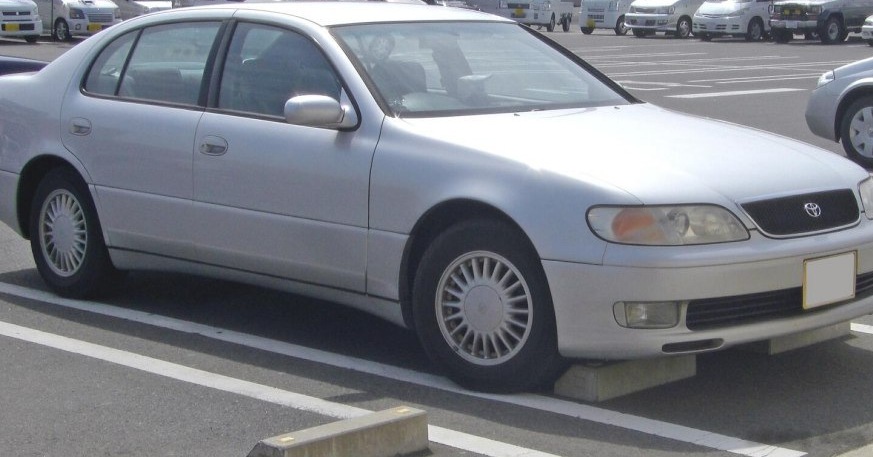
The Toyota Aristo, known as the Lexus GS in North America and other markets, represented Toyota’s foray into the luxury sedan segment. The S14 generation, produced from 1991 to 1997, was the second iteration of the Aristo, building upon the success of the initial model. The 3.0 i 24V variant, equipped with the 2JZ-GE engine and a four-speed automatic transmission, occupied a significant position in the Aristo lineup, offering a balance of performance and refinement. It was positioned as a step up from the base 2.5-liter models, appealing to buyers seeking a more powerful and luxurious experience without the higher price tag of the flagship models.
Technical Specifications
| Brand | Toyota |
| Model | Aristo |
| Generation | Aristo (S14) |
| Type (Engine) | 3.0 i 24V (230 Hp) |
| Start of production | 1991 |
| End of production | 1997 |
| Powertrain Architecture | Internal Combustion engine |
| Body type | Sedan |
| Seats | 5 |
| Doors | 4 |
| Fuel consumption (combined) | 9.3 l/100 km (25.3 US mpg, 30.4 UK mpg, 10.8 km/l) |
| Fuel Type | Petrol (Gasoline) |
| Weight-to-power ratio | 6.8 kg/Hp, 146.5 Hp/tonne |
| Weight-to-torque ratio | 5.5 kg/Nm, 180.9 Nm/tonne |
| Power | 230 Hp @ 6000 rpm |
| Power per litre | 76.7 Hp/l |
| Torque | 284 Nm @ 4800 rpm (209.47 lb.-ft. @ 4800 rpm) |
| Engine layout | Front, Longitudinal |
| Engine Model/Code | 2JZ-GE |
| Engine displacement | 2997 cm3 (182.89 cu. in.) |
| Number of cylinders | 6 |
| Engine configuration | Inline |
| Cylinder Bore | 86 mm (3.39 in.) |
| Piston Stroke | 86 mm (3.39 in.) |
| Compression ratio | 10.1:1 |
| Number of valves per cylinder | 4 |
| Fuel injection system | Multi-port manifold injection |
| Engine aspiration | Naturally aspirated engine |
| Valvetrain | DOHC |
| Engine oil capacity | 5.4 l (5.71 US qt | 4.75 UK qt) |
| Coolant | 7.7 l (8.14 US qt | 6.78 UK qt) |
| Kerb Weight | 1570 kg (3461.26 lbs.) |
| Max. weight | 1845 kg (4067.53 lbs.) |
| Max load | 275 kg (606.27 lbs.) |
| Trunk (boot) space – minimum | 404 l (14.27 cu. ft.) |
| Fuel tank capacity | 80 l (21.13 US gal | 17.6 UK gal) |
| Length | 4865 mm (191.54 in.) |
| Width | 1795 mm (70.67 in.) |
| Height | 1420 mm (55.91 in.) |
| Wheelbase | 2780 mm (109.45 in.) |
| Front track | 1535 mm (60.43 in.) |
| Rear (Back) track | 1510 mm (59.45 in.) |
| Drivetrain Architecture | Rear wheel drive |
| Number of gears and type of gearbox | 4 gears, automatic transmission |
| Front suspension | Double wishbone |
| Rear suspension | Double wishbone |
| Front brakes | Ventilated discs |
| Rear brakes | Ventilated discs |
| Assisting systems | ABS (Anti-lock braking system) |
| Steering type | Steering rack and pinion |
| Tires size | 215/65 R15 |
Powertrain & Engine Architecture
The heart of the Aristo 3.0 i was the 2JZ-GE, a 3.0-liter inline-six engine. This engine was a naturally aspirated variant of the renowned 2JZ family, known for its robustness and potential for modification. The 2JZ-GE featured a cast iron block, aluminum cylinder head with dual overhead camshafts (DOHC), and four valves per cylinder. Fuel delivery was handled by a multi-port fuel injection system, ensuring precise fuel metering for optimal performance and efficiency. The engine produced 230 horsepower at 6000 rpm and 284 Nm (209.47 lb-ft) of torque at 4800 rpm. Paired with this engine was a four-speed automatic transmission, designed for smooth and comfortable shifts. This transmission, while not offering the driver engagement of a manual, was well-suited to the Aristo’s luxury-oriented character.
Driving Characteristics
The 3.0 i automatic Aristo offered a refined and comfortable driving experience. While not a sports car, the 2JZ-GE provided ample power for effortless cruising and confident overtaking. The automatic transmission, while smooth, did result in some power loss compared to the available manual transmission. The gear ratios were tuned for relaxed highway driving, with a focus on fuel efficiency rather than outright acceleration. Compared to the base 2.5-liter models, the 3.0 i felt noticeably more responsive, particularly at higher speeds. However, it lacked the raw performance of the later turbocharged variants, such as the 3.0 Twin Turbo.
Equipment & Trim Levels
The Aristo 3.0 i typically came well-equipped, reflecting its position as a luxury vehicle. Standard features often included power windows, power locks, air conditioning, a high-quality sound system, and comfortable cloth upholstery. Higher trim levels offered upgrades such as leather seats, woodgrain interior trim, a sunroof, and more advanced audio systems. Optional extras could include a navigation system (a relatively new feature at the time), automatic climate control, and upgraded wheels. The interior design emphasized comfort and spaciousness, with a focus on creating a relaxing environment for both driver and passengers.
Chassis & Braking
The Aristo S14 utilized a double wishbone suspension system both front and rear, providing a comfortable ride and good handling characteristics. The suspension was tuned for a balance between comfort and stability, prioritizing a smooth ride over aggressive cornering. Braking duties were handled by ventilated disc brakes on all four wheels, providing adequate stopping power for the vehicle’s weight and performance. An Anti-lock Braking System (ABS) was standard, enhancing safety by preventing wheel lockup during hard braking. The steering system employed a rack and pinion setup, offering precise and responsive steering feel.
Market Reception & Comparison
The Toyota Aristo, and specifically the 3.0 i variant, was generally well-received by automotive critics. It was praised for its smooth ride, refined interior, and powerful engine. However, some critics noted that the automatic transmission could feel somewhat sluggish, and the car lacked the sporty handling of some of its European competitors. Compared to the 2.5-liter models, the 3.0 i offered a significant performance upgrade, justifying its higher price. In terms of fuel economy, the 3.0 i was reasonably efficient for its size and power, achieving around 9.3 l/100 km (25.3 US mpg). Reliability was also a strong point, with the 2JZ-GE engine being known for its durability.
Legacy
The Toyota Aristo S14 3.0 i has developed a loyal following among enthusiasts. The 2JZ-GE engine is highly regarded for its reliability and potential for modification, making it a popular choice for engine swaps and performance upgrades. The car’s comfortable ride, spacious interior, and understated luxury have also contributed to its enduring appeal. In the used car market, well-maintained examples of the Aristo 3.0 i are sought after by collectors and enthusiasts, commanding a premium price. The S14 generation Aristo, and the 3.0 i variant in particular, represents a significant chapter in Toyota’s history, showcasing the company’s ability to produce a truly refined and capable luxury sedan.