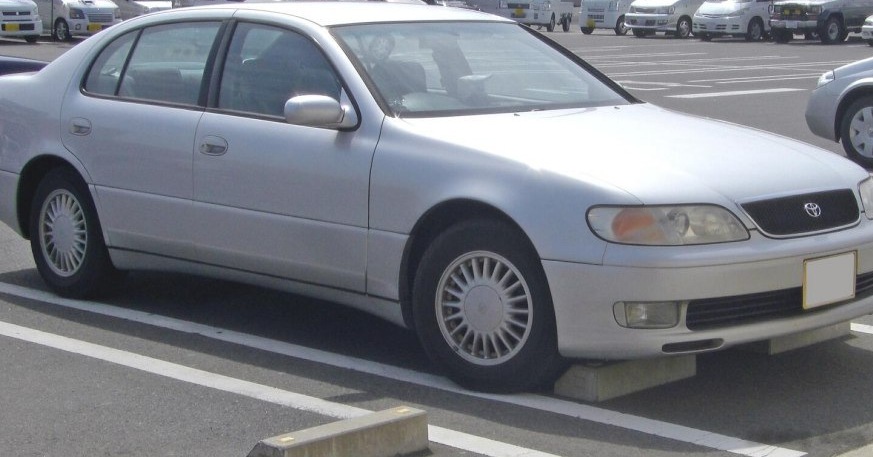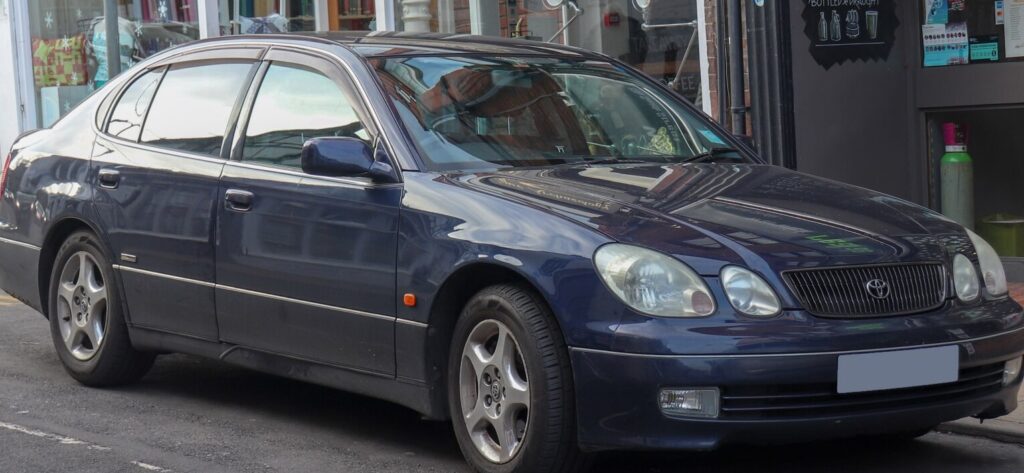
The Toyota Aristo S16, specifically the 3.0 i 24V Turbo variant, represents a significant offering from Toyota’s luxury and performance lineage during its 1997-2005 production run. Positioned as a flagship sedan primarily for the Japanese domestic market (JDM), the Aristo aimed to compete with established European luxury brands. This particular iteration, powered by the 2JZ-GTE engine and paired with a four-speed automatic transmission, occupied a performance-oriented niche within the Aristo lineup, offering a blend of refinement and spirited driving. While never officially sold in the United States, the Aristo S16 has gained a following among enthusiasts for its robust engineering and tuning potential.
Technical Specifications
| Brand | Toyota |
| Model | Aristo |
| Generation | Aristo (S16) |
| Type (Engine) | 3.0 i 24V Turbo (280 Hp) |
| Start of production | August, 1997 |
| End of production | July, 2005 |
| Powertrain Architecture | Internal Combustion engine |
| Body type | Sedan |
| Seats | 5 |
| Doors | 4 |
| Fuel consumption (combined) | 11.4 l/100 km (20.6 US mpg, 24.8 UK mpg, 8.8 km/l) |
| Fuel Type | Petrol (Gasoline) |
| Weight-to-power ratio | 6 kg/Hp, 166.7 Hp/tonne |
| Weight-to-torque ratio | 3.9 kg/Nm, 257.1 Nm/tonne |
| Power | 280 Hp @ 5600 rpm |
| Power per litre | 93.4 Hp/l |
| Torque | 432 Nm @ 3600 rpm (318.63 lb.-ft. @ 3600 rpm) |
| Engine layout | Front, Longitudinal |
| Engine Model/Code | 2JZ-GTE |
| Engine displacement | 2997 cm3 (182.89 cu. in.) |
| Number of cylinders | 6 |
| Engine configuration | Inline |
| Cylinder Bore | 86 mm (3.39 in.) |
| Piston Stroke | 86 mm (3.39 in.) |
| Compression ratio | 8.5:1 |
| Number of valves per cylinder | 4 |
| Fuel injection system | Multi-port manifold injection |
| Engine aspiration | Turbocharger |
| Valvetrain | DOHC |
| Engine oil capacity | 5.8 l (6.13 US qt | 5.1 UK qt) |
| Coolant | 8.5 l (8.98 US qt | 7.48 UK qt) |
| Kerb Weight | 1680 kg (3703.77 lbs.) |
| Max. weight | 1955 kg (4310.04 lbs.) |
| Max load | 275 kg (606.27 lbs.) |
| Trunk (boot) space – minimum | 515 l (18.19 cu. ft.) |
| Fuel tank capacity | 75 l (19.81 US gal | 16.5 UK gal) |
| Length | 4865 mm (191.54 in.) |
| Width | 1800 mm (70.87 in.) |
| Height | 1435 mm (56.5 in.) |
| Wheelbase | 2800 mm (110.24 in.) |
| Front track | 1535 mm (60.43 in.) |
| Rear (Back) track | 1515 mm (59.65 in.) |
| Drivetrain Architecture | Rear wheel drive |
| Number of gears and type of gearbox | 4 gears, automatic transmission |
| Front suspension | Double wishbone |
| Rear suspension | Double wishbone |
| Front brakes | Ventilated discs |
| Rear brakes | Disc |
| Assisting systems | ABS (Anti-lock braking system) |
| Steering type | Steering rack and pinion |
| Power steering | Hydraulic Steering |
| Tires size | 225/55 R16 |
Powertrain & Engine Architecture
The heart of the Aristo 3.0 i Turbo is the 2JZ-GTE, a 3.0-liter inline-six engine renowned for its durability and tuning potential. This engine utilizes a sequential twin-turbocharger system, employing two smaller turbochargers instead of a single large one. This configuration minimizes turbo lag and provides a broader, more usable powerband. The 2JZ-GTE features a cast iron block, aluminum cylinder head with four valves per cylinder (DOHC), and multi-port fuel injection. The 8.5:1 compression ratio, while relatively modest, allows for safe and reliable operation with boost. The four-speed automatic transmission, while not as sporty as a manual, was designed to handle the engine’s substantial torque output. It features electronically controlled torque converter lock-up for improved fuel efficiency at cruising speeds.
Driving Characteristics
The 280 horsepower and 318 lb-ft of torque delivered by the 2JZ-GTE, coupled with the automatic transmission, resulted in a smooth and relatively quick driving experience. While not as aggressively geared as a manual transmission variant would be, the automatic provided effortless acceleration in everyday driving situations. The turbocharger system provided a noticeable surge of power in the mid-range, making overtaking maneuvers easy. Compared to the naturally aspirated Aristo variants, the 3.0 i Turbo offered a significant performance advantage. However, it wasn’t as raw or engaging to drive as a manual transmission equipped model. The automatic transmission, while reliable, could feel somewhat dated by modern standards, with noticeable shifts.
Equipment & Trim Levels
The Aristo 3.0 i Turbo typically came well-equipped, reflecting its positioning as a luxury vehicle. Standard features included leather upholstery, power-adjustable front seats, a premium sound system, automatic climate control, and woodgrain interior trim. Optional extras included a navigation system, upgraded audio components, and a sunroof. The interior design emphasized comfort and refinement, with a focus on high-quality materials and a spacious cabin. The exterior styling was understated and elegant, with a focus on clean lines and a sophisticated appearance.
Chassis & Braking
The Aristo S16 utilized a double wishbone suspension system at both the front and rear, providing a comfortable ride and good handling characteristics. The suspension was tuned for a balance between comfort and control, prioritizing a smooth ride over outright sportiness. The braking system consisted of ventilated discs at the front and solid discs at the rear, supplemented by an Anti-lock Braking System (ABS). While adequate for the vehicle’s weight and performance, the braking system wasn’t particularly noteworthy compared to other luxury sedans of the era.
Market Reception & Comparison
The Toyota Aristo 3.0 i Turbo was generally well-received in Japan, praised for its performance, refinement, and reliability. Critics noted the engine’s smooth power delivery and the comfortable ride quality. However, some criticized the automatic transmission for lacking the engagement of a manual gearbox. Compared to other Aristo trims, the 3.0 i Turbo offered a significant performance upgrade, but at a higher price point. The naturally aspirated variants were more fuel-efficient and affordable, while appealing to buyers prioritizing comfort over outright speed. The 2JZ-GTE engine was also compared favorably to other inline-six engines of the time, such as the BMW M30 and M50 series.
Legacy
The Toyota Aristo S16 3.0 i Turbo has developed a strong following among car enthusiasts, particularly those interested in JDM vehicles. The 2JZ-GTE engine is highly regarded for its robustness and potential for modification, making it a popular choice for engine swaps and performance upgrades. The Aristo’s relatively simple construction and readily available parts contribute to its appeal. Today, well-maintained examples of the Aristo 3.0 i Turbo are becoming increasingly collectible, with prices reflecting their rarity and desirability. The car remains a testament to Toyota’s engineering prowess and its commitment to building high-quality, reliable vehicles.