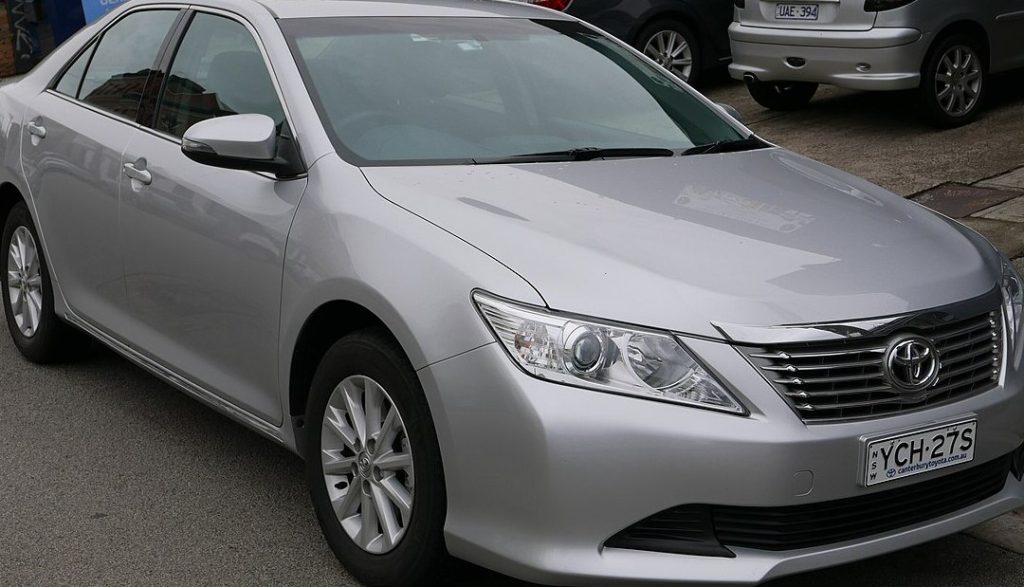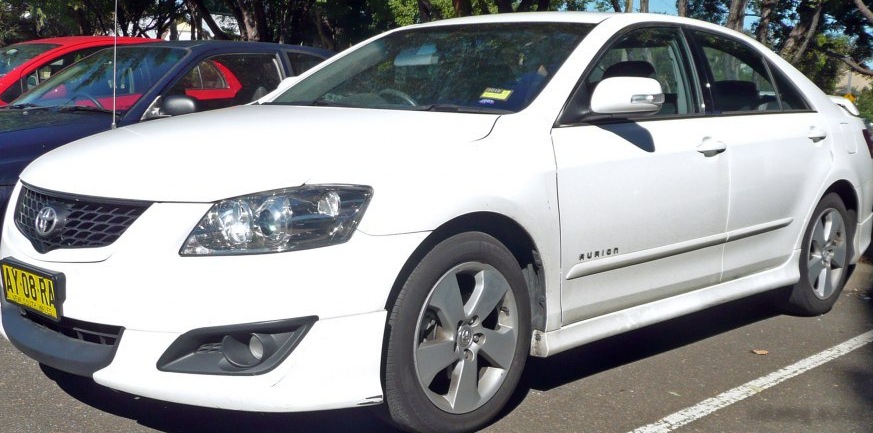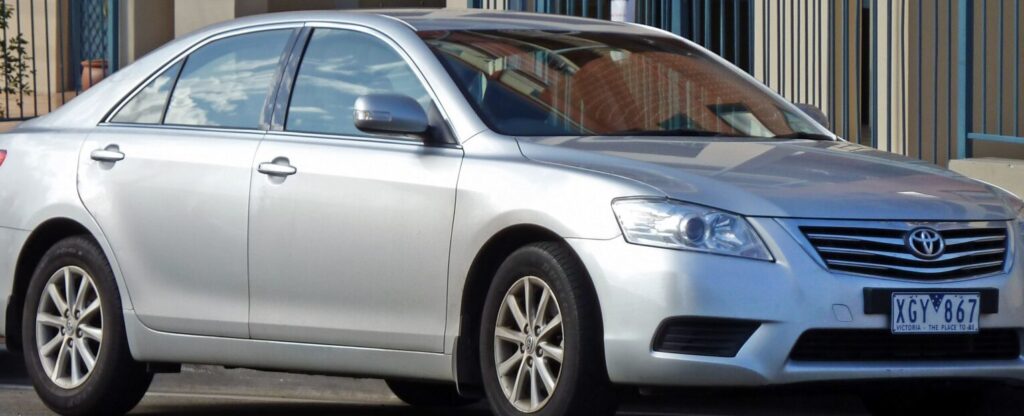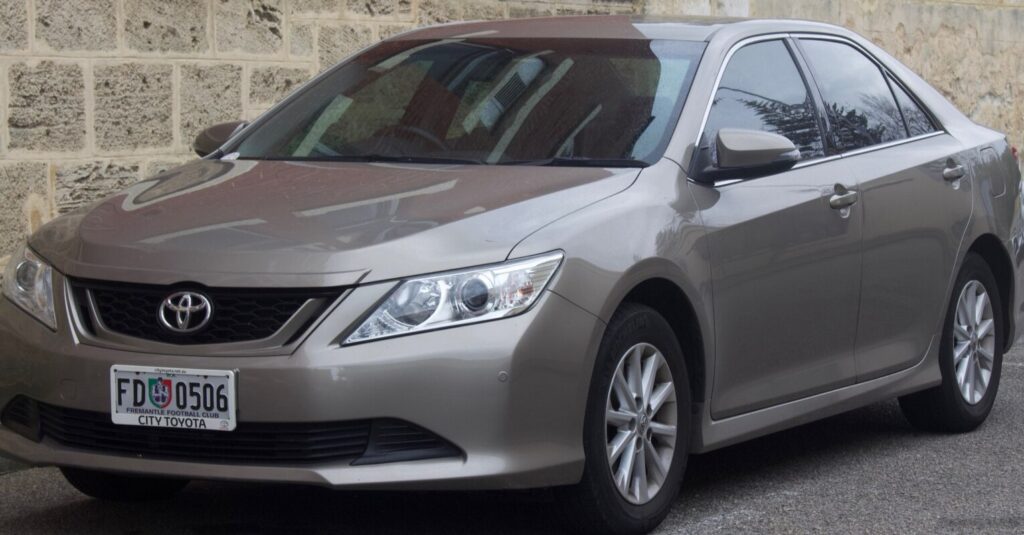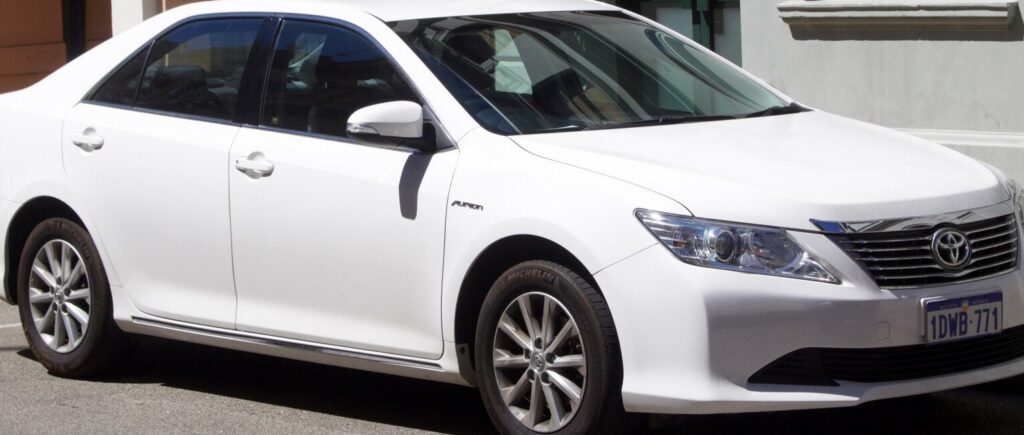
The Toyota Aurion II (XV50) 3.5 V6 Automatic, produced between April 2012 and 2014, represented a significant iteration of Toyota’s full-size sedan offering, primarily targeted towards the Australian and Middle Eastern markets. Positioned as a more premium alternative to the Camry, the XV50 Aurion aimed to deliver a blend of comfort, performance, and reliability. This specific variant, equipped with the 2GR-FE 3.5-liter V6 engine and a six-speed automatic transmission, occupied the top-tier position within the Aurion lineup, offering the highest level of performance available for the model. It was built on the Toyota K platform, shared with other Toyota and Lexus models of the era.
Technical Specifications
| Brand | Toyota |
| Model | Aurion |
| Generation | Aurion II (XV50) |
| Type (Engine) | 3.5 V6 (272 Hp) Automatic |
| Start of production | April, 2012 |
| End of production | 2014 |
| Powertrain Architecture | Internal Combustion engine |
| Body type | Sedan |
| Seats | 5 |
| Doors | 4 |
| Fuel consumption (combined) | 9.3 l/100 km (25.3 US mpg, 30.4 UK mpg, 10.8 km/l) |
| CO2 emissions | 215 g/km |
| Fuel Type | Petrol (Gasoline) |
| Weight-to-power ratio | 5.6 kg/Hp, 178.4 Hp/tonne |
| Weight-to-torque ratio | 4.5 kg/Nm, 220.3 Nm/tonne |
| Power | 272 Hp @ 6200 rpm |
| Power per litre | 78.7 Hp/l |
| Torque | 336 Nm @ 4700 rpm (247.82 lb.-ft. @ 4700 rpm) |
| Engine layout | Front, Longitudinal |
| Engine Model/Code | 2GR-FE |
| Engine displacement | 3456 cm3 (210.9 cu. in.) |
| Number of cylinders | 6 |
| Engine configuration | V-engine |
| Cylinder Bore | 94 mm (3.7 in.) |
| Piston Stroke | 83 mm (3.27 in.) |
| Compression ratio | 10.8:1 |
| Number of valves per cylinder | 4 |
| Fuel injection system | Multi-port manifold injection |
| Engine aspiration | Naturally aspirated engine |
| Valvetrain | DOHC, VVT-i |
| Engine oil capacity | 6.1 l (6.45 US qt | 5.37 UK qt) |
| Coolant | 9.4 l (9.93 US qt | 8.27 UK qt) |
| Kerb Weight | 1525-1555 kg (3362.05 – 3428.19 lbs.) |
| Max. weight | 2100 kg (4629.71 lbs.) |
| Max load | 545-575 kg (1201.52 – 1267.66 lbs.) |
| Fuel tank capacity | 70 l (18.49 US gal | 15.4 UK gal) |
| Permitted trailer load with brakes (12%) | 1600 kg (3527.4 lbs.) |
| Permitted trailer load without brakes | 500 kg (1102.31 lbs.) |
| Length | 4835 mm (190.35 in.) |
| Width | 1825 mm (71.85 in.) |
| Height | 1470 mm (57.87 in.) |
| Wheelbase | 2775 mm (109.25 in.) |
| Minimum turning circle | 11 m (36.09 ft.) |
| Drivetrain Architecture | Front wheel drive |
| Number of gears and type of gearbox | 6 gears, automatic transmission |
| Front suspension | Independent type McPherson, Transverse stabilizer |
| Rear suspension | Independent multi-link suspension, Transverse stabilizer |
| Front brakes | Ventilated discs |
| Rear brakes | Disc |
| Assisting systems | ABS (Anti-lock braking system) |
| Steering type | Steering rack and pinion |
| Power steering | Electric Steering |
| Tires size | 215/60 R16; 215/55 R17 |
| Wheel rims size | 16; 17 |
Powertrain & Engine Architecture
The heart of the Aurion 3.5 V6 Automatic is the 2GR-FE engine, a 3.5-liter, naturally aspirated V6. This engine utilizes a 60-degree V-angle configuration, contributing to a smoother power delivery and reduced vibrations. It features a dual overhead camshaft (DOHC) design with Toyota’s Variable Valve Timing-intelligent (VVT-i) system, optimizing valve timing for improved performance and fuel efficiency across the rev range. The engine employs multi-port fuel injection, delivering fuel directly into the intake ports. The six-speed automatic transmission, a common Toyota unit, was chosen for its smooth shifting characteristics and reliability. While not a sport-tuned transmission, it was well-matched to the engine’s torque curve, providing adequate acceleration for everyday driving. The transmission featured conventional hydraulic control, rather than more modern electronic controls.
Driving Characteristics
The 272 horsepower and 247.82 lb-ft of torque provided by the 3.5L V6 and automatic transmission combination delivered brisk acceleration. While not as responsive as a manual transmission equipped Aurion, the automatic offered a comfortable and effortless driving experience. The six-speed automatic was geared for a balance of fuel economy and performance, with lower gears providing quick off-the-line acceleration and higher gears optimized for highway cruising. Compared to the four-cylinder Aurion variants, the V6 offered significantly more power and a more refined driving experience. However, it came at the cost of increased fuel consumption. The suspension, tuned for comfort, provided a smooth ride, but didn’t offer the same level of handling precision as some of its competitors.
Equipment & Trim Levels
The 3.5 V6 Automatic trim typically came standard with a comprehensive list of features, including leather upholstery, power-adjustable front seats, a premium audio system, automatic climate control, and alloy wheels. Optional extras included a sunroof, navigation system, and advanced safety features like lane departure alert and adaptive cruise control. Interior appointments were generally well-executed, with a focus on comfort and practicality. The dashboard layout was functional and easy to use, with clearly labeled controls. The Aurion aimed to provide a luxurious experience without the price tag of a Lexus.
Chassis & Braking
The Aurion XV50 utilized a front-wheel-drive layout with an independent McPherson strut suspension in the front and an independent multi-link suspension in the rear. This suspension setup provided a comfortable ride and decent handling characteristics. The braking system consisted of ventilated discs on the front wheels and solid discs on the rear, providing adequate stopping power for the vehicle’s weight. Anti-lock Braking System (ABS) was standard, enhancing safety during emergency braking situations. The steering was electrically assisted, providing light and precise steering feel.
Market Reception & Comparison
The Aurion 3.5 V6 Automatic was generally well-received by automotive critics in Australia and the Middle East. It was praised for its smooth engine, comfortable ride, and spacious interior. However, some critics noted that its styling was somewhat conservative and that its handling wasn’t as engaging as some of its competitors, such as the Ford Falcon or Holden Commodore. Fuel economy was also a point of concern, as the V6 engine consumed more fuel than the four-cylinder options. Compared to the base model Aurion, the V6 offered a significant performance upgrade, but at a higher price point. The V6 was often seen as a more appealing option for drivers who prioritized comfort and performance over fuel efficiency.
Legacy
The Toyota Aurion XV50, particularly the 3.5 V6 Automatic variant, has proven to be a reliable and durable vehicle. The 2GR-FE engine is known for its longevity and relatively low maintenance requirements. In the used car market, these Aurions hold their value reasonably well, particularly those that have been well-maintained. While no longer in production, the XV50 Aurion remains a popular choice for buyers seeking a comfortable, spacious, and reliable full-size sedan. Its reputation for dependability and the robust nature of the 2GR-FE engine continue to make it a desirable option for many car buyers.