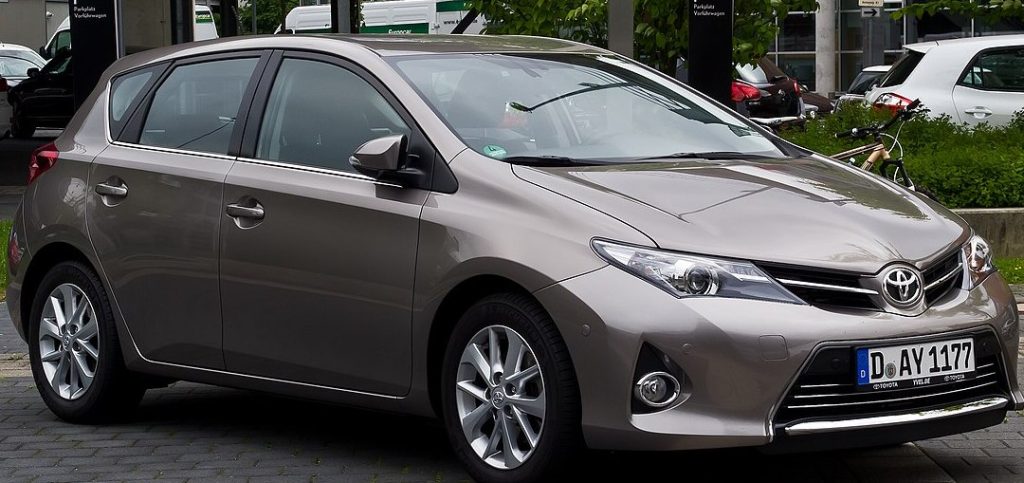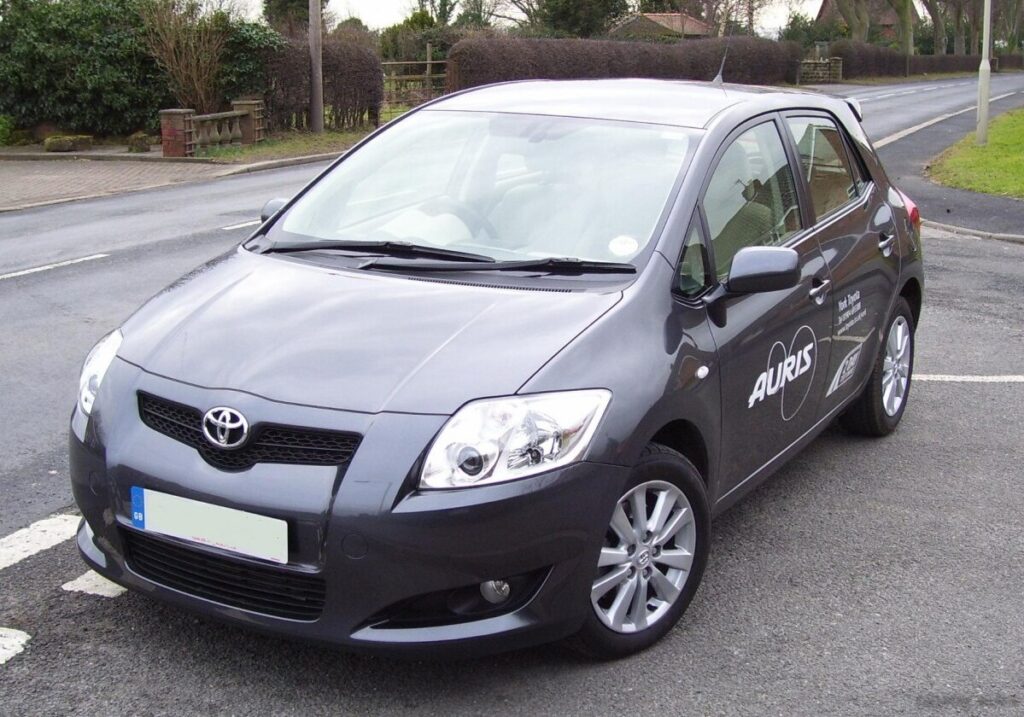
The Toyota Auris I 2.0 D-4D (126 hp) was a diesel-powered variant of the first-generation Auris, produced between 2006 and 2010. Positioned as a mid-range offering within the Auris lineup, it aimed to provide a balance of fuel efficiency and respectable performance for European drivers. The Auris, introduced as a replacement for the Corolla Hatchback in Europe, was designed to appeal to a more modern aesthetic and driving experience. This 2.0 D-4D model represented Toyota’s commitment to diesel technology in a segment increasingly focused on fuel economy and reduced emissions.
Technical Specifications
| Brand | Toyota |
| Model | Auris |
| Generation | Auris I |
| Type (Engine) | 2.0 D-4D (126 Hp) |
| Start of production | 2006 |
| End of production | 2010 |
| Powertrain Architecture | Internal Combustion engine |
| Body type | Hatchback |
| Seats | 5 |
| Doors | 5 |
| Fuel consumption (urban) | 5.8 l/100 km (40.6 US mpg, 48.7 UK mpg, 17.2 km/l) |
| Fuel consumption (extra urban) | 4.5 l/100 km (52.3 US mpg, 62.8 UK mpg, 22.2 km/l) |
| Fuel consumption (combined) | 5 l/100 km (47 US mpg, 56.5 UK mpg, 20 km/l) |
| Fuel Type | Diesel |
| Acceleration 0 – 100 km/h | 10.3 sec |
| Acceleration 0 – 62 mph | 10.3 sec |
| Acceleration 0 – 60 mph | 9.8 sec |
| Maximum speed | 195 km/h (121.17 mph) |
| Emission standard | Euro 4 |
| Weight-to-power ratio | 10 kg/Hp, 100 Hp/tonne |
| Weight-to-torque ratio | 4.2 kg/Nm, 238.1 Nm/tonne |
| Power | 126 Hp @ 3600 rpm |
| Power per litre | 63.1 Hp/l |
| Torque | 300 Nm @ 1800-2400 rpm (221.27 lb.-ft. @ 1800-2400 rpm) |
| Engine layout | Front, Transverse |
| Engine Model/Code | 1AD-FTV |
| Engine displacement | 1998 cm3 (121.93 cu. in.) |
| Number of cylinders | 4 |
| Engine configuration | Inline |
| Cylinder Bore | 86 mm (3.39 in.) |
| Piston Stroke | 86 mm (3.39 in.) |
| Compression ratio | 16.8:1 |
| Number of valves per cylinder | 4 |
| Fuel injection system | Diesel Commonrail |
| Engine aspiration | Turbocharger, Intercooler |
| Valvetrain | DOHC |
| Engine oil capacity | 6.3 l (6.66 US qt | 5.54 UK qt) |
| Coolant | 7.4 l (7.82 US qt | 6.51 UK qt) |
| Kerb Weight | 1260 kg (2777.82 lbs.) |
| Max. weight | 1760 kg (3880.14 lbs.) |
| Max load | 500 kg (1102.31 lbs.) |
| Trunk (boot) space – minimum | 354 l (12.5 cu. ft.) |
| Trunk (boot) space – maximum | 761 l (26.87 cu. ft.) |
| Fuel tank capacity | 55 l (14.53 US gal | 12.1 UK gal) |
| Length | 4220 mm (166.14 in.) |
| Width | 1760 mm (69.29 in.) |
| Height | 1515 mm (59.65 in.) |
| Wheelbase | 2600 mm (102.36 in.) |
| Front track | 1524 mm (60 in.) |
| Rear (Back) track | 1522 mm (59.92 in.) |
| Minimum turning circle | 10.2 m (33.46 ft.) |
| Drivetrain Architecture | ICE to Front Wheels |
| Drive wheel | Front wheel drive |
| Number of gears | 6 gears, manual transmission |
| Front suspension | Spring Strut |
| Rear suspension | Torsion |
| Front brakes | Ventilated discs |
| Rear brakes | Disc |
| Assisting systems | ABS (Anti-lock braking system) |
| Steering type | Steering rack and pinion |
| Tires size | 195/65 R15 |
Powertrain & Engine Architecture
The heart of the Auris 2.0 D-4D was the 1AD-FTV engine, a 1.998-liter inline-four cylinder diesel. This engine utilized a common rail direct injection system, delivering fuel at extremely high pressure for optimized combustion. A turbocharger with an intercooler was employed to boost power and torque, contributing to the engine’s 300 Nm (221 lb-ft) of torque available between 1800 and 2400 rpm. The engine featured a double overhead camshaft (DOHC) valvetrain with four valves per cylinder, enhancing breathing and overall efficiency. The 6-speed manual transmission was the standard offering, providing a good balance between fuel economy and driver control. The engine was designed to meet Euro 4 emission standards, incorporating technologies to reduce particulate matter and NOx emissions.
Driving Characteristics
The 126 hp 2.0 D-4D Auris offered a practical and efficient driving experience. While not a performance-oriented model, the engine’s torque output provided adequate acceleration for everyday driving situations. The 0-60 mph time of around 9.8 seconds was respectable for a diesel hatchback of this era. The six-speed manual transmission allowed drivers to keep the engine in its optimal power band, maximizing fuel economy and responsiveness. Compared to the lower-powered 1.6-liter petrol variants, the 2.0 D-4D offered significantly more torque, making it more comfortable for highway cruising and carrying passengers or cargo. However, it wasn’t as nimble or rev-happy as some of its petrol counterparts. The gear ratios were tuned for efficiency, prioritizing fuel economy over outright acceleration.
Equipment & Trim Levels
The 2.0 D-4D Auris typically came with a reasonable level of standard equipment. This included air conditioning, power steering, electric front windows, and a basic audio system. Higher trim levels, such as the SR and T2, added features like alloy wheels, fog lights, climate control, and upgraded audio systems. Interior upholstery was generally cloth, with options for partial leather trim on some models. Safety features included ABS brakes, front airbags, and seatbelt pretensioners. Optional extras included a sunroof, parking sensors, and a navigation system.
Chassis & Braking
The Auris I utilized a MacPherson strut front suspension and a torsion beam rear suspension. This setup provided a comfortable ride quality, although it wasn’t particularly sporty. The front brakes were ventilated discs, while the rear brakes were solid discs, providing adequate stopping power for the vehicle’s weight. The steering was a rack and pinion system, offering precise and responsive handling. The 195/65 R15 tires provided a good balance between grip and ride comfort.
Market Reception & Comparison
The Toyota Auris 2.0 D-4D was generally well-received by automotive critics for its fuel efficiency, comfortable ride, and reliability. It was often praised as a practical and sensible choice for drivers seeking a fuel-efficient hatchback. Compared to other diesel hatchbacks in its class, such as the Volkswagen Golf TDI and the Ford Focus TDCi, the Auris offered a competitive level of performance and economy. However, some critics noted that the interior design was somewhat bland and that the driving experience wasn’t as engaging as some of its rivals. Fuel economy was a key selling point, consistently achieving around 47 mpg on the combined cycle.
Legacy
The 1AD-FTV engine, while generally reliable, has been known to exhibit issues with the diesel particulate filter (DPF) if not properly maintained. Regular servicing and the use of high-quality diesel fuel are crucial for ensuring the longevity of this powertrain. Today, the Auris I 2.0 D-4D can be found on the used car market at relatively affordable prices. It remains a popular choice for drivers seeking a fuel-efficient and reliable hatchback, particularly those who prioritize practicality and low running costs. Its reputation for durability and Toyota’s strong brand image continue to make it a desirable option in the used car segment.