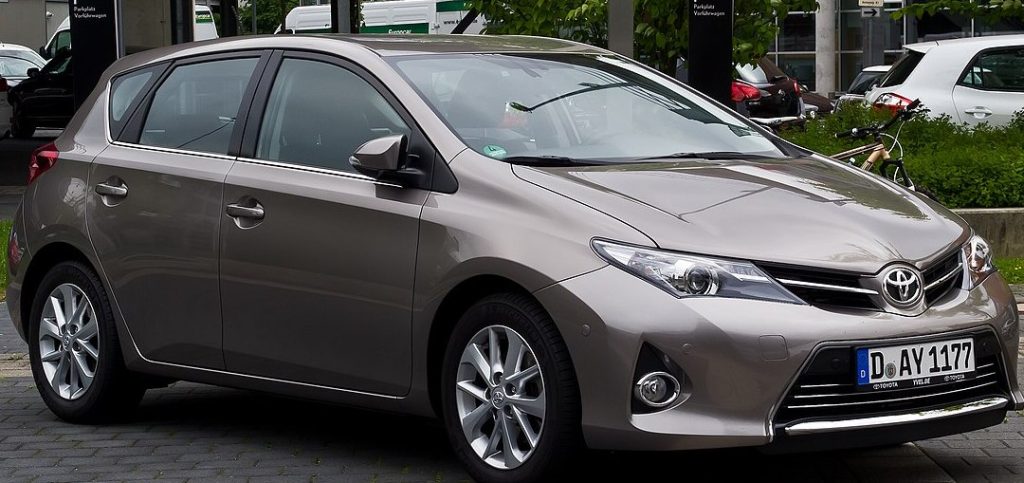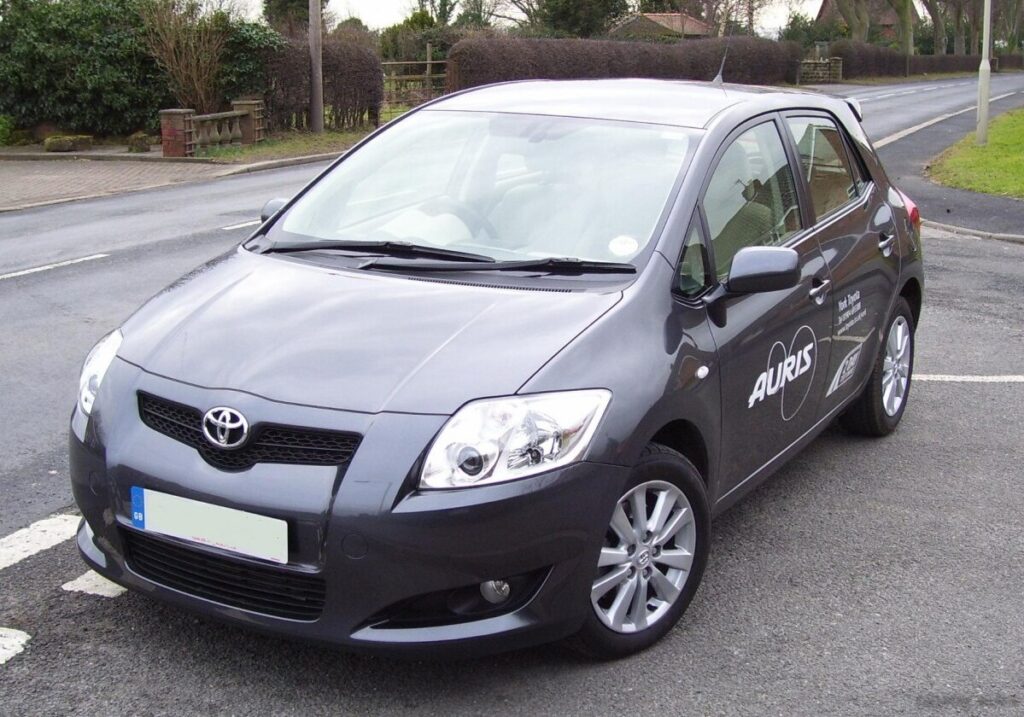
The Toyota Auris I 2.2 D-4D (177 hp) was a diesel-powered variant of the first-generation Auris, produced between 2006 and 2010. Positioned as a mid-range offering within the Auris lineup, it aimed to provide a balance of fuel efficiency, performance, and practicality for European buyers. The Auris, introduced as a replacement for the Corolla Hatchback in Europe, was Toyota’s entry into the competitive compact family car segment. This 2.2-liter diesel engine option provided a more powerful alternative to the gasoline engines available, appealing to drivers who frequently undertook longer journeys.
Technical Specifications
| Brand | Toyota |
| Model | Auris |
| Generation | Auris I |
| Type (Engine) | 2.2 D-4D (177 Hp) |
| Start of production | 2006 |
| End of production | 2010 |
| Powertrain Architecture | Internal Combustion engine |
| Body type | Hatchback |
| Seats | 5 |
| Doors | 5 |
| Fuel consumption (urban) | 7.9 l/100 km (29.8 US mpg) |
| Fuel consumption (extra urban) | 5.2 l/100 km (45.2 US mpg) |
| Fuel consumption (combined) | 6.2 l/100 km (37.9 US mpg) |
| Fuel Type | Diesel |
| Acceleration 0 – 100 km/h | 8.1 sec |
| Acceleration 0 – 62 mph | 8.1 sec |
| Acceleration 0 – 60 mph | 7.7 sec |
| Maximum speed | 210 km/h (130.49 mph) |
| Emission standard | Euro 4 |
| Weight-to-power ratio | 8.1 kg/Hp |
| Weight-to-torque ratio | 3.6 kg/Nm |
| Power | 177 Hp @ 3600 rpm |
| Torque | 400 Nm @ 2000-2600 rpm (295.02 lb.-ft.) |
| Engine layout | Front, Transverse |
| Engine Model/Code | 2AD-FHV |
| Engine displacement | 2231 cm3 (136.14 cu. in.) |
| Number of cylinders | 4 |
| Engine configuration | Inline |
| Cylinder Bore | 86 mm (3.39 in.) |
| Piston Stroke | 96 mm (3.78 in.) |
| Compression ratio | 15.8:1 |
| Number of valves per cylinder | 4 |
| Fuel injection system | Diesel Commonrail |
| Engine aspiration | Turbocharger, Intercooler |
| Valvetrain | DOHC |
| Engine oil capacity | 5.9 l (6.23 US qt | 5.19 UK qt) |
| Coolant capacity | 7.4 l (7.82 US qt | 6.51 UK qt) |
| Kerb Weight | 1435 kg (3163.63 lbs.) |
| Max. weight | 1920 kg (4232.88 lbs.) |
| Max load | 485 kg (1069.24 lbs.) |
| Trunk (boot) space – minimum | 354 l (12.5 cu. ft.) |
| Trunk (boot) space – maximum | 761 l (26.87 cu. ft.) |
| Fuel tank capacity | 55 l (14.53 US gal | 12.1 UK gal) |
| Length | 4220 mm (166.14 in.) |
| Width | 1760 mm (69.29 in.) |
| Height | 1515 mm (59.65 in.) |
| Wheelbase | 2600 mm (102.36 in.) |
| Front track | 1524 mm (60 in.) |
| Rear track | 1522 mm (59.92 in.) |
| Minimum turning circle | 10.2 m (33.46 ft.) |
| Drivetrain | Front wheel drive |
| Number of gears | 6 |
| Gearbox type | Manual transmission |
| Front suspension | Spring Strut |
| Rear suspension | Torsion |
| Front brakes | Ventilated discs |
| Rear brakes | Disc |
| Assisting systems | ABS (Anti-lock braking system) |
| Steering type | Steering rack and pinion |
| Tires size | 225/45 R17 |
INTRODUCTION
The Toyota Auris I 2.2 D-4D, launched in 2006, represented Toyota’s attempt to create a more stylish and engaging compact hatchback for the European market. Replacing the Corolla Hatchback, the Auris was built on the Toyota New Global Architecture (TNGA) platform, though the first generation (E150 series) predates the full implementation of TNGA. The 2.2 D-4D variant, powered by the 2AD-FHV engine, was a key component of the Auris range, offering a compelling alternative to petrol options for drivers prioritizing fuel economy and torque. Production of this specific configuration continued until 2010, when the Auris underwent a facelift and further powertrain revisions.
Powertrain & Engine Architecture
The heart of the Auris 2.2 D-4D is the 2AD-FHV, a 2.2-liter inline-four cylinder diesel engine. This engine utilizes a common rail direct injection system, delivering fuel directly into the combustion chamber at extremely high pressure for improved efficiency and reduced emissions. The 2AD-FHV features a single overhead camshaft (SOHC) design operating four valves per cylinder (DOHC). A turbocharger with an intercooler is employed to boost power output and enhance torque across a wider rev range. The engine produces 177 horsepower at 3600 rpm and a substantial 400 Nm (295 lb-ft) of torque between 2000 and 2600 rpm. This torque output provided strong acceleration and effortless cruising. The Auris 2.2 D-4D was exclusively offered with a six-speed manual transmission, designed to effectively manage the engine’s power and optimize fuel economy.
Driving Characteristics
The 2.2 D-4D Auris offered a noticeably different driving experience compared to the lower-powered petrol variants. The abundant torque made overtaking and hill climbing significantly easier, while the six-speed gearbox allowed for relaxed highway cruising. While not a sports car, the 2.2 D-4D provided a responsive and confident feel. The gear ratios were well-matched to the engine’s powerband, ensuring smooth acceleration in all gears. Compared to the 1.6-liter petrol engine, the diesel offered superior mid-range punch, but lacked the high-revving character of its gasoline counterpart. The manual transmission, while precise, didn’t offer the convenience of an automatic, which wasn’t available with this engine option.
Equipment & Trim Levels
The Auris 2.2 D-4D was typically offered in mid-range trim levels, often denoted as ‘Comfort’ or ‘Style’ depending on the specific market. Standard equipment generally included air conditioning, power windows, central locking, a CD player with MP3 compatibility, and alloy wheels. Higher trim levels added features such as automatic climate control, rain-sensing wipers, a multi-function steering wheel, and upgraded upholstery. Optional extras included a sunroof, satellite navigation, and parking sensors. Interior materials were generally of good quality, reflecting Toyota’s reputation for build quality and durability. The dashboard layout was functional and user-friendly, with logically placed controls.
Chassis & Braking
The Auris I utilized a MacPherson strut front suspension and a torsion beam rear suspension. This setup provided a comfortable ride quality, absorbing bumps and imperfections in the road surface effectively. The front brakes were ventilated discs, offering strong stopping power, while the rear brakes were solid discs. Anti-lock Braking System (ABS) was standard, enhancing safety and stability during emergency braking. The steering was a rack and pinion system, providing precise and responsive handling. The Auris 2.2 D-4D’s weight of approximately 1435 kg (3163.63 lbs) was relatively high for a compact hatchback, but the engine’s torque helped to mitigate the effects of this weight.
Market Reception & Comparison
The Toyota Auris 2.2 D-4D was generally well-received by automotive critics. It was praised for its fuel efficiency, strong performance, and comfortable ride. However, some reviewers noted that the engine could be slightly noisy compared to some of its competitors. Compared to other diesel-powered hatchbacks in its class, such as the Volkswagen Golf TDI and the Ford Focus TDCi, the Auris offered a competitive package, with a focus on reliability and practicality. Fuel economy was comparable to its rivals, with combined figures around 6.2 l/100 km (37.9 US mpg). Reliability was a strong point for the Auris, with Toyota’s reputation for building durable and dependable vehicles.
Legacy
The 2AD-FHV engine, while generally reliable, is known to require regular maintenance, particularly regarding the diesel particulate filter (DPF). Ensuring the DPF is properly maintained is crucial to avoid costly repairs. The Auris I 2.2 D-4D remains a popular choice in the used car market, particularly for drivers seeking a fuel-efficient and reliable compact hatchback. Its strong torque and comfortable ride make it well-suited for long-distance driving. While newer models offer more advanced technology and features, the Auris I 2.2 D-4D continues to represent a solid and dependable option for budget-conscious buyers.