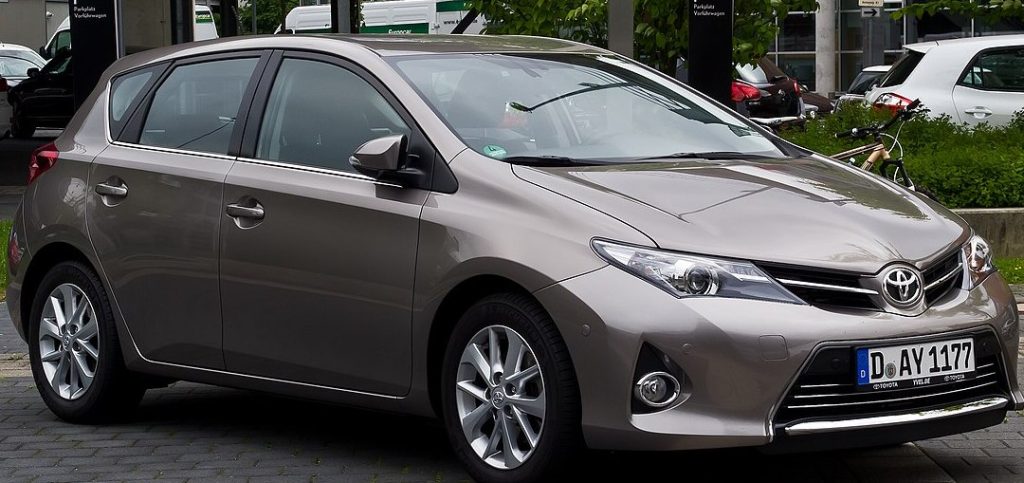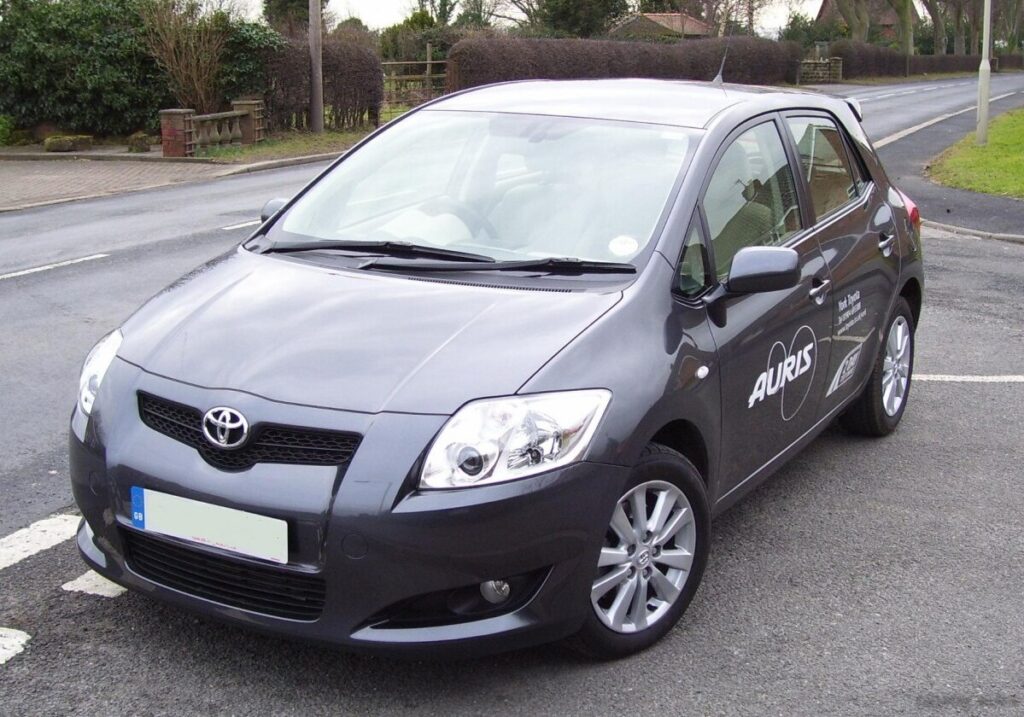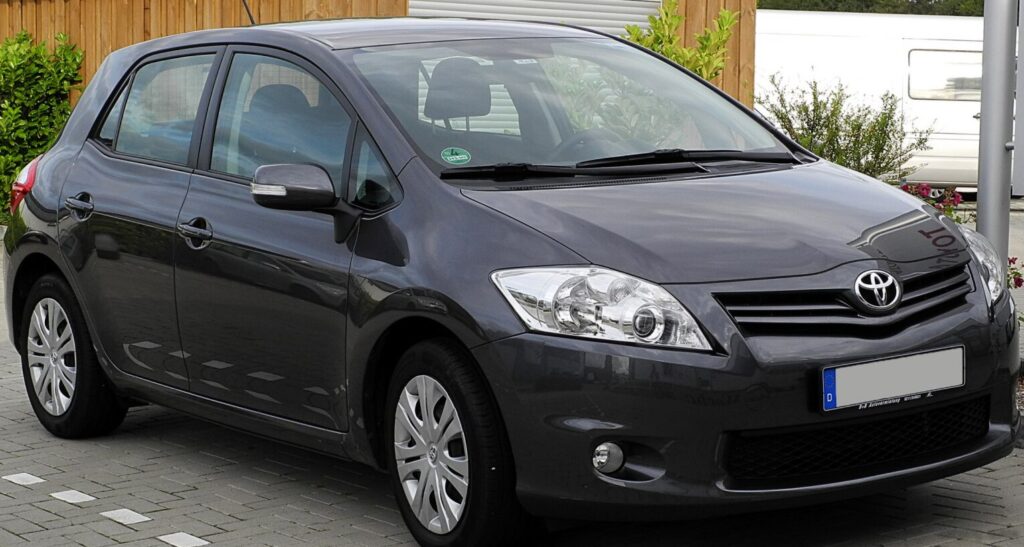
The Toyota Auris I (facelift, 2010) 2.0 D-4D 90 hp model represents a specific configuration within the first generation of Toyota’s Auris compact hatchback, produced from 2010 to 2012. Positioned as an economy-focused variant, it offered a diesel engine option aimed at buyers prioritizing fuel efficiency and lower running costs. This version sat below the more powerful diesel trims and the petrol-powered models in the Auris lineup. It was primarily marketed in Europe, where diesel engines held a significant market share, offering a practical and affordable option for daily commuting and family transport. The Auris itself was designed as a replacement for the Corolla hatchback in the European market, aiming for a more modern and stylish design while maintaining Toyota’s reputation for reliability.
Technical Specifications
| Brand | Toyota |
| Model | Auris |
| Generation | Auris I (facelift 2010) |
| Type (Engine) | 2.0 D-4D (90 Hp) |
| Start of production | 2010 |
| End of production | 2012 |
| Powertrain Architecture | Internal Combustion engine |
| Body type | Hatchback |
| Seats | 5 |
| Doors | 5 |
| Fuel consumption (urban) | 7.1 l/100 km (33.1 US mpg, 39.8 UK mpg, 14.1 km/l) |
| Fuel consumption (extra urban) | 5.1 l/100 km (46.1 US mpg, 55.4 UK mpg, 19.6 km/l) |
| Fuel consumption (combined) | 5.8 l/100 km (40.6 US mpg, 48.7 UK mpg, 17.2 km/l) |
| CO2 emissions | 125 g/km |
| Fuel Type | Diesel |
| Acceleration 0 – 100 km/h | 11.9 sec |
| Acceleration 0 – 62 mph | 11.9 sec |
| Acceleration 0 – 60 mph | 11.3 sec |
| Maximum speed | 175 km/h (108.74 mph) |
| Emission standard | Euro 5 |
| Weight-to-power ratio | 14.2 kg/Hp, 70.3 Hp/tonne |
| Weight-to-torque ratio | 6.2 kg/Nm, 160.2 Nm/tonne |
| Power | 90 Hp @ 3800 rpm |
| Power per litre | 66 Hp/l |
| Torque | 205 Nm @ 1800-2800 rpm (151.2 lb.-ft. @ 1800-2800 rpm) |
| Engine layout | Front, Transverse |
| Engine Model/Code | 1AD-FTV |
| Engine displacement | 1364 cm3 (83.24 cu. in.) |
| Number of cylinders | 4 |
| Engine configuration | Inline |
| Cylinder Bore | 73 mm (2.87 in.) |
| Piston Stroke | 81.5 mm (3.21 in.) |
| Compression ratio | 16.5:1 |
| Number of valves per cylinder | 2 |
| Fuel injection system | Diesel Commonrail |
| Engine aspiration | Turbocharger, Intercooler |
| Valvetrain | SOHC |
| Engine oil capacity | 6.3 l (6.66 US qt | 5.54 UK qt) |
| Coolant | 7.4 l (7.82 US qt | 6.51 UK qt) |
| Kerb Weight | 1280 kg (2821.92 lbs.) |
| Trunk (boot) space – minimum | 354 l (12.5 cu. ft.) |
| Trunk (boot) space – maximum | 761 l (26.87 cu. ft.) |
| Fuel tank capacity | 55 l (14.53 US gal | 12.1 UK gal) |
| Length | 4245 mm (167.13 in.) |
| Width | 1760 mm (69.29 in.) |
| Height | 1515 mm (59.65 in.) |
| Wheelbase | 2600 mm (102.36 in.) |
| Front track | 1536 mm (60.47 in.) |
| Rear track | 1533 mm (60.35 in.) |
| Drag coefficient (Cd) | 0.29 |
| Minimum turning circle | 10.2 m (33.46 ft.) |
| Drivetrain Architecture | Front wheel drive |
| Number of gears | 6 |
| Gearbox type | Manual transmission |
| Front suspension | Independent type McPherson |
| Rear suspension | Torsion |
| Front brakes | Ventilated discs |
| Rear brakes | Disc |
| Assisting systems | ABS (Anti-lock braking system) |
| Steering type | Steering rack and pinion |
| Tires size | 195/65 R15 |
| Wheel rims size | 15 |
Powertrain & Engine Architecture
The 2.0 D-4D engine, designated as the 1AD-FTV, is a four-cylinder, inline diesel engine. It utilizes a 16.5:1 compression ratio and a turbocharger with an intercooler to enhance power and efficiency. The engine employs a Diesel Commonrail direct injection system, delivering fuel directly into the cylinders at very high pressure for optimized combustion. The Single Overhead Camshaft (SOHC) valvetrain manages the intake and exhaust valves. This engine was known for its relatively quiet operation for a diesel, thanks to careful engineering and noise reduction measures. The six-speed manual transmission was the standard offering for this variant, providing a good balance between fuel economy and drivability. The gear ratios were tuned to maximize torque utilization at lower engine speeds, typical for a diesel application.
Driving Characteristics
The 90 hp output, coupled with 205 Nm of torque, resulted in a driving experience focused on practicality rather than performance. Acceleration from 0-60 mph took around 11.3 seconds, and top speed was 175 km/h (108.74 mph). The engine provided adequate power for everyday driving, including highway cruising and overtaking, but it wasn’t particularly quick. The manual transmission allowed for precise control, and the relatively long gear ratios helped to keep the engine within its optimal torque band. Compared to the higher-output diesel versions of the Auris, this variant felt noticeably slower, but it offered better fuel economy. The manual gearbox also provided a more engaging driving experience than the optional automatic transmission available on other trims.
Equipment & Trim Levels
The 2.0 D-4D 90 hp model typically came with a reasonable level of standard equipment, though it was generally positioned as a more basic trim level. Standard features often included air conditioning, power steering, electric front windows, and a basic audio system. Safety features such as ABS and multiple airbags were also standard. Interior upholstery was typically cloth, and the dashboard featured a functional, if somewhat understated, design. Optional extras could include alloy wheels, a more advanced audio system, and parking sensors. The trim level often dictated the color options available.
Chassis & Braking
The Auris I utilized a McPherson strut independent suspension at the front and a torsion beam suspension at the rear. This setup provided a comfortable ride quality, suitable for everyday driving. The front brakes were ventilated discs, while the rear brakes were solid discs. ABS (Anti-lock Braking System) was standard, enhancing braking performance and safety. The suspension was tuned for comfort rather than sporty handling, prioritizing ride quality over sharp cornering. Stabilizer bars were included to reduce body roll during cornering, but the overall handling characteristics were geared towards practicality and ease of use.
Market Reception & Comparison
The 2.0 D-4D 90 hp Auris was generally well-received by critics as a sensible and economical choice. It was praised for its fuel efficiency, low running costs, and comfortable ride. However, it was often criticized for its lack of outright performance compared to higher-powered variants. Compared to the petrol-powered Auris models, the diesel offered significantly better fuel economy, but at the cost of some refinement. Against competitors like the Ford Focus and Volkswagen Golf, the Auris offered a competitive package, with Toyota’s reputation for reliability being a key selling point. The manual transmission version was generally preferred by enthusiasts for its more engaging driving experience.
Legacy
The 1AD-FTV engine, while not without its share of common diesel issues like DPF (Diesel Particulate Filter) clogging, proved to be a relatively durable and reliable unit when properly maintained. Today, used examples of the 2.0 D-4D 90 hp Auris are still relatively common, and they represent an affordable option for those seeking a fuel-efficient and practical hatchback. Regular servicing, including oil changes and DPF maintenance, is crucial for ensuring the long-term reliability of these vehicles. The Auris I, in general, established Toyota as a strong contender in the European compact hatchback market, paving the way for subsequent generations of the model.