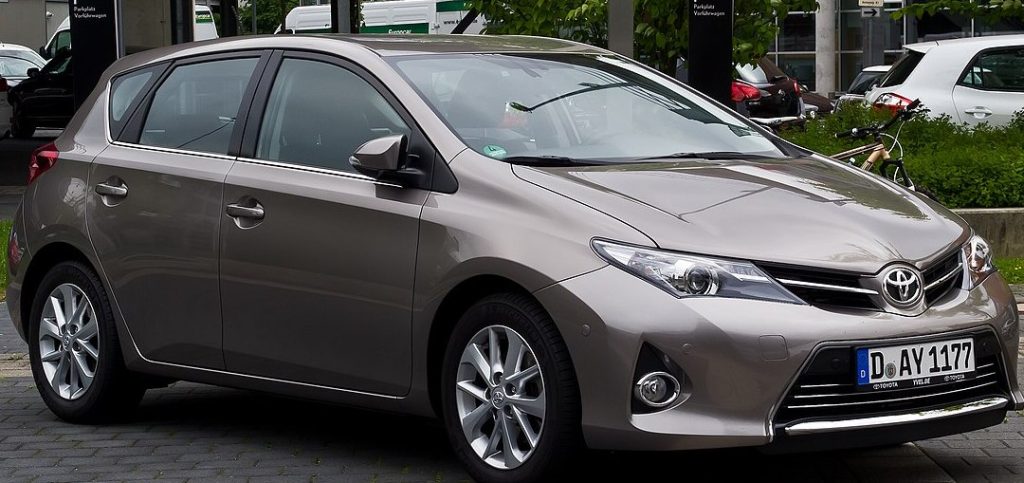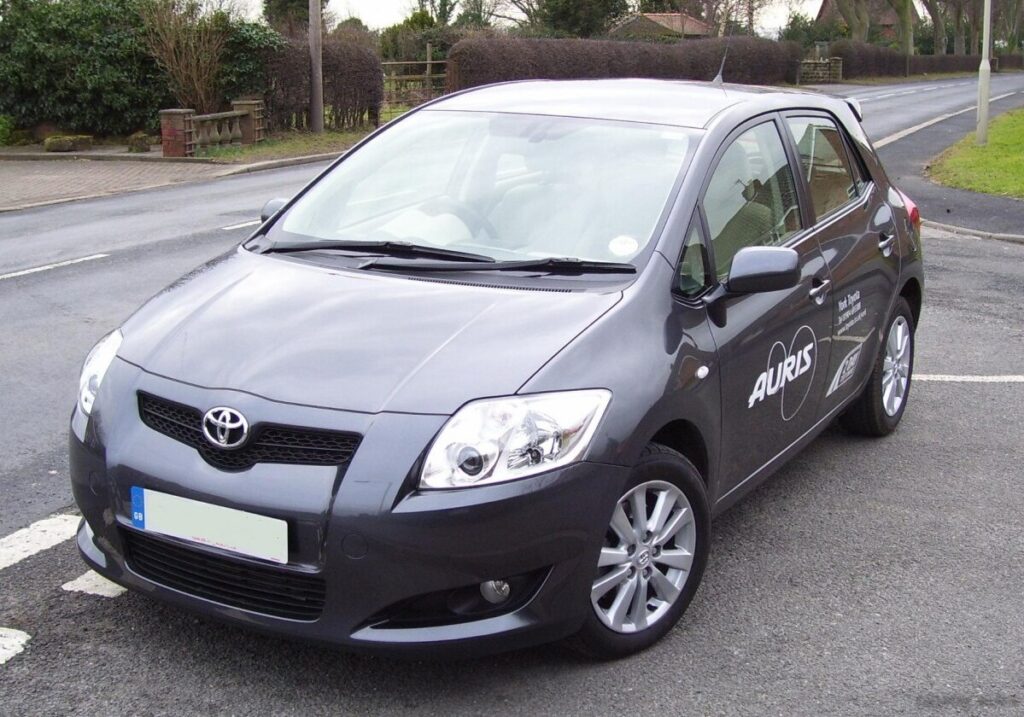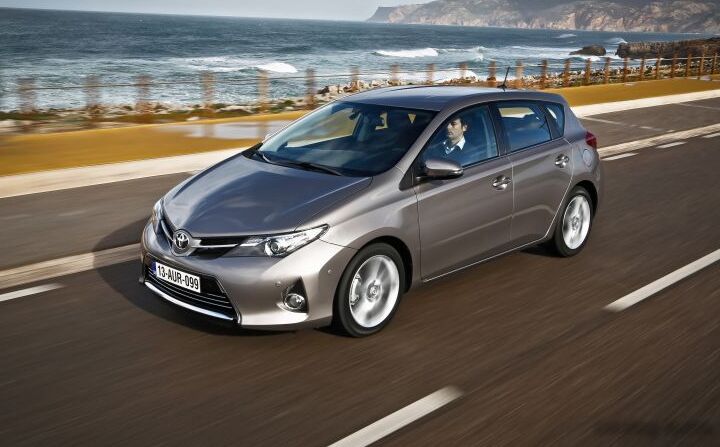
The Toyota Auris II 1.6 Valvematic (132 hp) was a front-wheel-drive, five-door hatchback produced between 2012 and 2015. Positioned as a mid-range offering within the Auris II lineup, it bridged the gap between the more economical base models and the higher-performance variants. This generation of the Auris, built on the E180 platform (also known as the 1HX0/A3 platform internally), represented a significant step forward for Toyota in the European compact hatchback segment, focusing on improved styling, interior quality, and driving dynamics. The 1.6 Valvematic engine was a key component of this effort, offering a balance of performance and fuel efficiency.
Technical Specifications
| Brand | Toyota |
| Model | Auris |
| Generation | Auris II |
| Type (Engine) | 1.6 Valvematic (132 Hp) |
| Start of production | 2012 |
| End of production | 2015 |
| Powertrain Architecture | Internal Combustion engine |
| Body type | Hatchback |
| Seats | 5 |
| Doors | 5 |
| Fuel consumption (urban) | 7.9 l/100 km (29.8 US mpg, 35.8 UK mpg, 12.7 km/l) |
| Fuel consumption (extra urban) | 4.8 l/100 km (49 US mpg, 58.9 UK mpg, 20.8 km/l) |
| Fuel consumption (combined) | 5.9 l/100 km (39.9 US mpg, 47.9 UK mpg, 16.9 km/l) |
| Fuel Type | Petrol (Gasoline) |
| Acceleration 0 – 100 km/h | 10 sec |
| Acceleration 0 – 62 mph | 10 sec |
| Acceleration 0 – 60 mph | 9.5 sec |
| Maximum speed | 200 km/h (124.27 mph) |
| Emission standard | Euro 5 J |
| Weight-to-power ratio | 9.6 kg/Hp, 103.9 Hp/tonne |
| Weight-to-torque ratio | 7.9 kg/Nm, 126 Nm/tonne |
| Power | 132 Hp @ 6400 rpm |
| Power per litre | 82.6 Hp/l |
| Torque | 160 Nm @ 4400-4400 rpm (118.01 lb.-ft. @ 4400-4400 rpm) |
| Engine layout | Front, Transverse |
| Engine Model/Code | 1ZR-FAE |
| Engine displacement | 1598 cm3 (97.52 cu. in.) |
| Number of cylinders | 4 |
| Engine configuration | Inline |
| Cylinder Bore | 80.5 mm (3.17 in.) |
| Piston Stroke | 78.5 mm (3.09 in.) |
| Compression ratio | 10.7:1 |
| Number of valves per cylinder | 4 |
| Fuel injection system | Multi-port manifold injection |
| Engine aspiration | Naturally aspirated engine |
| Valvetrain | DOHC – Valvematic |
| Engine oil capacity | 4.2 l (4.44 US qt | 3.7 UK qt) |
| Coolant | 5.6 l (5.92 US qt | 4.93 UK qt) |
| Kerb Weight | 1270 kg (2799.87 lbs.) |
| Max. weight | 1805 kg (3979.34 lbs.) |
| Max load | 535 kg (1179.47 lbs.) |
| Trunk (boot) space – minimum | 360 l (12.71 cu. ft.) |
| Fuel tank capacity | 50 l (13.21 US gal | 11 UK gal) |
| Length | 4275 mm (168.31 in.) |
| Width | 1760 mm (69.29 in.) |
| Height | 1460 mm (57.48 in.) |
| Wheelbase | 2600 mm (102.36 in.) |
| Front track | 1535 mm (60.43 in.) |
| Rear (Back) track | 1535 mm (60.43 in.) |
| Minimum turning circle | 10.4 m (34.12 ft.) |
| Drivetrain Architecture | The Internal combustion engine (ICE) drives the front wheels of the vehicle. |
| Drive wheel | Front wheel drive |
| Number of gears and type of gearbox | 6 gears, manual transmission |
| Front suspension | Independent, type McPherson with coil spring and anti-roll bar |
| Rear suspension | Double wishbone |
| Front brakes | Disc |
| Rear brakes | Disc |
| Assisting systems | ABS (Anti-lock braking system) |
| Steering type | Steering rack and pinion |
Powertrain & Engine Architecture
The heart of the Auris 1.6 Valvematic was the 1ZR-FAE engine, a 1.6-liter inline-four cylinder gasoline engine. This engine was part of Toyota’s ‘ZR’ family, known for its reliability and relatively simple design. The key feature of this engine was its Valvematic system, a continuously variable valve timing and lift mechanism. Unlike traditional VVT-i systems that only adjust valve timing, Valvematic also alters the lift of the intake valves, allowing for greater control over airflow into the cylinders. This resulted in improved fuel efficiency and a broader torque curve. The engine utilized multi-port fuel injection and a compression ratio of 10.7:1. The 6-speed manual transmission was standard, offering precise shifts and contributing to the car’s overall responsiveness.
Driving Characteristics
The 132 hp output of the 1.6 Valvematic engine provided adequate performance for everyday driving. Acceleration from 0-60 mph took around 9.5 seconds, and top speed was limited to 124 mph. While not a particularly sporty setup, the engine delivered a usable amount of torque, making it easy to navigate city streets and maintain highway speeds. Compared to the more powerful 1.8-liter engine options available in the Auris II range, the 1.6 felt less strained during acceleration, but lacked the same level of outright performance. The manual transmission’s gear ratios were well-matched to the engine’s characteristics, providing good drivability. The Valvematic system helped to keep the engine responsive even at lower RPMs, reducing the need for frequent downshifts.
Equipment & Trim Levels
The 1.6 Valvematic trim typically included standard features such as air conditioning, power windows, power mirrors, a CD player with auxiliary input, and ABS brakes. Higher trim levels added features like alloy wheels, a touchscreen infotainment system, rear parking sensors, and automatic climate control. Interior upholstery was typically cloth, with options for upgraded materials on higher trims. The dashboard layout was functional and well-designed, with a focus on ergonomics. Optional extras included a panoramic sunroof, navigation system, and a premium sound system.
Chassis & Braking
The Auris II featured a McPherson strut front suspension and a double wishbone rear suspension, providing a comfortable and controlled ride. The suspension was tuned to prioritize comfort over outright sportiness, but still offered decent handling characteristics. Brakes were disc brakes on all four wheels, providing adequate stopping power. ABS (Anti-lock Braking System) was standard, enhancing safety in emergency braking situations. The Auris II’s chassis was relatively lightweight, contributing to its fuel efficiency and agility.
Market Reception & Comparison
The Toyota Auris II 1.6 Valvematic was generally well-received by automotive critics. It was praised for its fuel efficiency, comfortable ride, and reliable engine. However, some critics noted that the engine lacked the punch of its competitors and that the interior, while well-built, was not particularly exciting. Compared to other 1.6-liter gasoline engines in the compact hatchback segment, the Auris 1.6 Valvematic offered competitive fuel economy and a smooth, refined driving experience. It was often seen as a more sensible and practical choice than some of the more performance-oriented options available.
Legacy
The 1ZR-FAE engine, found in the Auris 1.6 Valvematic, has proven to be a remarkably reliable powertrain. Common issues are relatively rare, and the engine is known for its longevity. On the used car market, the Auris II 1.6 Valvematic represents a good value proposition, offering a blend of practicality, fuel efficiency, and Toyota’s renowned reliability. Maintenance costs are generally low, and parts availability is good. While it may not be the most exciting car to drive, the Auris 1.6 Valvematic remains a popular choice for those seeking a dependable and economical compact hatchback.