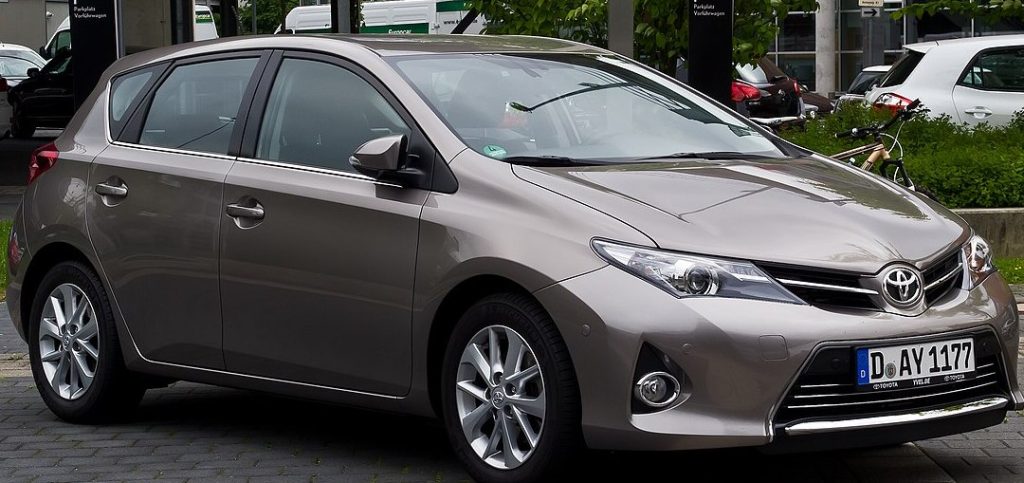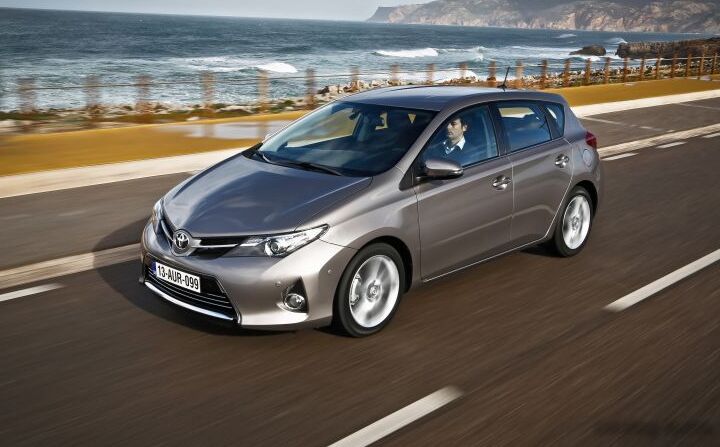
The Toyota Auris II 2.0 D-4D (124 hp) with a Diesel Particulate Filter (DPF) was a popular variant of Toyota’s compact hatchback, produced between 2012 and 2015. Positioned as a mid-range offering within the Auris II lineup, it aimed to balance fuel efficiency with respectable performance, appealing to drivers seeking a practical and economical vehicle. This model was primarily sold in the European market, where diesel engines held a significant share of the compact car segment. It represented Toyota’s attempt to cater to the demand for lower emissions and improved fuel economy while still providing a capable daily driver.
Technical Specifications
| Brand | Toyota |
| Model | Auris |
| Generation | Auris II |
| Type (Engine) | 2.0 D-4D (124 Hp) DPF |
| Start of production | 2012 |
| End of production | 2015 |
| Powertrain Architecture | Internal Combustion engine |
| Body type | Hatchback |
| Seats | 5 |
| Doors | 5 |
| Fuel consumption (urban) | 5.2 l/100 km (45.2 US mpg, 54.3 UK mpg, 19.2 km/l) |
| Fuel consumption (extra urban) | 3.8 l/100 km (61.9 US mpg, 74.3 UK mpg, 26.3 km/l) |
| Fuel consumption (combined) | 4.3 l/100 km (54.7 US mpg, 65.7 UK mpg, 23.3 km/l) |
| Fuel Type | Diesel |
| Acceleration 0 – 100 km/h | 10 sec |
| Acceleration 0 – 62 mph | 10 sec |
| Acceleration 0 – 60 mph | 9.5 sec |
| Maximum speed | 200 km/h (124.27 mph) |
| Emission standard | Euro 5 J |
| Weight-to-power ratio | 11.3 kg/Hp, 88.6 Hp/tonne |
| Weight-to-torque ratio | 4.5 kg/Nm, 221.4 Nm/tonne |
| Power | 124 Hp @ 3600 rpm |
| Power per litre | 62.1 Hp/l |
| Torque | 310 Nm @ 1600-2400 rpm (228.64 lb.-ft. @ 1600-2400 rpm) |
| Engine layout | Front, Transverse |
| Engine Model/Code | 1AD-FTV |
| Engine displacement | 1998 cm3 (121.93 cu. in.) |
| Number of cylinders | 4 |
| Engine configuration | Inline |
| Cylinder Bore | 86 mm (3.39 in.) |
| Piston Stroke | 86 mm (3.39 in.) |
| Compression ratio | 15.8:1 |
| Number of valves per cylinder | 4 |
| Fuel injection system | Diesel Commonrail |
| Engine aspiration | Turbocharger, Intercooler |
| Valvetrain | DOHC |
| Engine oil capacity | 5.9 l (6.23 US qt | 5.19 UK qt) |
| Coolant | 7.8 l (8.24 US qt | 6.86 UK qt) |
| Kerb Weight | 1400 kg (3086.47 lbs.) |
| Max. weight | 1915 kg (4221.85 lbs.) |
| Max load | 515 kg (1135.38 lbs.) |
| Trunk (boot) space – minimum | 360 l (12.71 cu. ft.) |
| Fuel tank capacity | 50 l (13.21 US gal | 11 UK gal) |
| Length | 4275 mm (168.31 in.) |
| Width | 1760 mm (69.29 in.) |
| Height | 1460 mm (57.48 in.) |
| Wheelbase | 2600 mm (102.36 in.) |
| Front track | 1525 mm (60.04 in.) |
| Rear (Back) track | 1525 mm (60.04 in.) |
| Minimum turning circle | 10.4 m (34.12 ft.) |
| Drivetrain Architecture | The Internal combustion engine (ICE) drives the front wheels of the vehicle. |
| Drive wheel | Front wheel drive |
| Number of gears and type of gearbox | 6 gears, manual transmission |
| Front suspension | Independent, type McPherson with coil spring and anti-roll bar |
| Rear suspension | Double wishbone |
| Front brakes | Disc |
| Rear brakes | Disc |
| Assisting systems | ABS (Anti-lock braking system) |
| Steering type | Steering rack and pinion |
Powertrain & Engine Architecture
The heart of the Auris 2.0 D-4D was the 1AD-FTV engine, a 1.998-liter inline-four cylinder diesel. This engine utilized a common-rail direct injection system, delivering fuel at extremely high pressure for optimized combustion. A turbocharger with an intercooler was employed to boost power and torque, providing a broader powerband. The engine featured a double overhead camshaft (DOHC) valvetrain with four valves per cylinder, enhancing volumetric efficiency. The 1AD-FTV was known for its relatively robust construction and ability to handle moderate tuning. The DPF, a crucial component for meeting Euro 5 emissions standards, captured and periodically burned off soot particles from the exhaust. This engine was paired with a six-speed manual transmission, providing a good balance between fuel economy and driver control.
Driving Characteristics
The 124 hp output and 310 Nm (228.64 lb-ft) of torque provided the Auris 2.0 D-4D with adequate performance for everyday driving. Acceleration from 0-60 mph took around 9.5 seconds, and it could reach a top speed of 124 mph. While not a particularly sporty vehicle, the engine’s torque delivery made it feel responsive in most situations, particularly during overtaking maneuvers. Compared to the lower-powered 1.6-liter diesel variants, the 2.0 D-4D offered a noticeable improvement in performance. However, it didn’t match the more spirited driving experience of the petrol-powered Auris models. The six-speed manual transmission was well-matched to the engine, offering precise shifts and helping to keep the engine in its optimal powerband.
Equipment & Trim Levels
The 2.0 D-4D trim typically included features such as air conditioning, electric front windows, a CD player with auxiliary input, and ABS brakes. Higher trim levels, such as the ‘Icon’ or ‘Excel’ variants, added features like alloy wheels, automatic climate control, a touchscreen infotainment system, and rear parking sensors. Interior upholstery was generally cloth, with options for partial leather trim on higher-spec models. The dashboard layout was functional and straightforward, prioritizing usability over outright style. Optional extras included satellite navigation, a panoramic sunroof, and upgraded audio systems.
Chassis & Braking
The Auris II utilized a McPherson strut front suspension and a double wishbone rear suspension, providing a comfortable and controlled ride. The front brakes were ventilated discs, while the rear brakes were solid discs. ABS (Anti-lock Braking System) was standard, enhancing safety during emergency braking. The suspension was tuned for comfort rather than outright handling prowess, but it provided a stable and predictable driving experience. Stabilizer bars were fitted to both the front and rear axles to reduce body roll during cornering.
Market Reception & Comparison
The Toyota Auris 2.0 D-4D was generally well-received by automotive critics for its fuel efficiency, comfortable ride, and reliability. It was often praised as a practical and sensible choice for drivers covering long distances. Compared to other diesel-powered hatchbacks in its class, such as the Volkswagen Golf and Ford Focus, the Auris offered competitive fuel economy and a similar level of refinement. However, some critics noted that its styling was somewhat conservative and its driving dynamics weren’t as engaging as those of its rivals. The DPF system required periodic maintenance, and failures could be costly to repair.
Legacy
The 1AD-FTV engine, when properly maintained, proved to be a durable and reliable unit. The Auris 2.0 D-4D remains a popular choice on the used car market, particularly for those seeking a fuel-efficient and dependable vehicle. However, potential buyers should be aware of the potential for DPF-related issues and ensure that the vehicle has been regularly serviced. The Auris II, in general, established Toyota as a strong contender in the European compact car segment, paving the way for the later Auris Hybrid models.