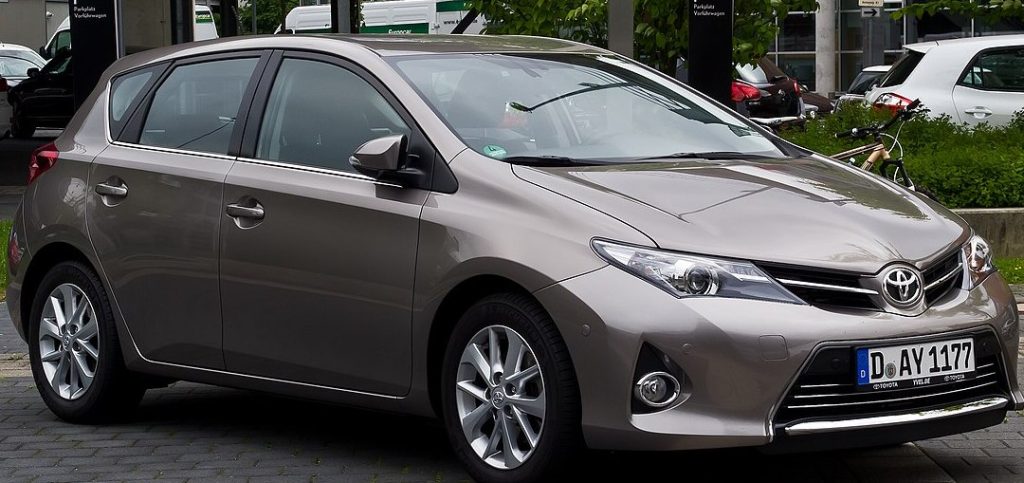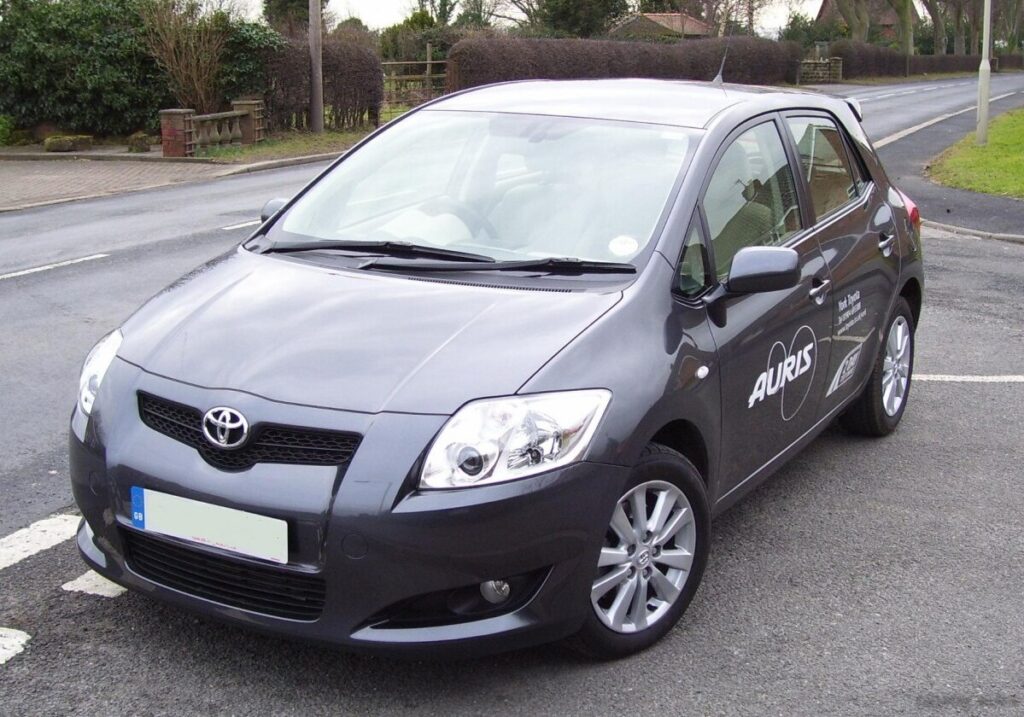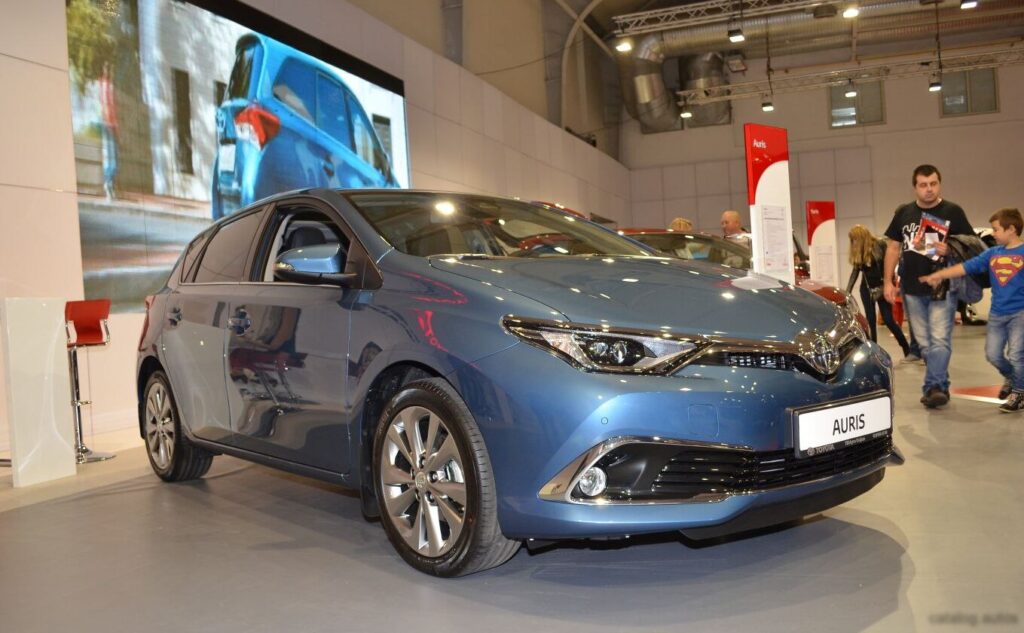
The Toyota Auris II, specifically the 1.4 D-4D variant producing 90 horsepower, was a key model in Toyota’s European lineup from 2015 to 2018, following the facelift of the second-generation Auris (introduced in 2012). Positioned as an entry-level diesel option, this version aimed to provide fuel efficiency and affordability within the competitive C-segment hatchback market. It was built on the Toyota New Global Architecture (TNGA) platform, though the initial Auris II models predated full TNGA implementation. This variant catered to buyers prioritizing economy and practicality over outright performance, offering a balance between running costs and everyday usability.
Technical Specifications
| Brand | Toyota |
| Model | Auris |
| Generation | Auris II (facelift 2015) |
| Type (Engine) | 1.4 D-4D (90 Hp) |
| Start of production | 2015 |
| End of production | 2018 |
| Powertrain Architecture | Internal Combustion engine |
| Body type | Hatchback |
| Seats | 5 |
| Doors | 5 |
| Fuel consumption (urban) | 4.6 l/100 km (51.1 US mpg, 61.4 UK mpg, 21.7 km/l) |
| Fuel consumption (extra urban) | 3.6 l/100 km (65.3 US mpg, 78.5 UK mpg, 27.8 km/l) |
| Fuel consumption (combined) | 4 l/100 km (58.8 US mpg, 70.6 UK mpg, 25 km/l) |
| CO2 emissions | 105 g/km |
| Fuel Type | Diesel |
| Acceleration 0 – 100 km/h | 12.5 sec |
| Acceleration 0 – 62 mph | 12.5 sec |
| Acceleration 0 – 60 mph | 11.9 sec |
| Maximum speed | 180 km/h (111.85 mph) |
| Emission standard | Euro 6 W |
| Weight-to-power ratio | 14.2 kg/Hp, 70.6 Hp/tonne |
| Weight-to-torque ratio | 6.2 kg/Nm, 160.8 Nm/tonne |
| Power | 90 Hp @ 3800 rpm |
| Power per litre | 66 Hp/l |
| Torque | 205 Nm @ 1400-2800 rpm (151.2 lb.-ft. @ 1400-2800 rpm) |
| Engine layout | Front, Transverse |
| Engine Model/Code | 1ND-TV |
| Engine displacement | 1364 cm3 (83.24 cu. in.) |
| Number of cylinders | 4 |
| Engine configuration | Inline |
| Compression ratio | 16.5:1 |
| Number of valves per cylinder | 2 |
| Fuel injection system | Diesel Commonrail |
| Engine aspiration | Turbocharger, Intercooler |
| Valvetrain | SOHC |
| Engine oil capacity | 3.7 l (3.91 US qt | 3.26 UK qt) |
| Coolant | 6 l (6.34 US qt | 5.28 UK qt) |
| Kerb Weight | 1275-1415 kg (2810.89 – 3119.54 lbs.) |
| Max. weight | 1815 kg (4001.39 lbs.) |
| Max load | 400-540 kg (881.85 – 1190.5 lbs.) |
| Trunk (boot) space – minimum | 360 l (12.71 cu. ft.) |
| Fuel tank capacity | 50 l (13.21 US gal | 11 UK gal) |
| Max. roof load | 75 kg (165.35 lbs.) |
| Permitted trailer load with brakes (12%) | 1000 kg (2204.62 lbs.) |
| Permitted trailer load without brakes | 450 kg (992.08 lbs.) |
| Permitted towbar download | 55 kg (121.25 lbs.) |
| Length | 4330 mm (170.47 in.) |
| Width | 1760 mm (69.29 in.) |
| Height | 1475 mm (58.07 in.) |
| Wheelbase | 2600 mm (102.36 in.) |
| Front track | 1525 mm (60.04 in.) |
| Rear (Back) track | 1525 mm (60.04 in.) |
| Minimum turning circle | 11.0 m (36.09 ft.) |
| Drivetrain Architecture | Front wheel drive |
| Number of gears | 6 gears, manual transmission |
| Front suspension | Independent, type McPherson with coil spring and anti-roll bar |
| Rear suspension | Semi-independent, coil spring |
| Front brakes | Disc |
| Rear brakes | Disc |
| Assisting systems | ABS (Anti-lock braking system) |
| Steering type | Steering rack and pinion |
| Power steering | Electric Steering |
| Tires size | 205/55 R16 |
| Wheel rims size | 6.5J x 16 |
Powertrain & Engine Architecture
The heart of this Auris variant is the 1ND-TV engine, a 1.4-liter inline-four cylinder diesel. This engine utilizes a common-rail direct injection system, delivering fuel at extremely high pressure for improved combustion efficiency and reduced emissions. A turbocharger with an intercooler is employed to boost power output and enhance torque across a broad rev range. The engine features a single overhead camshaft (SOHC) valvetrain, operating with two valves per cylinder. The high compression ratio of 16.5:1 is typical for diesel engines, contributing to their thermal efficiency. The 1ND-TV is known for its relatively simple design, which aids in reliability and ease of maintenance. The engine was paired with a six-speed manual transmission, optimized for fuel economy rather than sporty performance.
Driving Characteristics
The 90 horsepower output and 205 Nm (151 lb-ft) of torque provide adequate, but not exhilarating, performance. Acceleration from 0 to 100 km/h (0-62 mph) takes around 12.5 seconds. The engine’s torque peak, available from 1400 to 2800 rpm, makes it reasonably responsive in everyday driving situations, particularly for overtaking on highways. However, compared to higher-powered Auris variants like the 1.6L petrol or the 1.8 Hybrid, the 1.4 D-4D feels noticeably slower. The six-speed manual transmission is well-matched to the engine’s characteristics, allowing drivers to keep the engine in its optimal torque band. The gear ratios are spaced to prioritize fuel efficiency, resulting in a slightly less engaging driving experience than sportier trims.
Equipment & Trim Levels
The 1.4 D-4D typically came equipped as a base or mid-range trim level. Standard features generally included air conditioning, power windows, central locking, and a basic audio system with USB connectivity. Safety features such as ABS, multiple airbags, and stability control were also standard. Higher trim levels offered options like alloy wheels, a touchscreen infotainment system, rear parking sensors, and climate control. Interior upholstery was typically cloth, with a functional and durable design. The dashboard layout was straightforward and user-friendly, prioritizing practicality over luxury.
Chassis & Braking
The Auris II utilized a McPherson strut front suspension and a semi-independent coil spring rear suspension. This setup provided a comfortable ride quality, suitable for everyday commuting. The front brakes were ventilated discs, while the rear brakes were solid discs. The braking system was adequate for the vehicle’s weight and performance, with ABS providing enhanced stopping power and stability. The steering was electrically assisted, offering light and precise control. Stabilizer bars were fitted to both the front and rear axles to reduce body roll during cornering.
Market Reception & Comparison
The 1.4 D-4D Auris was well-received by buyers seeking a fuel-efficient and affordable hatchback. Critics praised its low running costs and comfortable ride, but noted its lack of outright performance. Compared to the petrol-powered Auris variants, the diesel offered significantly better fuel economy, but at the cost of acceleration. The 1.8 Hybrid Auris provided even better fuel economy and a smoother driving experience, but came at a higher price point. The 1.4 D-4D represented a good value proposition for those prioritizing economy and practicality.
Legacy
The 1.4 D-4D engine, while not known for being particularly exciting, proved to be a reliable and durable unit. Properly maintained examples continue to offer good fuel economy and relatively low running costs. In the used car market, this variant represents an affordable entry point into Toyota ownership. While not a collector’s item, its reputation for reliability and fuel efficiency ensures continued demand from budget-conscious buyers. The 1ND-TV engine has been used in various Toyota and Daihatsu models, further cementing its reputation as a dependable powerplant.