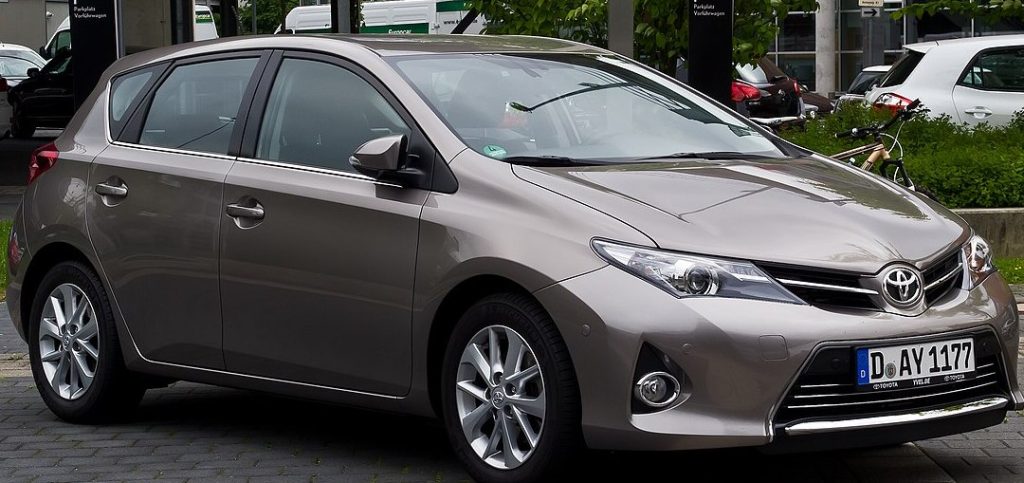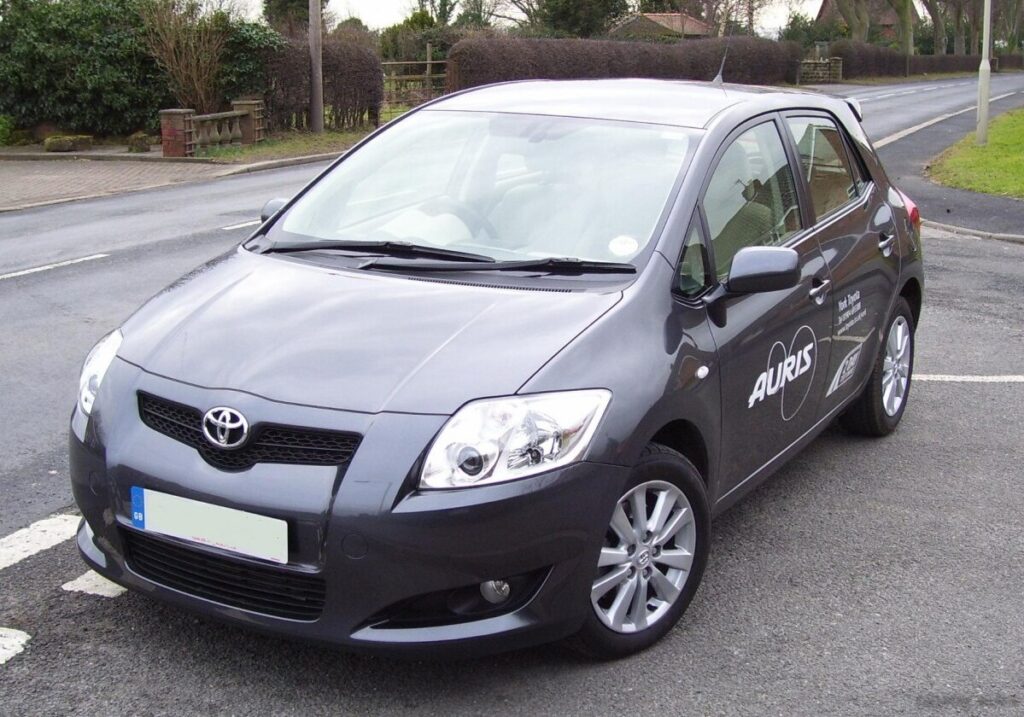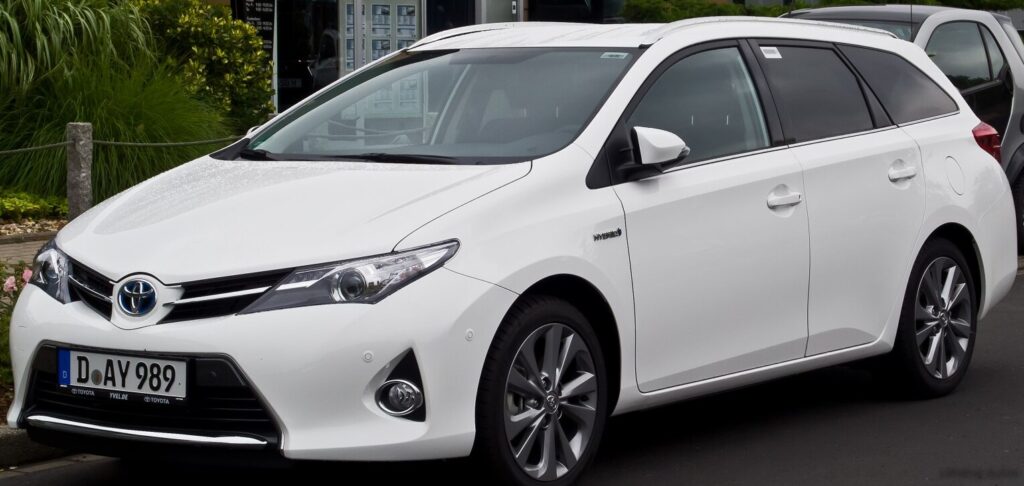
The Toyota Auris II Touring Sports 1.6 Valvematic, produced from 2012 to 2015, represents a practical and fuel-efficient offering within the second generation of Toyota’s Auris range. Positioned as a compact estate (wagon) designed primarily for the European market, the Touring Sports variant expanded the Auris’s appeal by offering increased cargo capacity compared to the hatchback model. This particular 1.6-liter Valvematic engine, producing 132 horsepower, served as a mid-range option, balancing affordability with reasonable performance. It was a key component of Toyota’s strategy to provide a versatile vehicle catering to families and individuals needing a flexible and economical transportation solution.
Technical Specifications
| Brand | Toyota |
| Model | Auris |
| Generation | Auris II Touring Sports |
| Type (Engine) | 1.6 Valvematic (132 Hp) |
| Start of production | 2012 |
| End of production | 2015 |
| Powertrain Architecture | Internal Combustion engine |
| Body type | Station wagon (estate) |
| Seats | 5 |
| Doors | 5 |
| Fuel consumption (urban) | 8.1 l/100 km (29 US mpg, 34.9 UK mpg) |
| Fuel consumption (extra urban) | 5.1 l/100 km (46.1 US mpg, 55.4 UK mpg) |
| Fuel consumption (combined) | 6.2 l/100 km (37.9 US mpg, 45.6 UK mpg) |
| Fuel Type | Petrol (Gasoline) |
| Acceleration 0 – 100 km/h | 10.5 sec |
| Acceleration 0 – 62 mph | 10.5 sec |
| Acceleration 0 – 60 mph | 10 sec |
| Maximum speed | 195 km/h (121.17 mph) |
| Emission standard | Euro 5 J |
| Weight-to-power ratio | 9.1 kg/Hp |
| Weight-to-torque ratio | 7.5 kg/Nm |
| Power | 132 Hp @ 6400 rpm |
| Torque | 160 Nm @ 4400-4400 rpm (118.01 lb.-ft. @ 4400-4400 rpm) |
| Engine layout | Front, Transverse |
| Engine Model/Code | 1ZR-FAE |
| Engine displacement | 1598 cm3 (97.52 cu. in.) |
| Number of cylinders | 4 |
| Engine configuration | Inline |
| Cylinder Bore | 80.5 mm (3.17 in.) |
| Piston Stroke | 78.5 mm (3.09 in.) |
| Compression ratio | 10.7:1 |
| Number of valves per cylinder | 4 |
| Fuel injection system | Multi-port manifold injection |
| Engine aspiration | Naturally aspirated engine |
| Valvetrain | DOHC – Valvematic |
| Engine oil capacity | 4.2 l (4.44 US qt | 3.7 UK qt) |
| Coolant | 5.6 l (5.92 US qt | 4.93 UK qt) |
| Kerb Weight | 1205 kg (2656.57 lbs.) |
| Max. weight | 1835 kg (4045.48 lbs.) |
| Max load | 630 kg (1388.91 lbs.) |
| Trunk (boot) space – minimum | 530 l (18.72 cu. ft.) |
| Fuel tank capacity | 50 l (13.21 US gal | 11 UK gal) |
| Length | 4560 mm (179.53 in.) |
| Width | 1760 mm (69.29 in.) |
| Height | 1460 mm (57.48 in.) |
| Wheelbase | 2600 mm (102.36 in.) |
| Front track | 1535 mm (60.43 in.) |
| Rear (Back) track | 1535 mm (60.43 in.) |
| Minimum turning circle | 10.4 m (34.12 ft.) |
| Drivetrain Architecture | Front wheel drive |
| Number of gears | 6 gears, manual transmission |
| Front suspension | Independent, type McPherson with coil spring and anti-roll bar |
| Rear suspension | Double wishbone |
| Front brakes | Ventilated discs |
| Rear brakes | Disc |
| Assisting systems | ABS (Anti-lock braking system) |
| Steering type | Steering rack and pinion |
Powertrain & Engine Architecture
The heart of this Auris variant is the 1.6-liter 1ZR-FAE inline-four engine. This engine is notable for its Valvematic technology, a variable valve lift system that optimizes engine efficiency and responsiveness. Unlike traditional variable valve timing systems that adjust the timing of valve opening and closing, Valvematic continuously adjusts the lift amount of the intake valves. This allows for a wider range of control over the air-fuel mixture, improving both fuel economy and power output. The engine utilizes multi-port fuel injection and a compression ratio of 10.7:1. The 132 horsepower and 160 Nm (118 lb-ft) of torque are delivered across a relatively broad rev range. The engine is transversely mounted, driving the front wheels. The six-speed manual transmission was the standard offering, providing a good balance between fuel efficiency and driver engagement.
Driving Characteristics
The 1.6 Valvematic engine, paired with the six-speed manual transmission, provides adequate performance for everyday driving. Acceleration from 0-60 mph takes around 10 seconds, and the top speed is 195 km/h (121 mph). While not a particularly sporty setup, the engine is responsive enough for merging onto highways and overtaking slower traffic. The gear ratios are well-chosen to maximize fuel efficiency, but this can sometimes result in the engine feeling slightly strained when climbing hills or carrying a full load. Compared to the more powerful 1.8-liter engine options, this variant offers a more economical driving experience, but at the expense of outright performance. The Valvematic system contributes to a smooth and linear power delivery, making it easy to modulate the throttle and maintain control in various driving conditions.
Equipment & Trim Levels
The 1.6 Valvematic trim typically included standard features such as air conditioning, power windows, power mirrors, a CD player with auxiliary input, and ABS brakes. Higher trim levels, such as the Active and Icon trims, added features like alloy wheels, a touchscreen infotainment system, Bluetooth connectivity, and cruise control. Interior upholstery was typically cloth, with options for upgraded materials on higher trims. Safety features included multiple airbags, stability control, and traction control. Optional extras included a panoramic sunroof, parking sensors, and a navigation system.
Chassis & Braking
The Auris II Touring Sports utilizes a McPherson strut front suspension and a double wishbone rear suspension. This setup provides a comfortable ride quality and predictable handling. The front brakes are ventilated discs, while the rear brakes are solid discs. ABS (Anti-lock Braking System) is standard, enhancing braking performance and stability. The steering is rack and pinion, providing precise and responsive steering feel. The suspension is tuned for comfort rather than outright sportiness, prioritizing ride quality over aggressive cornering. Stabilizer bars are fitted to both the front and rear axles to reduce body roll.
Market Reception & Comparison
The Auris II Touring Sports 1.6 Valvematic was generally well-received by automotive critics for its fuel efficiency, practicality, and comfortable ride. It was seen as a sensible choice for families and individuals needing a versatile and economical estate car. Compared to other trims in the Auris lineup, the 1.6 Valvematic offered a more affordable entry point, making it accessible to a wider range of buyers. However, some critics noted that the engine lacked the punch of the more powerful 1.8-liter options. Fuel economy figures of around 37.9 US mpg combined were competitive for its class. Reliability was generally good, consistent with Toyota’s reputation for building durable and dependable vehicles.
Legacy
The 1.6 Valvematic engine proved to be a reliable and durable powertrain. The Auris II Touring Sports, in general, has maintained a good reputation for reliability in the used car market. While not a particularly sought-after performance variant, the 1.6 Valvematic offers a cost-effective and practical option for buyers looking for a fuel-efficient and spacious estate car. Common maintenance issues are relatively minor, typically involving routine servicing items such as oil changes, brake pad replacements, and tire rotations. The Valvematic system itself is generally robust, but it’s important to ensure regular oil changes to maintain its optimal performance.