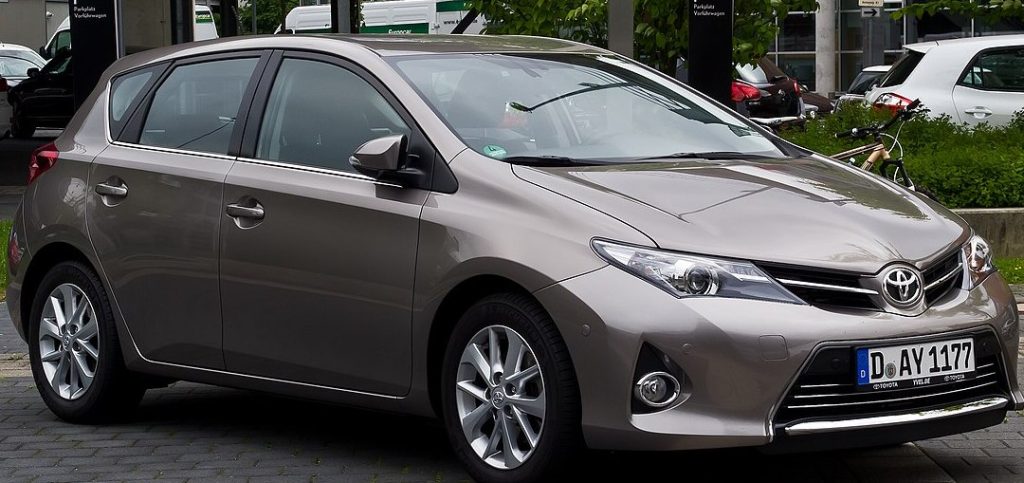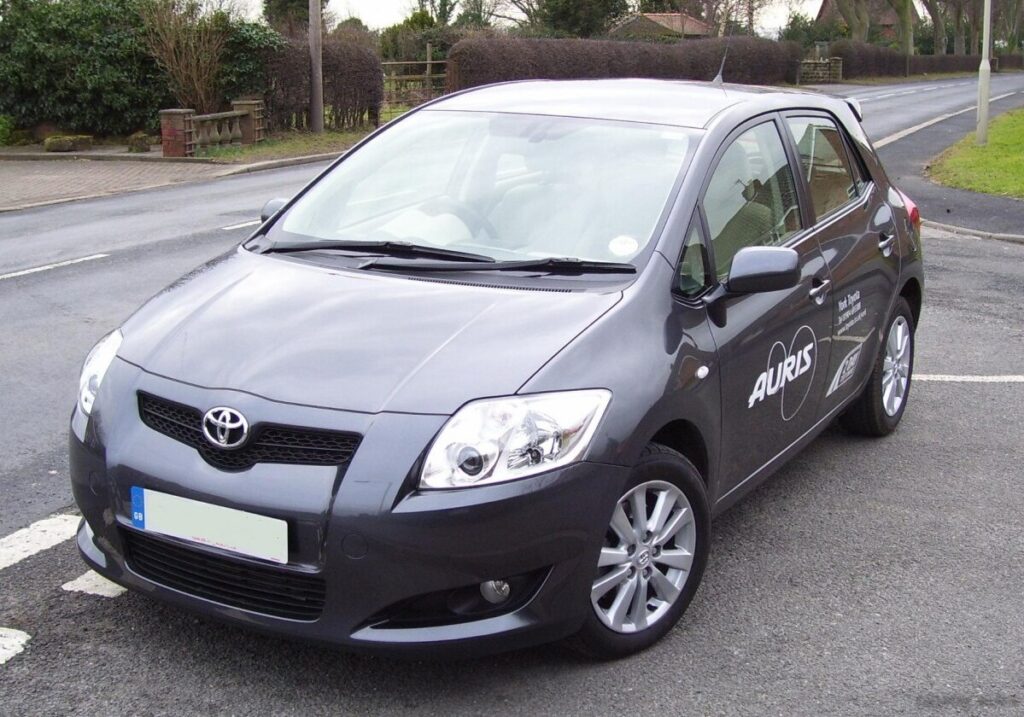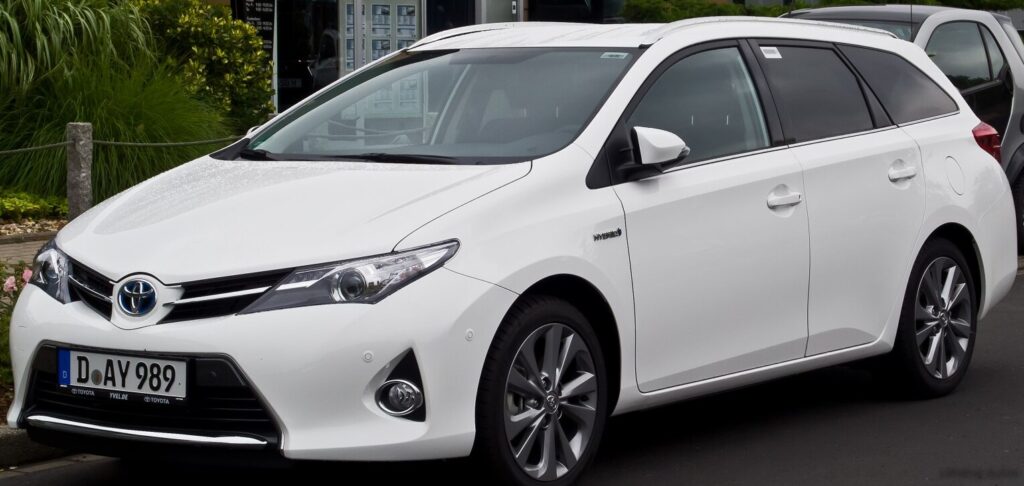
The Toyota Auris II Touring Sports 2.0 D-4D (124 hp) DPF, produced from 2012 to 2015, represents a practical and fuel-efficient offering within the second generation of Toyota’s Auris range. Positioned as a station wagon (estate) variant, it aimed to provide increased cargo capacity and versatility compared to the hatchback model. This particular engine and drivetrain combination was primarily sold in the European market, catering to buyers seeking a balance between economy, practicality, and reasonable performance in a compact family vehicle. It falls within the E-segment in Europe, competing with vehicles like the Volkswagen Golf Estate and Ford Focus Estate.
Technical Specifications
| Brand | Toyota |
| Model | Auris |
| Generation | Auris II Touring Sports |
| Type (Engine) | 2.0 D-4D (124 Hp) DPF |
| Start of production | 2012 |
| End of production | 2015 |
| Powertrain Architecture | Internal Combustion engine |
| Body type | Station wagon (estate) |
| Seats | 5 |
| Doors | 5 |
| Fuel consumption (urban) | 5.4 l/100 km (43.6 US mpg, 52.3 UK mpg, 18.5 km/l) |
| Fuel consumption (extra urban) | 4 l/100 km (58.8 US mpg, 70.6 UK mpg, 25 km/l) |
| Fuel consumption (combined) | 4.5 l/100 km (52.3 US mpg, 62.8 UK mpg, 22.2 km/l) |
| Fuel Type | Diesel |
| Acceleration 0 – 100 km/h | 10.5 sec |
| Acceleration 0 – 62 mph | 10.5 sec |
| Acceleration 0 – 60 mph | 10 sec |
| Maximum speed | 195 km/h (121.17 mph) |
| Emission standard | Euro 5 J |
| Weight-to-power ratio | 10.8 kg/Hp, 92.2 Hp/tonne |
| Weight-to-torque ratio | 4.3 kg/Nm, 230.5 Nm/tonne |
| Power | 124 Hp @ 3600 rpm |
| Power per litre | 62.1 Hp/l |
| Torque | 310 Nm @ 1600-2400 rpm (228.64 lb.-ft. @ 1600-2400 rpm) |
| Engine layout | Front, Transverse |
| Engine Model/Code | 1AD-FTV |
| Engine displacement | 1998 cm3 (121.93 cu. in.) |
| Number of cylinders | 4 |
| Engine configuration | Inline |
| Cylinder Bore | 86 mm (3.39 in.) |
| Piston Stroke | 86 mm (3.39 in.) |
| Compression ratio | 15.8:1 |
| Number of valves per cylinder | 4 |
| Fuel injection system | Diesel Commonrail |
| Engine aspiration | Turbocharger, Intercooler |
| Valvetrain | DOHC |
| Engine oil capacity | 5.9 l (6.23 US qt | 5.19 UK qt) |
| Coolant | 7.8 l (8.24 US qt | 6.86 UK qt) |
| Kerb Weight | 1345 kg (2965.22 lbs.) |
| Max. weight | 1915 kg (4221.85 lbs.) |
| Max load | 570 kg (1256.63 lbs.) |
| Trunk (boot) space – minimum | 530 l (18.72 cu. ft.) |
| Trunk (boot) space – maximum | 1658 l (58.55 cu. ft.) |
| Fuel tank capacity | 50 l (13.21 US gal | 11 UK gal) |
| Length | 4560 mm (179.53 in.) |
| Width | 1760 mm (69.29 in.) |
| Height | 1460 mm (57.48 in.) |
| Wheelbase | 2600 mm (102.36 in.) |
| Front track | 1535 mm (60.43 in.) |
| Rear track | 1535 mm (60.43 in.) |
| Minimum turning circle | 10.4 m (34.12 ft.) |
| Drivetrain Architecture | Front wheel drive |
| Number of gears | 6 gears, manual transmission |
| Front suspension | Independent, type McPherson with coil spring and anti-roll bar |
| Rear suspension | Double wishbone |
| Front brakes | Ventilated discs |
| Rear brakes | Disc |
| Assisting systems | ABS (Anti-lock braking system) |
| Steering type | Steering rack and pinion |
Powertrain & Engine Architecture
The heart of this Auris Touring Sports variant is the 1AD-FTV 2.0-liter inline-four diesel engine. This engine is a member of Toyota’s ‘D-4D’ family, known for its focus on efficiency and low emissions. The 1AD-FTV utilizes a common-rail direct injection system, delivering fuel at extremely high pressure for optimized combustion. A turbocharger with an intercooler is employed to boost power output and improve torque across a wider rev range. The engine features a double overhead camshaft (DOHC) valvetrain with four valves per cylinder, contributing to its breathing efficiency. The engine’s 15.8:1 compression ratio is relatively high for a diesel, aiding in thermal efficiency. The engine is transversely mounted in the front of the vehicle. The six-speed manual transmission was the standard offering, providing a good balance between fuel economy and driver control. The transmission’s gear ratios were tuned to maximize the engine’s torque output, providing adequate acceleration for everyday driving.
Driving Characteristics
The 124 hp 2.0 D-4D engine, paired with the six-speed manual transmission, delivers a respectable, though not particularly sporty, driving experience. Acceleration from 0-62 mph takes around 10.5 seconds, which is adequate for merging onto highways and overtaking slower traffic. The engine’s strong low-end torque (310 Nm) makes it feel responsive in everyday driving situations, particularly when loaded with passengers or cargo. Compared to the higher-output 177 hp version of the 2.0 D-4D, this variant feels noticeably less powerful, especially at higher engine speeds. However, it offers significantly better fuel economy. The manual transmission provides precise shifts, and the gear ratios are well-matched to the engine’s powerband. The Auris Touring Sports handles predictably, with a comfortable ride quality. It’s not a particularly engaging car to drive, but it’s competent and easy to live with.
Equipment & Trim Levels
The 2.0 D-4D variant typically came with a reasonable level of standard equipment. This included air conditioning, power windows, power mirrors, a CD/MP3 audio system, and ABS brakes. Higher trim levels, such as the ‘Icon’ or ‘Excel’ models, added features like alloy wheels, automatic climate control, a touchscreen infotainment system, rear parking sensors, and cruise control. Interior upholstery was typically cloth, with options for partial leather trim on higher-spec models. The dashboard layout was functional and straightforward, prioritizing ease of use over stylistic flair.
Chassis & Braking
The Auris Touring Sports utilizes a McPherson strut front suspension and a double wishbone rear suspension. This setup provides a good balance between ride comfort and handling. The front brakes are ventilated discs, while the rear brakes are solid discs. ABS (Anti-lock Braking System) is standard, enhancing braking performance and stability. The suspension tuning is geared towards comfort, resulting in a relatively soft ride. Stabilizer bars are fitted to both the front and rear axles to reduce body roll during cornering.
Market Reception & Comparison
The Toyota Auris II Touring Sports 2.0 D-4D (124 hp) was generally well-received by automotive critics as a practical and economical family car. Its fuel efficiency was a major selling point, and its spacious interior and large cargo area were also praised. However, some critics found the engine to be somewhat underpowered, particularly when the car was fully loaded. Compared to the 1.6 D-4D engine, the 2.0 D-4D offered more power and torque, but at a slightly higher price point. The 2.0 D-4D also offered better refinement and a more relaxed driving experience. In terms of reliability, the Auris II Touring Sports has a good reputation, with few major issues reported.
Legacy
The 1AD-FTV engine, while not without its complexities, has proven to be a relatively reliable unit when properly maintained. The Auris II Touring Sports 2.0 D-4D (124 hp) remains a popular choice on the used car market, particularly for buyers seeking a fuel-efficient and practical estate car. Regular servicing, including oil changes and filter replacements, is crucial for maintaining the engine’s longevity. The DPF (Diesel Particulate Filter) requires periodic regeneration to prevent clogging, and it’s important to use high-quality diesel fuel to minimize the risk of DPF-related issues. Today, these vehicles represent a good value proposition for those needing a dependable and economical vehicle.