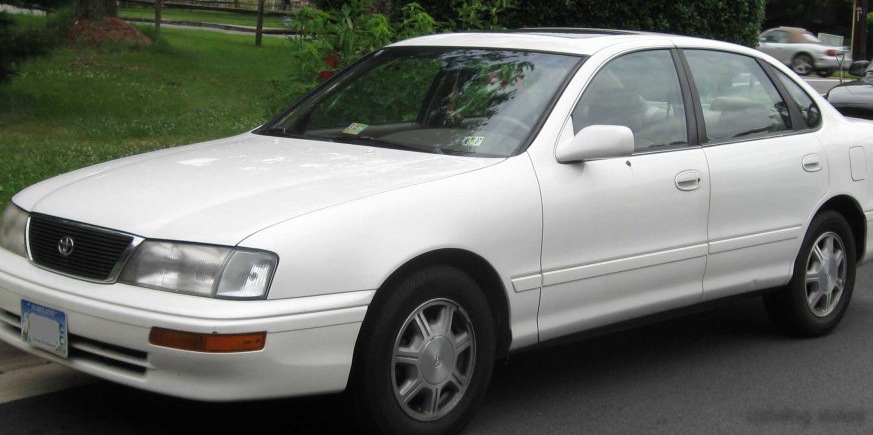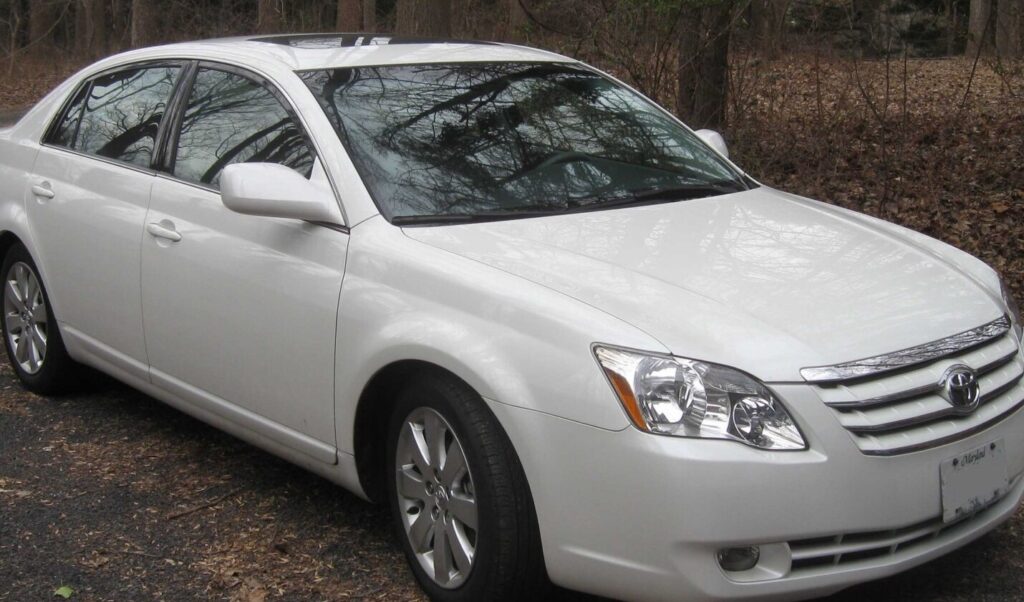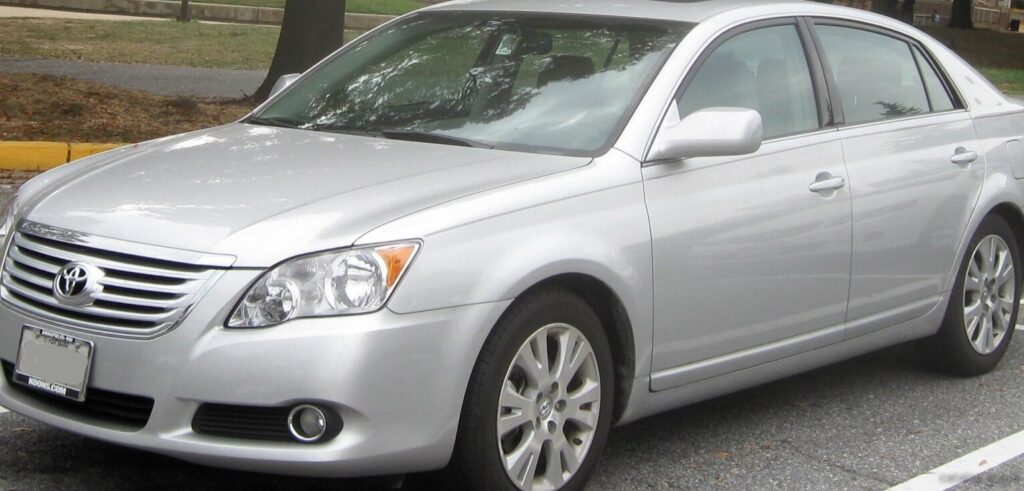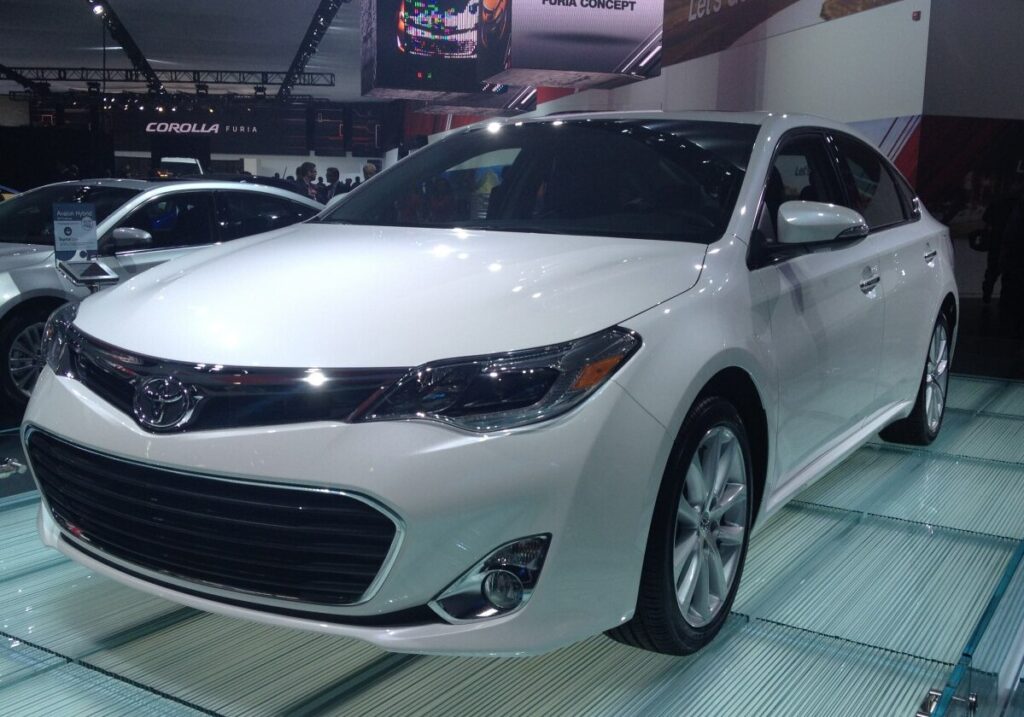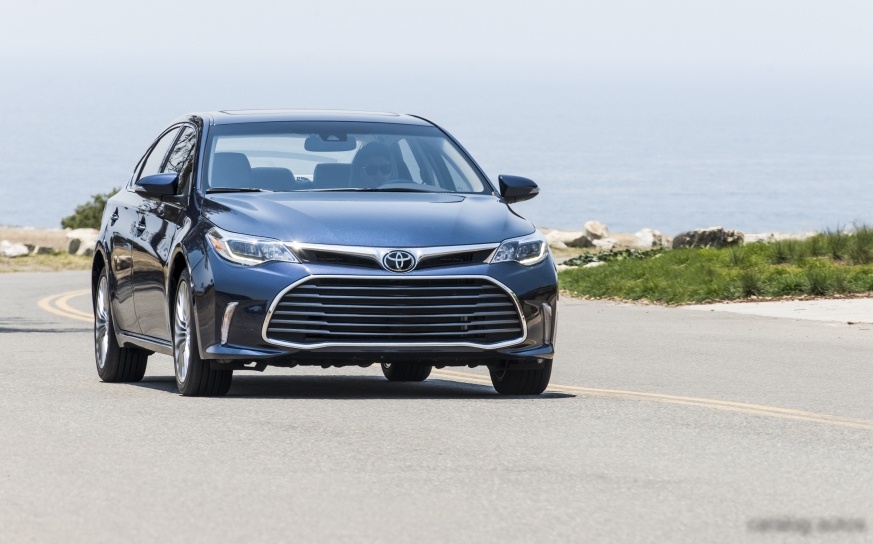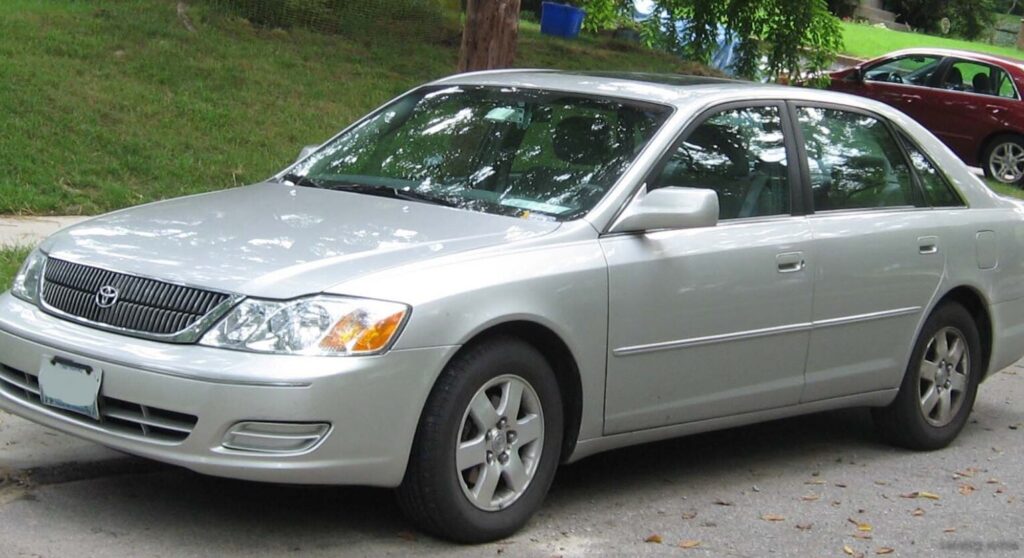
The Toyota Avalon II, specifically the 3.0 i V6 24V variant producing 213 horsepower, was a key model in Toyota’s expansion of the full-size sedan market in North America. Produced from September 1999 to November 2004, this second generation Avalon (designated chassis code XLS20) aimed to provide a more refined and spacious alternative to established American sedans while maintaining Toyota’s reputation for reliability. This particular engine and transmission combination represented a mid-range offering within the Avalon II lineup, positioned between the base 2.5L four-cylinder and the more performance-oriented trims.
Technical Specifications
| Brand | Toyota |
| Model | Avalon |
| Generation | Avalon II |
| Type (Engine) | 3.0 i V6 24V (213 Hp) |
| Start of production | September, 1999 |
| End of production | November, 2004 |
| Powertrain Architecture | Internal Combustion engine |
| Body type | Sedan |
| Seats | 5 |
| Doors | 4 |
| Fuel consumption (urban) | 11.2 l/100 km (21 US mpg) |
| Fuel consumption (extra urban) | 8.1 l/100 km (29 US mpg) |
| Fuel Type | Petrol (Gasoline) |
| Acceleration 0 – 100 km/h | 8.4 sec |
| Acceleration 0 – 62 mph | 8.4 sec |
| Acceleration 0 – 60 mph | 8 sec |
| Maximum speed | 215 km/h (133.59 mph) |
| Weight-to-power ratio | 7.5 kg/Hp |
| Weight-to-torque ratio | 5.3 kg/Nm |
| Power | 213 Hp @ 5800 rpm |
| Torque | 298 Nm @ 4400 rpm (219.79 lb.-ft. @ 4400 rpm) |
| Engine layout | Front, Transverse |
| Engine Model/Code | 1MZ-FE |
| Engine displacement | 2995 cm3 (182.77 cu. in.) |
| Number of cylinders | 6 |
| Engine configuration | V-engine |
| Cylinder Bore | 87.5 mm (3.44 in.) |
| Piston Stroke | 83 mm (3.27 in.) |
| Compression ratio | 10.5:1 |
| Number of valves per cylinder | 4 |
| Fuel injection system | Multi-port manifold injection |
| Engine aspiration | Naturally aspirated engine |
| Valvetrain | DOHC |
| Engine oil capacity | 4.7 l (4.97 US qt | 4.14 UK qt) |
| Coolant | 9 l (9.51 US qt | 7.92 UK qt) |
| Kerb Weight | 1590 kg (3505.35 lbs.) |
| Max. weight | 1975 kg (4354.13 lbs.) |
| Max load | 385 kg (848.78 lbs.) |
| Trunk (boot) space – minimum | 450 l (15.89 cu. ft.) |
| Fuel tank capacity | 70 l (18.49 US gal | 15.4 UK gal) |
| Length | 4874 mm (191.89 in.) |
| Width | 1821 mm (71.69 in.) |
| Height | 1465 mm (57.68 in.) |
| Wheelbase | 2720 mm (107.09 in.) |
| Front track | 1549 mm (60.98 in.) |
| Rear (Back) track | 1524 mm (60 in.) |
| Drivetrain Architecture | The Internal combustion engine (ICE) drives the front wheels of the vehicle. |
| Drive wheel | Front wheel drive |
| Number of gears and type of gearbox | 4 gears, automatic transmission |
| Front suspension | Coil spring |
| Rear suspension | Coil spring |
| Front brakes | Ventilated discs |
| Rear brakes | Disc |
| Assisting systems | ABS (Anti-lock braking system) |
| Steering type | Steering rack and pinion |
| Power steering | Hydraulic Steering |
| Tires size | 205/65 R15 |
INTRODUCTION
The Toyota Avalon II 3.0 i V6 24V (213 Hp) represented Toyota’s commitment to providing a comfortable, reliable, and spacious sedan for the American market. Introduced in 1999 as part of the second-generation Avalon (XLS20), it built upon the success of the first generation by offering increased refinement and a more modern design. This variant, with its 3.0-liter V6 engine and four-speed automatic transmission, was designed to appeal to buyers seeking a balance between performance and fuel efficiency. It was a direct competitor to vehicles like the Honda Accord, Buick Century, and Ford Taurus.
Powertrain & Engine Architecture
At the heart of the Avalon II 3.0 i was the 1MZ-FE engine, a 3.0-liter (2995 cc) naturally aspirated V6. This engine featured a 60-degree V-angle, four valves per cylinder (24V total) operated by a dual overhead camshaft (DOHC) valvetrain, and multi-port fuel injection. The 1MZ-FE was known for its smooth operation and relatively high output for its displacement. The engine produced 213 horsepower at 5800 rpm and 298 Nm (219.79 lb-ft) of torque at 4400 rpm. The engine’s block was constructed from cast iron, while the cylinder heads were made of aluminum. Paired with this engine was a four-speed automatic transmission, designed for smooth and comfortable shifts. This transmission was a conventional hydraulic automatic, lacking the manual shift mode found in some competing vehicles. The transmission’s gear ratios were tuned for relaxed cruising and adequate acceleration.
Driving Characteristics
The 3.0L V6 and four-speed automatic combination in the Avalon II delivered a comfortable and predictable driving experience. Acceleration from 0-60 mph took approximately 8 seconds, which was competitive for the segment at the time, but noticeably slower than models equipped with larger engines or manual transmissions. The automatic transmission prioritized smooth shifts over aggressive performance. The gear ratios were spaced to provide good low-end torque for everyday driving, but lacked the close ratios needed for spirited acceleration. Compared to the base 2.5L four-cylinder Avalon, the 3.0L V6 offered a significant improvement in power and responsiveness. However, it didn’t possess the sporty character of some competitors, focusing instead on a refined and quiet ride.
Equipment & Trim Levels
The 3.0 i V6 trim of the Avalon II typically included features such as air conditioning, power windows and locks, cruise control, a CD player, and cloth upholstery. Higher trim levels, such as the XLS, added features like alloy wheels, a power driver’s seat, and upgraded audio systems. Optional extras included a sunroof, leather upholstery, and a navigation system. The interior design was focused on comfort and spaciousness, with ample legroom for both front and rear passengers. The dashboard layout was straightforward and user-friendly, prioritizing ease of use over flashy design elements.
Chassis & Braking
The Avalon II utilized a front-engine, front-wheel-drive layout. Suspension consisted of coil springs and stabilizer bars at both the front and rear, providing a comfortable ride quality. The front suspension employed MacPherson struts, while the rear used a multi-link setup. Braking duties were handled by ventilated discs at the front and solid discs at the rear. Anti-lock Braking System (ABS) was standard equipment. The steering system was a rack-and-pinion setup with hydraulic power assistance. The Avalon II’s chassis was designed to prioritize ride comfort and noise isolation over sporty handling.
Market Reception & Comparison
The Avalon II 3.0 i V6 was generally well-received by automotive critics. It was praised for its spacious interior, comfortable ride, and Toyota’s renowned reliability. However, some reviewers noted that the handling was not as engaging as some competitors, and the four-speed automatic transmission felt somewhat dated compared to newer transmissions with more gears. Fuel economy was considered average for the segment, with EPA estimates of around 21 mpg city and 29 mpg highway. Compared to the base 2.5L Avalon, the 3.0L V6 offered a noticeable performance improvement, but at a higher price point. Compared to the more expensive trims, the 3.0L V6 offered a good balance of features and performance for the money.
Legacy
The 1MZ-FE engine, found in the Avalon II 3.0 i, is known for its durability and longevity. With proper maintenance, these engines can reliably exceed 200,000 miles. The Avalon II, in general, has earned a reputation as a dependable and long-lasting vehicle. On the used car market today, these Avalons are often sought after by buyers looking for an affordable and reliable full-size sedan. While not a performance icon, the Avalon II 3.0 i V6 remains a testament to Toyota’s commitment to building practical, comfortable, and dependable vehicles.