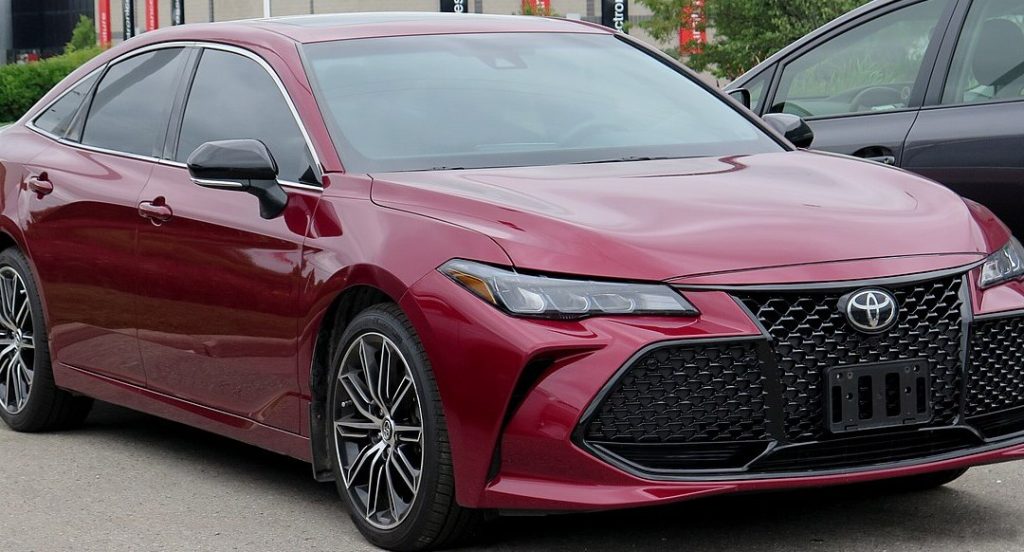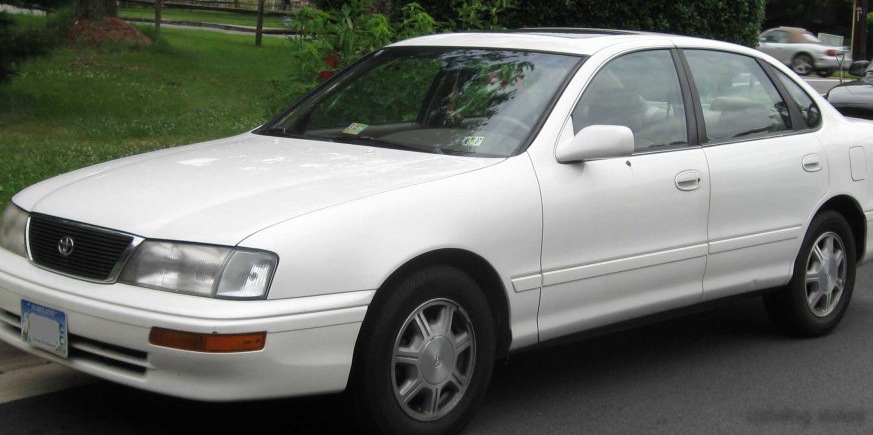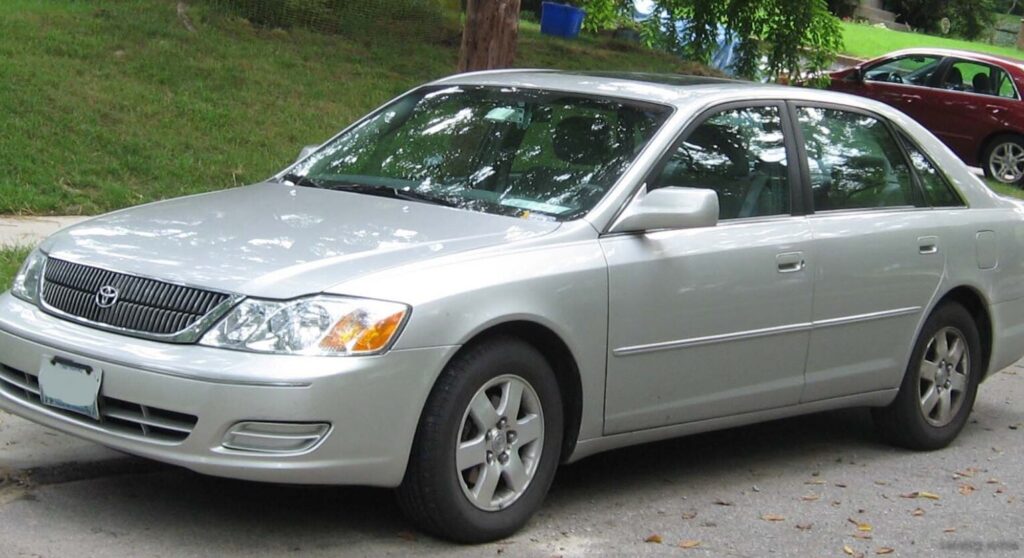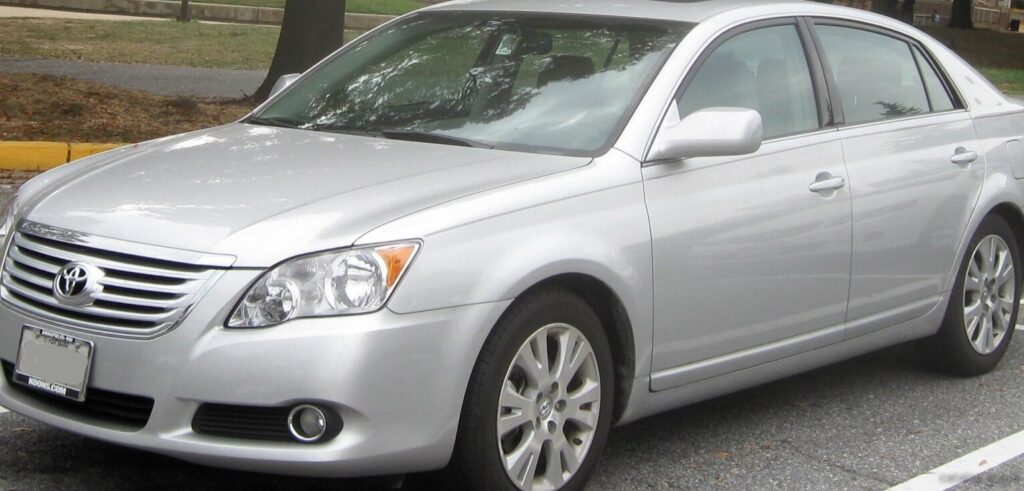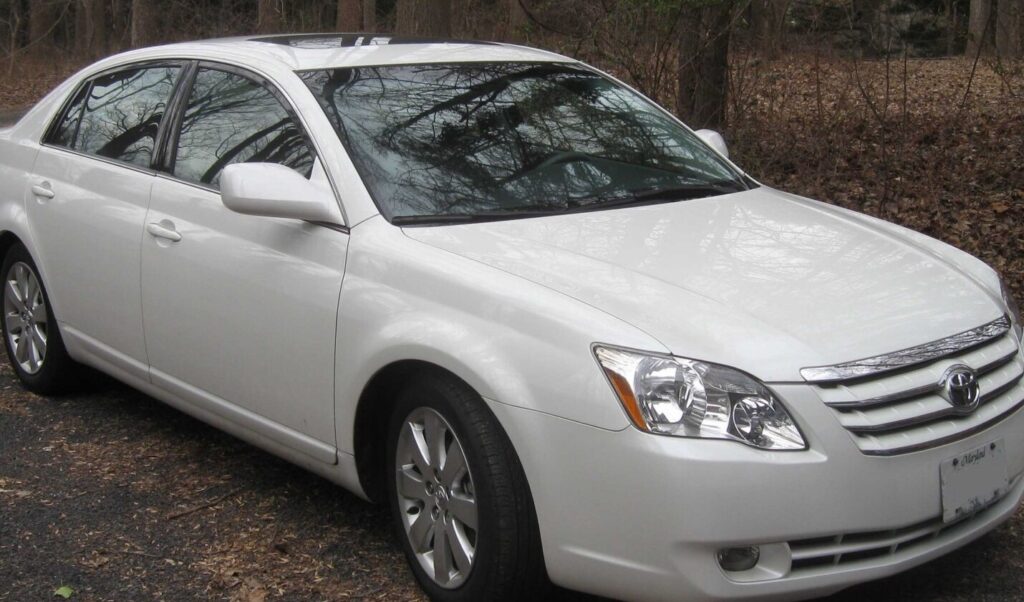
The Toyota Avalon III, produced between 2005 and 2006, represented a significant evolution for Toyota’s full-size sedan. Positioned as a more upscale and spacious alternative to the Camry, the Avalon aimed to capture a larger share of the American market seeking comfort, reliability, and a refined driving experience. The 3.5 V6 variant, equipped with the ECT-i automatic transmission, was a key offering within the Avalon III lineup, representing a balance between performance and fuel efficiency. It served as the primary engine option for those desiring a more powerful experience than the base four-cylinder models, while remaining more accessible than potential future performance-oriented trims.
Technical Specifications
| Brand | Toyota |
| Model | Avalon |
| Generation | Avalon III |
| Type (Engine) | 3.5 V6 (268 Hp) ECT-i |
| Start of production | 2005 |
| End of production | 2006 |
| Powertrain Architecture | Internal Combustion engine |
| Body type | Sedan |
| Seats | 5 |
| Doors | 4 |
| Fuel consumption (urban) | 10.7 l/100 km (22 US mpg) |
| Fuel consumption (extra urban) | 7.6 l/100 km (30.9 US mpg) |
| Fuel Type | Petrol (Gasoline) |
| Emission standard | ULEV |
| Weight-to-power ratio | 5.9 kg/Hp |
| Weight-to-torque ratio | 4.7 kg/Nm |
| Power | 268 Hp @ 6200 rpm |
| Power per litre | 77.5 Hp/l |
| Torque | 336 Nm @ 4700 rpm (247.82 lb.-ft. @ 4700 rpm) |
| Engine layout | Front, Transverse |
| Engine Model/Code | 2GR-FE |
| Engine displacement | 3456 cm3 (210.9 cu. in.) |
| Number of cylinders | 6 |
| Engine configuration | V-engine |
| Cylinder Bore | 93.98 mm (3.7 in.) |
| Piston Stroke | 83.06 mm (3.27 in.) |
| Compression ratio | 10.8:1 |
| Number of valves per cylinder | 4 |
| Fuel injection system | Multi-port manifold injection |
| Engine aspiration | Naturally aspirated engine |
| Valvetrain | DOHC, Dual VVT-i |
| Engine oil capacity | 6.2 l (6.55 US qt | 5.46 UK qt) |
| Coolant | 8.3 l (8.77 US qt | 7.3 UK qt) |
| Kerb Weight | 1583 kg (3489.92 lbs.) |
| Trunk (boot) space – minimum | 408 l (14.41 cu. ft.) |
| Fuel tank capacity | 70 l (18.49 US gal | 15.4 UK gal) |
| Length | 5010 mm (197.24 in.) |
| Width | 1850 mm (72.83 in.) |
| Height | 1485 mm (58.46 in.) |
| Wheelbase | 2820 mm (111.02 in.) |
| Front track | 1580 mm (62.2 in.) |
| Rear (Back) track | 1565 mm (61.61 in.) |
| Ride height (ground clearance) | 135 mm (5.31 in.) |
| Drag coefficient (Cd) | 0.291 |
| Minimum turning circle (turning diameter) | 11.2 m (36.75 ft.) |
| Drivetrain Architecture | The Internal combustion engine (ICE) drives the front wheels of the vehicle. |
| Drive wheel | Front wheel drive |
| Number of gears and type of gearbox | 5 gears, automatic transmission ECT-i |
| Front suspension | Independent, type McPherson with coil spring and anti-roll bar |
| Rear suspension | McPherson, Transverse stabilizer |
| Front brakes | Ventilated discs, 297.18 mm |
| Rear brakes | Disc, 276.86 mm |
| Assisting systems | ABS (Anti-lock braking system) |
| Steering type | Steering rack and pinion |
| Power steering | Hydraulic Steering |
| Tires size | 215/60 R16; 215/55 R17 |
| Wheel rims size | 6.5J x 16; 7J x 17 |
INTRODUCTION
The 2005-2006 Toyota Avalon III 3.5 V6 ECT-i represented a significant step forward in Toyota’s full-size sedan offerings. Built on the robust XV40 platform, this generation Avalon aimed to provide a more refined and spacious experience than its predecessor. The 3.5-liter V6 engine, paired with Toyota’s electronically controlled intelligent transmission (ECT-i), was the flagship powertrain for the Avalon III, offering a compelling blend of performance and fuel economy. This variant occupied the mid-to-upper range of the Avalon lineup, offering more power and features than the base 2.4-liter four-cylinder models, but remaining more accessible than any potential future high-performance trims.
Powertrain & Engine Architecture
At the heart of the Avalon III 3.5 V6 lies the 2GR-FE engine, a 3.5-liter (3456 cc) naturally aspirated V6. This engine utilizes a 60-degree V-angle configuration, contributing to a smoother power delivery and reduced vibrations. The 2GR-FE features a dual overhead camshaft (DOHC) design with Toyota’s Variable Valve Timing-intelligent (VVT-i) system on both intake and exhaust valves. This system optimizes valve timing based on engine speed and load, enhancing both power and fuel efficiency. Fuel delivery is managed by a multi-port fuel injection system. The engine produces 268 horsepower at 6200 rpm and 247.82 lb-ft of torque at 4700 rpm.
The ECT-i automatic transmission is a five-speed unit designed to provide smooth and responsive shifting. It incorporates electronic controls to adapt to driving conditions and driver input. The transmission features several driving modes, including “Economy” and “Power,” allowing drivers to prioritize fuel efficiency or performance. The transmission’s gear ratios are tuned to balance acceleration and highway cruising efficiency.
Driving Characteristics
The Avalon III 3.5 V6 ECT-i delivered a comfortable and refined driving experience. The 268 horsepower engine provided ample power for everyday driving and confident highway passing maneuvers. While not a sports sedan, the Avalon offered brisk acceleration, with 0-60 mph times typically around 7.0-7.5 seconds. The ECT-i transmission shifted smoothly and predictably, although some reviewers noted a slight hesitation during downshifts. Compared to the four-cylinder Avalon models, the V6 offered a noticeably more responsive and engaging driving experience. Compared to potential future performance trims, the 3.5L offered a more balanced approach, prioritizing comfort and refinement over outright speed.
Equipment & Trim Levels
The 3.5 V6 trim of the Avalon III typically included a generous array of standard features. These included power-adjustable front seats, a premium audio system, automatic climate control, and keyless entry. Higher trim levels, such as the XLS, added features like leather upholstery, a sunroof, and upgraded audio systems. Optional extras included navigation systems, heated seats, and a rear-seat entertainment system. Interior materials were generally of high quality, contributing to the Avalon’s upscale feel.
Chassis & Braking
The Avalon III utilized a front-engine, front-wheel-drive layout. The suspension consisted of an independent McPherson strut setup at the front and a McPherson strut arrangement at the rear, incorporating a transverse stabilizer bar. This suspension configuration provided a comfortable ride, effectively absorbing bumps and road imperfections. Braking duties were handled by ventilated discs at the front and solid discs at the rear, equipped with an Anti-lock Braking System (ABS) as standard. The braking system provided adequate stopping power for everyday driving conditions.
Market Reception & Comparison
The Avalon III 3.5 V6 was generally well-received by automotive critics. It was praised for its spacious interior, comfortable ride, and refined powertrain. Fuel economy was considered respectable for a full-size sedan, with EPA estimates of 22 mpg city and 30 mpg highway. Compared to other V6-powered sedans in its class, such as the Honda Accord and Nissan Maxima, the Avalon offered a more luxurious and spacious interior, but potentially less sporty handling. The Avalon’s reputation for reliability was also a significant selling point.
Legacy
The 2GR-FE engine, used in the Avalon III 3.5 V6, has proven to be a remarkably durable and reliable powertrain. These engines are known to exceed 200,000 miles with proper maintenance. On the used car market, the 2005-2006 Avalon III 3.5 V6 remains a popular choice for buyers seeking a comfortable, reliable, and spacious full-size sedan. While not a collector’s item, these Avalons hold their value reasonably well, particularly those in good condition with low mileage. The ECT-i transmission, while generally reliable, may require occasional servicing to ensure smooth operation. Overall, the Avalon III 3.5 V6 represents a well-engineered and durable vehicle that continues to provide years of dependable service.