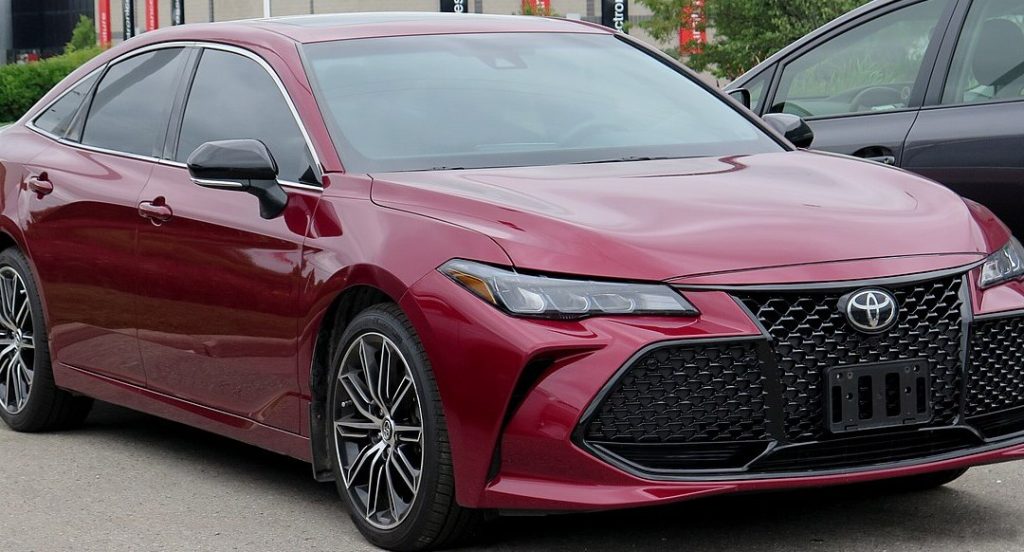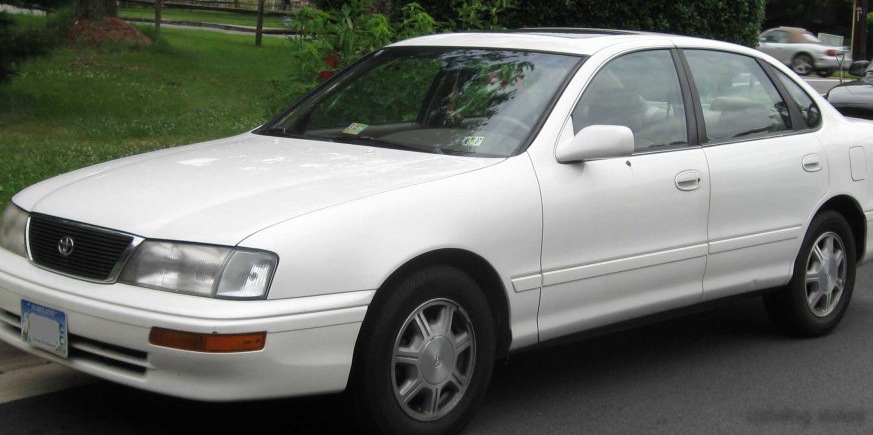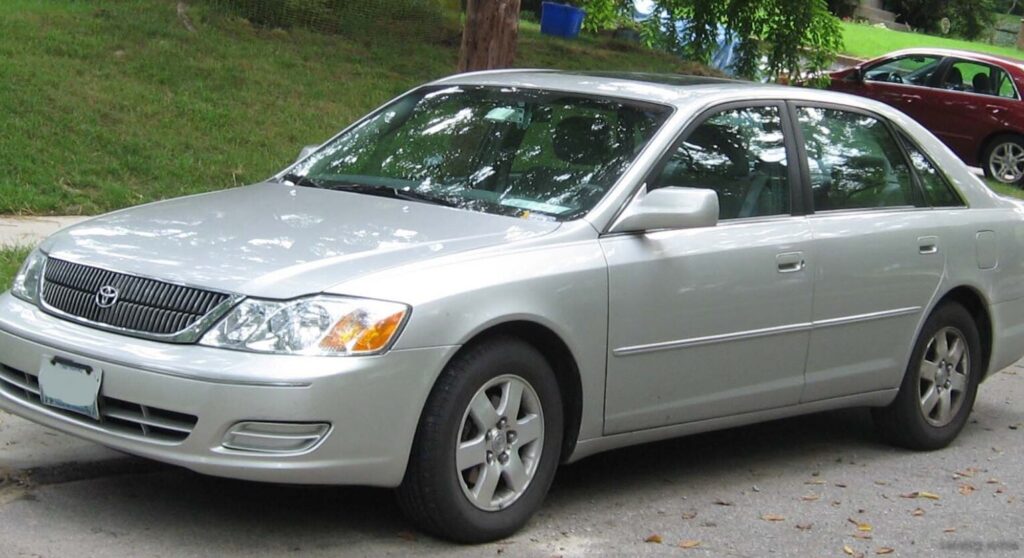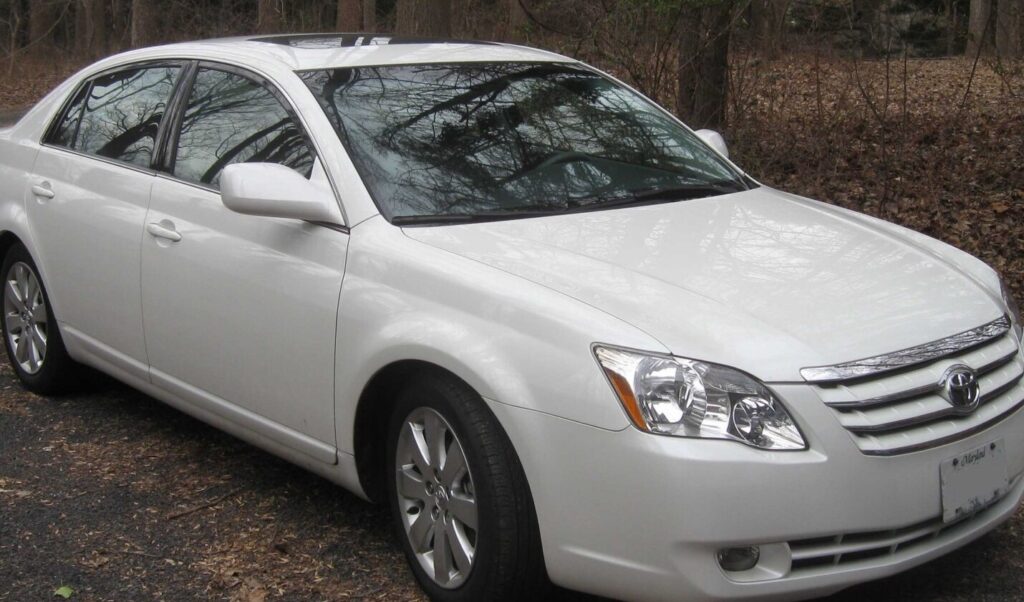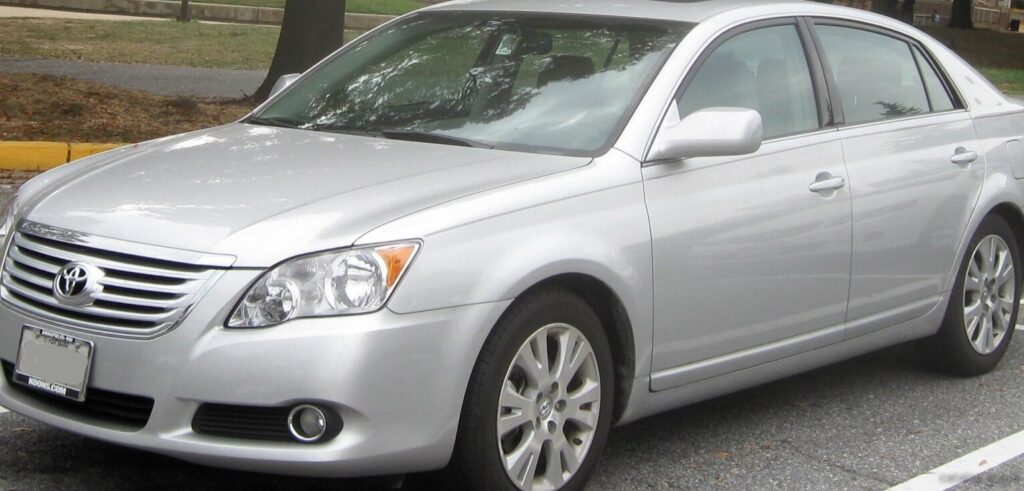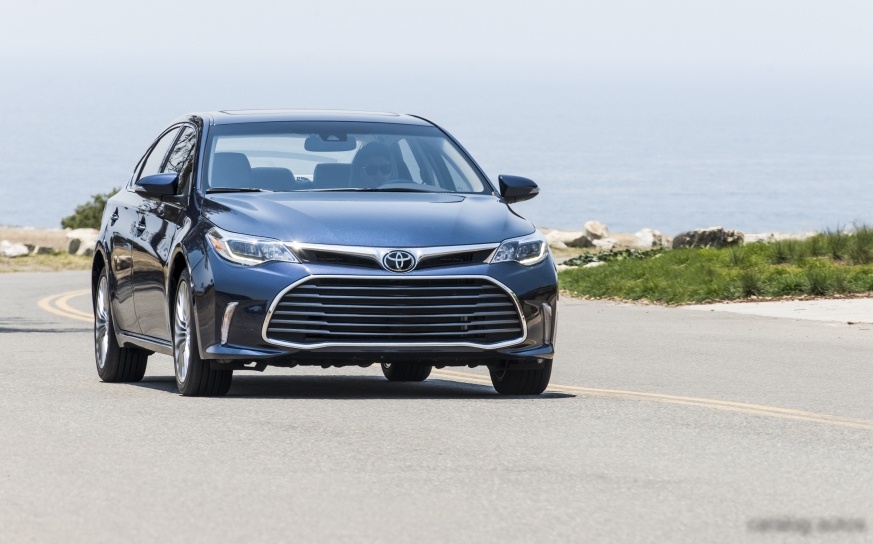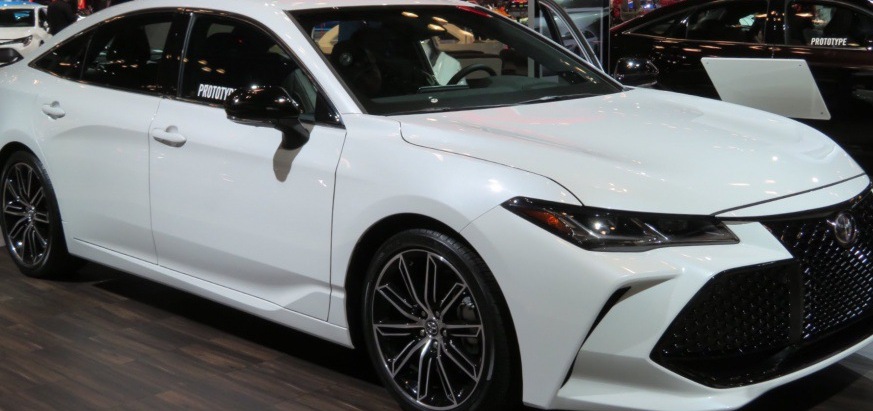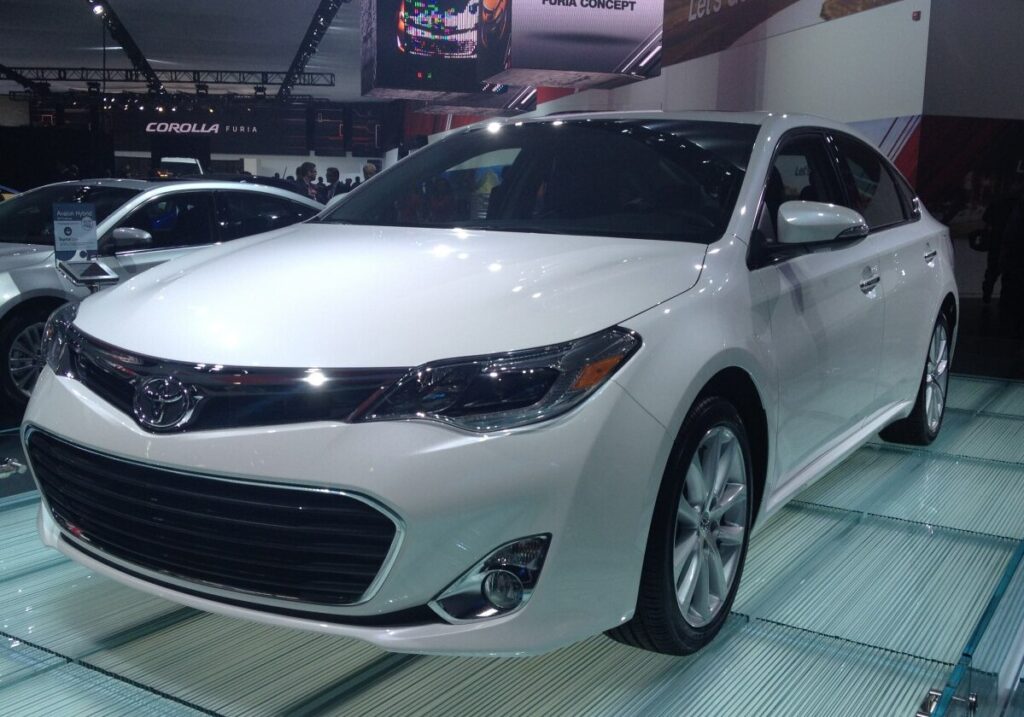
The Toyota Avalon IV 2.5 Hybrid, produced from November 2012 to February 2015, represented a significant step forward in full hybrid technology for the American market. Positioned as a premium, full-size sedan, the Avalon IV aimed to deliver a blend of comfort, efficiency, and reliability. This particular 2.5-liter hybrid variant, utilizing Toyota’s ECVT (Electronically Controlled Continuously Variable Transmission), served as a core offering within the fourth-generation Avalon lineup, appealing to buyers seeking a sophisticated and fuel-conscious alternative to traditional large sedans. It competed directly with vehicles like the Buick LaCrosse, Ford Taurus, and Chrysler 300, offering a distinct advantage in fuel economy thanks to its hybrid powertrain.
Technical Specifications
| Brand | Toyota |
| Model | Avalon |
| Generation | Avalon IV |
| Type (Engine) | 2.5 (203 Hp) Hybrid ECVT |
| Start of production | November, 2012 |
| End of production | February, 2015 |
| Powertrain Architecture | FHEV (Full Hybrid Electric Vehicle) |
| Body type | Sedan |
| Seats | 5 |
| Doors | 4 |
| Fuel consumption (urban) | 5.9 l/100 km (39.9 US mpg, 47.9 UK mpg, 16.9 km/l) |
| Fuel consumption (extra urban) | 6 l/100 km (39.2 US mpg, 47.1 UK mpg, 16.7 km/l) |
| Fuel consumption (combined) | 5.9 l/100 km (39.9 US mpg, 47.9 UK mpg, 16.9 km/l) |
| Fuel Type | Petrol (Gasoline) |
| Emission standard | SULEV |
| Weight-to-power ratio | 8 kg/Hp, 124.5 Hp/tonne |
| Battery voltage | 244.8 V |
| Battery technology | Nickel-metal hydride (NiMH) |
| Battery location | Under the trunk |
| Electric motor power | 143 Hp |
| Electric motor Torque | 270 Nm (199.14 lb.-ft.) |
| Electric motor location | Integrated into the transmission |
| Electric motor type | Synchronous |
| System power | 203 Hp |
| Power | 203 Hp |
| Power per litre | 81.4 Hp/l |
| Engine layout | Front, Transverse |
| Engine Model/Code | 2AR-FXE |
| Engine displacement | 2494 cm3 (152.19 cu. in.) |
| Number of cylinders | 4 |
| Engine configuration | Inline |
| Cylinder Bore | 90 mm (3.54 in.) |
| Piston Stroke | 98 mm (3.86 in.) |
| Number of valves per cylinder | 4 |
| Fuel injection system | Multi-port manifold injection |
| Engine aspiration | Naturally aspirated engine |
| Valvetrain | DOHC, VVT-i |
| Engine oil capacity | 4.4 l (4.65 US qt | 3.87 UK qt) |
| Coolant | 7.2 l (7.61 US qt | 6.34 UK qt) |
| Kerb Weight | 1630-1650 kg (3593.53 – 3637.63 lbs.) |
| Trunk (boot) space (minimum) | 396 l (13.98 cu. ft.) |
| Fuel tank capacity | 64 l (16.91 US gal | 14.08 UK gal) |
| Length | 4961 mm (195.31 in.) |
| Width | 1834 mm (72.2 in.) |
| Height | 1461 mm (57.52 in.) |
| Wheelbase | 2819 mm (110.98 in.) |
| Front track | 1590 mm (62.6 in.) |
| Rear (Back) track | 1580 mm (62.2 in.) |
| Ride height (ground clearance) | 140 mm (5.51 in.) |
| Drag coefficient (Cd) | 0.28 |
| Minimum turning circle (turning diameter) | 12.2 m (40.03 ft.) |
| Drivetrain Architecture | The Internal combustion engine (ICE) and electric motor drive the front wheels of the car with the ability to work in full electric or mixed mode. |
| Drive wheel | Front wheel drive |
| Number of gears and type of gearbox | automatic transmission ECVT |
| Front suspension | Independent, type McPherson with coil spring and anti-roll bar |
| Rear suspension | McPherson, Transverse stabilizer |
| Front brakes | Ventilated discs, 295.91 mm |
| Rear brakes | Disc, 279.4 mm |
| Assisting systems | ABS (Anti-lock braking system) |
| Steering type | Steering rack and pinion |
| Power steering | Electric Steering |
| Tires size | 215/55 R17 |
| Wheel rims size | 17 |
Powertrain & Engine Architecture
The heart of the Avalon Hybrid is Toyota’s 2AR-FXE 2.5-liter inline-four engine. This engine utilizes a multi-port fuel injection system and a Dual Variable Valve Timing with intelligence (VVT-i) system to optimize performance and fuel efficiency. The engine produces 203 horsepower when combined with the electric motor. The electric motor, a synchronous type, contributes an additional 143 horsepower and 270 Nm (199 lb-ft) of torque. The powertrain’s architecture is a full hybrid system (FHEV), meaning it can operate on electric power alone for short distances and at lower speeds. The nickel-metal hydride (NiMH) battery pack, located under the trunk floor, provides the energy storage for the electric motor. The ECVT, a key component, seamlessly blends the power from the engine and motor, offering a smooth and continuously variable gear ratio. Unlike traditional automatic transmissions, the ECVT doesn’t have fixed gears, resulting in a more efficient and refined driving experience.
Driving Characteristics
The 203-horsepower hybrid powertrain delivers adequate, though not exhilarating, performance. Acceleration from 0 to 60 mph takes around 8.2 seconds. The ECVT contributes to a very smooth and linear power delivery, lacking the distinct shift points of a conventional automatic. While this provides a comfortable ride, it can feel somewhat disconnected to drivers accustomed to more traditional transmissions. The hybrid system prioritizes fuel efficiency, and the engine frequently shuts off during deceleration and at stops. The regenerative braking system captures energy during braking, further enhancing fuel economy. Compared to the standard 3.5-liter V6 Avalon, the hybrid offers significantly better fuel economy but sacrifices some outright performance. The hybrid also feels slightly heavier due to the battery pack, impacting handling dynamics to a small degree.
Equipment & Trim Levels
The Avalon Hybrid was typically offered in XLE and Limited trim levels. The XLE came standard with features like tri-zone automatic climate control, a touchscreen infotainment system, Bluetooth connectivity, and a rearview camera. Leather upholstery, heated and ventilated front seats, a premium audio system, and advanced safety features like lane departure alert and adaptive cruise control were typically included on the Limited trim. Optional extras included a navigation system, a sunroof, and upgraded interior trim materials. The interior design emphasized comfort and spaciousness, with high-quality materials and a user-friendly layout.
Chassis & Braking
The Avalon IV utilizes a McPherson strut front suspension and a multi-link rear suspension, tuned for a comfortable ride. Stabilizer bars are included at both ends to reduce body roll during cornering. The braking system consists of ventilated discs at the front and solid discs at the rear. ABS (Anti-lock Braking System) is standard. The steering is electric power-assisted, providing light and precise steering feel. The Avalon’s chassis is designed to prioritize ride comfort over sporty handling, making it a pleasant cruiser for long distances.
Market Reception & Comparison
The Avalon Hybrid was generally well-received by critics for its fuel efficiency, comfortable ride, and spacious interior. However, some reviewers noted the lack of sporty handling and the somewhat uninspiring acceleration. Compared to the standard Avalon, the hybrid offered a significant advantage in fuel economy, achieving around 40 mpg in combined driving. Reliability was also a strong point, with the Avalon consistently ranking high in consumer reports. The hybrid powertrain proved to be durable and required minimal maintenance.
Legacy
The Toyota Avalon IV 2.5 Hybrid established Toyota as a leader in hybrid technology within the full-size sedan segment. The 2AR-FXE engine and ECVT powertrain proved to be reliable and efficient, and many examples remain on the road today. In the used car market, these Avalons are sought after for their fuel economy and reputation for dependability. While not a performance car, the Avalon Hybrid offered a compelling combination of comfort, efficiency, and reliability, making it a popular choice for buyers seeking a practical and well-equipped sedan.