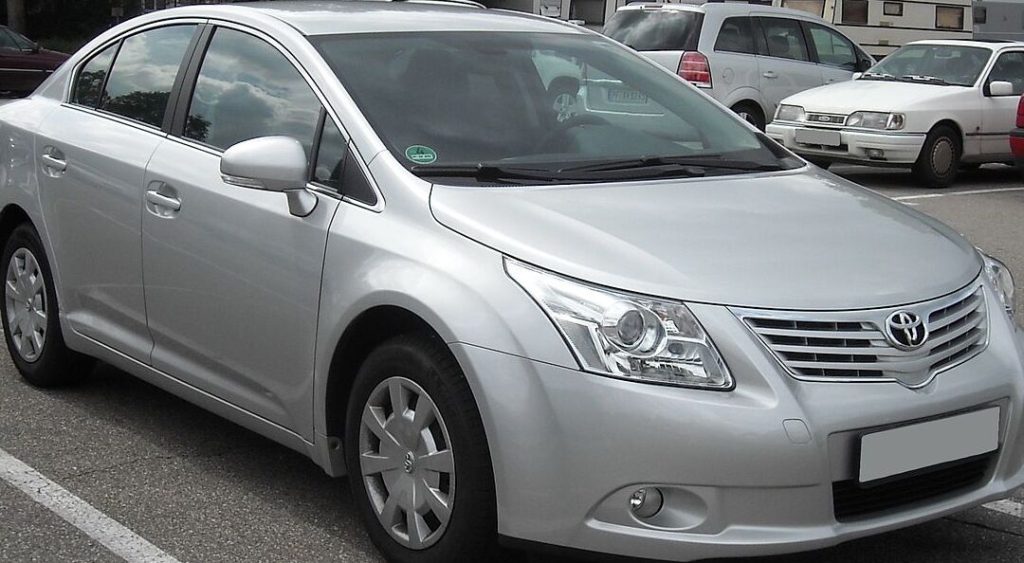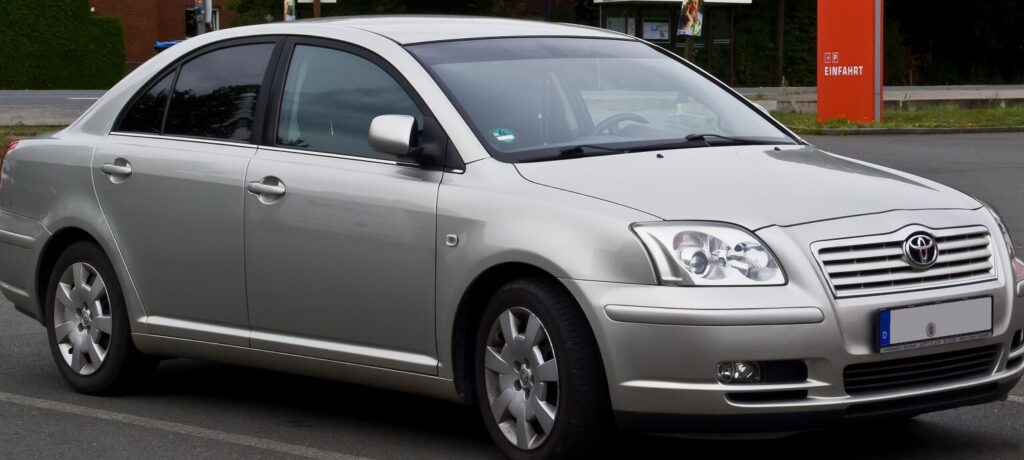
The Toyota Avensis II 2.0 D-4D (116 hp) was a diesel-powered variant of the second-generation Avensis, produced between 2003 and 2005. Positioned as a mid-range offering within the Avensis lineup, it aimed to balance fuel efficiency with reasonable performance for European markets. The Avensis II, built on the T27 platform, represented Toyota’s continued effort to establish a strong presence in the competitive mid-size family car segment. This particular engine and transmission combination offered a compelling alternative to gasoline engines and higher-output diesel options, appealing to drivers prioritizing economy and practicality.
Technical Specifications
| Brand | Toyota |
| Model | Avensis |
| Generation | Avensis II |
| Type (Engine) | 2.0 D-4D (116 Hp) |
| Start of production | 2003 |
| End of production | 2005 |
| Powertrain Architecture | Internal Combustion engine |
| Body type | Sedan |
| Seats | 5 |
| Doors | 4 |
| Fuel consumption (urban) | 7.5 l/100 km (31.4 US mpg) |
| Fuel consumption (extra urban) | 4.9 l/100 km (48 US mpg) |
| Fuel consumption (combined) | 5.6 l/100 km (42 US mpg) |
| Fuel Type | Diesel |
| Acceleration 0 – 100 km/h | 11.2 sec |
| Acceleration 0 – 62 mph | 11.2 sec |
| Acceleration 0 – 60 mph | 10.6 sec |
| Maximum speed | 195 km/h (121.17 mph) |
| Weight-to-power ratio | 11.9 kg/Hp |
| Weight-to-torque ratio | 4.9 kg/Nm |
| Power | 116 Hp @ 3600 rpm |
| Torque | 280 Nm @ 2000 rpm (206.52 lb.-ft. @ 2000 rpm) |
| Engine layout | Front, Transverse |
| Engine Model/Code | 1CD-FTV |
| Engine displacement | 1995 cm3 (121.74 cu. in.) |
| Number of cylinders | 4 |
| Engine configuration | Inline |
| Cylinder Bore | 82.2 mm (3.24 in.) |
| Piston Stroke | 94 mm (3.7 in.) |
| Compression ratio | 18.6:1 |
| Number of valves per cylinder | 4 |
| Fuel injection system | Diesel Commonrail |
| Engine aspiration | Turbocharger, Intercooler |
| Valvetrain | DOHC |
| Engine oil capacity | 5.9 l (6.23 US qt | 5.19 UK qt) |
| Coolant capacity | 7.6 l (8.03 US qt | 6.69 UK qt) |
| Kerb Weight | 1380 kg (3042.38 lbs.) |
| Max. weight | 1970 kg (4343.11 lbs.) |
| Max load | 590 kg (1300.73 lbs.) |
| Trunk (boot) space – minimum | 520 l (18.36 cu. ft.) |
| Fuel tank capacity | 60 l (15.85 US gal | 13.2 UK gal) |
| Length | 4630 mm (182.28 in.) |
| Width | 1760 mm (69.29 in.) |
| Height | 1480 mm (58.27 in.) |
| Wheelbase | 2700 mm (106.3 in.) |
| Front track | 1505 mm (59.25 in.) |
| Rear track | 1510 mm (59.45 in.) |
| Drivetrain Architecture | Front wheel drive |
| Number of gears | 5 |
| Gearbox type | Manual transmission |
Powertrain & Engine Architecture
The heart of the Avensis II 2.0 D-4D was the 1CD-FTV engine, a 1.995-liter inline-four cylinder diesel. This engine was a key component of Toyota’s D-4D (Direct-injection 4-cylinder Diesel) technology, emphasizing efficiency and reduced emissions. The 1CD-FTV utilized a common rail direct injection system, delivering fuel at extremely high pressure for optimized combustion. A turbocharger with an intercooler was employed to boost power output and improve torque across the rev range. The engine featured a double overhead camshaft (DOHC) valvetrain with four valves per cylinder, contributing to its breathing efficiency. The 5-speed manual transmission was the standard offering for this variant, providing a balance between fuel economy and driver control.
Driving Characteristics
The 116 hp output and 280 Nm (206 lb-ft) of torque provided adequate, though not exhilarating, performance. Acceleration from 0-60 mph took around 10.6 seconds, making it suitable for everyday driving and highway cruising. Compared to the more powerful 2.0-liter gasoline engine or the higher-output diesel variants, the 2.0 D-4D prioritized fuel economy over outright speed. The manual transmission allowed for precise gear selection, but the relatively long gearing emphasized fuel efficiency at the expense of responsiveness. The engine delivered a usable amount of torque from low RPMs, making it easy to drive in urban environments. However, it lacked the punch of the more powerful engines when overtaking or climbing hills.
Equipment & Trim Levels
The 2.0 D-4D typically came equipped with a reasonable level of standard features. Interior upholstery was generally cloth, with options for upgraded materials available. Standard equipment often included air conditioning, power windows, central locking, and an audio system. Higher trim levels, such as the ‘T2’ or ‘T3’ variants, added features like alloy wheels, climate control, and upgraded audio systems. Optional extras included a sunroof, leather upholstery, and parking sensors. The overall interior design was functional and well-built, reflecting Toyota’s reputation for quality and reliability.
Chassis & Braking
The Avensis II featured a conventional suspension setup with coil springs and dampers all around. The front suspension utilized MacPherson struts, while the rear employed a multi-link system. This configuration provided a comfortable ride quality, absorbing bumps and imperfections in the road surface effectively. Braking duties were handled by ventilated discs on the front wheels and solid discs on the rear. Anti-lock Braking System (ABS) was standard, enhancing safety and control during emergency braking situations. The chassis was designed to provide a stable and predictable handling experience, prioritizing comfort and ease of driving over sporty dynamics.
Market Reception & Comparison
The Avensis II 2.0 D-4D was generally well-received by automotive critics as a practical and economical family car. Its fuel efficiency was a major selling point, particularly in Europe where diesel engines were highly popular. Compared to the gasoline-powered Avensis models, the 2.0 D-4D offered significantly better fuel economy. However, it was often criticized for its relatively modest performance compared to some of its competitors. The higher-output diesel variants within the Avensis range provided more power but came at a higher price point. The 2.0 D-4D struck a balance between affordability, fuel economy, and usability, making it a popular choice for fleet buyers and private motorists alike.
Legacy
The 1CD-FTV engine, found in the Avensis II 2.0 D-4D, proved to be a relatively reliable powertrain. While diesel engines are inherently more complex than their gasoline counterparts, the 1CD-FTV benefited from Toyota’s engineering expertise and build quality. Common issues, when they arose, often related to the diesel particulate filter (DPF) or the fuel injection system, particularly on vehicles that were primarily used for short journeys. Today, well-maintained examples of the Avensis II 2.0 D-4D can still be found on the used car market, offering a cost-effective and economical transportation option. Its reputation for reliability and fuel efficiency continues to make it a desirable choice for budget-conscious buyers.