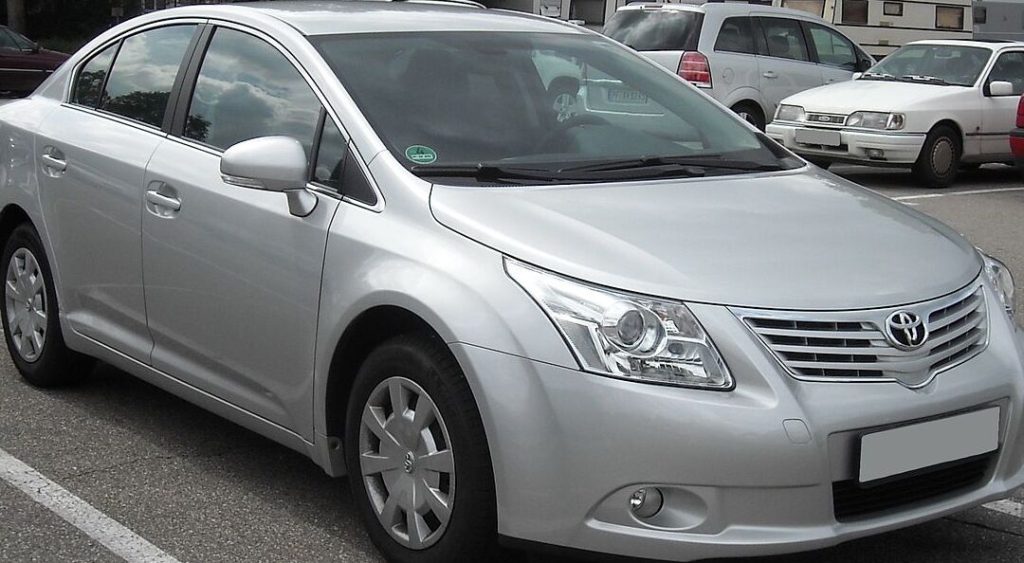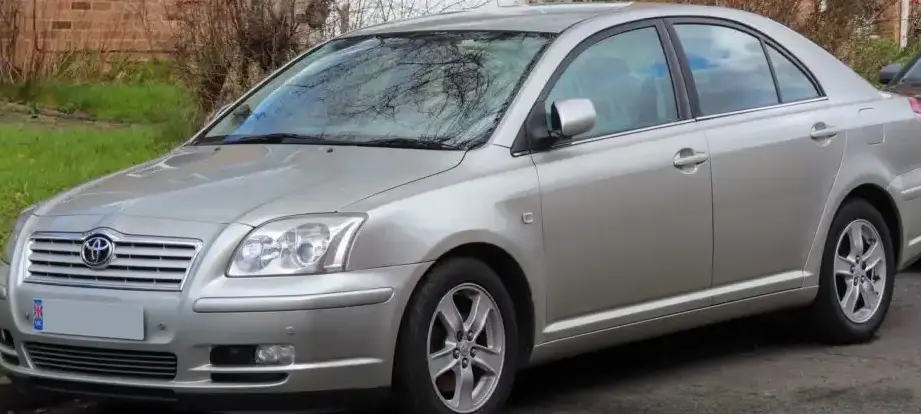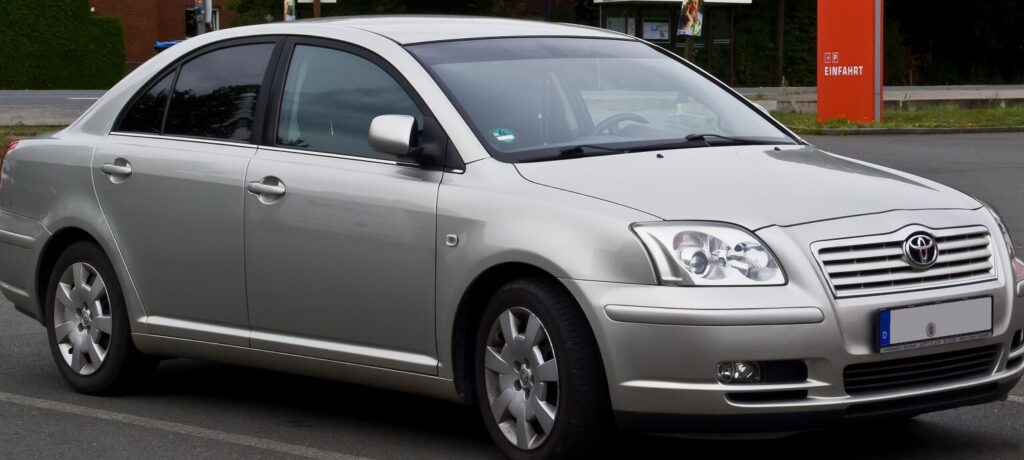
The Toyota Avensis II 2.2 D-4D (148 hp) was a mid-size family car produced by Toyota between 2005 and 2009 as part of the Avensis II generation (T27). Positioned as a practical and efficient option within the Avensis lineup, this variant offered a balance between performance and fuel economy, appealing to drivers seeking a comfortable and reliable diesel-powered sedan. It was primarily marketed in Europe and other regions where diesel engines were popular, offering a compelling alternative to gasoline-powered models and competing with vehicles like the Ford Mondeo, Volkswagen Passat, and Opel Vectra.
Technical Specifications
| Brand | Toyota |
| Model | Avensis |
| Generation | Avensis II |
| Type (Engine) | 2.2 D-4D (148 Hp) |
| Start of production | 2005 |
| End of production | 2009 |
| Powertrain Architecture | Internal Combustion engine |
| Body type | Sedan |
| Seats | 5 |
| Doors | 4 |
| Fuel consumption (urban) | 6.3 l/100 km (37.3 US mpg, 44.8 UK mpg, 15.9 km/l) |
| Fuel consumption (extra urban) | 4.1 l/100 km (57.4 US mpg, 68.9 UK mpg, 24.4 km/l) |
| Fuel consumption (combined) | 5 l/100 km (47 US mpg, 56.5 UK mpg, 20 km/l) |
| Fuel Type | Diesel |
| Acceleration 0 – 100 km/h | 9.3 sec |
| Acceleration 0 – 62 mph | 9.3 sec |
| Acceleration 0 – 60 mph | 8.8 sec |
| Maximum speed | 210 km/h (130.49 mph) |
| Power | 148 Hp @ 3600 rpm |
| Power per litre | 66.3 Hp/l |
| Torque | 310 Nm @ 2000 rpm (228.64 lb.-ft. @ 2000 rpm) |
| Engine layout | Front, Transverse |
| Engine Model/Code | 2AD-FTV |
| Engine displacement | 2231 cm3 (136.14 cu. in.) |
| Number of cylinders | 4 |
| Engine configuration | Inline |
| Cylinder Bore | 86 mm (3.39 in.) |
| Piston Stroke | 96 mm (3.78 in.) |
| Compression ratio | 16.8:1 |
| Number of valves per cylinder | 4 |
| Fuel injection system | Diesel Commonrail |
| Engine aspiration | Turbocharger, Intercooler |
| Valvetrain | DOHC |
| Engine oil capacity | 5.9 l (6.23 US qt | 5.19 UK qt) |
| Coolant | 8 l (8.45 US qt | 7.04 UK qt) |
| Trunk (boot) space (minimum) | 520 l (18.36 cu. ft.) |
| Fuel tank capacity | 60 l (15.85 US gal | 13.2 UK gal) |
| Length | 4630 mm (182.28 in.) |
| Width | 1760 mm (69.29 in.) |
| Height | 1480 mm (58.27 in.) |
| Wheelbase | 2700 mm (106.3 in.) |
| Front track | 1505 mm (59.25 in.) |
| Rear track | 1510 mm (59.45 in.) |
| Drivetrain Architecture | The Internal combustion engine (ICE) drives the front wheels of the vehicle. |
| Drive wheel | Front wheel drive |
| Number of gears and type of gearbox | 6 gears, manual transmission |
| Front suspension | Coil spring |
| Rear suspension | Coil spring |
| Front brakes | Ventilated discs |
| Rear brakes | Disc |
| Assisting systems | ABS (Anti-lock braking system) |
| Steering type | Steering rack and pinion |
Powertrain & Engine Architecture
The heart of the Avensis II 2.2 D-4D was the 2AD-FTV engine, a 2.2-liter inline-four cylinder diesel. This engine utilized a common rail direct injection system, delivering fuel directly into the combustion chamber at extremely high pressure for improved efficiency and reduced emissions. The engine was turbocharged and intercooled, boosting power output to 148 horsepower and 310 Nm (228.64 lb.-ft.) of torque. The D-4D designation signified Toyota’s direct injection diesel technology. The engine featured a double overhead camshaft (DOHC) valvetrain with four valves per cylinder, optimizing airflow for enhanced performance. The 6-speed manual transmission was standard, providing a good balance between fuel economy and driver control.
Driving Characteristics
The 2.2 D-4D engine provided a noticeable step up in performance compared to the lower-powered 1.8-liter gasoline variants. While not a sports car, the 148 hp engine offered sufficient power for comfortable highway cruising and overtaking maneuvers. The 6-speed manual transmission allowed drivers to keep the engine in its optimal power band, maximizing efficiency and responsiveness. Acceleration from 0 to 60 mph took approximately 8.8 seconds, and the car had a top speed of around 130 mph. The torque output of 310 Nm was readily available from 2000 rpm, providing strong pulling power in everyday driving situations. Compared to the higher-output 2.4 D-4D, this version offered a more economical driving experience, albeit with slightly less outright performance.
Equipment & Trim Levels
The 2.2 D-4D variant of the Avensis II was typically offered in mid-range trim levels, often designated as ‘Comfort’ or ‘Style’ depending on the specific market. Standard equipment generally included air conditioning, power windows, central locking, a CD player, and ABS brakes. Higher trim levels added features such as alloy wheels, climate control, a multi-function steering wheel, and upgraded upholstery. Optional extras included a sunroof, navigation system, and parking sensors. Interior upholstery was typically cloth, with leather options available on higher-spec models. The dashboard layout was functional and straightforward, prioritizing ease of use over flashy design.
Chassis & Braking
The Avensis II featured a conventional front-wheel-drive layout with coil spring suspension at both the front and rear. The suspension was tuned for comfort, providing a smooth and compliant ride. Front brakes were ventilated discs, offering good stopping power, while rear brakes were solid discs. ABS (Anti-lock Braking System) was standard, enhancing safety during emergency braking situations. Stabilizer bars were fitted to both the front and rear axles to reduce body roll during cornering. The chassis was designed to provide a stable and predictable driving experience, prioritizing comfort and practicality over sporty handling.
Market Reception & Comparison
The Toyota Avensis II 2.2 D-4D was generally well-received by automotive critics for its reliability, fuel efficiency, and comfortable ride. It was praised for its spacious interior and practical design. However, some critics noted that the driving experience was not particularly engaging, and the interior styling was somewhat conservative. Compared to other diesel-powered rivals, the Avensis offered a competitive fuel economy figure of around 5 liters per 100 kilometers (47 US mpg). The 2.2 D-4D engine was considered more refined and quieter than some of its competitors, and it offered a good balance between performance and economy. Compared to the 1.8L gasoline engine, the 2.2 D-4D provided significantly more torque and better fuel economy, making it a popular choice for drivers who covered long distances.
Legacy
The 2AD-FTV engine, found in the Avensis II 2.2 D-4D, has proven to be a relatively reliable powertrain. While diesel engines are generally more complex than their gasoline counterparts, the 2AD-FTV has a reputation for durability, provided it is properly maintained. Common issues include diesel particulate filter (DPF) clogging and injector problems, but these are not uncommon in modern diesel engines. In the used car market, the Avensis II 2.2 D-4D remains a popular choice for buyers seeking a reliable and economical family car. Its reputation for dependability and low running costs continues to make it a compelling option, even as newer models have been introduced. The Avensis II, in general, is still seen as a solid and practical vehicle, offering good value for money.