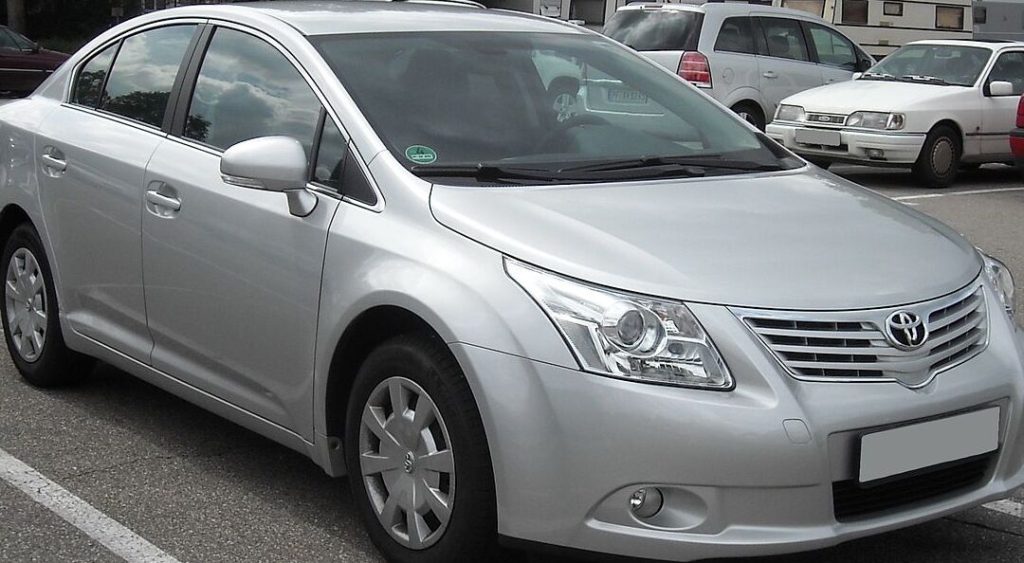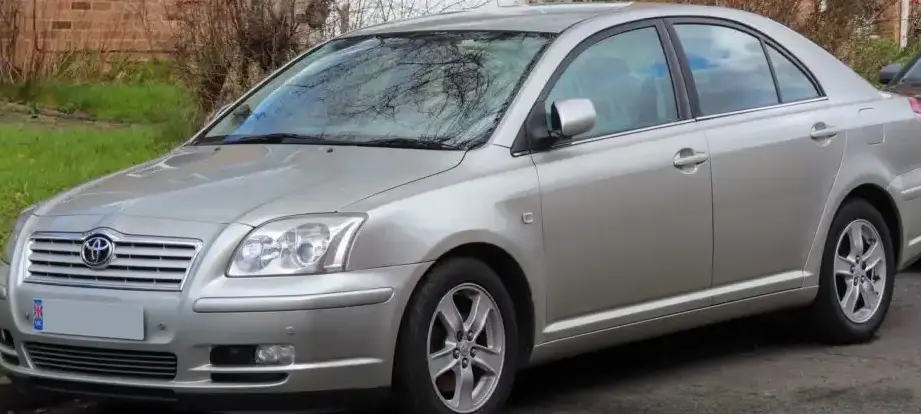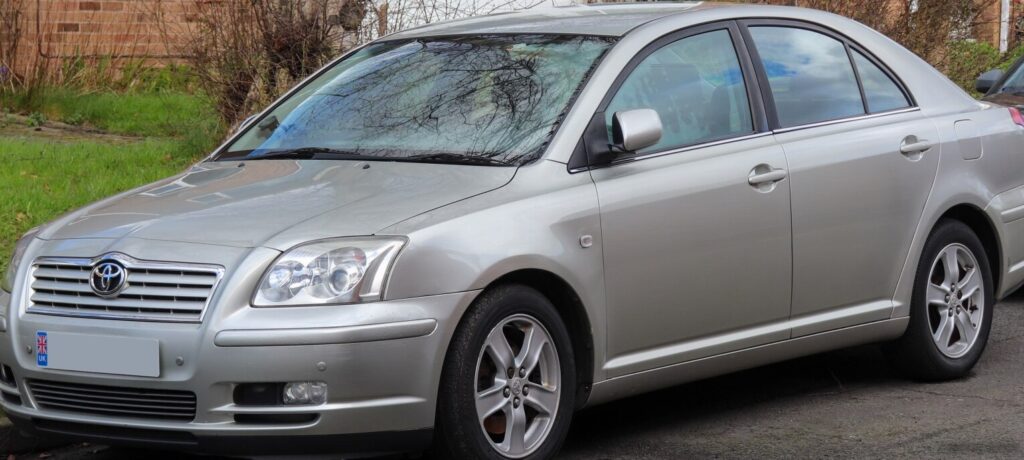
The Toyota Avensis II Hatch 1.8 VVT-i, produced between 2003 and 2009, represented a significant evolution in Toyota’s mid-size family car offering. Positioned as a practical and reliable hatchback, it was a key component of the second-generation Avensis (T27) lineup, which also included sedan and wagon body styles. This particular 1.8-liter variant, delivering 129 horsepower, served as a popular choice for buyers seeking a balance between fuel efficiency and adequate performance, often representing a mid-range option within the Avensis II portfolio. It was primarily marketed in Europe and other international markets, where the hatchback body style was particularly favored.
Technical Specifications
| Brand | Toyota |
| Model | Avensis |
| Generation | Avensis II Hatch |
| Type (Engine) | 1.8 VVT-i (129 Hp) |
| Start of production | 2003 |
| End of production | 2009 |
| Powertrain Architecture | Internal Combustion engine |
| Body type | Hatchback |
| Seats | 5 |
| Doors | 5 |
| Fuel consumption (urban) | 9.4 l/100 km (25 US mpg, 30.1 UK mpg) |
| Fuel consumption (extra urban) | 5.8 l/100 km (40.6 US mpg, 48.7 UK mpg) |
| Fuel consumption (combined) | 7.2 l/100 km (32.7 US mpg, 39.2 UK mpg) |
| Fuel Type | Petrol (Gasoline) |
| Acceleration 0 – 100 km/h | 10.3 sec |
| Acceleration 0 – 62 mph | 10.3 sec |
| Acceleration 0 – 60 mph | 9.8 sec |
| Maximum speed | 200 km/h (124.27 mph) |
| Weight-to-power ratio | 9.9 kg/Hp |
| Weight-to-torque ratio | 7.5 kg/Nm |
| Power | 129 Hp @ 6000 rpm |
| Torque | 170 Nm @ 4200 rpm (125.39 lb.-ft. @ 4200 rpm) |
| Engine layout | Front, Transverse |
| Engine Model/Code | 1ZZ-FE |
| Engine displacement | 1794 cm3 (109.48 cu. in.) |
| Number of cylinders | 4 |
| Engine configuration | Inline |
| Cylinder Bore | 79 mm (3.11 in.) |
| Piston Stroke | 91.5 mm (3.6 in.) |
| Compression ratio | 10:1 |
| Number of valves per cylinder | 4 |
| Fuel injection system | Multi-port manifold injection |
| Engine aspiration | Naturally aspirated engine |
| Valvetrain | DOHC |
| Engine oil capacity | 3.7 l (3.91 US qt | 3.26 UK qt) |
| Coolant capacity | 5.7 l (6.02 US qt | 5.02 UK qt) |
| Kerb Weight | 1275 kg (2810.89 lbs.) |
| Max. weight | 1820 kg (4012.41 lbs.) |
| Max load | 545 kg (1201.52 lbs.) |
| Trunk (boot) space – minimum | 510 l (18.01 cu. ft.) |
| Trunk (boot) space – maximum | 1320 l (46.62 cu. ft.) |
| Fuel tank capacity | 60 l (15.85 US gal | 13.2 UK gal) |
| Length | 4630 mm (182.28 in.) |
| Width | 1760 mm (69.29 in.) |
| Height | 1480 mm (58.27 in.) |
| Wheelbase | 2700 mm (106.3 in.) |
| Front track | 1505 mm (59.25 in.) |
| Rear track | 1510 mm (59.45 in.) |
| Drivetrain Architecture | Front wheel drive |
| Number of gears | 5 |
| Gearbox type | Manual transmission |
| Front suspension | Coil spring |
| Rear suspension | Coil spring |
| Front brakes | Ventilated discs |
| Rear brakes | Disc |
| Assisting systems | ABS (Anti-lock braking system) |
| Steering type | Steering rack and pinion |
| Tires size | 205/55 R16 |
| Wheel rims size | 16 |
Powertrain & Engine Architecture
The heart of the Avensis II Hatch 1.8 VVT-i is the 1ZZ-FE engine, a 1.8-liter (1794 cc) inline-four cylinder gasoline engine. This engine is notable for its use of Toyota’s Variable Valve Timing-intelligent (VVT-i) technology, which optimizes valve timing based on engine speed and load, improving both performance and fuel efficiency. The 1ZZ-FE utilizes a multi-port fuel injection system, delivering fuel directly to the intake ports. The engine’s double overhead camshaft (DOHC) valvetrain further contributes to its efficient operation. The 129 horsepower and 170 Nm (125 lb-ft) of torque were considered adequate for everyday driving, though not particularly sporty. The engine was typically paired with a five-speed manual transmission, but a four-speed automatic transmission was also available, impacting acceleration and fuel economy slightly. The automatic transmission, while providing convenience, generally resulted in a slower 0-60 mph time of around 9.8 seconds compared to the manual’s 10.3 seconds.
Driving Characteristics
The 1.8 VVT-i engine in the Avensis II Hatch provided a smooth and refined driving experience. Power delivery was linear, making it predictable and easy to control. While not a performance-oriented engine, it offered sufficient power for comfortable cruising and overtaking maneuvers. The five-speed manual transmission allowed drivers to maximize engine efficiency and control, while the four-speed automatic provided a more relaxed driving experience. The automatic transmission’s gear ratios were tuned for fuel economy rather than outright acceleration. Compared to the higher-output 2.0-liter and 2.4-liter Avensis variants, the 1.8 felt less responsive, particularly at higher speeds. However, it excelled in urban environments where its fuel efficiency and ease of driving were highly valued.
Equipment & Trim Levels
The Avensis II Hatch 1.8 VVT-i typically came equipped with a respectable level of standard features. These included power windows, central locking, air conditioning, and an integrated audio system. Higher trim levels, such as the ‘T2’ or ‘T3’ variants, added features like alloy wheels, climate control, and upgraded interior upholstery. Optional extras included a sunroof, navigation system, and leather seats. Interior materials were generally durable and well-assembled, reflecting Toyota’s reputation for quality. The dashboard layout was functional and user-friendly, with logically placed controls.
Chassis & Braking
The Avensis II Hatch featured a MacPherson strut front suspension and a coil spring rear suspension. This setup provided a comfortable ride quality, absorbing bumps and imperfections in the road effectively. The chassis was designed to prioritize stability and handling, rather than sporty dynamics. Braking duties were handled by ventilated discs on the front wheels and solid discs on the rear. Anti-lock Braking System (ABS) was standard, enhancing safety and control during emergency braking situations. The Avensis II Hatch’s weight of approximately 1275 kg (2810 lbs) contributed to its stable handling characteristics.
Market Reception & Comparison
The Avensis II Hatch 1.8 VVT-i was generally well-received by automotive critics. It was praised for its reliability, fuel efficiency, and comfortable ride. However, some reviewers noted that the engine lacked the punch of its larger counterparts. Compared to rivals like the Ford Focus, Volkswagen Golf, and Opel/Vauxhall Astra, the Avensis offered a compelling combination of practicality, reliability, and value. The 1.8-liter engine offered better fuel economy than the 2.0-liter, but at the expense of performance. The automatic transmission, while convenient, slightly reduced fuel economy compared to the manual version.
Legacy
The Toyota Avensis II Hatch 1.8 VVT-i has proven to be a remarkably reliable vehicle over the long term. The 1ZZ-FE engine is known for its durability and relatively low maintenance costs. Today, these vehicles are readily available on the used car market at affordable prices. While they may not offer the latest technology or features, they remain a practical and dependable choice for buyers seeking a budget-friendly family hatchback. Common issues are relatively minor, often relating to age-related wear and tear on components like suspension bushings and exhaust systems. The Avensis II Hatch 1.8 VVT-i continues to be regarded as a testament to Toyota’s commitment to building durable and reliable vehicles.