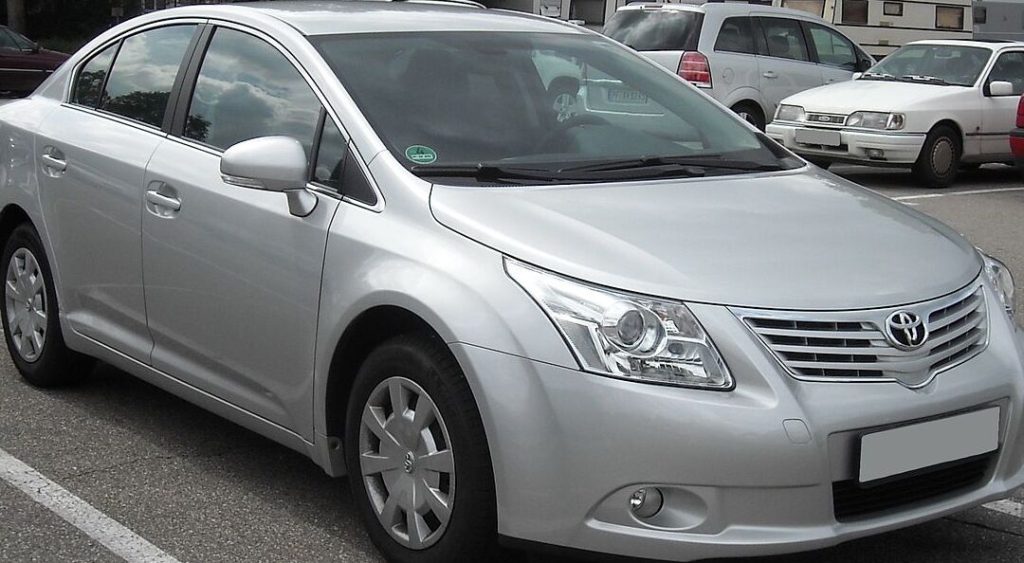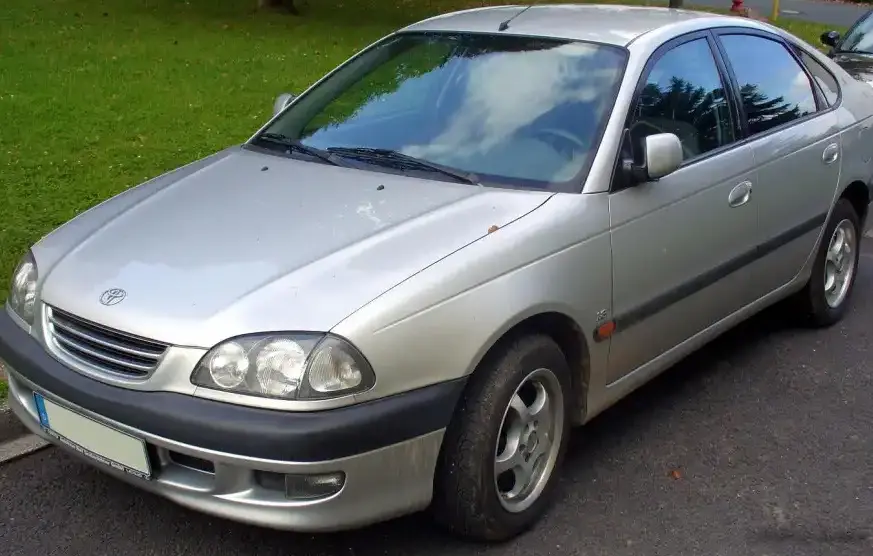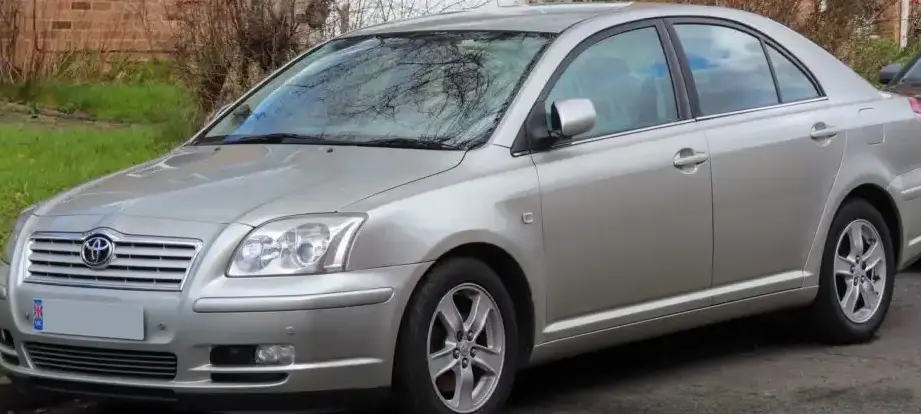
The Toyota Avensis II Hatch 1.8 VVT-i Automatic, produced between 2003 and 2009, represented a key offering in Toyota’s European D-segment lineup. Positioned as a comfortable and practical family hatchback, this variant aimed to provide a balance between fuel efficiency, reasonable performance, and affordability. It was part of the second generation Avensis (T270 platform), which sought to improve upon the first generation’s reputation for reliability and build quality while offering a more modern design and improved driving experience. The 1.8L VVT-i Automatic served as a mid-range option, slotting below the more powerful 2.0L and 2.4L variants, and above the entry-level 1.6L engine.
Technical Specifications
| Brand | Toyota |
| Model | Avensis |
| Generation | Avensis II Hatch |
| Type (Engine) | 1.8 VVT-i (129 Hp) Automatic |
| Start of production | 2003 |
| End of production | 2009 |
| Powertrain Architecture | Internal Combustion engine |
| Body type | Hatchback |
| Seats | 5 |
| Doors | 5 |
| Fuel consumption (urban) | 10.3 l/100 km (22.8 US mpg) |
| Fuel consumption (extra urban) | 6.3 l/100 km (37.3 US mpg) |
| Fuel consumption (combined) | 7.7 l/100 km (30.5 US mpg) |
| Fuel Type | Petrol (Gasoline) |
| Acceleration 0 – 100 km/h | 11.6 sec |
| Acceleration 0 – 62 mph | 11.6 sec |
| Acceleration 0 – 60 mph | 11 sec |
| Maximum speed | 185 km/h (114.95 mph) |
| Weight-to-power ratio | 9.9 kg/Hp |
| Weight-to-torque ratio | 7.5 kg/Nm |
| Power | 129 Hp @ 6000 rpm |
| Torque | 170 Nm @ 4200 rpm (125.39 lb.-ft. @ 4200 rpm) |
| Engine layout | Front, Transverse |
| Engine Model/Code | 1ZZ-FE |
| Engine displacement | 1794 cm3 (109.48 cu. in.) |
| Number of cylinders | 4 |
| Engine configuration | Inline |
| Cylinder Bore | 79 mm (3.11 in.) |
| Piston Stroke | 91.5 mm (3.6 in.) |
| Compression ratio | 10:1 |
| Number of valves per cylinder | 4 |
| Fuel injection system | Multi-port manifold injection |
| Engine aspiration | Naturally aspirated engine |
| Valvetrain | DOHC |
| Engine oil capacity | 3.7 l (3.91 US qt | 3.26 UK qt) |
| Coolant capacity | 5.7 l (6.02 US qt | 5.02 UK qt) |
| Kerb Weight | 1275 kg (2810.89 lbs.) |
| Max. weight | 1820 kg (4012.41 lbs.) |
| Max load | 545 kg (1201.52 lbs.) |
| Trunk (boot) space – minimum | 510 l (18.01 cu. ft.) |
| Trunk (boot) space – maximum | 1320 l (46.62 cu. ft.) |
| Fuel tank capacity | 60 l (15.85 US gal | 13.2 UK gal) |
| Length | 4630 mm (182.28 in.) |
| Width | 1760 mm (69.29 in.) |
| Height | 1480 mm (58.27 in.) |
| Wheelbase | 2700 mm (106.3 in.) |
| Front track | 1505 mm (59.25 in.) |
| Rear track | 1510 mm (59.45 in.) |
| Drivetrain Architecture | Front wheel drive |
| Number of gears | 4 |
| Gearbox type | Automatic transmission |
| Front suspension | Coil spring |
| Rear suspension | Coil spring |
| Front brakes | Ventilated discs |
| Rear brakes | Disc |
| Assisting systems | ABS (Anti-lock braking system) |
| Steering type | Steering rack and pinion |
| Tires size | 205/55 R16 |
| Wheel rims size | 16 |
INTRODUCTION
The Avensis II Hatch 1.8 VVT-i Automatic, launched in 2003, was a crucial model for Toyota in the European market. Designed to compete with established rivals like the Ford Focus, Vauxhall/Opel Astra, and Volkswagen Golf, the Avensis aimed to offer a compelling package of reliability, practicality, and comfort. The hatchback body style, introduced with the second generation, broadened the Avensis’s appeal, catering to buyers who preferred the versatility of a five-door layout. This particular variant, with its 1.8-liter engine and automatic transmission, was targeted towards drivers seeking a relaxed and convenient driving experience, prioritizing ease of use over outright performance.
Powertrain & Engine Architecture
At the heart of the Avensis 1.8 Automatic lies the 1ZZ-FE engine, a 1.794-liter (109.48 cubic inches) inline-four cylinder gasoline engine. This engine is notable for its use of Toyota’s Variable Valve Timing-intelligent (VVT-i) technology, which optimizes valve timing based on engine speed and load, improving both fuel efficiency and power output. The 1ZZ-FE utilizes a multi-port fuel injection system, delivering fuel directly to the intake ports. The engine’s valvetrain features a double overhead camshaft (DOHC) design with four valves per cylinder, contributing to its relatively high specific output. The engine produces 129 horsepower at 6000 rpm and 170 Nm (125.39 lb-ft) of torque at 4200 rpm. Paired with the engine is a four-speed automatic transmission, designed for smooth and effortless gear changes. This transmission, while not offering the latest in gear ratios, was known for its reliability and ease of operation.
Driving Characteristics
The Avensis 1.8 Automatic offered a comfortable, if not particularly sporty, driving experience. The four-speed automatic transmission, while smooth, resulted in somewhat leisurely acceleration – 0-60 mph taking around 11 seconds. The gear ratios were tuned for fuel economy and relaxed cruising rather than aggressive performance. Compared to the manual transmission version of the 1.8L, the automatic suffered a slight performance penalty. The higher-output 2.0L and 2.4L models offered significantly more power and quicker acceleration, but at the expense of fuel economy. The 1.8L Automatic excelled in urban driving and on long highway journeys, providing a comfortable and refined ride. The steering was light and precise, making it easy to maneuver in tight spaces.
Equipment & Trim Levels
The Avensis 1.8 VVT-i Automatic typically came equipped with a reasonable level of standard features. These included air conditioning, central locking, electric front windows, power steering, and an audio system. Higher trim levels, such as the T3 or T4, added features like alloy wheels, climate control, rear electric windows, and upgraded audio systems. Optional extras included a sunroof, leather upholstery, and a navigation system. Interior upholstery was typically cloth, with a functional and durable design. The dashboard layout was straightforward and user-friendly, prioritizing ease of use over stylistic flair.
Chassis & Braking
The Avensis II Hatch featured a MacPherson strut front suspension and a coil spring rear suspension. This setup provided a comfortable ride quality, absorbing bumps and imperfections in the road surface effectively. The front brakes were ventilated discs, offering good stopping power, while the rear brakes were solid discs. Anti-lock Braking System (ABS) was standard, enhancing safety and stability during emergency braking. The Avensis 1.8 Automatic’s weight of approximately 1275 kg (2810.89 lbs) was relatively moderate for its class, contributing to its manageable handling characteristics. Stabilizer bars were fitted to both the front and rear axles to reduce body roll during cornering.
Market Reception & Comparison
The Avensis 1.8 VVT-i Automatic was generally well-received by automotive critics. It was praised for its reliability, comfortable ride, and spacious interior. However, it was often criticized for its lack of dynamic flair and its somewhat uninspiring engine performance. Compared to rivals like the Ford Focus and Volkswagen Golf, the Avensis offered a more refined and comfortable driving experience, but lacked the same level of driver engagement. Fuel economy was competitive, averaging around 30.5 US mpg in combined driving. Reliability proved to be a strong point, with the 1ZZ-FE engine and the four-speed automatic transmission proving to be durable and long-lasting.
Legacy
The Toyota Avensis II Hatch 1.8 VVT-i Automatic has proven to be a reliable and durable vehicle, maintaining a good reputation in the used car market. The 1ZZ-FE engine is known for its longevity, and the four-speed automatic transmission, while not the most technologically advanced, has proven to be robust. Today, these vehicles can be found with relatively high mileage and still in good working order, a testament to Toyota’s engineering and build quality. While not a performance icon, the Avensis 1.8 Automatic remains a practical and affordable option for buyers seeking a comfortable and dependable family hatchback.