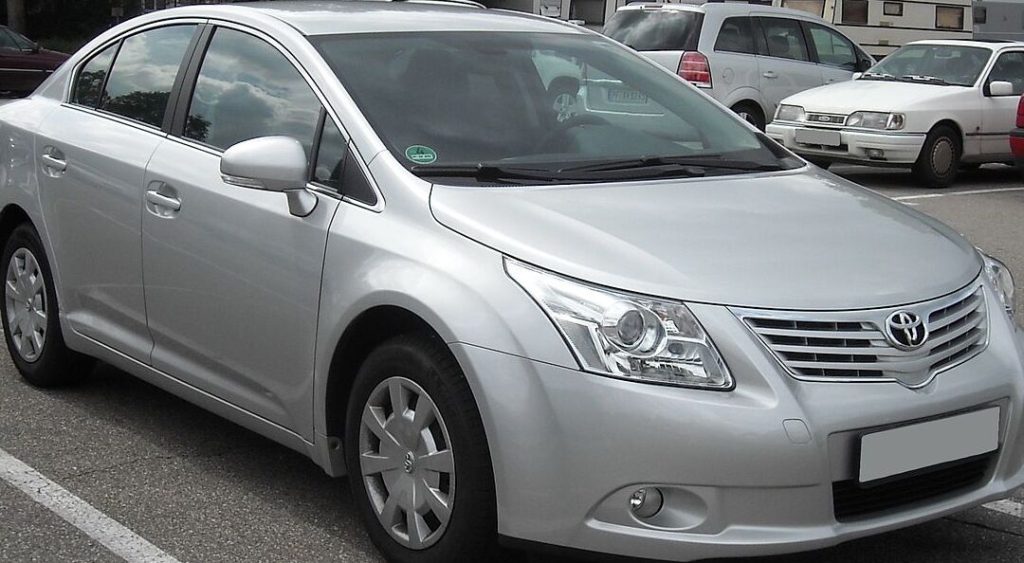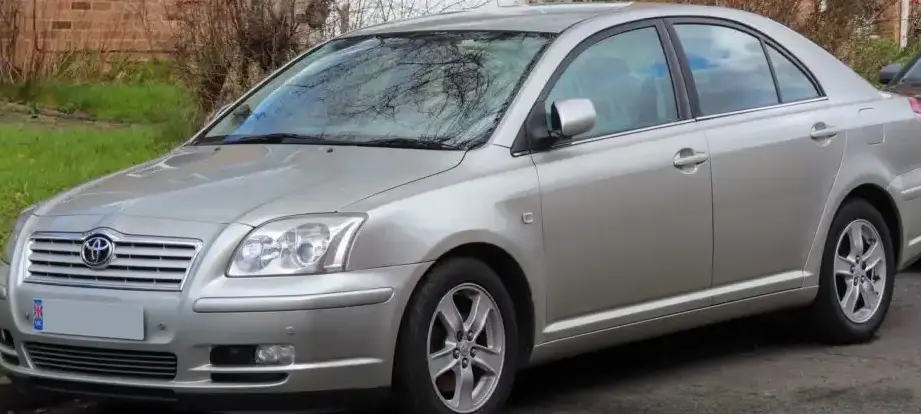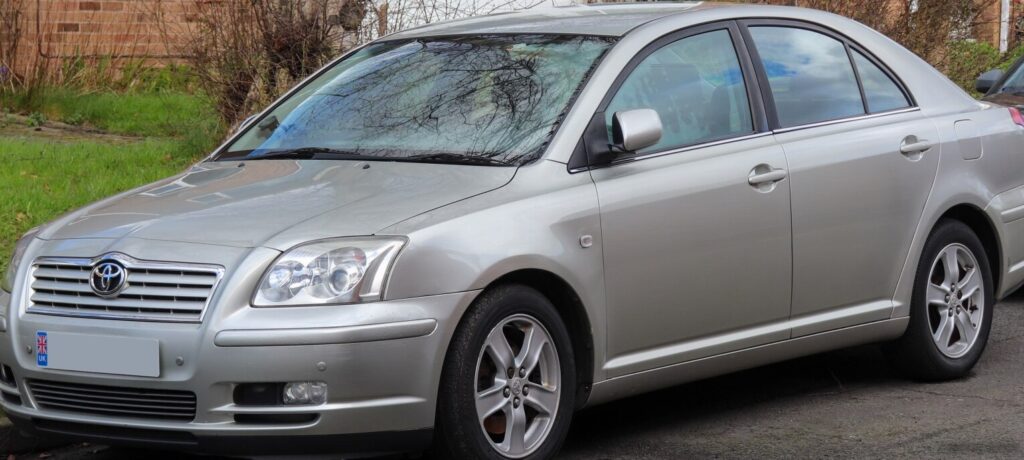
The Toyota Avensis II Hatch 2.0 VVT-i (147 hp) was a key variant within the second generation Avensis lineup, produced from 2003 to 2009. Positioned as a mid-range offering, it aimed to balance performance with practicality and fuel efficiency for the European market, where the Avensis competed directly with established family hatchbacks like the Ford Focus, Vauxhall Astra, and Volkswagen Golf. While Toyota wasn’t a dominant force in the European hatchback segment like it was in the sedan market, the Avensis II sought to broaden the brand’s appeal with a more versatile body style. This particular engine and transmission combination represented a sweet spot for buyers seeking a responsive driving experience without the higher costs associated with the range-topping models.
Technical Specifications
| Brand | Toyota |
| Model | Avensis |
| Generation | Avensis II Hatch |
| Type (Engine) | 2.0 VVT-i (147 Hp) |
| Start of production | 2003 |
| End of production | 2009 |
| Powertrain Architecture | Internal Combustion engine |
| Body type | Hatchback |
| Seats | 5 |
| Doors | 5 |
| Fuel consumption (urban) | 10.7 l/100 km (22 US mpg, 26.4 UK mpg, 9.3 km/l) |
| Fuel consumption (extra urban) | 6.6 l/100 km (35.6 US mpg, 42.8 UK mpg, 15.2 km/l) |
| Fuel consumption (combined) | 8.1 l/100 km (29 US mpg, 34.9 UK mpg, 12.3 km/l) |
| Fuel Type | Petrol (Gasoline) |
| Acceleration 0 – 100 km/h | 8.1 sec |
| Acceleration 0 – 62 mph | 8.1 sec |
| Acceleration 0 – 60 mph | 7.7 sec |
| Maximum speed | 205 km/h (127.38 mph) |
| Weight-to-power ratio | 9.1 kg/Hp, 110.1 Hp/tonne |
| Weight-to-torque ratio | 6.8 kg/Nm, 146.8 Nm/tonne |
| Power | 147 Hp @ 5700 rpm |
| Power per litre | 73.6 Hp/l |
| Torque | 196 Nm @ 4000 rpm (144.56 lb.-ft. @ 4000 rpm) |
| Engine layout | Front, Transverse |
| Engine Model/Code | 1AZ-FSE |
| Engine displacement | 1998 cm3 (121.93 cu. in.) |
| Number of cylinders | 4 |
| Engine configuration | Inline |
| Cylinder Bore | 86 mm (3.39 in.) |
| Piston Stroke | 86 mm (3.39 in.) |
| Compression ratio | 11:1 |
| Number of valves per cylinder | 4 |
| Fuel injection system | Direct injection |
| Engine aspiration | Naturally aspirated engine |
| Valvetrain | DOHC |
| Engine oil capacity | 4.2 l (4.44 US qt | 3.7 UK qt) |
| Coolant | 6 l (6.34 US qt | 5.28 UK qt) |
| Kerb Weight | 1335 kg (2943.17 lbs.) |
| Max. weight | 1895 kg (4177.76 lbs.) |
| Max load | 560 kg (1234.59 lbs.) |
| Trunk (boot) space – minimum | 510 l (18.01 cu. ft.) |
| Trunk (boot) space – maximum | 1320 l (46.62 cu. ft.) |
| Fuel tank capacity | 60 l (15.85 US gal | 13.2 UK gal) |
| Length | 4630 mm (182.28 in.) |
| Width | 1760 mm (69.29 in.) |
| Height | 1480 mm (58.27 in.) |
| Wheelbase | 2700 mm (106.3 in.) |
| Front track | 1505 mm (59.25 in.) |
| Rear (Back) track | 1510 mm (59.45 in.) |
| Drivetrain Architecture | Front wheel drive |
| Drive wheel | Front wheel drive |
| Number of gears and type of gearbox | 5 gears, manual transmission |
| Front suspension | Coil spring |
| Rear suspension | Coil spring |
| Front brakes | Ventilated discs |
| Rear brakes | Disc |
| Assisting systems | ABS (Anti-lock braking system) |
| Steering type | Steering rack and pinion |
| Tires size | 205/55 R16 |
| Wheel rims size | 16 |
INTRODUCTION
The Avensis II, launched in 2003, represented a significant step forward for Toyota in the European market. Moving away from the more conservative styling of its predecessor, the second-generation Avensis adopted a more modern and dynamic design. The hatchback variant, in particular, was aimed at attracting buyers who prioritized versatility and practicality. The 2.0 VVT-i engine, producing 147 horsepower, was a popular choice, offering a good balance between performance and fuel economy. It sat in the middle of the Avensis II range, above the 1.6L and 1.8L engines, but below the more powerful 2.4L variant. The Avensis II was built on the Toyota MC platform (also known as the 1HX0/A3 platform), shared with other Toyota and Lexus models.
Powertrain & Engine Architecture
The heart of the Avensis II 2.0 VVT-i was the 1AZ-FSE engine, a 1.998-liter inline-four cylinder powerplant. This engine featured Toyota’s Variable Valve Timing with intelligence (VVT-i) system, which optimized valve timing based on engine speed and load, improving both performance and fuel efficiency. Crucially, the 1AZ-FSE utilized direct fuel injection, a relatively advanced feature for its time, further enhancing combustion efficiency and reducing emissions. The engine boasted a compression ratio of 11:1. The 5-speed manual transmission was the standard offering for this variant, providing a direct and engaging driving experience. The transmission was known for its smooth shifts and relatively robust construction. While an automatic transmission was available, the manual was generally preferred by enthusiasts for its improved responsiveness.
Driving Characteristics
The 2.0 VVT-i engine delivered a respectable 0-60 mph time of around 7.7 seconds, making the Avensis II Hatch a reasonably quick contender in its class. The engine’s torque curve was relatively flat, providing good pulling power throughout the rev range. The 5-speed manual transmission allowed drivers to make the most of the engine’s capabilities, while the gear ratios were well-matched for both urban and highway driving. Compared to the lower-powered 1.6L and 1.8L models, the 2.0 VVT-i offered noticeably more punch, particularly when overtaking or climbing hills. However, it didn’t possess the outright performance of the 2.4L variant. The suspension provided a comfortable ride, absorbing bumps and imperfections in the road effectively, but it wasn’t particularly sporty or engaging. Steering feel was light and precise, making the Avensis II easy to maneuver in tight spaces.
Equipment & Trim Levels
The Avensis II 2.0 VVT-i typically came equipped with a decent level of standard features, including air conditioning, power windows, central locking, and an integrated audio system. Higher trim levels added features such as alloy wheels, a multi-function steering wheel, and upgraded upholstery. Interior materials were generally of good quality, although not quite as luxurious as some of its German rivals. Optional extras included a sunroof, leather seats, and a navigation system. The dashboard layout was functional and user-friendly, with clearly labeled controls and a straightforward instrument cluster.
Chassis & Braking
The Avensis II Hatch featured a MacPherson strut front suspension and a coil spring rear suspension. This setup provided a good balance between ride comfort and handling. The front brakes were ventilated discs, while the rear brakes were solid discs, providing adequate stopping power for most driving situations. Anti-lock Braking System (ABS) was standard, enhancing safety and stability during emergency braking. The chassis was relatively lightweight, contributing to the car’s nimble handling characteristics. Stabilizer bars were fitted to both the front and rear axles to reduce body roll during cornering.
Market Reception & Comparison
The Avensis II 2.0 VVT-i received generally positive reviews from automotive critics. It was praised for its reliability, fuel efficiency, and comfortable ride. However, some critics found the styling to be somewhat bland and the driving experience to be lacking in excitement. Compared to the 1.6L and 1.8L models, the 2.0 VVT-i offered a significant performance upgrade, but at a slightly higher price point. The 2.4L variant provided even more power, but it was considerably more expensive and less fuel-efficient. In terms of reliability, the 2.0 VVT-i proved to be a very dependable engine, with few reported issues. Fuel economy was competitive with other cars in its class, averaging around 29 US mpg in combined driving.
Legacy
The Toyota Avensis II 2.0 VVT-i has proven to be a durable and reliable vehicle, and well-maintained examples continue to be sought after in the used car market. The 1AZ-FSE engine is known for its longevity and relatively low maintenance costs. While it may not be the most exciting car to drive, its practicality, reliability, and fuel efficiency make it a sensible choice for buyers looking for a dependable family hatchback. The Avensis II helped to establish Toyota as a credible player in the European hatchback segment, paving the way for future models like the Auris and Corolla Hatchback.