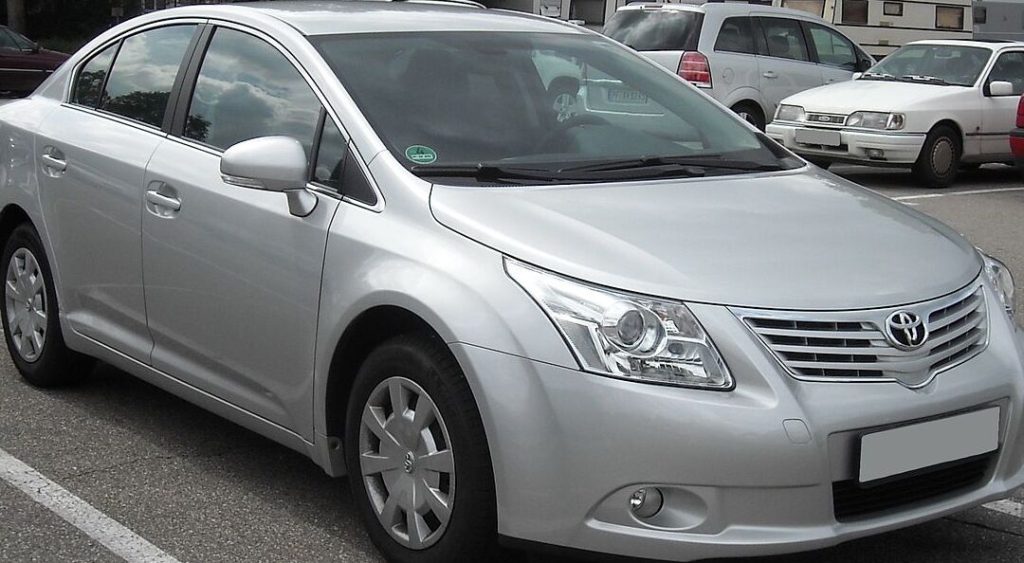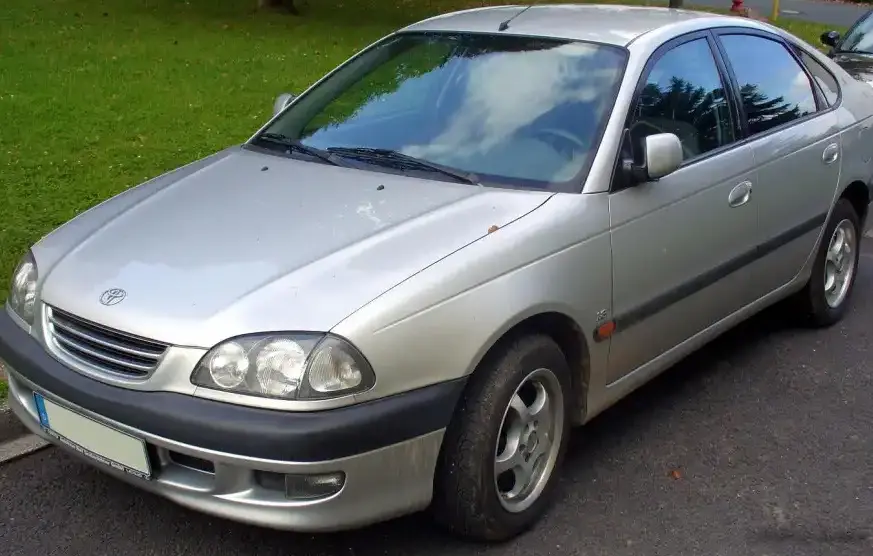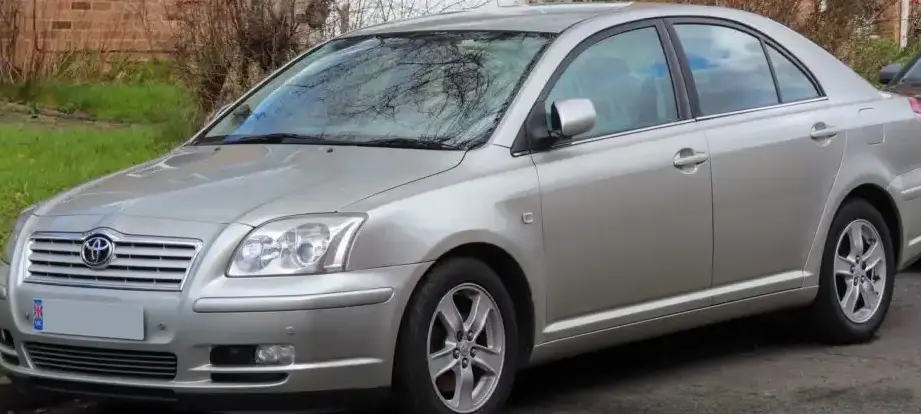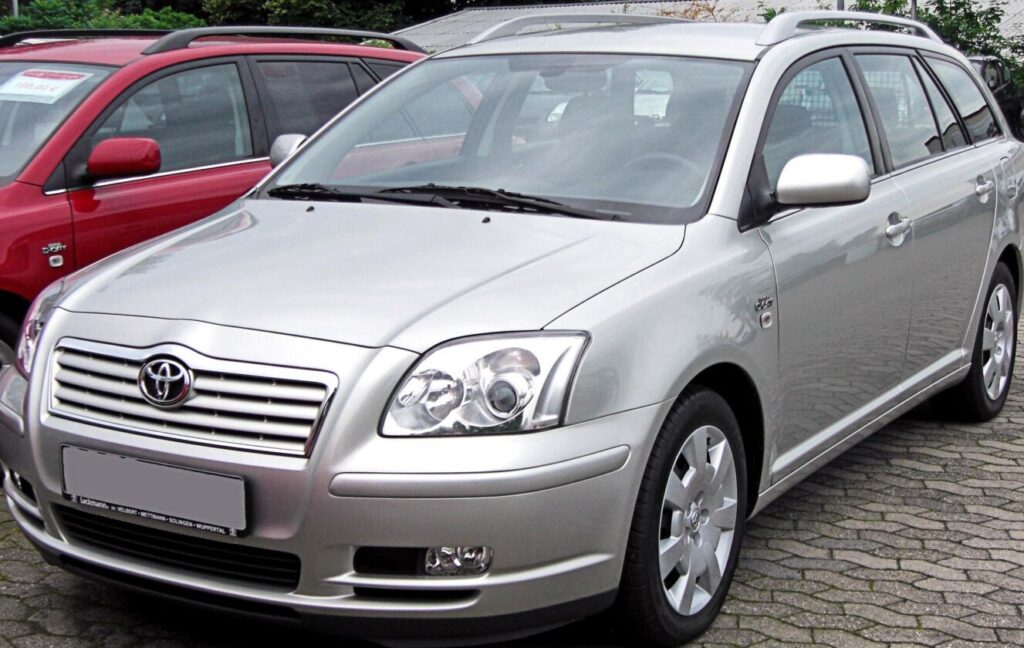
The Toyota Avensis II Wagon 1.8 VVT-i (129 hp) was a mainstay of Toyota’s European lineup from 2003 to 2009, representing a practical and reliable choice in the mid-size station wagon segment. Positioned as a mid-range offering within the Avensis II generation (codenamed T27), it aimed to balance fuel efficiency, reasonable performance, and family-oriented practicality. This variant was particularly popular in Europe where the station wagon body style held significant market share, offering a compelling alternative to sedans and hatchbacks. The Avensis II was Toyota’s attempt to create a truly global mid-size car, designed to appeal to both European and Asian markets, and the 1.8L VVT-i wagon played a key role in that strategy.
Technical Specifications
| Brand | Toyota |
| Model | Avensis |
| Generation | Avensis II Wagon |
| Type (Engine) | 1.8 VVT-i (129 Hp) |
| Start of production | 2003 |
| End of production | 2009 |
| Powertrain Architecture | Internal Combustion engine |
| Body type | Station wagon (estate) |
| Seats | 5 |
| Doors | 5 |
| Fuel consumption (urban) | 9.4 l/100 km (25 US mpg, 30.1 UK mpg) |
| Fuel consumption (extra urban) | 5.8 l/100 km (40.6 US mpg, 48.7 UK mpg) |
| Fuel consumption (combined) | 7.2 l/100 km (32.7 US mpg, 39.2 UK mpg) |
| Fuel Type | Petrol (Gasoline) |
| Acceleration 0 – 100 km/h | 10.5 sec |
| Acceleration 0 – 62 mph | 10.5 sec |
| Acceleration 0 – 60 mph | 10 sec |
| Maximum speed | 195 km/h (121.17 mph) |
| Weight-to-power ratio | 10 kg/Hp |
| Weight-to-torque ratio | 7.6 kg/Nm |
| Power | 129 Hp @ 6000 rpm |
| Torque | 170 Nm @ 4200 rpm (125.39 lb.-ft. @ 4200 rpm) |
| Engine layout | Front, Transverse |
| Engine Model/Code | 1ZZ-FE |
| Engine displacement | 1794 cm3 (109.48 cu. in.) |
| Number of cylinders | 4 |
| Engine configuration | Inline |
| Cylinder Bore | 79 mm (3.11 in.) |
| Piston Stroke | 91.5 mm (3.6 in.) |
| Compression ratio | 10:1 |
| Number of valves per cylinder | 4 |
| Fuel injection system | Multi-port manifold injection |
| Engine aspiration | Naturally aspirated engine |
| Valvetrain | DOHC |
| Engine oil capacity | 3.7 l (3.91 US qt | 3.26 UK qt) |
| Coolant capacity | 5.7 l (6.02 US qt | 5.02 UK qt) |
| Kerb Weight | 1295 kg (2854.99 lbs.) |
| Max. weight | 1820 kg (4012.41 lbs.) |
| Max load | 525 kg (1157.43 lbs.) |
| Trunk (boot) space – minimum | 520 l (18.36 cu. ft.) |
| Trunk (boot) space – maximum | 1500 l (52.97 cu. ft.) |
| Fuel tank capacity | 60 l (15.85 US gal | 13.2 UK gal) |
| Length | 4700 mm (185.04 in.) |
| Width | 1760 mm (69.29 in.) |
| Height | 1525 mm (60.04 in.) |
| Wheelbase | 2700 mm (106.3 in.) |
| Front track | 1505 mm (59.25 in.) |
| Rear track | 1510 mm (59.45 in.) |
| Drivetrain Architecture | Front wheel drive |
| Number of gears | 5 |
| Gearbox type | Manual transmission |
| Front suspension | Coil spring |
| Rear suspension | Coil spring |
| Front brakes | Ventilated discs |
| Rear brakes | Disc |
| Assisting systems | ABS (Anti-lock braking system) |
| Steering type | Steering rack and pinion |
| Tires size | 205/55 R16 |
| Wheel rims size | 16 |
Powertrain & Engine Architecture
The heart of the Avensis II Wagon 1.8 VVT-i was the 1ZZ-FE engine, a 1.8-liter (1794 cc) inline-four cylinder gasoline engine. This engine was a member of Toyota’s ZZ engine family, known for its relatively lightweight construction and use of aluminum alloy for the cylinder head and block. The ‘VVT-i’ designation stands for Variable Valve Timing-intelligent, Toyota’s system for optimizing valve timing based on engine speed and load. This technology improved both fuel efficiency and power output across the rev range. The 1ZZ-FE utilized multi-port fuel injection, delivering fuel directly into the intake ports just before the intake valves. The engine produced 129 horsepower at 6000 rpm and 170 Nm (125 lb-ft) of torque at 4200 rpm. The engine was typically paired with a 5-speed manual transmission, although a 4-speed automatic transmission was also available, and was the more common choice for this trim level. The automatic transmission was designed for smooth operation and ease of use, prioritizing comfort over outright performance.
Driving Characteristics
The 1.8L VVT-i engine, when coupled with the 4-speed automatic transmission, provided adequate, but not exhilarating, performance. Acceleration from 0-60 mph took around 10.5 seconds, and top speed was approximately 195 km/h (121 mph). The automatic transmission’s gear ratios were tuned for fuel economy and smooth cruising, rather than aggressive acceleration. Compared to the available 2.0L and 2.4L engines, the 1.8L felt noticeably less powerful, particularly when fully loaded or tackling steep inclines. However, the VVT-i system ensured a reasonably responsive engine, with usable torque available from lower engine speeds. The automatic transmission, while comfortable, could sometimes feel hesitant during quick overtaking maneuvers. The overall driving experience was geared towards practicality and comfort, making it a suitable choice for daily commuting and family trips.
Equipment & Trim Levels
The 1.8 VVT-i Wagon typically came with a respectable level of standard equipment. This included power windows, power door locks, central locking, air conditioning, and an integrated audio system. Interior upholstery was typically cloth, with a focus on durability and practicality. Higher trim levels offered options such as alloy wheels, a sunroof, upgraded audio systems, and climate control. Safety features included ABS brakes, front airbags, and side impact beams. The Avensis II Wagon was designed to be a family-friendly vehicle, and the 1.8L trim reflected this with its emphasis on comfort and convenience features.
Chassis & Braking
The Avensis II Wagon featured a typical front-engine, front-wheel-drive layout. Suspension consisted of coil springs and shock absorbers all around, providing a comfortable ride quality. The front suspension utilized MacPherson struts, while the rear suspension employed a double-wishbone setup. Brakes were ventilated discs on the front wheels and solid discs on the rear. ABS (Anti-lock Braking System) was standard, enhancing braking performance and stability. The chassis was designed to provide a balance between ride comfort and handling, prioritizing stability and predictability over sporty dynamics. The steering was rack and pinion, offering precise and responsive control.
Market Reception & Comparison
The Avensis II Wagon 1.8 VVT-i was generally well-received by automotive critics as a practical and reliable family car. It was praised for its comfortable ride, spacious interior, and fuel efficiency. However, some critics noted that the 1.8L engine lacked the punch of its larger counterparts. Compared to the 2.0L and 2.4L models, the 1.8L offered a more affordable entry point into the Avensis range, but at the expense of performance. The 1.8L automatic was often seen as a good choice for drivers who prioritized comfort and ease of use over sporty driving dynamics. Fuel economy was a strong point, with combined fuel consumption figures around 7.2 l/100 km (32.7 US mpg).
Legacy
The Toyota Avensis II Wagon 1.8 VVT-i has proven to be a remarkably reliable vehicle, with many examples still on the road today. The 1ZZ-FE engine is known for its durability and relatively low maintenance costs. Common issues are typically limited to routine maintenance items such as spark plugs, air filters, and oil changes. The automatic transmission, while not as sophisticated as modern units, has also proven to be generally reliable. On the used car market, the Avensis II Wagon 1.8 VVT-i represents a good value proposition, offering a practical and dependable vehicle at an affordable price. Its reputation for reliability and low running costs continues to make it a popular choice for budget-conscious buyers.