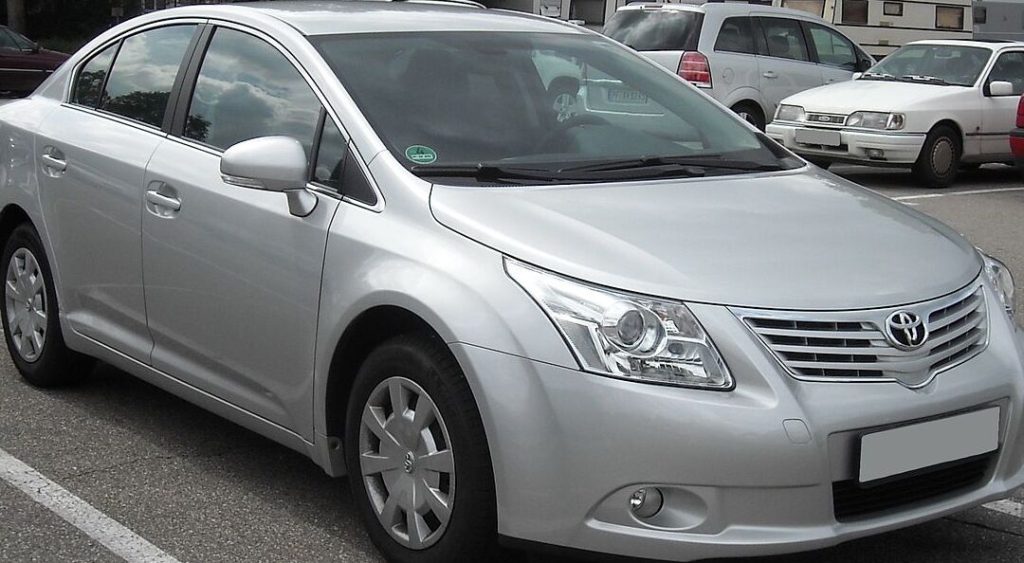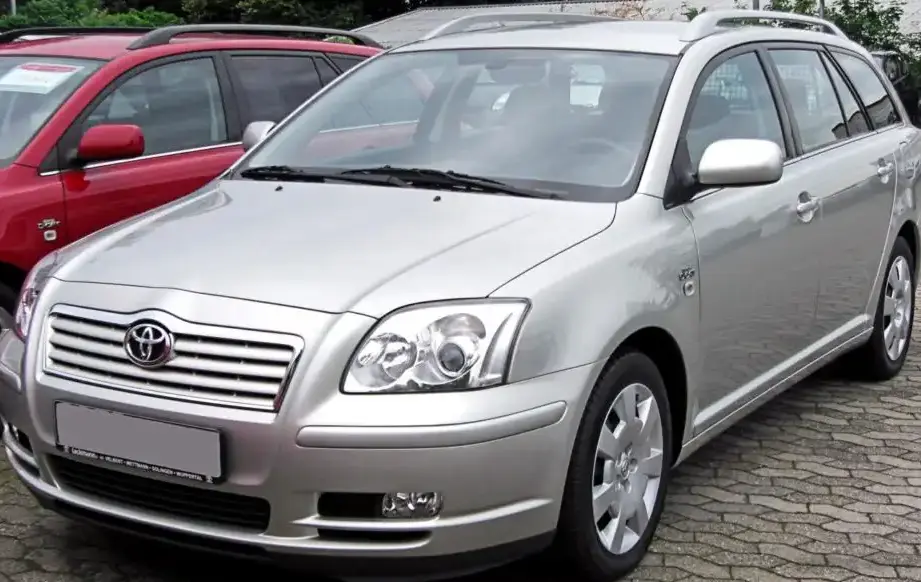
The Toyota Avensis II Wagon 2.0 D-4D (116 hp) was a popular estate car produced between 2003 and 2009, forming a key part of Toyota’s European lineup. Positioned as a practical and reliable family vehicle, it offered a compelling alternative to competitors like the Ford Mondeo Estate and Volkswagen Passat Wagon. This specific variant, powered by the 1CD-FTV diesel engine, aimed to balance fuel efficiency with reasonable performance, appealing to buyers prioritizing economy and space. It was part of the second-generation Avensis (T27), which represented a significant step forward in terms of refinement and build quality compared to its predecessor.
Technical Specifications
| Brand | Toyota |
| Model | Avensis |
| Generation | Avensis II Wagon |
| Type (Engine) | 2.0 D-4D (116 Hp) |
| Start of production | 2003 |
| End of production | 2009 |
| Powertrain Architecture | Internal Combustion engine |
| Body type | Station wagon (estate) |
| Seats | 5 |
| Doors | 5 |
| Fuel consumption (urban) | 7.7 l/100 km (30.5 US mpg) |
| Fuel consumption (extra urban) | 5.1 l/100 km (46.1 US mpg) |
| Fuel consumption (combined) | 6 l/100 km (39.2 US mpg) |
| Fuel Type | Diesel |
| Acceleration 0 – 100 km/h | 11.4 sec |
| Acceleration 0 – 62 mph | 11.4 sec |
| Acceleration 0 – 60 mph | 10.8 sec |
| Maximum speed | 190 km/h (118.06 mph) |
| Emission standard | Euro 4 |
| Weight-to-power ratio | 12.3 kg/Hp |
| Weight-to-torque ratio | 5.1 kg/Nm |
| Power | 116 Hp @ 3600 rpm |
| Torque | 280 Nm @ 2000 rpm (206.52 lb.-ft. @ 2000 rpm) |
| Engine layout | Front, Transverse |
| Engine Model/Code | 1CD-FTV |
| Engine displacement | 1995 cm3 (121.74 cu. in.) |
| Number of cylinders | 4 |
| Engine configuration | Inline |
| Cylinder Bore | 82.2 mm (3.24 in.) |
| Piston Stroke | 94 mm (3.7 in.) |
| Compression ratio | 18.6:1 |
| Number of valves per cylinder | 4 |
| Fuel injection system | Diesel Commonrail |
| Engine aspiration | Turbocharger, Intercooler |
| Valvetrain | DOHC |
| Engine oil capacity | 5.9 l (6.23 US qt | 5.19 UK qt) |
| Coolant capacity | 7.6 l (8.03 US qt | 6.69 UK qt) |
| Kerb Weight | 1430 kg (3152.61 lbs.) |
| Max. weight | 1970 kg (4343.11 lbs.) |
| Max load | 540 kg (1190.5 lbs.) |
| Trunk (boot) space – minimum | 520 l (18.36 cu. ft.) |
| Trunk (boot) space – maximum | 1500 l (52.97 cu. ft.) |
| Fuel tank capacity | 60 l (15.85 US gal | 13.2 UK gal) |
| Length | 4700 mm (185.04 in.) |
| Width | 1760 mm (69.29 in.) |
| Height | 1525 mm (60.04 in.) |
| Wheelbase | 2700 mm (106.3 in.) |
| Front track | 1505 mm (59.25 in.) |
| Rear track | 1510 mm (59.45 in.) |
| Minimum turning circle | 10.1 m (33.14 ft.) |
| Drivetrain Architecture | Front wheel drive |
| Number of gears | 5 |
| Gearbox type | Manual transmission |
| Front suspension | Independent type McPherson |
| Rear suspension | Independent multi-link spring suspension with stabilizer |
| Front brakes | Ventilated discs |
| Rear brakes | Disc |
| Assisting systems | ABS (Anti-lock braking system) |
| Steering type | Steering rack and pinion |
| Power steering | Hydraulic Steering |
| Tires size | 205/55 R16 |
| Wheel rims size | 6.5J x 16 |
Powertrain & Engine Architecture
The heart of the Avensis 2.0 D-4D was the 1CD-FTV engine, a 1.995-liter inline-four cylinder diesel. This engine was a key component of Toyota’s D-4D (Direct-injection 4-cylinder Diesel) technology, which focused on maximizing fuel efficiency and reducing emissions. The 1CD-FTV utilized a common rail direct injection system, delivering fuel at extremely high pressure for improved combustion. A turbocharger with an intercooler further enhanced performance, boosting power output to 116 horsepower and 280 Nm (206 lb-ft) of torque. The engine featured a double overhead camshaft (DOHC) valvetrain with four valves per cylinder, optimizing gas flow. The five-speed manual transmission was the standard offering, providing a balance between fuel economy and drivability. The engine was transversely mounted in the front of the vehicle, driving the front wheels.
Driving Characteristics
The 2.0 D-4D Avensis Wagon, with its 116 hp and 280 Nm of torque, offered adequate, but not exhilarating, performance. Acceleration from 0 to 60 mph took around 10.8 seconds, and top speed was approximately 118 mph. The engine’s torque peak at 2000 rpm provided good low-end grunt, making it suitable for everyday driving and hauling loads. Compared to the more powerful 2.4-liter D-4D variants, this engine felt less responsive, particularly when fully loaded. However, it excelled in fuel economy, achieving combined figures of around 39.2 US mpg. The five-speed manual transmission was well-matched to the engine’s characteristics, offering smooth gear changes. The gear ratios were geared towards economy rather than outright performance.
Equipment & Trim Levels
The Avensis II Wagon 2.0 D-4D typically came with a reasonable level of standard equipment. This included power steering, central locking, electric front windows, and an air conditioning system. Higher trim levels, such as the T3 or T Spirit, added features like alloy wheels, a CD stereo, climate control, and rear electric windows. Interior upholstery was typically cloth, with options for leather on higher-spec models. Safety features included ABS brakes, front airbags, and seatbelt pretensioners. Optional extras included a sunroof, parking sensors, and a navigation system.
Chassis & Braking
The Avensis II Wagon featured independent suspension all around, with McPherson struts at the front and a multi-link setup at the rear. This provided a comfortable ride quality, absorbing bumps and imperfections in the road effectively. A stabilizer bar was fitted to both axles to reduce body roll during cornering. The braking system consisted of ventilated discs at the front and solid discs at the rear, providing adequate stopping power. ABS (Anti-lock Braking System) was standard, enhancing safety in emergency braking situations.
Market Reception & Comparison
The Toyota Avensis II Wagon 2.0 D-4D was generally well-received by critics for its practicality, reliability, and fuel efficiency. It was often praised for its spacious interior and comfortable ride. However, some reviewers found the engine to be somewhat underpowered, particularly when compared to competitors offering more potent diesel engines. Compared to the 2.4 D-4D Avensis, the 2.0 D-4D offered significantly better fuel economy but at the cost of performance. Against rivals like the Ford Mondeo Estate and Volkswagen Passat Wagon, the Avensis offered a strong value proposition, combining practicality with Toyota’s renowned reliability.
Legacy
The 1CD-FTV engine, found in the Avensis 2.0 D-4D, has proven to be a remarkably durable and reliable unit. With proper maintenance, these engines can easily exceed 200,000 miles. Common issues are relatively minor, often relating to the fuel injection system or turbocharger. On the used car market, the Avensis II Wagon 2.0 D-4D remains a popular choice for buyers seeking a practical, economical, and dependable estate car. Its reputation for reliability and low running costs continues to make it a compelling option, even today.