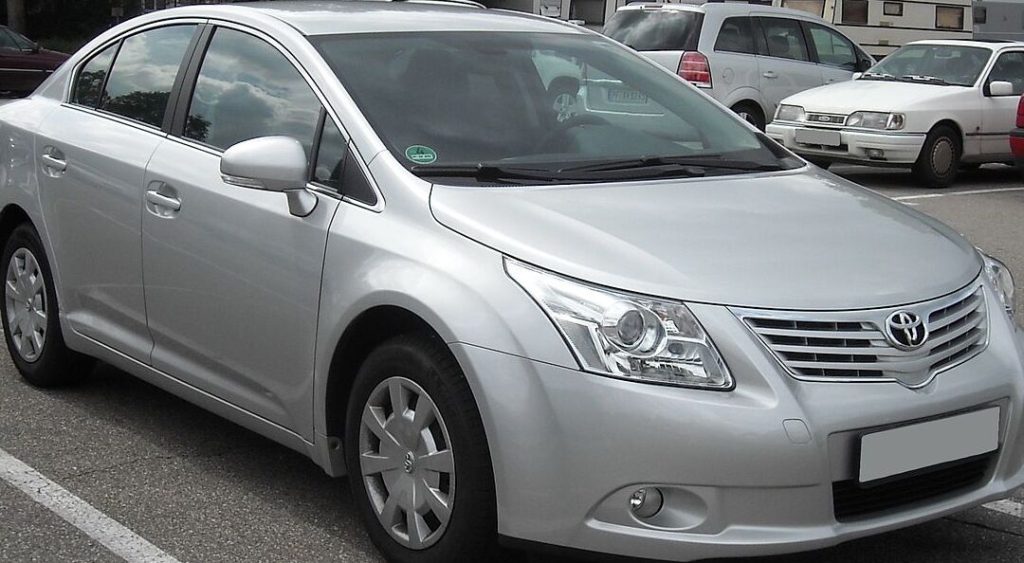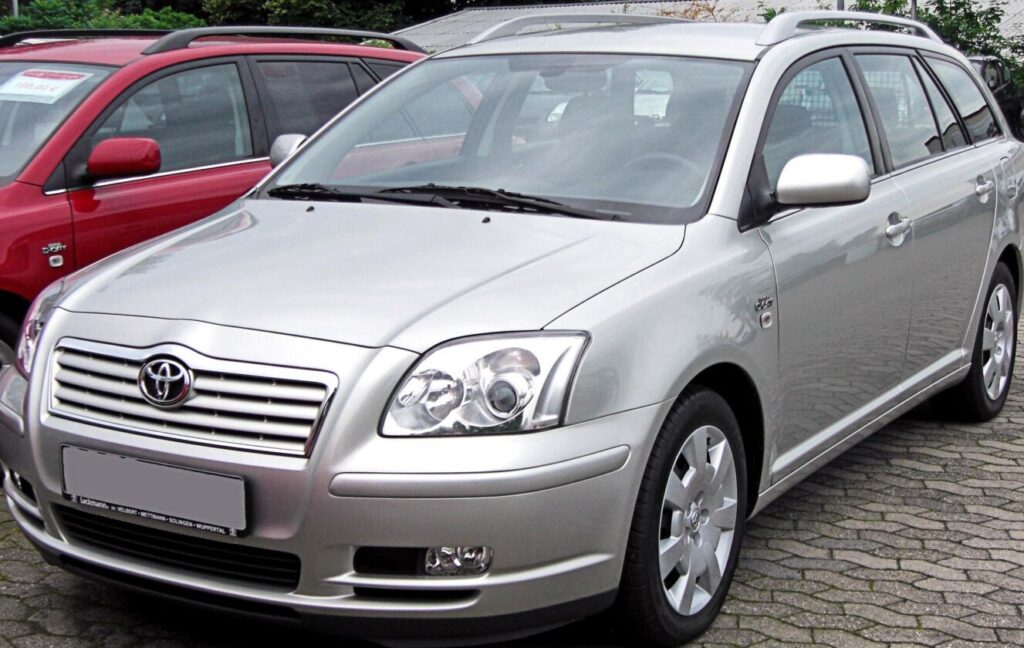
The Toyota Avensis II Wagon 2.0 VVT-i Automatic, produced between 2003 and 2009, represented a significant offering in the mid-size station wagon segment. Part of the second generation Avensis (codenamed T27), this variant aimed to provide a balance of practicality, comfort, and reasonable performance for family buyers. Positioned as a mid-range trim within the Avensis Wagon lineup, it slotted above the base 1.8L models and below the more powerful 2.4L versions. The Avensis, in general, was Toyota’s attempt to create a genuinely European-focused vehicle, designed and engineered primarily for the demands of the European market, though it was also sold in other regions including Australia and Asia.
Technical Specifications
| Brand | Toyota |
| Model | Avensis |
| Generation | Avensis II Wagon |
| Type (Engine) | 2.0 VVT-i (147 Hp) Automatic |
| Start of production | 2003 |
| End of production | 2009 |
| Powertrain Architecture | Internal Combustion engine |
| Body type | Station wagon (estate) |
| Seats | 5 |
| Doors | 5 |
| Fuel consumption (urban) | 12.9 l/100 km (18.2 US mpg, 21.9 UK mpg) |
| Fuel consumption (extra urban) | 7.3 l/100 km (32.2 US mpg, 38.7 UK mpg) |
| Fuel consumption (combined) | 9.4 l/100 km (25 US mpg, 30.1 UK mpg) |
| Fuel Type | Petrol (Gasoline) |
| Acceleration 0 – 100 km/h | 11.3 sec |
| Acceleration 0 – 62 mph | 11.3 sec |
| Acceleration 0 – 60 mph | 10.7 sec |
| Maximum speed | 195 km/h (121.17 mph) |
| Weight-to-power ratio | 9.2 kg/Hp |
| Weight-to-torque ratio | 6.9 kg/Nm |
| Power | 147 Hp @ 5700 rpm |
| Torque | 196 Nm @ 4000 rpm (144.56 lb.-ft. @ 4000 rpm) |
| Engine layout | Front, Transverse |
| Engine Model/Code | 1AZ-FSE |
| Engine displacement | 1998 cm3 (121.93 cu. in.) |
| Number of cylinders | 4 |
| Engine configuration | Inline |
| Cylinder Bore | 86 mm (3.39 in.) |
| Piston Stroke | 86 mm (3.39 in.) |
| Compression ratio | 11:1 |
| Number of valves per cylinder | 4 |
| Fuel injection system | Direct injection |
| Engine aspiration | Naturally aspirated engine |
| Valvetrain | DOHC |
| Engine oil capacity | 4.2 l (4.44 US qt | 3.7 UK qt) |
| Coolant capacity | 6.1 l (6.45 US qt | 5.37 UK qt) |
| Kerb Weight | 1355 kg (2987.26 lbs.) |
| Max. weight | 1895 kg (4177.76 lbs.) |
| Max load | 540 kg (1190.5 lbs.) |
| Trunk (boot) space – minimum | 520 l (18.36 cu. ft.) |
| Trunk (boot) space – maximum | 1500 l (52.97 cu. ft.) |
| Fuel tank capacity | 60 l (15.85 US gal | 13.2 UK gal) |
| Length | 4700 mm (185.04 in.) |
| Width | 1760 mm (69.29 in.) |
| Height | 1525 mm (60.04 in.) |
| Wheelbase | 2700 mm (106.3 in.) |
| Front track | 1505 mm (59.25 in.) |
| Rear track | 1510 mm (59.45 in.) |
| Drivetrain Architecture | Front wheel drive |
| Number of gears | 4 |
| Gearbox type | Automatic transmission |
| Front suspension | Coil spring |
| Rear suspension | Coil spring |
| Front brakes | Ventilated discs |
| Rear brakes | Disc |
| Assisting systems | ABS (Anti-lock braking system) |
| Steering type | Steering rack and pinion |
| Tires size | 205/55 R16 |
INTRODUCTION
The Avensis II Wagon 2.0 VVT-i Automatic, launched in 2003, was a key component of Toyota’s strategy to establish a stronger presence in the European mid-size family car market. Building upon the success of the first-generation Avensis, the T27 series offered increased refinement, improved interior space, and a wider range of engine options. The 2.0-liter VVT-i engine paired with a four-speed automatic transmission was designed to appeal to buyers seeking a comfortable and convenient driving experience without sacrificing too much performance. This configuration was particularly popular in markets where automatic transmissions were preferred, such as the United States and Australia, though the Avensis was not officially sold in the US.
Powertrain & Engine Architecture
At the heart of the Avensis II Wagon 2.0 VVT-i Automatic lies the 1AZ-FSE engine, a 1.998-liter inline-four cylinder powerplant. This engine utilizes Toyota’s Variable Valve Timing-intelligent (VVT-i) system, which optimizes valve timing based on engine speed and load, improving both fuel efficiency and power output. The 1AZ-FSE is a direct-injection engine, meaning fuel is sprayed directly into the combustion chamber, further enhancing efficiency and reducing emissions. The engine produces 147 horsepower at 5700 rpm and 196 Nm (144.56 lb-ft) of torque at 4000 rpm. The four-speed automatic transmission, while providing smooth shifts, is a relatively conventional design compared to more modern transmissions with more gears. It’s known for its reliability but isn’t particularly focused on maximizing fuel economy or providing sporty performance. The transmission’s gear ratios are tuned for comfortable cruising and adequate acceleration in everyday driving situations.
Driving Characteristics
The driving experience in the Avensis II Wagon 2.0 VVT-i Automatic is characterized by its smoothness and refinement. The automatic transmission delivers seamless gear changes, making it ideal for city driving and long highway journeys. However, the 147 hp engine and four-speed automatic don’t offer particularly brisk acceleration. 0-60 mph takes around 10.7 seconds, which is adequate but not exciting. Compared to the manual transmission version of the same engine, the automatic suffers a slight performance penalty due to the transmission’s inherent efficiency losses. The higher-output 2.4L engine offered significantly more power, but at the cost of increased fuel consumption. The suspension provides a comfortable ride, absorbing bumps and imperfections in the road well, but it’s not particularly sporty or engaging. Steering is light and precise, making it easy to maneuver in tight spaces.
Equipment & Trim Levels
The 2.0 VVT-i Automatic trim typically included features such as air conditioning, power windows, power mirrors, central locking, and an integrated audio system. Higher trim levels added features like alloy wheels, a sunroof, leather upholstery, and a more advanced audio system with CD changer. Safety features included ABS brakes, front airbags, and side airbags. The interior was generally well-built and functional, with a focus on practicality and durability. Upholstery was typically cloth, though leather was available as an option. The dashboard layout was straightforward and easy to use, with clearly labeled controls.
Chassis & Braking
The Avensis II Wagon featured a MacPherson strut front suspension and a coil spring rear suspension. This setup provided a good balance of ride comfort and handling. The front brakes were ventilated discs, while the rear brakes were solid discs. ABS (Anti-lock Braking System) was standard, enhancing braking performance and stability, especially in wet or slippery conditions. The chassis was designed to provide a stable and predictable driving experience, prioritizing comfort and safety over outright sportiness. Stabilizer bars were fitted to both the front and rear axles to reduce body roll during cornering.
Market Reception & Comparison
The Avensis II Wagon 2.0 VVT-i Automatic was generally well-received by automotive critics. It was praised for its comfortable ride, spacious interior, and reliable powertrain. However, some critics noted that the engine lacked the punch of its competitors and that the automatic transmission wasn’t as refined as some of the newer designs on the market. Compared to rivals like the Ford Mondeo and Volkswagen Passat, the Avensis offered a more conservative driving experience but was often considered more reliable. Fuel economy was respectable, averaging around 25 mpg in combined driving, but not class-leading.
Legacy
The Toyota Avensis II Wagon 2.0 VVT-i Automatic has proven to be a durable and reliable vehicle. The 1AZ-FSE engine is known for its longevity, and the four-speed automatic transmission, while not the most advanced, is generally robust. In the used car market, these Avensis wagons are often sought after by buyers looking for a practical, affordable, and dependable family vehicle. Maintenance costs are typically reasonable, and parts availability is good. While it may not offer the excitement of some of its rivals, the Avensis II Wagon 2.0 VVT-i Automatic remains a solid and sensible choice for those seeking a comfortable and reliable station wagon.