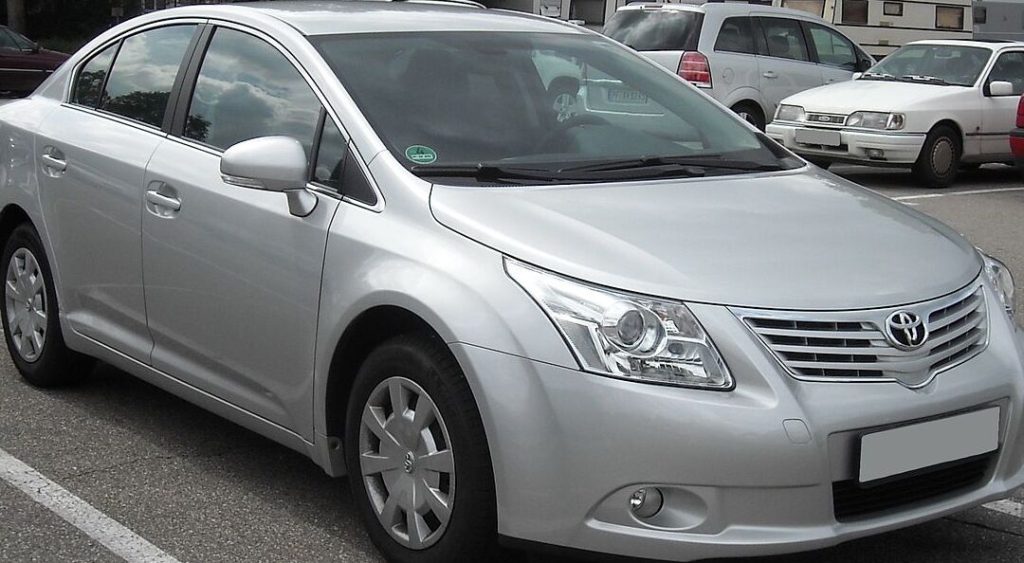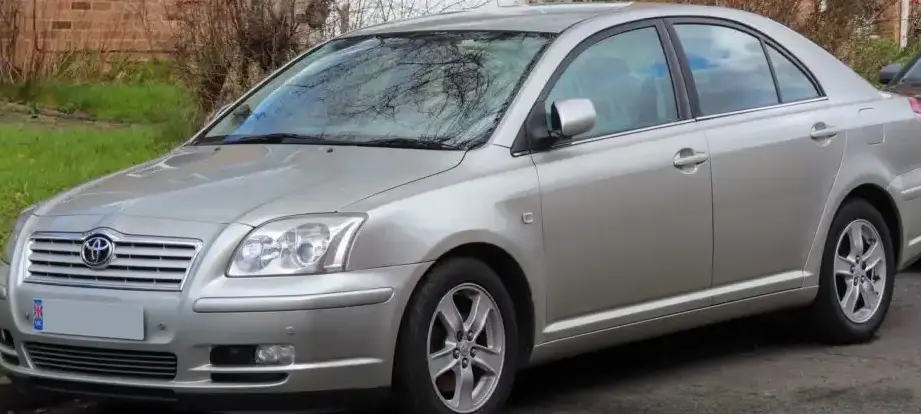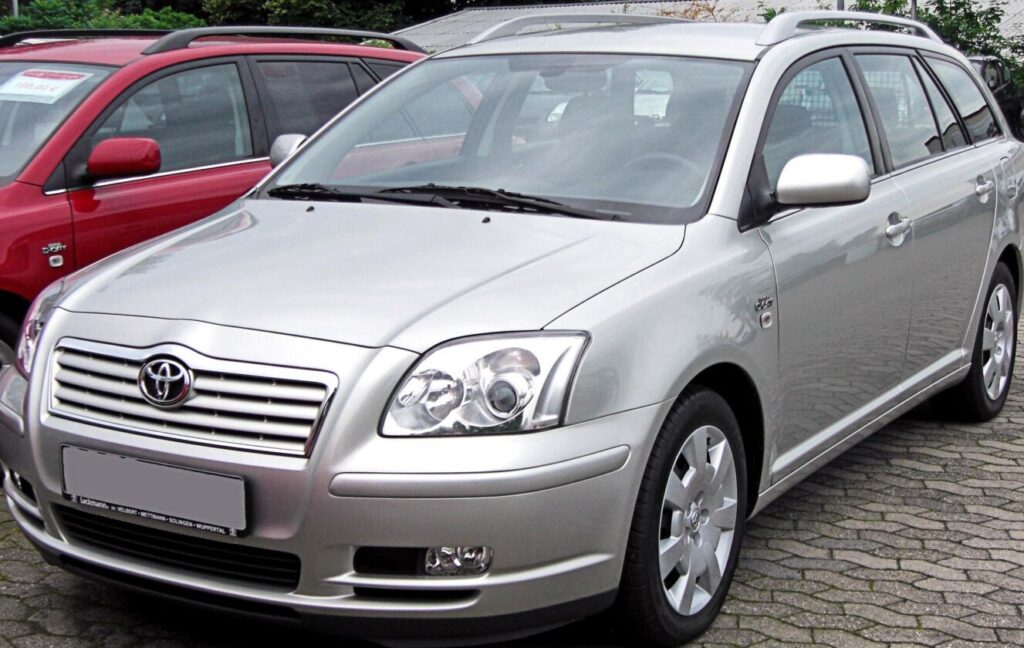
The Toyota Avensis II Wagon 2.2 D-CAT, produced between June 2006 and January 2009, represented a significant offering in the European D-segment for Toyota. Positioned as a practical and reliable family vehicle, the Avensis Wagon competed with established rivals like the Ford Mondeo, Volkswagen Passat, and Peugeot 407. This particular variant, equipped with the 2AD-FHV 2.2-liter four-cylinder diesel engine producing 177 horsepower, aimed to balance fuel efficiency with respectable performance. It occupied a mid-to-upper trim level within the Avensis II Wagon range, offering a step up from the lower-powered engine options while remaining more accessible than the petrol-powered models.
Technical Specifications
| Brand | Toyota |
| Model | Avensis |
| Generation | Avensis II Wagon |
| Type (Engine) | 2.2 D-CAT (177 Hp) |
| Start of production | June, 2006 |
| End of production | January, 2009 |
| Powertrain Architecture | Internal Combustion engine |
| Body type | Station wagon (estate) |
| Seats | 5 |
| Doors | 5 |
| Fuel consumption (urban) | 5.2 l/100 km (45.2 US mpg, 54.3 UK mpg, 19.2 km/l) |
| Fuel consumption (extra urban) | 7.6 l/100 km (30.9 US mpg, 37.2 UK mpg, 13.2 km/l) |
| Fuel consumption (combined) | 6.1 l/100 km (38.6 US mpg, 46.3 UK mpg, 16.4 km/l) |
| CO2 emissions | 161 g/km |
| Fuel Type | Diesel |
| Acceleration 0 – 100 km/h | 8.6 sec |
| Acceleration 0 – 62 mph | 8.6 sec |
| Acceleration 0 – 60 mph | 8.2 sec |
| Maximum speed | 220 km/h (136.7 mph) |
| Emission standard | Euro 4 |
| Weight-to-power ratio | 8.7 kg/Hp, 115.3 Hp/tonne |
| Weight-to-torque ratio | 3.8 kg/Nm, 260.6 Nm/tonne |
| Power | 177 Hp @ 4000 rpm |
| Power per litre | 79.3 Hp/l |
| Torque | 400 Nm @ 2000-2600 rpm (295.02 lb.-ft. @ 2000-2600 rpm) |
| Engine layout | Front, Transverse |
| Engine Model/Code | 2AD-FHV |
| Engine displacement | 2231 cm3 (136.14 cu. in.) |
| Number of cylinders | 4 |
| Engine configuration | Inline |
| Cylinder Bore | 86 mm (3.39 in.) |
| Piston Stroke | 96 mm (3.78 in.) |
| Compression ratio | 15.8:1 |
| Number of valves per cylinder | 4 |
| Fuel injection system | Diesel Commonrail |
| Engine aspiration | Turbocharger, Intercooler |
| Valvetrain | DOHC |
| Engine oil capacity | 5.9 l (6.23 US qt | 5.19 UK qt) |
| Coolant | 8 l (8.45 US qt | 7.04 UK qt) |
| Kerb Weight | 1535-1585 kg (3384.1 – 3494.33 lbs.) |
| Max. weight | 1970 kg (4343.11 lbs.) |
| Max load | 385-435 kg (848.78 – 959.01 lbs.) |
| Trunk (boot) space – minimum | 520 l (18.36 cu. ft.) |
| Trunk (boot) space – maximum | 1500 l (52.97 cu. ft.) |
| Fuel tank capacity | 60 l (15.85 US gal | 13.2 UK gal) |
| Max. roof load | 90 kg (198.42 lbs.) |
| Permitted trailer load with brakes (8%) | 1500 kg (3306.93 lbs.) |
| Permitted trailer load with brakes (12%) | 1300 kg (2866.01 lbs.) |
| Permitted trailer load without brakes | 500 kg (1102.31 lbs.) |
| Permitted towbar download | 75 kg (165.35 lbs.) |
| Length | 4715 mm (185.63 in.) |
| Width | 1760 mm (69.29 in.) |
| Height | 1525 mm (60.04 in.) |
| Wheelbase | 2700 mm (106.3 in.) |
| Front track | 1505 mm (59.25 in.) |
| Rear (Back) track | 1510 mm (59.45 in.) |
| Drivetrain Architecture | The Internal combustion engine (ICE) drives the front wheels of the vehicle. |
| Drive wheel | Front wheel drive |
| Number of gears and type of gearbox | 6 gears, manual transmission |
| Front suspension | Independent, type McPherson with coil spring and anti-roll bar |
| Rear suspension | Double wishbone |
| Front brakes | Ventilated discs |
| Rear brakes | Disc |
| Assisting systems | ABS (Anti-lock braking system) |
| Steering type | Steering rack and pinion |
| Power steering | Hydraulic Steering |
Powertrain & Engine Architecture
The heart of the Avensis 2.2 D-CAT is the 2AD-FHV engine, a 2.2-liter inline-four diesel. This engine utilizes a common rail direct injection system, delivering fuel at extremely high pressure for optimized combustion. The D-CAT designation refers to the Diesel particulate filter and Catalytic Reduction system employed to meet stringent Euro 4 emissions standards. A turbocharger with an intercooler further enhances performance by forcing more air into the cylinders. The engine features a double overhead camshaft (DOHC) valvetrain with four valves per cylinder, contributing to efficient gas exchange. The 2AD-FHV engine is known for its relatively robust construction, though early versions were subject to DPF issues. The engine paired with a 6-speed manual transmission, providing a good balance between fuel economy and driver control.
Driving Characteristics
The 177 horsepower and 400 Nm (295 lb-ft) of torque provided by the 2.2 D-CAT engine delivered a respectable driving experience for the Avensis Wagon. Acceleration from 0-60 mph took approximately 8.2 seconds, making it adequately quick for everyday driving and overtaking maneuvers. The torque curve was relatively flat, providing strong pulling power from low engine speeds, which was particularly useful when fully loaded. Compared to the lower-powered 1.8-liter petrol variants, the 2.2 D-CAT offered significantly more effortless performance. However, it didn’t possess the outright punch of the higher-output petrol engines or the more responsive nature of some competitor’s diesel engines. The 6-speed manual transmission was well-matched to the engine, offering smooth gear changes and allowing the driver to keep the engine in its optimal power band.
Equipment & Trim Levels
The 2.2 D-CAT variant of the Avensis Wagon typically came equipped with a good level of standard features. These included air conditioning, electric front and rear windows, a CD stereo system, alloy wheels, and ABS brakes. Higher trim levels added features such as automatic climate control, a multi-function steering wheel, cruise control, and parking sensors. Interior upholstery was generally cloth, with leather options available as an upgrade. The dashboard layout was functional and well-built, prioritizing practicality over outright style. Optional extras included a sunroof, satellite navigation, and upgraded audio systems.
Chassis & Braking
The Avensis II Wagon featured an independent McPherson strut suspension at the front and a double wishbone suspension at the rear, providing a comfortable and controlled ride. The suspension was tuned to prioritize comfort, making it well-suited for long journeys. Front brakes were ventilated discs, while rear brakes were solid discs, providing adequate stopping power for the vehicle’s weight. ABS (Anti-lock Braking System) was standard, enhancing safety during emergency braking situations. The steering was hydraulic power-assisted, offering a reasonably direct and responsive feel.
Market Reception & Comparison
The Toyota Avensis II Wagon 2.2 D-CAT was generally well-received by automotive critics. It was praised for its reliability, practicality, and comfortable ride. Fuel economy was also a strong point, with combined figures around 38.6 US mpg. However, some critics noted that the engine was somewhat noisy and lacked the refinement of some competitors. Compared to other trims in the Avensis lineup, the 2.2 D-CAT offered a compelling balance of performance and economy, making it a popular choice for fleet buyers and private customers alike. The 1.8 petrol models were cheaper to purchase but offered significantly less performance, while the higher-powered petrol engines were more expensive and less fuel-efficient.
Legacy
The 2AD-FHV engine, while generally reliable, did experience some issues with the diesel particulate filter (DPF), particularly on vehicles that primarily undertook short journeys. Regular maintenance and the use of high-quality diesel fuel were crucial to prevent DPF blockages. Today, the Avensis II Wagon 2.2 D-CAT can be found on the used car market at relatively affordable prices. It remains a practical and dependable family vehicle, offering good value for money. However, potential buyers should be aware of the potential DPF issues and ensure that the vehicle has been well-maintained.