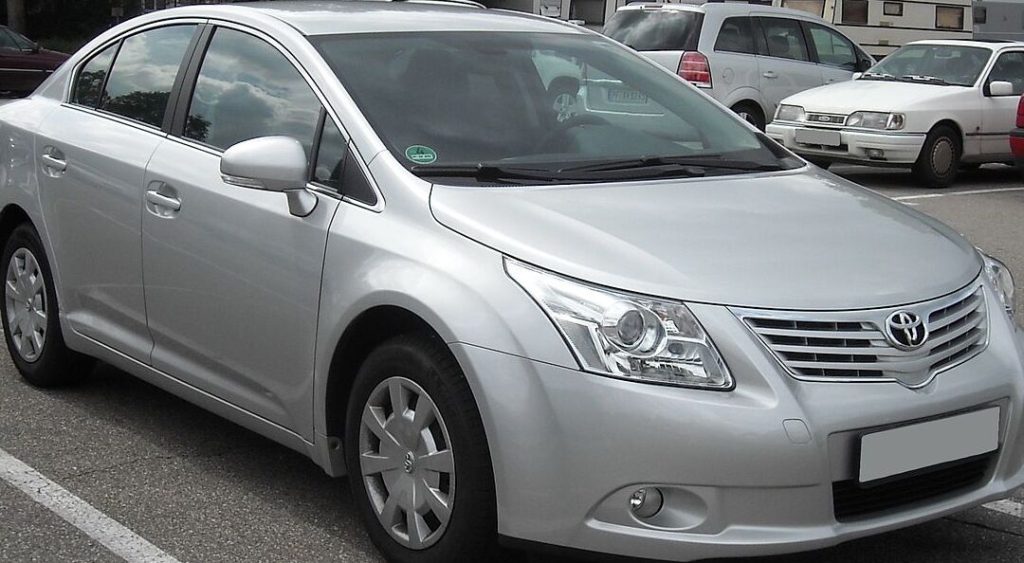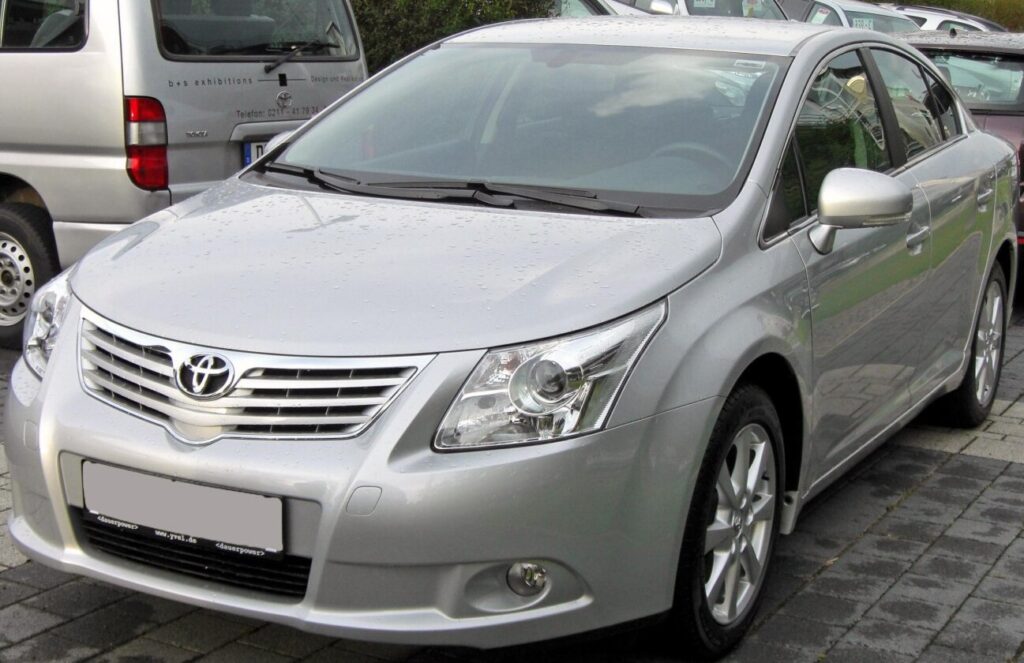
The Toyota Avensis III 1.6i (132 hp) was a mainstream, mid-size sedan produced between 2009 and 2011, forming a key part of Toyota’s European and Asian lineup. Positioned as an entry-level offering within the third-generation Avensis (T270) range, it aimed to provide a balance of affordability, fuel efficiency, and Toyota’s renowned reliability. This variant was primarily targeted at buyers seeking a comfortable and practical family car without the higher price tag associated with larger engines or more luxurious trim levels. It sat below the 2.0-liter and 2.4-liter engine options in terms of performance and equipment, and was generally offered alongside a diesel alternative, the 2.0 D-4D.
| Brand | Toyota |
| Model | Avensis |
| Generation | Avensis III |
| Type (Engine) | 1.6i (132 Hp) |
| Start of production | 2009 |
| End of production | 2011 |
| Powertrain Architecture | Internal Combustion engine |
| Body type | Sedan |
| Seats | 5 |
| Doors | 4 |
| Fuel consumption (urban) | 8.3 l/100 km (28.3 US mpg) |
| Fuel consumption (extra urban) | 5.4 l/100 km (43.6 US mpg) |
| Fuel consumption (combined) | 6.5 l/100 km (36.2 US mpg) |
| Fuel Type | Petrol (Gasoline) |
| Acceleration 0 – 100 km/h | 10.4 sec |
| Acceleration 0 – 62 mph | 10.4 sec |
| Acceleration 0 – 60 mph | 9.9 sec |
| Maximum speed | 200 km/h (124.27 mph) |
| Emission standard | Euro 5 |
| Weight-to-power ratio | 10.3 kg/Hp |
| Weight-to-torque ratio | 8.5 kg/Nm |
| Power | 132 Hp @ 6400 rpm |
| Torque | 160 Nm @ 4400 rpm (118.01 lb.-ft. @ 4400 rpm) |
| Engine layout | Front, Transverse |
| Engine Model/Code | 1ZR-FAE |
| Engine displacement | 1598 cm3 (97.52 cu. in.) |
| Number of cylinders | 4 |
| Engine configuration | Inline |
| Cylinder Bore | 80.5 mm (3.17 in.) |
| Piston Stroke | 78.5 mm (3.09 in.) |
| Number of valves per cylinder | 4 |
| Fuel injection system | Multi-port manifold injection |
| Engine aspiration | Naturally aspirated engine |
| Valvetrain | DOHC |
| Engine oil capacity | 4.2 l (4.44 US qt | 3.7 UK qt) |
| Coolant capacity | 6.3 l (6.66 US qt | 5.54 UK qt) |
| Kerb Weight | 1365 kg (3009.31 lbs.) |
| Max. weight | 1950 kg (4299.01 lbs.) |
| Max load | 585 kg (1289.7 lbs.) |
| Trunk (boot) space – minimum | 509 l (17.98 cu. ft.) |
| Fuel tank capacity | 60 l (15.85 US gal | 13.2 UK gal) |
| Length | 4695 mm (184.84 in.) |
| Width | 1810 mm (71.26 in.) |
| Height | 1480 mm (58.27 in.) |
| Wheelbase | 2700 mm (106.3 in.) |
| Front track | 1550 mm (61.02 in.) |
| Rear track | 1540 mm (60.63 in.) |
| Minimum turning circle | 10.8 m (35.43 ft.) |
| Drivetrain Architecture | Front wheel drive |
| Number of gears | 6 |
| Gearbox type | Manual transmission |
| Front suspension | Independent type McPherson |
| Rear suspension | Double wishbone |
| Front brakes | Ventilated discs |
| Rear brakes | Disc |
| Assisting systems | ABS (Anti-lock braking system), Electric Power Steering |
Powertrain & Engine Architecture
The Avensis III 1.6i utilized Toyota’s 1ZR-FAE engine, a 1.6-liter inline-four cylinder gasoline engine. This engine featured a dual overhead camshaft (DOHC) valvetrain with four valves per cylinder, and employed multi-port fuel injection. The 1ZR-FAE was designed with a focus on efficiency and smooth operation, rather than outright performance. It produced 132 horsepower at 6,400 rpm and 160 Nm (118 lb-ft) of torque at 4,400 rpm. The engine’s relatively modest output was paired with a six-speed manual transmission, which was the standard offering for this trim level. The engine block was constructed from aluminum alloy, contributing to weight reduction. The 1ZR-FAE was a relatively simple engine design, contributing to its reputation for reliability.
Driving Characteristics
The 1.6i Avensis offered a comfortable, but not particularly sporty, driving experience. Acceleration from 0-60 mph took approximately 9.9 seconds, and top speed was limited to 124 mph. The six-speed manual transmission helped to keep the engine in its optimal power band, but the engine lacked the low-end torque of larger displacement engines or turbocharged alternatives. Gear ratios were tuned for fuel economy, meaning that frequent downshifts were often required for overtaking or climbing hills. Compared to the 2.0-liter Avensis, the 1.6i felt noticeably less powerful, especially when fully loaded with passengers and luggage. The suspension provided a comfortable ride, absorbing bumps and imperfections in the road surface effectively, but it wasn’t particularly engaging for enthusiastic drivers. Steering was light and precise, making it easy to maneuver in urban environments.
Equipment & Trim Levels
The 1.6i trim level typically represented the entry point into the Avensis III range. Standard equipment generally included air conditioning, power windows, power door locks, a basic audio system with CD player, and ABS brakes. Safety features such as front and side airbags were also standard. Interior upholstery was typically cloth, and the dashboard featured a functional, if somewhat understated, design. Optional extras included alloy wheels, a sunroof, upgraded audio systems, and parking sensors. Higher trim levels, such as the 2.0-liter models, offered additional features like leather upholstery, automatic climate control, and navigation systems.
Chassis & Braking
The Avensis III utilized a front-wheel-drive layout with an independent McPherson strut suspension at the front and a double wishbone suspension at the rear. This suspension setup provided a good balance of ride comfort and handling. The 1.6i model was equipped with ventilated disc brakes at the front and solid disc brakes at the rear. ABS (Anti-lock Braking System) was standard, enhancing braking performance and stability. The chassis was designed to provide a rigid and safe platform, and the car benefited from Toyota’s extensive experience in vehicle dynamics. Stabilizer bars were fitted to both the front and rear axles to reduce body roll during cornering.
Market Reception & Comparison
The Avensis III 1.6i was generally well-received by automotive critics as a practical and reliable family car. However, its performance was often criticized as being somewhat underwhelming, particularly when compared to competitors offering more powerful engines. Fuel economy was a strong point, with the 1.6i achieving combined fuel consumption figures of around 36.2 US mpg. In terms of reliability, the Avensis consistently ranked highly in owner satisfaction surveys. Compared to the 2.0-liter Avensis, the 1.6i offered lower running costs but sacrificed performance. The diesel-powered 2.0 D-4D offered superior fuel economy and torque, but at a higher purchase price.
Legacy
The Toyota Avensis III 1.6i has proven to be a durable and dependable vehicle in the used car market. The 1ZR-FAE engine is known for its longevity and relatively low maintenance costs. Common issues are infrequent, and parts availability remains good. While not a particularly exciting car to drive, its practicality, reliability, and affordability have made it a popular choice for budget-conscious buyers seeking a comfortable and dependable family sedan. Today, well-maintained examples can still provide years of reliable service, making it a sensible option for those prioritizing practicality over performance.