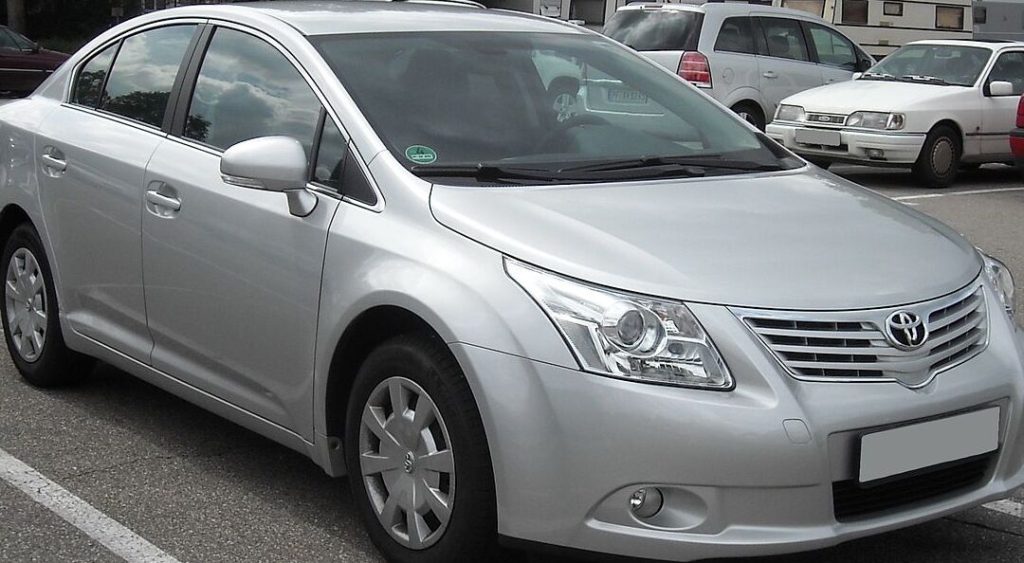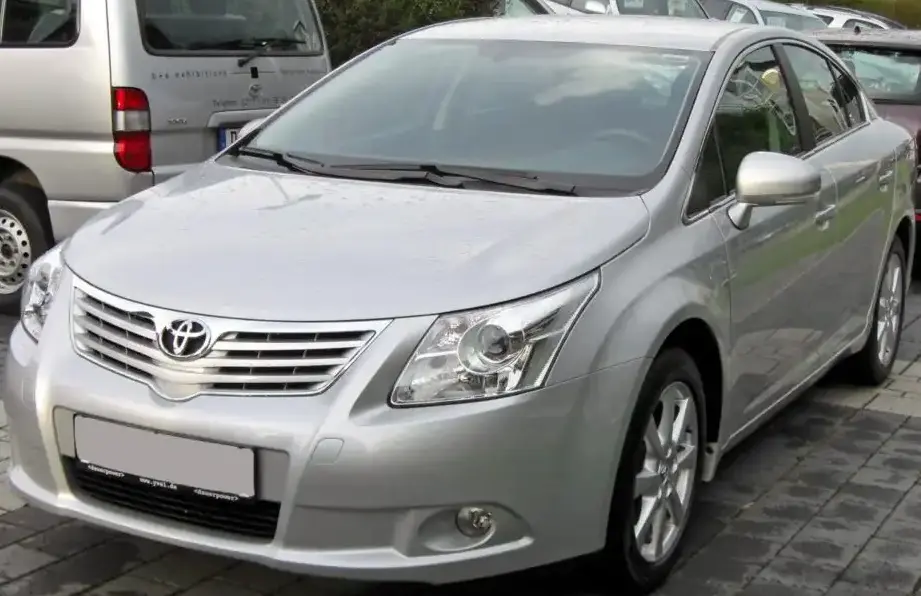
The Toyota Avensis III 2.2 D-4D (150 hp) was a mid-range variant of Toyota’s third-generation Avensis, produced between 2009 and 2011. Positioned within the broader Avensis III lineup (codenamed T27), this model aimed to balance fuel efficiency with respectable performance, appealing to drivers seeking a comfortable and practical family sedan. It represented Toyota’s continued commitment to diesel technology in the European market, where diesel-powered vehicles held a significant share. This particular engine and transmission combination offered a compelling alternative to the petrol options and the more powerful diesel variants.
Technical Specifications
| Brand | Toyota |
| Model | Avensis |
| Generation | Avensis III |
| Type (Engine) | 2.2 D-4D (150 Hp) |
| Start of production | 2009 |
| End of production | 2011 |
| Powertrain Architecture | Internal Combustion engine |
| Body type | Sedan |
| Seats | 5 |
| Doors | 4 |
| Fuel consumption (urban) | 7 l/100 km (33.6 US mpg, 40.4 UK mpg, 14.3 km/l) |
| Fuel consumption (extra urban) | 4.7 l/100 km (50 US mpg, 60.1 UK mpg, 21.3 km/l) |
| Fuel consumption (combined) | 5.4 l/100 km (43.6 US mpg, 52.3 UK mpg, 18.5 km/l) |
| CO2 emissions | 147 g/km |
| Fuel Type | Diesel |
| Acceleration 0 – 100 km/h | 8.9 sec |
| Acceleration 0 – 62 mph | 8.9 sec |
| Acceleration 0 – 60 mph | 8.5 sec |
| Maximum speed | 210 km/h (130.49 mph) |
| Emission standard | Euro 5 |
| Weight-to-power ratio | 10.1 kg/Hp, 99 Hp/tonne |
| Weight-to-torque ratio | 4.5 kg/Nm, 224.4 Nm/tonne |
| Power | 150 Hp @ 3600 rpm |
| Power per litre | 67.2 Hp/l |
| Torque | 340 Nm @ 2000-2800 rpm (250.77 lb.-ft. @ 2000-2800 rpm) |
| Engine layout | Front, Transverse |
| Engine Model/Code | 2AD-FTV |
| Engine displacement | 2231 cm3 (136.14 cu. in.) |
| Number of cylinders | 4 |
| Engine configuration | Inline |
| Cylinder Bore | 86 mm (3.39 in.) |
| Piston Stroke | 96 mm (3.78 in.) |
| Compression ratio | 15.7:1 |
| Number of valves per cylinder | 4 |
| Fuel injection system | Diesel Commonrail |
| Engine aspiration | Turbocharger, Intercooler |
| Valvetrain | DOHC |
| Engine oil capacity | 5.9 l (6.23 US qt | 5.19 UK qt) |
| Coolant | 7.4 l (7.82 US qt | 6.51 UK qt) |
| Kerb Weight | 1515 kg (3340 lbs.) |
| Max. weight | 2140 kg (4717.89 lbs.) |
| Max load | 625 kg (1377.89 lbs.) |
| Trunk (boot) space – minimum | 509 l (17.98 cu. ft.) |
| Fuel tank capacity | 60 l (15.85 US gal | 13.2 UK gal) |
| Permitted trailer load with brakes (12%) | 1800 kg (3968.32 lbs.) |
| Permitted trailer load without brakes | 500 kg (1102.31 lbs.) |
| Length | 4695 mm (184.84 in.) |
| Width | 1810 mm (71.26 in.) |
| Height | 1480 mm (58.27 in.) |
| Wheelbase | 2700 mm (106.3 in.) |
| Front track | 1550-1560 mm (61.02 – 61.42 in.) |
| Rear (Back) track | 1550-1560 mm (61.02 – 61.42 in.) |
| Front overhang | 965 mm (37.99 in.) |
| Rear overhang | 1030 mm (40.55 in.) |
| Minimum turning circle | 10.8 m (35.43 ft.) |
| Drivetrain Architecture | Front wheel drive |
| Drive wheel | Front wheel drive |
| Number of gears and type of gearbox | 6 gears, manual transmission |
| Front suspension | Independent type McPherson |
| Rear suspension | Double wishbone |
| Front brakes | Ventilated discs, 320×26 mm |
| Rear brakes | Disc, 290×11 mm |
| Assisting systems | ABS (Anti-lock braking system) |
| Steering type | Steering rack and pinion |
| Power steering | Electric Steering |
| Tires size | 205/60 R16; 215/55 R17; 225/45 R18 |
| Wheel rims size | 6.5J x 16; 7J x 17; 7.5J x 18 |
INTRODUCTION
The Avensis III, launched in 2009, represented a significant step forward for Toyota’s D-segment offering. Built on the T27 platform (shared with other Toyota and Lexus models), it aimed to provide a more refined and sophisticated experience than its predecessors. The 2.2 D-4D 150 hp variant was a key component of the Avensis III range, particularly in Europe, where diesel engines were favored for their fuel economy and torque. This engine offered a balance between performance and efficiency, making it a popular choice for fleet buyers and private customers alike. It was available in both sedan and wagon body styles.
Powertrain & Engine Architecture
The heart of this Avensis variant is the 2AD-FTV 2.2-liter inline-four diesel engine. This engine utilizes a common-rail direct injection system, delivering fuel at extremely high pressure for improved combustion efficiency and reduced emissions. The 2AD-FTV is a 16-valve DOHC (Double Overhead Camshaft) engine, featuring a turbocharger with an intercooler to boost power output. The turbocharger helps to overcome the inherent limitations of a naturally aspirated diesel engine, providing increased torque across a wider rev range. The engine’s block is constructed from cast iron for durability, while the cylinder head is made from aluminum to reduce weight. The 150 hp version of the 2AD-FTV was tuned for a balance of power and economy, differing from the higher-output versions found in other Toyota models. The engine was typically paired with a six-speed manual transmission, although a six-speed automatic transmission was also available, though less common.
Driving Characteristics
The 2.2 D-4D 150 hp Avensis offered a comfortable and refined driving experience. While not a sports sedan, it provided ample torque for everyday driving and overtaking maneuvers. The engine’s peak torque of 340 Nm (250 lb-ft) was available from 2000-2800 rpm, providing strong acceleration in the mid-range. The six-speed manual transmission allowed for precise gear changes and helped to maximize fuel efficiency. Compared to the higher-output 177 hp version of the 2.2 D-4D, the 150 hp variant felt slightly less responsive, particularly at higher engine speeds. However, this difference was often offset by the improved fuel economy. The automatic transmission, when equipped, offered smooth shifts but could sometimes feel hesitant during quick acceleration.
Equipment & Trim Levels
The 2.2 D-4D 150 hp Avensis was typically offered in mid-range trim levels, such as the ‘Comfort’ or ‘Style’ variants, depending on the specific market. Standard equipment generally included air conditioning, power windows, central locking, a CD player with MP3 compatibility, and alloy wheels. Higher trim levels added features such as leather upholstery, a sunroof, a navigation system, and automatic climate control. Safety features included ABS brakes, electronic brakeforce distribution, and multiple airbags. Optional extras included parking sensors, a rear-view camera, and a premium sound system.
Chassis & Braking
The Avensis III featured an independent McPherson strut suspension at the front and a double wishbone suspension at the rear, providing a comfortable ride and good handling characteristics. The suspension was tuned to prioritize comfort over outright sportiness. Braking duties were handled by ventilated disc brakes at the front and solid disc brakes at the rear. ABS (Anti-lock Braking System) was standard, enhancing braking performance and stability. The steering was electrically assisted, providing light and precise steering feel.
Market Reception & Comparison
The Toyota Avensis III 2.2 D-4D 150 hp was generally well-received by automotive critics. It was praised for its fuel efficiency, comfortable ride, and spacious interior. However, some critics noted that the engine lacked the refinement of some of its competitors, such as the Volkswagen Passat and Ford Mondeo. Compared to the 1.8-liter petrol variants, the 2.2 D-4D offered significantly better fuel economy and torque, making it a more practical choice for long-distance driving. Compared to the higher-output 2.2 D-4D, the 150 hp version offered a lower purchase price and slightly better fuel economy, but at the expense of some performance.
Legacy
The 2AD-FTV engine, while generally reliable, has been known to exhibit issues with the diesel particulate filter (DPF) if not properly maintained. Regular servicing and the use of high-quality diesel fuel are essential to prevent DPF blockages. The Avensis III 2.2 D-4D 150 hp remains a popular choice in the used car market, particularly for buyers seeking a reliable and fuel-efficient family sedan. Its reputation for durability and low running costs has helped to maintain its value over time. Parts availability is generally good, and the Avensis III is relatively easy to maintain, making it a practical and affordable option for many drivers.