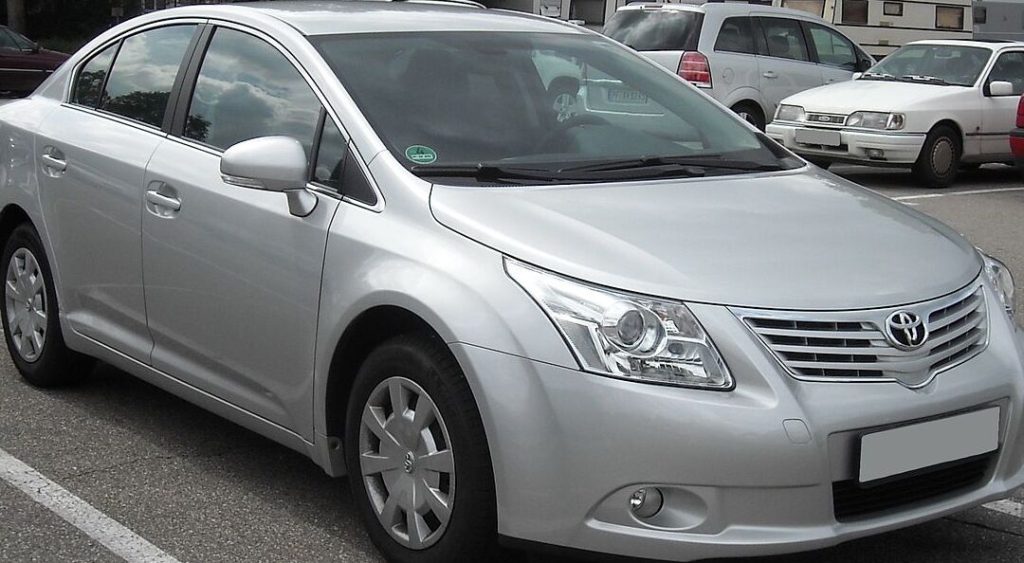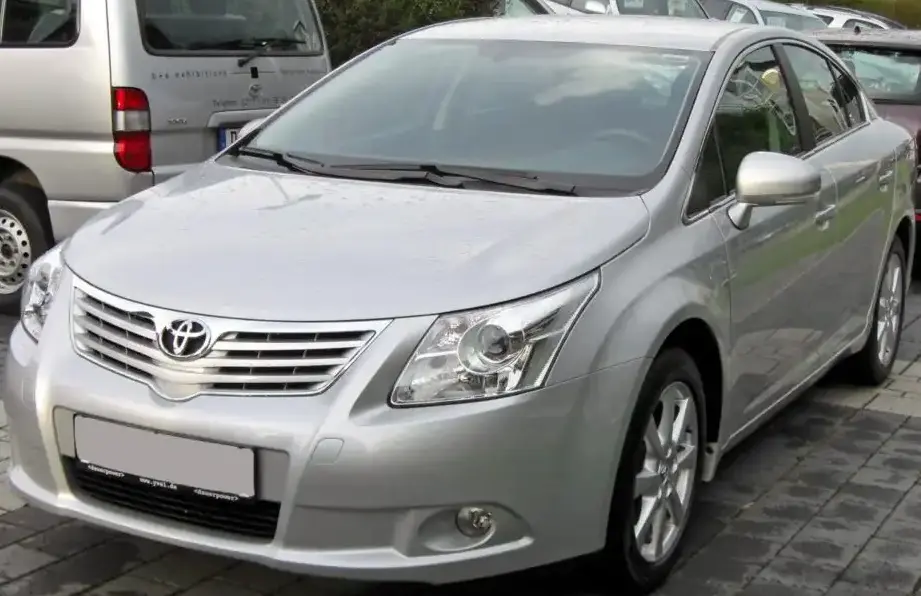
The Toyota Avensis III 2.2 D-CAT (150 hp) Automatic, produced between 2009 and 2011, represented a mid-cycle offering within the third generation (T270) Avensis lineup. Positioned as a comfortable and efficient option, it aimed to balance performance with fuel economy for the European market, where the Avensis competed primarily with the Ford Mondeo, Vauxhall/Opel Insignia, and Volkswagen Passat. This variant utilized a diesel engine paired with a six-speed automatic transmission, catering to buyers who preferred the convenience of an automatic gearbox. It was a popular choice for fleet buyers and private customers alike, seeking a reliable and well-equipped family sedan.
Technical Specifications
| Brand | Toyota |
| Model | Avensis |
| Generation | Avensis III |
| Type (Engine) | 2.2 D-CAT (150 Hp) Automatic |
| Start of production | 2009 |
| End of production | 2011 |
| Powertrain Architecture | Internal Combustion engine |
| Body type | Sedan |
| Seats | 5 |
| Doors | 4 |
| Fuel consumption (urban) | 8.2 l/100 km (28.7 US mpg, 34.4 UK mpg, 12.2 km/l) |
| Fuel consumption (extra urban) | 5.3 l/100 km (44.4 US mpg, 53.3 UK mpg, 18.9 km/l) |
| Fuel consumption (combined) | 6.4 l/100 km (36.8 US mpg, 44.1 UK mpg, 15.6 km/l) |
| CO2 emissions | 169 g/km |
| Fuel Type | Diesel |
| Acceleration 0 – 100 km/h | 9.5 sec |
| Acceleration 0 – 62 mph | 9.5 sec |
| Acceleration 0 – 60 mph | 9 sec |
| Maximum speed | 205 km/h (127.38 mph) |
| Emission standard | Euro 5 |
| Weight-to-power ratio | 10.2 kg/Hp, 98 Hp/tonne |
| Weight-to-torque ratio | 4.5 kg/Nm, 222.2 Nm/tonne |
| Power | 150 Hp @ 3600 rpm |
| Power per litre | 67.2 Hp/l |
| Torque | 340 Nm @ 2000-2800 rpm (250.77 lb.-ft. @ 2000-2800 rpm) |
| Engine layout | Front, Transverse |
| Engine Model/Code | 2AD-FHV |
| Engine displacement | 2231 cm3 (136.14 cu. in.) |
| Number of cylinders | 4 |
| Engine configuration | Inline |
| Cylinder Bore | 86 mm (3.39 in.) |
| Piston Stroke | 96 mm (3.78 in.) |
| Compression ratio | 15.7:1 |
| Number of valves per cylinder | 4 |
| Fuel injection system | Diesel Commonrail |
| Engine aspiration | Turbocharger, Intercooler |
| Valvetrain | DOHC |
| Engine oil capacity | 5.9 l (6.23 US qt | 5.19 UK qt) |
| Coolant | 7.4 l (7.82 US qt | 6.51 UK qt) |
| Kerb Weight | 1530 kg (3373.07 lbs.) |
| Max. weight | 2140 kg (4717.89 lbs.) |
| Max load | 610 kg (1344.82 lbs.) |
| Trunk (boot) space – minimum | 509 l (17.98 cu. ft.) |
| Fuel tank capacity | 60 l (15.85 US gal | 13.2 UK gal) |
| Permitted trailer load with brakes (12%) | 1600 kg (3527.4 lbs.) |
| Permitted trailer load without brakes | 500 kg (1102.31 lbs.) |
| Length | 4695 mm (184.84 in.) |
| Width | 1810 mm (71.26 in.) |
| Height | 1480 mm (58.27 in.) |
| Wheelbase | 2700 mm (106.3 in.) |
| Front track | 1550-1560 mm (61.02 – 61.42 in.) |
| Rear (Back) track | 1550-1560 mm (61.02 – 61.42 in.) |
| Front overhang | 965 mm (37.99 in.) |
| Rear overhang | 1030 mm (40.55 in.) |
| Minimum turning circle (turning diameter) | 10.8 m (35.43 ft.) |
| Drivetrain Architecture | The Internal combustion engine (ICE) drives the front wheels of the vehicle. |
| Drive wheel | Front wheel drive |
| Number of gears and type of gearbox | 6 gears, automatic transmission |
| Front suspension | Independent type McPherson |
| Rear suspension | Double wishbone |
| Front brakes | Ventilated discs |
| Rear brakes | Disc |
| Assisting systems | ABS (Anti-lock braking system) |
| Steering type | Steering rack and pinion |
| Power steering | Electric Steering |
| Tires size | 205/60 R16; 215/55 R17; 225/45 R18 |
| Wheel rims size | 6.5J x 16; 7J x 17; 7.5J x 18 |
Powertrain & Engine Architecture
The heart of the Avensis 2.2 D-CAT Automatic is the 2AD-FHV 2.2-liter inline-four diesel engine. This engine is a common-rail direct injection diesel, meaning fuel is delivered to the cylinders at extremely high pressure via a sophisticated fuel injection system. The 2AD-FHV utilizes a turbocharger with an intercooler to boost power and torque, resulting in 150 horsepower at 3600 rpm and a substantial 340 Nm (250 lb-ft) of torque available between 2000 and 2800 rpm. The engine features a double overhead camshaft (DOHC) valvetrain with four valves per cylinder, optimizing breathing and contributing to its efficiency. A diesel particulate filter (DPF) was standard to meet Euro 5 emissions standards. The engine is transversely mounted in the front of the vehicle. The automatic transmission is a six-speed unit, designed to provide smooth shifts and optimize fuel economy. It’s a conventional torque converter automatic, prioritizing comfort over outright performance.
Driving Characteristics
The 2.2 D-CAT Automatic offered a comfortable and relaxed driving experience. While not particularly sporty, the engine provided adequate power for everyday driving and highway cruising. The automatic transmission, while smooth, wasn’t known for its responsiveness. Compared to the six-speed manual version of the same engine, the automatic resulted in slightly slower acceleration (0-60 mph in around 9.5 seconds) due to transmission losses. The gear ratios were tuned for fuel efficiency rather than outright performance. The abundance of low-end torque made overtaking at highway speeds relatively effortless, but the engine could feel strained when pushed hard. The automatic transmission’s shift points were generally well-chosen, but lacked the driver control offered by a manual gearbox.
Equipment & Trim Levels
The 2.2 D-CAT Automatic was typically offered in mid-range trim levels, such as the ‘Comfort’ or ‘Style’ variants, depending on the specific market. Standard equipment generally included air conditioning, power windows, central locking, a CD/radio system, and alloy wheels. Higher trim levels added features like leather upholstery, a sunroof, automatic climate control, and a navigation system. Safety features such as ABS, traction control, and multiple airbags were standard across the range. Optional extras included parking sensors, a premium sound system, and metallic paint.
Chassis & Braking
The Avensis III utilized an independent McPherson strut suspension at the front and a double wishbone suspension at the rear, providing a comfortable ride and decent handling. The front brakes were ventilated discs, while the rear brakes were solid discs. ABS (Anti-lock Braking System) was standard. Stabilizer bars were fitted to both the front and rear axles to reduce body roll. The suspension was tuned for comfort, prioritizing ride quality over sporty handling. The steering was electrically assisted, providing light and easy steering feel.
Market Reception & Comparison
The Avensis 2.2 D-CAT Automatic was generally well-received by critics as a practical and reliable family car. It offered a good balance of comfort, fuel economy, and equipment. However, it wasn’t considered particularly exciting to drive. Compared to the 1.8-liter petrol versions, the 2.2 D-CAT offered significantly more torque and better fuel economy, making it a more suitable choice for long-distance driving. Compared to the higher-powered 2.4-liter D-CAT, the 2.2 offered a more affordable price point and slightly better fuel efficiency, albeit with less overall performance. Reliability was a strong point, with the Avensis consistently scoring well in reliability surveys.
Legacy
The 2AD-FHV engine, while generally reliable, is known to require regular maintenance, particularly regarding the DPF. Proper servicing and the use of high-quality diesel fuel are crucial to prevent issues. The six-speed automatic transmission is also generally durable, but can be susceptible to wear and tear with high mileage. Today, the Avensis III 2.2 D-CAT Automatic represents a relatively affordable and practical used car option. Its reputation for reliability and comfortable ride continues to make it a popular choice for buyers seeking a dependable family sedan. Parts availability is generally good, and maintenance costs are reasonable.