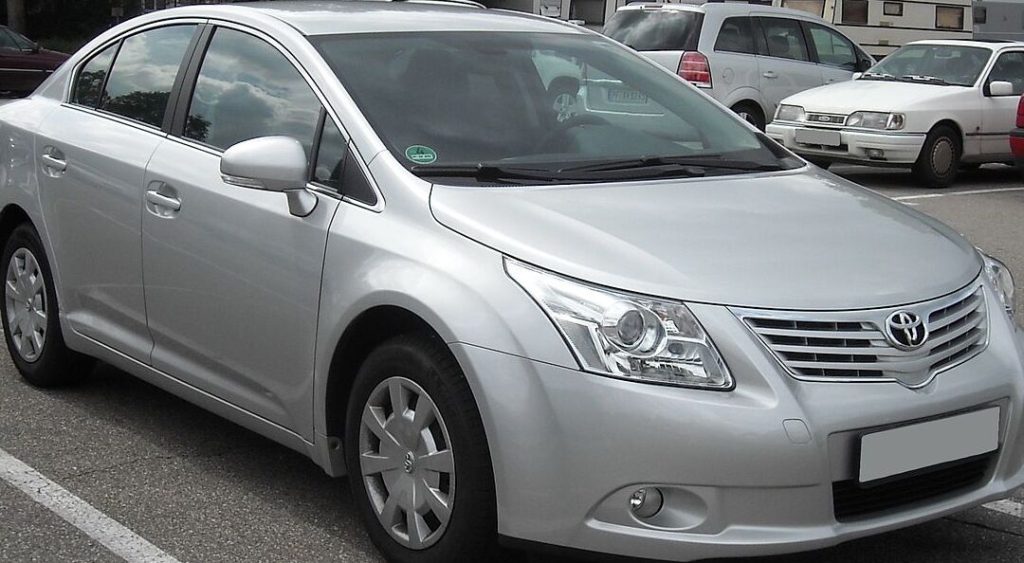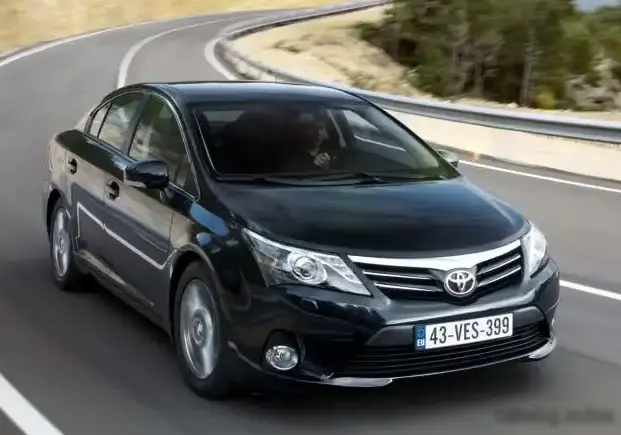
The Toyota Avensis III (facelift, introduced in 2012) 1.6 Valvematic, producing 132 horsepower, represented a key offering in Toyota’s European D-segment lineup. Positioned as a mainstream, fuel-efficient option, this variant was available from 2012 through 2015 and aimed to provide a balance of practicality, comfort, and affordability. It slotted into the Avensis range below the more powerful 2.0-liter gasoline and diesel variants, targeting buyers prioritizing economy over outright performance. The Avensis, in general, was Toyota’s attempt to establish a stronger foothold in the European mid-size sedan market, competing with established rivals like the Ford Mondeo, Volkswagen Passat, and Opel/Vauxhall Insignia.
Technical Specifications
| Brand | Toyota |
| Model | Avensis |
| Generation | Avensis III (facelift 2012) |
| Type (Engine) | 1.6 Valvematic (132 Hp) |
| Start of production | 2012 |
| End of production | 2015 |
| Powertrain Architecture | Internal Combustion engine |
| Body type | Sedan |
| Seats | 5 |
| Doors | 4 |
| Fuel consumption (urban) | 8.5 l/100 km (27.7 US mpg, 33.2 UK mpg, 11.8 km/l) |
| Fuel consumption (extra urban) | 5.3 l/100 km (44.4 US mpg, 53.3 UK mpg, 18.9 km/l) |
| Fuel consumption (combined) | 6.5 l/100 km (36.2 US mpg, 43.5 UK mpg, 15.4 km/l) |
| Fuel Type | Petrol (Gasoline) |
| Acceleration 0 – 100 km/h | 10.4 sec |
| Acceleration 0 – 62 mph | 10.4 sec |
| Acceleration 0 – 60 mph | 9.9 sec |
| Maximum speed | 200 km/h (124.27 mph) |
| Emission standard | Euro 5 B |
| Weight-to-power ratio | 10.3 kg/Hp, 96.7 Hp/tonne |
| Weight-to-torque ratio | 8.5 kg/Nm, 117.2 Nm/tonne |
| Power | 132 Hp @ 6400 rpm |
| Power per litre | 82.6 Hp/l |
| Torque | 160 Nm @ 4400 rpm (118.01 lb.-ft. @ 4400 rpm) |
| Engine layout | Front, Transverse |
| Engine Model/Code | 1ZR-FAE |
| Engine displacement | 1598 cm3 (97.52 cu. in.) |
| Number of cylinders | 4 |
| Engine configuration | Inline |
| Cylinder Bore | 80.5 mm (3.17 in.) |
| Piston Stroke | 78.5 mm (3.09 in.) |
| Compression ratio | 10.7:1 |
| Number of valves per cylinder | 4 |
| Fuel injection system | Multi-port manifold injection |
| Engine aspiration | Naturally aspirated engine |
| Valvetrain | DOHC – Valvematic |
| Engine oil capacity | 4.2 l (4.44 US qt | 3.7 UK qt) |
| Coolant | 6.3 l (6.66 US qt | 5.54 UK qt) |
| Kerb Weight | 1365 kg (3009.31 lbs.) |
| Max. weight | 1970 kg (4343.11 lbs.) |
| Max load | 605 kg (1333.8 lbs.) |
| Trunk (boot) space – minimum | 509 l (17.98 cu. ft.) |
| Fuel tank capacity | 60 l (15.85 US gal | 13.2 UK gal) |
| Length | 4710 mm (185.43 in.) |
| Width | 1810 mm (71.26 in.) |
| Height | 1480 mm (58.27 in.) |
| Wheelbase | 2700 mm (106.3 in.) |
| Front track | 1550 mm (61.02 in.) |
| Rear (Back) track | 1540 mm (60.63 in.) |
| Minimum turning circle | 10.8 m (35.43 ft.) |
| Drivetrain Architecture | ICE, Front wheel drive |
| Drive wheel | Front wheel drive |
| Number of gears | 6 gears, manual transmission |
| Front suspension | Independent, type McPherson with coil spring and anti-roll bar |
| Rear suspension | Double wishbone |
| Front brakes | Ventilated discs |
| Rear brakes | Disc |
| Assisting systems | ABS (Anti-lock braking system) |
| Steering type | Steering rack and pinion |
| Tires size | 205/60 R16 |
| Wheel rims size | 16 |
Powertrain & Engine Architecture
The heart of the Avensis 1.6 Valvematic is the 1ZR-FAE engine, a 1.6-liter inline-four cylinder gasoline engine. This engine is notable for its Toyota’s Valvematic technology, a continuously variable valve timing and lift system. Unlike traditional VVT-i systems that only adjust valve timing, Valvematic also alters valve lift, allowing for greater control over airflow into the cylinders. This results in improved fuel efficiency and a broader torque curve. The 1ZR-FAE utilizes multi-port fuel injection and a compression ratio of 10.7:1. The engine is transversely mounted in the front of the vehicle. The standard transmission for this variant was a six-speed manual gearbox, providing a balance between fuel economy and driver engagement. While an automatic transmission was available in some markets, it wasn’t as commonly paired with this engine as the manual.
Driving Characteristics
The 1.6 Valvematic engine, producing 132 horsepower, delivered adequate performance for everyday driving. Acceleration from 0-60 mph took approximately 9.9 seconds, and top speed was around 124 mph. However, it wasn’t a particularly sporty engine. Power delivery was smooth and linear, but lacked the punch of the larger 2.0-liter variants. The six-speed manual transmission helped to keep the engine in its optimal power band, but drivers seeking more spirited performance often found themselves shifting frequently. Compared to the automatic versions, the manual offered a more engaging driving experience and slightly better fuel economy. The suspension setup prioritized comfort over handling, resulting in a smooth ride quality, but with some body roll during cornering.
Equipment & Trim Levels
The 1.6 Valvematic Avensis typically came with a reasonable level of standard equipment. This included air conditioning, power windows, power mirrors, a CD player with auxiliary input, and ABS brakes. Higher trim levels added features such as alloy wheels, a touchscreen infotainment system, rear parking sensors, and cruise control. Interior upholstery was typically cloth, with options for leather available on higher-spec models. The dashboard layout was functional and straightforward, prioritizing ease of use over stylistic flair.
Chassis & Braking
The Avensis III utilized a front-wheel-drive chassis with an independent McPherson strut suspension in the front and a double wishbone suspension in the rear. This setup provided a comfortable ride and decent handling characteristics. The front brakes were ventilated discs, while the rear brakes were solid discs. ABS (Anti-lock Braking System) was standard, providing enhanced braking performance and stability. The steering was a rack and pinion system, offering precise and responsive control.
Market Reception & Comparison
The Avensis 1.6 Valvematic was generally well-received by critics as a practical and fuel-efficient family sedan. It was praised for its comfortable ride, spacious interior, and reliability. However, it was often criticized for its lack of excitement and its somewhat bland styling. Compared to the 2.0-liter gasoline and diesel variants, the 1.6 offered lower running costs but less performance. The 1.9-liter diesel, in particular, provided significantly more torque and better fuel economy, making it a popular choice for high-mileage drivers. The 1.6 Valvematic appealed to buyers who prioritized affordability and fuel efficiency over sporty driving dynamics.
Legacy
The Toyota Avensis, including the 1.6 Valvematic variant, has earned a reputation for reliability and durability. The 1ZR-FAE engine is generally considered to be a robust and long-lasting unit, with few major issues reported. On the used car market, Avensis models from this era represent a good value proposition, offering a comfortable and reliable driving experience at an affordable price. While not a particularly exciting car, the Avensis 1.6 Valvematic remains a practical and sensible choice for buyers seeking a dependable family sedan.