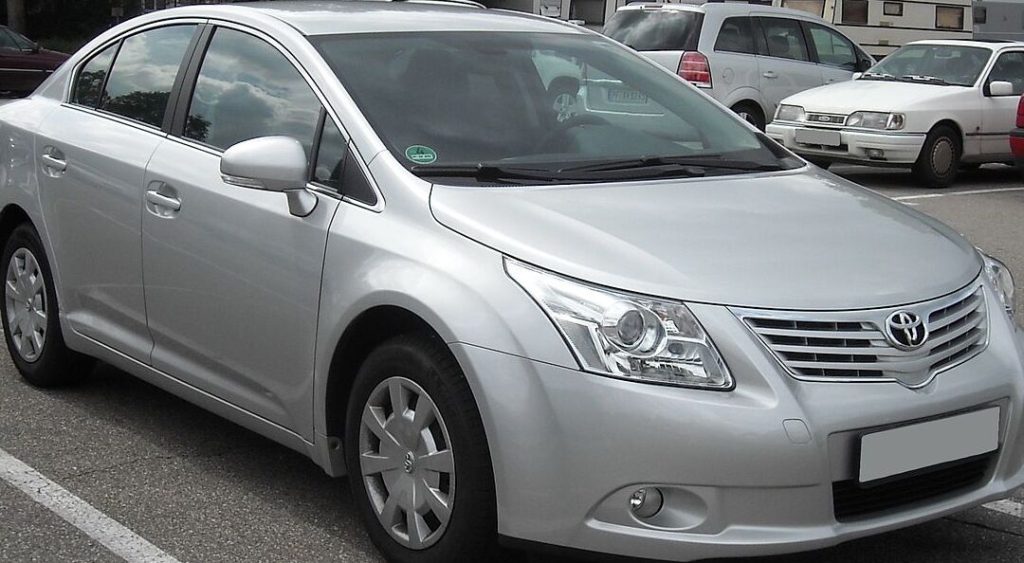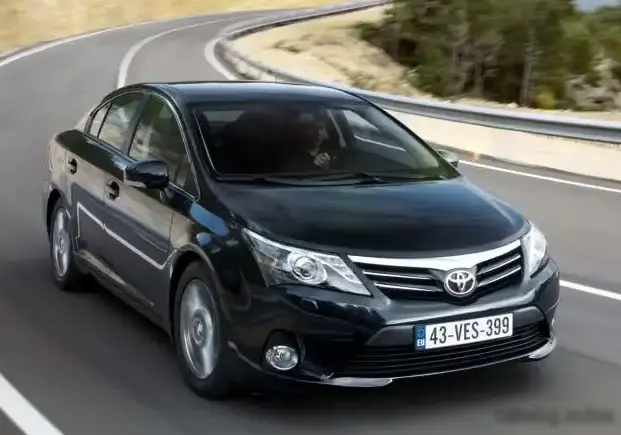
The Toyota Avensis III (facelift, introduced in 2012) 1.8 Valvematic, producing 147 horsepower, represented a key offering in Toyota’s European D-segment lineup. Produced from 2012 to 2015, this variant aimed to balance fuel efficiency with reasonable performance, targeting buyers seeking a comfortable and reliable family sedan. It sat within the broader Avensis III range, which included both petrol and diesel engine options, as well as manual and automatic transmissions. The facelift brought styling updates and refinements to the already well-regarded Avensis platform, enhancing its appeal in a competitive market.
Technical Specifications
| Brand | Toyota |
| Model | Avensis |
| Generation | Avensis III (facelift 2012) |
| Type (Engine) | 1.8 Valvematic (147 Hp) |
| Start of production | 2012 |
| End of production | 2015 |
| Powertrain Architecture | Internal Combustion engine |
| Body type | Sedan |
| Seats | 5 |
| Doors | 4 |
| Fuel consumption (urban) | 8.6 l/100 km (27.4 US mpg, 32.8 UK mpg, 11.6 km/l) |
| Fuel consumption (extra urban) | 5.4 l/100 km (43.6 US mpg, 52.3 UK mpg, 18.5 km/l) |
| Fuel consumption (combined) | 6.5 l/100 km (36.2 US mpg, 43.5 UK mpg, 15.4 km/l) |
| Fuel Type | Petrol (Gasoline) |
| Acceleration 0 – 100 km/h | 9.4 sec |
| Acceleration 0 – 62 mph | 9.4 sec |
| Acceleration 0 – 60 mph | 8.9 sec |
| Maximum speed | 200 km/h (124.27 mph) |
| Emission standard | Euro 5 B |
| Weight-to-power ratio | 9.4 kg/Hp, 106.9 Hp/tonne |
| Weight-to-torque ratio | 7.6 kg/Nm, 130.9 Nm/tonne |
| Power | 147 Hp @ 6400 rpm |
| Power per litre | 81.8 Hp/l |
| Torque | 180 Nm @ 4000 rpm (132.76 lb.-ft. @ 4000 rpm) |
| Engine layout | Front, Transverse |
| Engine Model/Code | 2ZR-FAE |
| Engine displacement | 1798 cm3 (109.72 cu. in.) |
| Number of cylinders | 4 |
| Engine configuration | Inline |
| Cylinder Bore | 80.5 mm (3.17 in.) |
| Piston Stroke | 88.3 mm (3.48 in.) |
| Compression ratio | 10.5:1 |
| Number of valves per cylinder | 4 |
| Fuel injection system | Multi-port manifold injection |
| Engine aspiration | Naturally aspirated engine |
| Valvetrain | DOHC – Valvematic |
| Engine oil capacity | 4.2 l (4.44 US qt | 3.7 UK qt) |
| Coolant | 6.3 l (6.66 US qt | 5.54 UK qt) |
| Kerb Weight | 1375 kg (3031.36 lbs.) |
| Max. weight | 2000 kg (4409.25 lbs.) |
| Max load | 625 kg (1377.89 lbs.) |
| Trunk (boot) space – minimum | 509 l (17.98 cu. ft.) |
| Fuel tank capacity | 60 l (15.85 US gal | 13.2 UK gal) |
| Length | 4710 mm (185.43 in.) |
| Width | 1810 mm (71.26 in.) |
| Height | 1480 mm (58.27 in.) |
| Wheelbase | 2700 mm (106.3 in.) |
| Front track | 1550 mm (61.02 in.) |
| Rear (Back) track | 1540 mm (60.63 in.) |
| Minimum turning circle | 10.8 m (35.43 ft.) |
| Drivetrain Architecture | Front wheel drive |
| Drive wheel | Front wheel drive |
| Number of gears | 6 gears, manual transmission |
| Front suspension | Independent, type McPherson with coil spring and anti-roll bar |
| Rear suspension | Double wishbone |
| Front brakes | Ventilated discs |
| Rear brakes | Disc |
| Assisting systems | ABS (Anti-lock braking system) |
| Steering type | Steering rack and pinion |
| Tires size | 205/60 R16 |
| Wheel rims size | 16 |
Powertrain & Engine Architecture
The heart of this Avensis variant is the 2ZR-FAE 1.8-liter inline-four engine. This engine is a naturally aspirated unit featuring Toyota’s Valvematic technology, a continuously variable valve lift system. Valvematic allows for precise control of intake valve timing and lift, optimizing engine efficiency and responsiveness across a wider range of engine speeds. The 2ZR-FAE utilizes multi-port fuel injection and a double overhead camshaft (DOHC) configuration. The engine produces 147 horsepower at 6400 rpm and 180 Nm (132.76 lb-ft) of torque at 4000 rpm. This power is delivered through a six-speed manual transmission, which was the standard offering for this trim level. The engine’s transverse mounting and front-wheel-drive configuration are typical for vehicles in this class.
Driving Characteristics
The 1.8 Valvematic engine, paired with the six-speed manual transmission, provides a reasonably engaging driving experience. While not a performance-oriented setup, the engine offers adequate power for everyday driving situations. Acceleration from 0-60 mph takes approximately 8.9 seconds, and the car has a top speed of 200 km/h (124 mph). The six-speed gearbox allows for efficient cruising at highway speeds, while the Valvematic system contributes to a smooth and linear power delivery. Compared to the more powerful 2.0-liter engine options available in the Avensis range, this 1.8L variant feels less urgent in acceleration, but it compensates with improved fuel economy. The gear ratios are tuned for a balance between fuel efficiency and usability, prioritizing comfortable daily commutes over outright speed.
Equipment & Trim Levels
The 1.8 Valvematic trim typically included a good level of standard equipment. Features commonly found in this variant include air conditioning, power windows, power mirrors, a CD/radio system with auxiliary input, and central locking. Safety features such as ABS, electronic brakeforce distribution (EBD), and multiple airbags were also standard. Higher trim levels offered options like alloy wheels, a touchscreen infotainment system, automatic climate control, and parking sensors. Interior upholstery was typically cloth, with a functional and durable design. The dashboard layout was straightforward and user-friendly, prioritizing ease of use over extravagant styling.
Chassis & Braking
The Avensis III utilized a McPherson strut front suspension and a double wishbone rear suspension, providing a comfortable and controlled ride. The suspension was tuned to prioritize ride comfort over sporty handling. The front brakes were ventilated discs, while the rear brakes were solid discs. ABS (Anti-lock Braking System) was standard, enhancing braking performance and stability, particularly in adverse conditions. The Avensis’s chassis was designed to provide a good balance between rigidity and weight, contributing to its overall stability and handling characteristics.
Market Reception & Comparison
The Avensis 1.8 Valvematic was generally well-received by automotive critics as a practical and reliable family car. It was praised for its fuel efficiency, comfortable ride, and spacious interior. However, some reviewers noted that the engine lacked the outright performance of some of its competitors. Compared to other trims in the Avensis lineup, such as the 2.0-liter petrol or 2.2-liter diesel models, the 1.8L offered a more affordable entry point with lower running costs. Its fuel economy of around 36.2 US mpg combined was a significant selling point for buyers prioritizing efficiency. The diesel variants offered superior torque and fuel economy, but at a higher purchase price and with potentially higher maintenance costs.
Legacy
The Toyota Avensis III 1.8 Valvematic has proven to be a reliable and durable vehicle in the used car market. The 2ZR-FAE engine is known for its longevity and relatively low maintenance requirements. While not a particularly exciting car to drive, its dependability and practicality have made it a popular choice for families and commuters. Common issues are relatively minor, often relating to wear and tear on suspension components or routine maintenance items. Today, these Avensis models represent a good value proposition for buyers seeking a dependable and affordable used car.