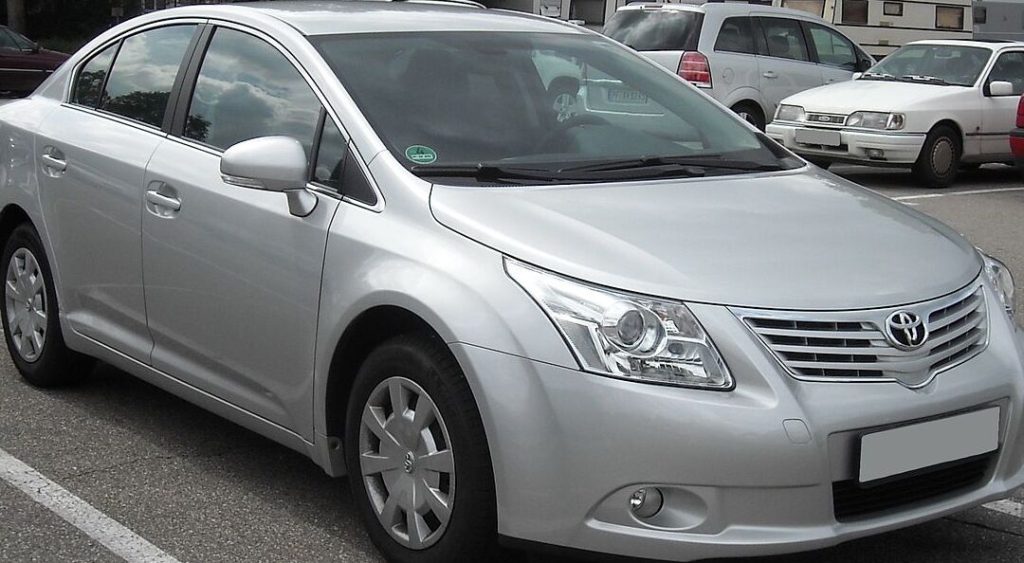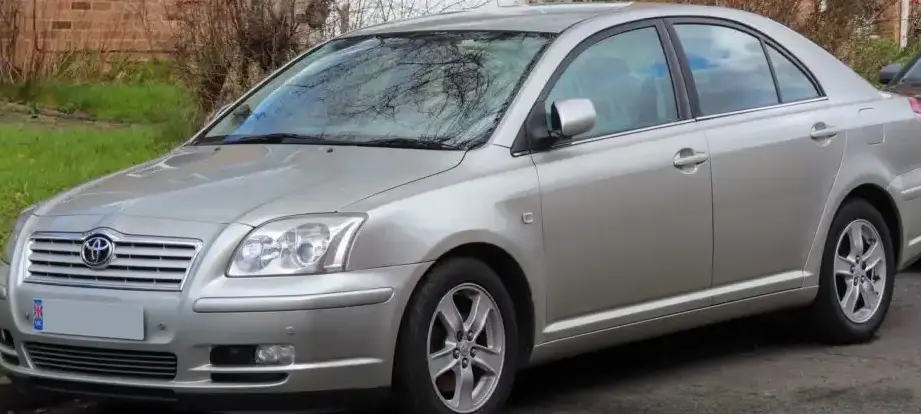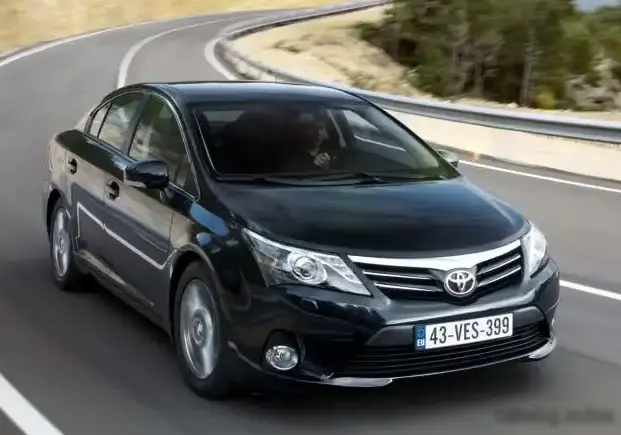
The Toyota Avensis III (facelift, introduced in 2012) 1.8 Valvematic with the Multidrive S continuously variable transmission represents a significant iteration of Toyota’s D-segment offering, primarily aimed at the European market. Produced from 2012 to 2015, this variant occupied a middle ground within the Avensis lineup, balancing fuel efficiency with reasonable performance and a comfortable driving experience. It was positioned as a practical and reliable family sedan, competing with vehicles like the Ford Mondeo, Vauxhall/Opel Insignia, and Volkswagen Passat. The facelift brought styling updates and refinements to the already well-regarded Avensis, enhancing its appeal to buyers seeking a dependable and well-equipped vehicle.
Technical Specifications
| Brand | Toyota |
| Model | Avensis |
| Generation | Avensis III (facelift 2012) |
| Type (Engine) | 1.8 Valvematic (147 Hp) Multidrive S |
| Start of production | 2012 |
| End of production | 2015 |
| Powertrain Architecture | Internal Combustion engine |
| Body type | Sedan |
| Seats | 5 |
| Doors | 4 |
| Fuel consumption (urban) | 8.6 l/100 km (27.4 US mpg) |
| Fuel consumption (extra urban) | 5.5 l/100 km (42.8 US mpg) |
| Fuel consumption (combined) | 6.6-6.7 l/100 km (35.6 – 35.1 US mpg) |
| CO2 emissions | 153-154 g/km |
| Fuel Type | Petrol (Gasoline) |
| Acceleration 0 – 100 km/h | 10.4 sec |
| Acceleration 0 – 60 mph | 9.9 sec |
| Maximum speed | 200 km/h (124.27 mph) |
| Emission standard | Euro 5 |
| Weight-to-power ratio | 9.6 kg/Hp |
| Weight-to-torque ratio | 7.8 kg/Nm |
| Power | 147 Hp @ 6400 rpm |
| Torque | 180 Nm @ 4000 rpm (132.76 lb.-ft. @ 4000 rpm) |
| Engine layout | Front, Transverse |
| Engine Model/Code | 2ZR-FAE |
| Engine displacement | 1798 cm3 (109.72 cu. in.) |
| Number of cylinders | 4 |
| Engine configuration | Inline |
| Cylinder Bore | 80.5 mm (3.17 in.) |
| Piston Stroke | 88.3 mm (3.48 in.) |
| Compression ratio | 10.5:1 |
| Number of valves per cylinder | 4 |
| Fuel injection system | Multi-port manifold injection |
| Engine aspiration | Naturally aspirated |
| Valvetrain | DOHC, Valvematic |
| Engine oil capacity | 4.2 l (4.44 US qt | 3.7 UK qt) |
| Coolant capacity | 6.3 l (6.66 US qt | 5.54 UK qt) |
| Kerb Weight | 1405-1475 kg (3097.49 – 3251.82 lbs.) |
| Max. weight | 2020 kg (4453.34 lbs.) |
| Max load | 545-615 kg (1201.52 – 1355.84 lbs.) |
| Trunk (boot) space | 509 l (17.98 cu. ft.) |
| Fuel tank capacity | 60 l (15.85 US gal | 13.2 UK gal) |
| Max. roof load | 78 kg (171.96 lbs.) |
| Permitted trailer load (braked) | 1600 kg (3527.4 lbs.) |
| Permitted trailer load (unbraked) | 500 kg (1102.31 lbs.) |
| Permitted towbar download | 75 kg (165.35 lbs.) |
| Length | 4710 mm (185.43 in.) |
| Width | 1810 mm (71.26 in.) |
| Height | 1480 mm (58.27 in.) |
| Wheelbase | 2700 mm (106.3 in.) |
| Front track | 1550-1560 mm (61.02 – 61.42 in.) |
| Rear track | 1550-1560 mm (61.02 – 61.42 in.) |
| Front overhang | 980 mm (38.58 in.) |
| Rear overhang | 1030 mm (40.55 in.) |
| Turning circle | 10.8 m (35.43 ft.) |
| Drivetrain | Front wheel drive |
| Gearbox | Multidrive S (CVT) |
| Front suspension | Independent, McPherson with coil spring and anti-roll bar |
| Rear suspension | Double wishbone |
| Front brakes | Ventilated discs, 295×26 mm |
| Rear brakes | Disc, 290×11 mm |
| Steering | Steering rack and pinion, Electric Power Steering |
| Tires | 205/60 R16; 215/55 R17 |
| Wheel rims | 6.5J x 16; 7J x 17 |
Powertrain & Engine Architecture
The heart of this Avensis variant is the 2ZR-FAE 1.8-liter inline-four engine. This engine is a naturally aspirated unit featuring Toyota’s Valvematic technology, a variable valve lift system that optimizes engine efficiency and responsiveness. Unlike traditional VVT-i systems that primarily adjust valve timing, Valvematic continuously adjusts the lift of the intake valves, allowing for greater control over the air-fuel mixture and improved fuel economy. The engine utilizes multi-port fuel injection and a compression ratio of 10.5:1. The Multidrive S transmission is a continuously variable transmission (CVT) offering smooth, stepless gear changes. It simulates traditional gear shifts for a more familiar driving experience but primarily focuses on keeping the engine in its optimal power band.
Driving Characteristics
The 1.8 Valvematic with Multidrive S provides a comfortable and refined driving experience. Acceleration from 0-60 mph takes approximately 9.9 seconds, making it adequate for everyday driving but not particularly sporty. The CVT transmission contributes to smooth acceleration, but can sometimes feel less engaging than a traditional automatic or manual gearbox. The Multidrive S transmission is programmed to mimic stepped gears under hard acceleration, providing a more conventional feel. The engine delivers its peak torque at 4000 rpm, requiring the CVT to hold the engine at higher revs during acceleration. Compared to the more powerful 2.0-liter variants, this engine prioritizes fuel efficiency over outright performance. The manual transmission versions of the 1.8 offered a more direct connection to the engine and slightly improved fuel economy, but the Multidrive S was favored by those seeking convenience and ease of use.
Equipment & Trim Levels
The 1.8 Valvematic Multidrive S typically came equipped with a respectable level of standard features. These generally included air conditioning, power windows and mirrors, a CD/radio system with auxiliary input, and alloy wheels. Higher trim levels added features such as automatic climate control, a touchscreen infotainment system, rear parking sensors, and cruise control. Interior upholstery was typically cloth, with options for leather available on higher-spec models. Safety features were comprehensive, including ABS, EBD, and multiple airbags.
Chassis & Braking
The Avensis III utilized an independent McPherson strut suspension at the front and a double wishbone suspension at the rear, providing a comfortable ride and predictable handling. The front brakes were ventilated discs, while the rear brakes were solid discs. The suspension was tuned for comfort rather than outright sportiness, prioritizing a smooth ride over sharp handling. Stabilizer bars were fitted to both the front and rear axles to reduce body roll during cornering. The steering was electrically assisted, providing light and easy steering feel.
Market Reception & Comparison
The 1.8 Valvematic Multidrive S Avensis was generally well-received by critics as a practical and reliable family car. It was praised for its fuel efficiency, comfortable ride, and spacious interior. However, some reviewers found the engine to be somewhat underpowered, particularly when fully loaded or tackling steep hills. Compared to the 2.0-liter variants, the 1.8 offered lower running costs but sacrificed some performance. The Multidrive S transmission was appreciated for its smoothness, but some drivers preferred the more engaging feel of a traditional automatic or manual gearbox. Fuel economy figures of around 35-40 mpg combined were typical, making it a competitive option in its class.
Legacy
The 2ZR-FAE engine and Multidrive S transmission have proven to be generally reliable powertrains. The Valvematic system, while complex, has not been prone to widespread failures. The Multidrive S CVT, when properly maintained with regular fluid changes, is also known for its durability. In the used car market, the 1.8 Valvematic Avensis represents a good value proposition for buyers seeking a dependable and fuel-efficient family sedan. Its relatively low running costs and Toyota’s reputation for reliability make it an attractive option for those prioritizing practicality and peace of mind.