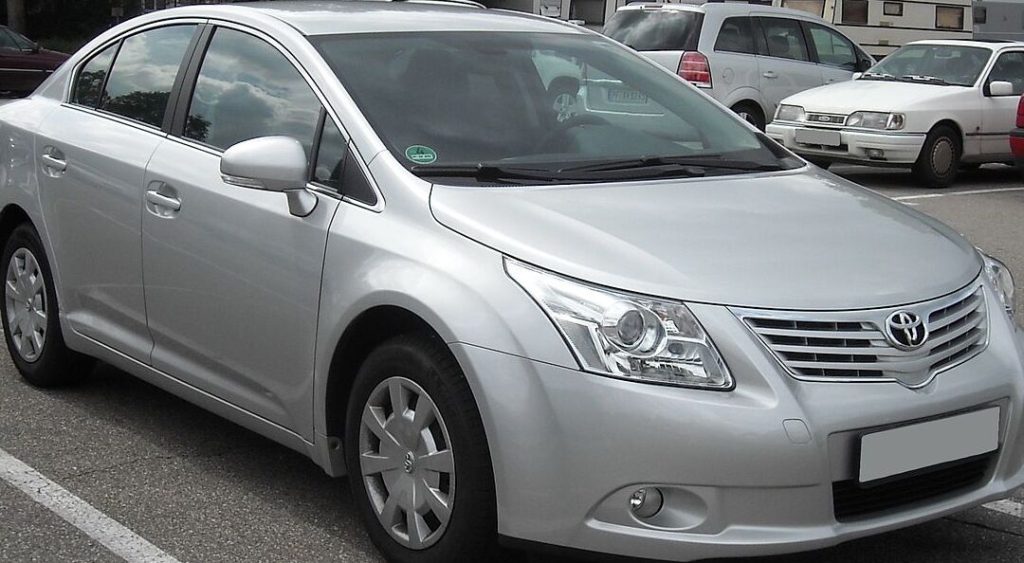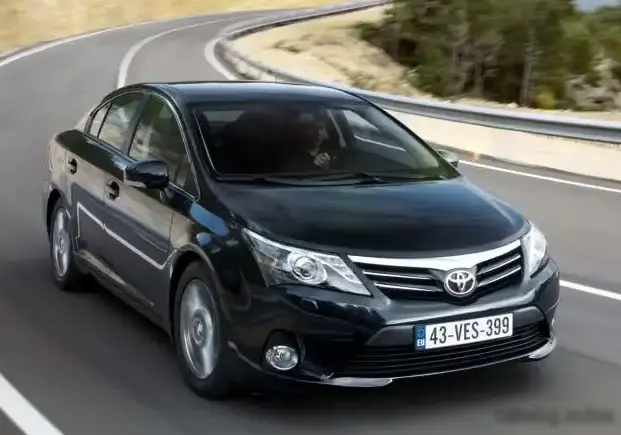
The Toyota Avensis III (facelift, introduced in 2012) 2.0 D-4D producing 124 horsepower represents a significant iteration of Toyota’s mid-size family sedan, primarily aimed at the European market. Produced from 2012 to 2015, this variant occupied a middle ground within the Avensis lineup, offering a balance between fuel efficiency, reasonable performance, and affordability. It was positioned as a practical choice for fleet buyers and families seeking a reliable and economical vehicle. The facelift brought styling updates and refinements to the already well-regarded Avensis III, which itself was based on the Toyota K-platform.
Technical Specifications
| Brand | Toyota |
| Model | Avensis |
| Generation | Avensis III (facelift 2012) |
| Type (Engine) | 2.0 D-4D (124 Hp) |
| Start of production | 2012 |
| End of production | 2015 |
| Powertrain Architecture | Internal Combustion engine |
| Body type | Sedan |
| Seats | 5 |
| Doors | 4 |
| Fuel consumption (urban) | 5.6 l/100 km (42 US mpg, 50.4 UK mpg, 17.9 km/l) |
| Fuel consumption (extra urban) | 3.9 l/100 km (60.3 US mpg, 72.4 UK mpg, 25.6 km/l) |
| Fuel consumption (combined) | 4.5 l/100 km (52.3 US mpg, 62.8 UK mpg, 22.2 km/l) |
| Fuel Type | Diesel |
| Acceleration 0 – 100 km/h | 9.7 sec |
| Acceleration 0 – 62 mph | 9.7 sec |
| Acceleration 0 – 60 mph | 9.2 sec |
| Maximum speed | 200 km/h (124.27 mph) |
| Emission standard | Euro 5 B |
| Weight-to-power ratio | 12 kg/Hp, 83.2 Hp/tonne |
| Weight-to-torque ratio | 4.8 kg/Nm, 208.1 Nm/tonne |
| Power | 124 Hp @ 3600 rpm |
| Power per litre | 62.1 Hp/l |
| Torque | 310 Nm @ 2400 rpm (228.64 lb.-ft. @ 2400 rpm) |
| Engine layout | Front, Transverse |
| Engine Model/Code | 1AD-FTV |
| Engine displacement | 1998 cm3 (121.93 cu. in.) |
| Number of cylinders | 4 |
| Engine configuration | Inline |
| Cylinder Bore | 86 mm (3.39 in.) |
| Piston Stroke | 86 mm (3.39 in.) |
| Compression ratio | 15.8:1 |
| Number of valves per cylinder | 4 |
| Fuel injection system | Diesel Commonrail |
| Engine aspiration | Turbocharger, Intercooler |
| Valvetrain | DOHC |
| Engine oil capacity | 6.3 l (6.66 US qt | 5.54 UK qt) |
| Coolant | 7.4 l (7.82 US qt | 6.51 UK qt) |
| Kerb Weight | 1490 kg (3284.89 lbs.) |
| Max. weight | 2100 kg (4629.71 lbs.) |
| Max load | 610 kg (1344.82 lbs.) |
| Trunk (boot) space – minimum | 509 l (17.98 cu. ft.) |
| Fuel tank capacity | 60 l (15.85 US gal | 13.2 UK gal) |
| Length | 4710 mm (185.43 in.) |
| Width | 1810 mm (71.26 in.) |
| Height | 1480 mm (58.27 in.) |
| Wheelbase | 2700 mm (106.3 in.) |
| Front track | 1550 mm (61.02 in.) |
| Rear (Back) track | 1540 mm (60.63 in.) |
| Minimum turning circle | 10.8 m (35.43 ft.) |
| Drivetrain Architecture | Front wheel drive |
| Drive wheel | Front wheel drive |
| Number of gears | 6 gears, manual transmission |
| Front suspension | Independent, type McPherson with coil spring and anti-roll bar |
| Rear suspension | Double wishbone |
| Front brakes | Ventilated discs |
| Rear brakes | Disc |
| Tires size | 205/60 R16 |
| Wheel rims size | 16 |
Powertrain & Engine Architecture
The heart of this Avensis variant is the 1AD-FTV 2.0-liter inline-four diesel engine. This engine is a member of Toyota’s ‘D-4D’ family, known for its robust construction and fuel efficiency. The 1AD-FTV utilizes a common-rail direct injection system, delivering fuel at extremely high pressure for optimized combustion. A turbocharger with an intercooler is employed to boost power output and improve torque across a wider rev range. The engine features a double overhead camshaft (DOHC) valvetrain with four valves per cylinder, contributing to its breathing efficiency. The engine’s 15.8:1 compression ratio is typical for a diesel engine, maximizing thermal efficiency. This engine was paired with a six-speed manual transmission, providing a good balance between fuel economy and driver control. While an automatic transmission was available on other Avensis models, it wasn’t offered with this specific engine/power output combination in most markets.
Driving Characteristics
The 124 horsepower and 310 Nm (228.64 lb-ft) of torque offered by the 2.0 D-4D engine provided adequate, though not exhilarating, performance. Acceleration from 0-60 mph took around 9.2 seconds, making it competitive with other mid-size diesel sedans of the time. The engine’s torque peak at 2400 rpm meant that it felt responsive in everyday driving situations, offering good pulling power for overtaking and climbing hills. Compared to the more powerful 2.2 D-4D variants, this engine prioritized fuel economy over outright speed. The six-speed manual transmission allowed drivers to keep the engine in its optimal power band, maximizing efficiency and responsiveness. The gear ratios were well-chosen for both urban and highway driving, providing a comfortable and refined driving experience.
Equipment & Trim Levels
The 2.0 D-4D variant typically came equipped with a reasonable level of standard features. These included air conditioning, power windows, central locking, and an audio system with CD player. Higher trim levels, such as the ‘T2’ or ‘T3’, added features like alloy wheels, climate control, cruise control, and a multi-function steering wheel. Interior upholstery was typically cloth, with options for leather available on higher-spec models. Safety features included ABS brakes, electronic brakeforce distribution (EBD), and multiple airbags. Optional extras included a navigation system, parking sensors, and a sunroof.
Chassis & Braking
The Avensis III utilized a McPherson strut front suspension and a double wishbone rear suspension, providing a comfortable and controlled ride. The suspension was tuned to prioritize comfort over sporty handling, making it well-suited for long-distance journeys. The front brakes were ventilated discs, while the rear brakes were solid discs, providing adequate stopping power for the vehicle’s weight. Anti-lock Braking System (ABS) was standard, enhancing safety during emergency braking situations. The Avensis’s chassis was designed to minimize noise, vibration, and harshness (NVH), contributing to a refined driving experience.
Market Reception & Comparison
The Toyota Avensis III 2.0 D-4D was generally well-received by automotive critics for its fuel efficiency, reliability, and comfortable ride. It was often praised as a practical and sensible choice for families and fleet buyers. Compared to other mid-size diesel sedans, such as the Ford Mondeo and Volkswagen Passat, the Avensis offered a strong reputation for reliability and lower running costs. However, some critics noted that its driving dynamics were not as engaging as those of its rivals. Fuel economy was a key selling point, with the Avensis achieving impressive figures in combined driving conditions.
Legacy
The 1AD-FTV engine, when properly maintained, has proven to be a durable and reliable unit. The Avensis III 2.0 D-4D remains a popular choice in the used car market, particularly for buyers seeking a dependable and economical vehicle. Common issues are relatively minor, often relating to diesel particulate filter (DPF) maintenance and occasional turbocharger wear. The Avensis’s reputation for reliability and low running costs continues to make it a desirable option for those seeking a practical and affordable family sedan. Its longevity and relatively simple mechanical design contribute to its continued appeal in the used car market.