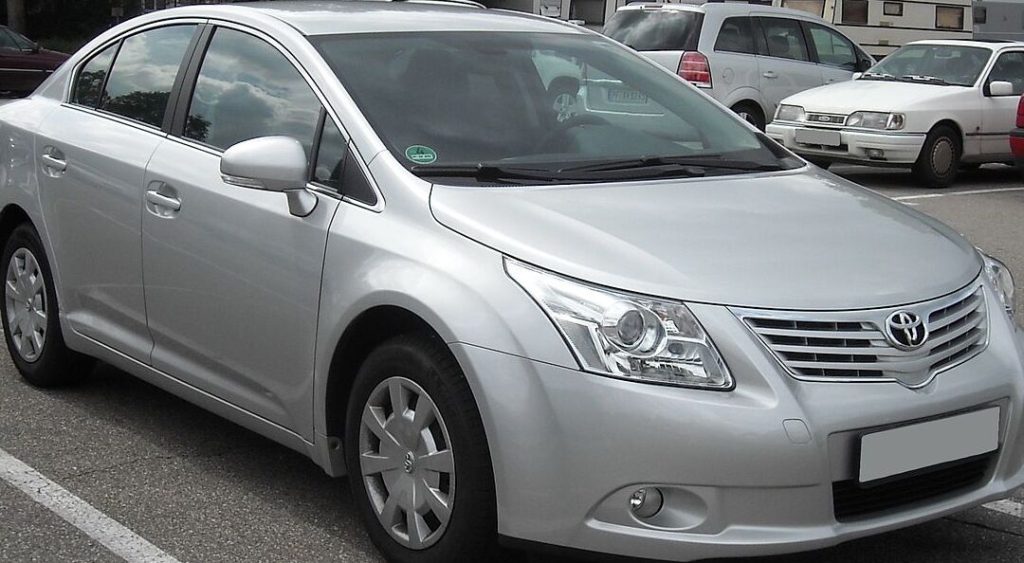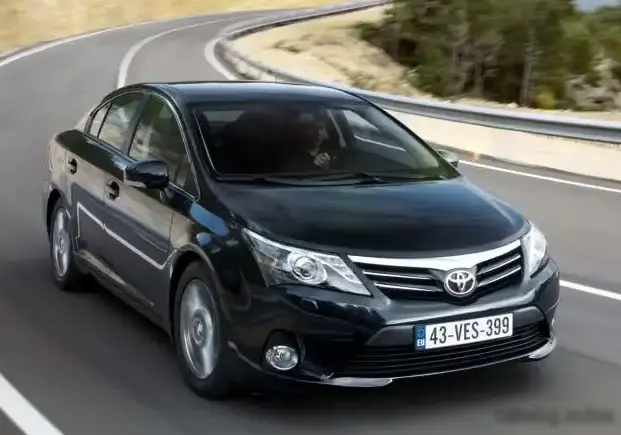
The Toyota Avensis III (facelift, introduced in 2012) 2.0 Valvematic, producing 152 horsepower, represented a significant mid-cycle refresh of Toyota’s D-segment offering. Produced from 2012 to 2015, this variant aimed to balance performance and fuel efficiency within the Avensis lineup, primarily targeting the European market where the Avensis competed with vehicles like the Ford Mondeo, Vauxhall/Opel Insignia, and Volkswagen Passat. It sat in the mid-range of the Avensis offerings, positioned above the lower-powered 1.6L models and below the more expensive and often better-equipped diesel variants.
Technical Specifications
| Brand | Toyota |
| Model | Avensis |
| Generation | Avensis III (facelift 2012) |
| Type (Engine) | 2.0 Valvematic (152 Hp) |
| Start of production | 2012 |
| End of production | 2015 |
| Powertrain Architecture | Internal Combustion engine |
| Body type | Sedan |
| Seats | 5 |
| Doors | 4 |
| Fuel consumption (urban) | 9.2 l/100 km (25.6 US mpg) |
| Fuel consumption (extra urban) | 5.6 l/100 km (42 US mpg) |
| Fuel consumption (combined) | 6.9 l/100 km (34.1 US mpg) |
| Fuel Type | Petrol (Gasoline) |
| Acceleration 0 – 100 km/h | 9 sec |
| Acceleration 0 – 62 mph | 9 sec |
| Acceleration 0 – 60 mph | 8.6 sec |
| Maximum speed | 205 km/h (127.38 mph) |
| Emission standard | Euro 5 B |
| Weight-to-power ratio | 9.3 kg/Hp |
| Weight-to-torque ratio | 7.2 kg/Nm |
| Power | 152 Hp @ 6200 rpm |
| Torque | 196 Nm @ 4000 rpm (144.56 lb.-ft. @ 4000 rpm) |
| Engine layout | Front, Transverse |
| Engine Model/Code | 3ZR-FAE |
| Engine displacement | 1987 cm3 (121.25 cu. in.) |
| Number of cylinders | 4 |
| Engine configuration | Inline |
| Cylinder Bore | 80.5 mm (3.17 in.) |
| Piston Stroke | 97.6 mm (3.84 in.) |
| Compression ratio | 10:1 |
| Number of valves per cylinder | 4 |
| Fuel injection system | Multi-port manifold injection |
| Engine aspiration | Naturally aspirated engine |
| Valvetrain | DOHC – Valvematic |
| Engine oil capacity | 4.2 l (4.44 US qt | 3.7 UK qt) |
| Coolant capacity | 6.3 l (6.66 US qt | 5.54 UK qt) |
| Kerb Weight | 1410 kg (3108.52 lbs.) |
| Max. weight | 2020 kg (4453.34 lbs.) |
| Max load | 610 kg (1344.82 lbs.) |
| Trunk (boot) space – minimum | 509 l (17.98 cu. ft.) |
| Fuel tank capacity | 60 l (15.85 US gal | 13.2 UK gal) |
| Length | 4710 mm (185.43 in.) |
| Width | 1810 mm (71.26 in.) |
| Height | 1480 mm (58.27 in.) |
| Wheelbase | 2700 mm (106.3 in.) |
| Front track | 1550 mm (61.02 in.) |
| Rear (Back) track | 1540 mm (60.63 in.) |
| Minimum turning circle | 10.8 m (35.43 ft.) |
| Drivetrain Architecture | Front wheel drive |
| Number of gears | 6 gears, manual transmission |
| Front suspension | Independent, type McPherson with coil spring and anti-roll bar |
| Rear suspension | Double wishbone |
| Front brakes | Ventilated discs |
| Rear brakes | Disc |
| Assisting systems | ABS (Anti-lock braking system) |
| Steering type | Steering rack and pinion |
| Tires size | 215/55 R17 |
| Wheel rims size | 17 |
INTRODUCTION
The 2012 facelift of the Toyota Avensis III brought with it a revised front fascia, updated interior materials, and crucially, improvements to the engine range. The 2.0 Valvematic engine, designated 3ZR-FAE, was a key component of this update. This engine was designed to offer a balance between performance and fuel economy, appealing to buyers who wanted more than the base 1.6L engine but didn’t require the higher running costs associated with the diesel options. The Avensis, in general, was Toyota’s attempt to create a genuinely European-focused D-segment vehicle, built in the UK (Burnaston plant) and designed to appeal to the tastes and requirements of European drivers.
Powertrain & Engine Architecture
The 3ZR-FAE 2.0-liter inline-four engine is the heart of this Avensis variant. It features Toyota’s Valvematic system, a continuously variable valve lift and timing technology. Unlike traditional VVT-i systems that adjust valve timing, Valvematic alters the lift amount of the intake valves, allowing for greater control over the air-fuel mixture and improved efficiency. This is achieved through an eccentric cam mechanism. The engine utilizes multi-port fuel injection and a compression ratio of 10:1. The 152 horsepower and 196 Nm (144.56 lb-ft) of torque are respectable figures for a naturally aspirated 2.0L engine. The engine is transversely mounted in the front of the vehicle. The six-speed manual transmission was standard, offering a relatively conventional gear ratio spread designed for both urban and highway driving.
Driving Characteristics
The 2.0 Valvematic Avensis offered a noticeably more responsive driving experience than the 1.6L models. While not a sports sedan, the 152 hp engine provided adequate power for overtaking and cruising on motorways. Acceleration from 0-60 mph took around 8.6 seconds, and the top speed was 205 km/h (127.38 mph). The six-speed manual transmission allowed drivers to keep the engine in its optimal power band. Compared to the diesel variants, the 2.0L felt less torquey at low speeds, requiring more gear changes to maintain momentum. However, it offered a smoother and quieter driving experience, particularly at higher RPMs. The gear ratios were fairly well-spaced, but the engine didn’t have the low-end grunt of a turbocharged unit.
Equipment & Trim Levels
The 2.0 Valvematic trim typically included features such as air conditioning, electric windows and mirrors, a CD/radio system with auxiliary input, and alloy wheels. Higher trim levels added features like automatic climate control, a touchscreen infotainment system, rear parking sensors, and cruise control. Interior upholstery was generally cloth, with leather options available on higher-spec models. Safety features included ABS, EBD (Electronic Brakeforce Distribution), and multiple airbags. The Avensis aimed for a comfortable and well-equipped interior, although it didn’t quite match the premium feel of some of its German rivals.
Chassis & Braking
The Avensis III utilized a McPherson strut front suspension and a double wishbone rear suspension setup. This configuration provided a comfortable ride quality, absorbing bumps and imperfections in the road effectively. The front brakes were ventilated discs, while the rear brakes were solid discs. ABS (Anti-lock Braking System) was standard. The suspension was tuned for comfort rather than outright handling prowess, resulting in a slightly softer and more forgiving ride. Stabilizer bars were fitted front and rear to reduce body roll during cornering.
Market Reception & Comparison
The 2.0 Valvematic Avensis received generally positive reviews from automotive critics. It was praised for its smooth engine, comfortable ride, and good fuel economy. However, some reviewers noted that the interior design was somewhat conservative and lacked the visual appeal of some competitors. Compared to the 1.6L models, the 2.0L offered a significant performance upgrade. Compared to the diesel variants, it was quieter and smoother but less fuel-efficient and lacked the low-end torque. Fuel economy figures of around 34.1 US mpg combined were competitive for its class. Reliability was a strong point, as expected from a Toyota.
Legacy
The Toyota Avensis III 2.0 Valvematic has proven to be a reliable and durable vehicle. The 3ZR-FAE engine is known for its longevity, and with regular maintenance, it can cover high mileages without major issues. In the used car market, these Avensis models are often sought after for their dependability and relatively low running costs. While not a particularly exciting car to drive, it represents a sensible and practical choice for buyers looking for a comfortable and reliable family sedan. Parts availability remains good, and the Avensis continues to be a popular choice for those seeking a well-built and dependable vehicle.