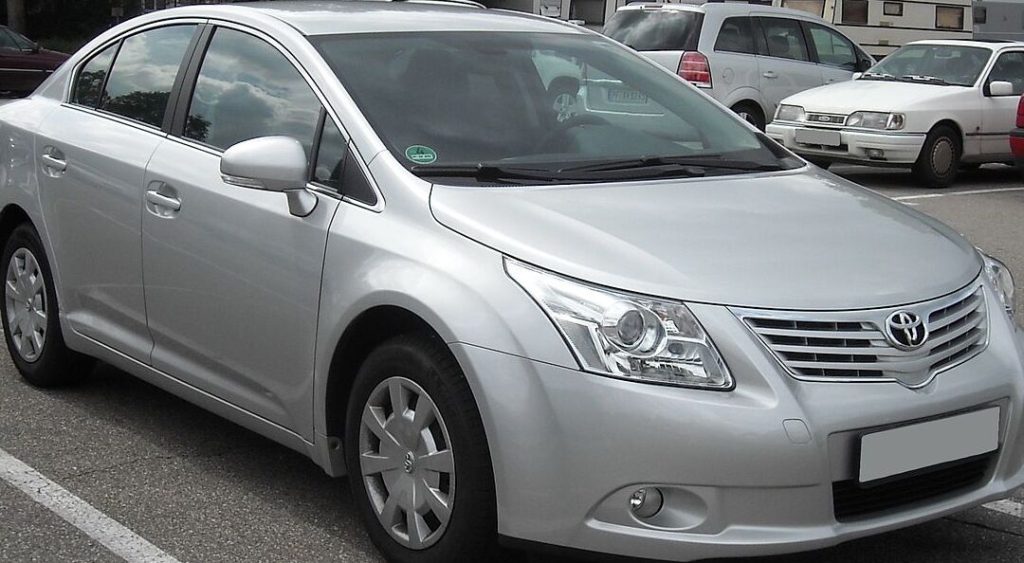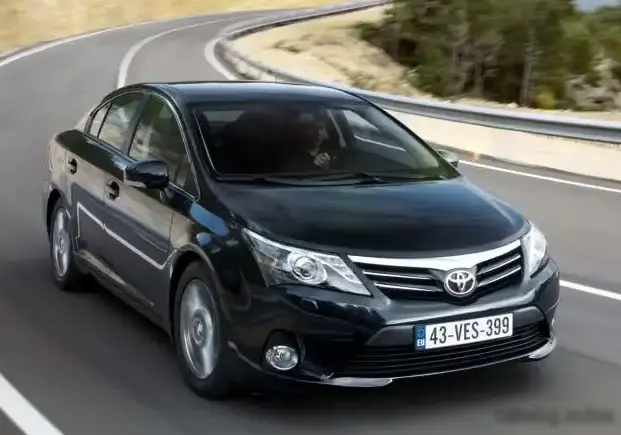
The Toyota Avensis III (facelift, introduced in 2012) 2.0 Valvematic with a Continuously Variable Transmission (CVT) represents a mid-cycle refresh of Toyota’s D-segment offering, aimed primarily at the European market. Produced from 2012 to 2015, this variant occupied a central position within the Avensis lineup, offering a balance between performance, fuel efficiency, and comfort. It was designed to compete with established rivals like the Ford Mondeo, Vauxhall/Opel Insignia, and Volkswagen Passat, offering a reputation for reliability and a comfortable driving experience. The facelift brought styling updates, improved interior materials, and refinements to the engine and transmission options.
Technical Specifications
| Brand | Toyota |
| Model | Avensis |
| Generation | Avensis III (facelift 2012) |
| Type (Engine) | 2.0 Valvematic (152 Hp) CVT |
| Start of production | 2012 |
| End of production | 2015 |
| Powertrain Architecture | Internal Combustion engine |
| Body type | Sedan |
| Seats | 5 |
| Doors | 4 |
| Fuel consumption (urban) | 9.1 l/100 km (25.8 US mpg, 31 UK mpg, 11 km/l) |
| Fuel consumption (extra urban) | 5.7 l/100 km (41.3 US mpg, 49.6 UK mpg, 17.5 km/l) |
| Fuel consumption (combined) | 6.9 l/100 km (34.1 US mpg, 40.9 UK mpg, 14.5 km/l) |
| Fuel Type | Petrol (Gasoline) |
| Acceleration 0 – 100 km/h | 10 sec |
| Acceleration 0 – 62 mph | 10 sec |
| Acceleration 0 – 60 mph | 9.5 sec |
| Maximum speed | 205 km/h (127.38 mph) |
| Emission standard | Euro 5 B |
| Weight-to-power ratio | 9.3 kg/Hp, 107.8 Hp/tonne |
| Weight-to-torque ratio | 7.2 kg/Nm, 139 Nm/tonne |
| Power | 152 Hp @ 6200 rpm |
| Power per litre | 76.5 Hp/l |
| Torque | 196 Nm @ 4000 rpm (144.56 lb.-ft. @ 4000 rpm) |
| Engine layout | Front, Transverse |
| Engine Model/Code | 3ZR-FAE |
| Engine displacement | 1987 cm3 (121.25 cu. in.) |
| Number of cylinders | 4 |
| Engine configuration | Inline |
| Cylinder Bore | 80.5 mm (3.17 in.) |
| Piston Stroke | 97.6 mm (3.84 in.) |
| Compression ratio | 10:1 |
| Number of valves per cylinder | 4 |
| Fuel injection system | Multi-port manifold injection |
| Engine aspiration | Naturally aspirated engine |
| Valvetrain | DOHC – Valvematic |
| Engine oil capacity | 4.2 l (4.44 US qt | 3.7 UK qt) |
| Coolant capacity | 6.2 l (6.55 US qt | 5.46 UK qt) |
| Kerb Weight | 1410 kg (3108.52 lbs.) |
| Max. weight | 2020 kg (4453.34 lbs.) |
| Max load | 610 kg (1344.82 lbs.) |
| Trunk (boot) space – minimum | 509 l (17.98 cu. ft.) |
| Fuel tank capacity | 60 l (15.85 US gal | 13.2 UK gal) |
| Length | 4710 mm (185.43 in.) |
| Width | 1810 mm (71.26 in.) |
| Height | 1480 mm (58.27 in.) |
| Wheelbase | 2700 mm (106.3 in.) |
| Front track | 1550 mm (61.02 in.) |
| Rear (Back) track | 1540 mm (60.63 in.) |
| Minimum turning circle | 10.8 m (35.43 ft.) |
| Drivetrain Architecture | Front wheel drive |
| Drive wheel | Front wheel drive |
| Number of gears and type of gearbox | 7 gears, CVT |
| Front suspension | Independent, type McPherson with coil spring and anti-roll bar |
| Rear suspension | Double wishbone |
| Front brakes | Ventilated discs |
| Rear brakes | Disc |
| Assisting systems | ABS (Anti-lock braking system) |
| Steering type | Steering rack and pinion |
| Tires size | 215/55 R17 |
| Wheel rims size | 17 |
Powertrain & Engine Architecture
The heart of this Avensis variant is the 3ZR-FAE 2.0-liter inline-four engine. This engine is a naturally aspirated unit featuring Toyota’s Valvematic technology, a continuously variable valve lift system. Valvematic allows for precise control of intake valve timing and lift, optimizing engine performance and fuel efficiency across a wider range of engine speeds. The engine utilizes multi-port fuel injection and a compression ratio of 10:1. The 3ZR-FAE produces 152 horsepower at 6200 rpm and 196 Nm (144.56 lb-ft) of torque at 4000 rpm. Paired with this engine is a seven-speed Continuously Variable Transmission (CVT). Toyota’s CVT is designed to provide smooth, seamless acceleration and improved fuel economy compared to traditional automatic transmissions. It operates by using a belt and pulley system to provide an infinite number of gear ratios within its range.
Driving Characteristics
The 2.0 Valvematic CVT Avensis offers a comfortable and refined driving experience. The CVT, while prioritizing efficiency, can feel somewhat less responsive than a traditional automatic or manual transmission, particularly during quick acceleration. The engine delivers adequate power for everyday driving situations, with a 0-60 mph time of around 9.5 seconds. The CVT is programmed to mimic stepped gear changes under hard acceleration, providing a more familiar feel. The focus is on smooth power delivery and minimizing fuel consumption. Compared to the higher-output 2.2-liter diesel variants, the 2.0 Valvematic is noticeably less powerful, but it offers a quieter and more refined driving experience. The CVT also differs significantly from the six-speed manual transmission available on other Avensis models, offering a more relaxed driving style but sacrificing some driver engagement.
Equipment & Trim Levels
The 2.0 Valvematic CVT trim typically came well-equipped, positioning it as a mid-range offering within the Avensis lineup. Standard features generally included air conditioning, power windows and mirrors, a CD/MP3 stereo system, alloy wheels, and ABS brakes. Higher trim levels added features such as leather upholstery, a sunroof, navigation system, and parking sensors. Interior upholstery was typically cloth, with options for partial leather. The dashboard layout was functional and user-friendly, with a focus on ergonomics. Optional extras included a touchscreen infotainment system and advanced safety features like lane departure warning and adaptive cruise control.
Chassis & Braking
The Avensis III utilizes a front-wheel-drive layout with an independent McPherson strut suspension at the front and a double wishbone suspension at the rear. This suspension setup provides a comfortable ride and good handling characteristics. The front brakes are ventilated discs, while the rear brakes are solid discs. ABS (Anti-lock Braking System) is standard. The steering is a rack and pinion system, providing precise and responsive steering feel. The 17-inch alloy wheels are typically fitted with 215/55 R17 tires.
Market Reception & Comparison
The Avensis 2.0 Valvematic CVT was generally well-received by automotive critics for its comfortable ride, refined engine, and good fuel economy. However, some reviewers noted the CVT’s lack of responsiveness compared to traditional transmissions. Fuel economy figures of around 34.1 US mpg combined were competitive within its segment. Compared to the diesel variants, the petrol engine offered lower torque but a quieter and smoother driving experience. The Avensis consistently scored well in reliability surveys, making it a popular choice for fleet buyers and private owners seeking a dependable family car.
Legacy
The Toyota Avensis III 2.0 Valvematic CVT has proven to be a reliable and durable vehicle. The 3ZR-FAE engine is known for its longevity, and the CVT transmission, while requiring regular fluid changes, has generally proven to be dependable. In the used car market, these Avensis models are often sought after for their reputation for reliability and affordability. While not a particularly sporty or exciting vehicle, the Avensis 2.0 Valvematic CVT remains a practical and sensible choice for those seeking a comfortable and dependable family saloon.