Technical Specifications
| Brand | Toyota |
| Model | Avensis |
| Generation | Avensis III (facelift 2012) |
| Type (Engine) | 2.2 D-CAT (150 Hp) Automatic |
| Start of production | 2012 |
| End of production | 2015 |
| Powertrain Architecture | Internal Combustion engine |
| Body type | Sedan |
| Seats | 5 |
| Doors | 4 |
| Fuel consumption (urban) | 7.9 l/100 km (29.8 US mpg, 35.8 UK mpg, 12.7 km/l) |
| Fuel consumption (extra urban) | 5.3 l/100 km (44.4 US mpg, 53.3 UK mpg, 18.9 km/l) |
| Fuel consumption (combined) | 6.2 l/100 km (37.9 US mpg, 45.6 UK mpg, 16.1 km/l) |
| Fuel Type | Diesel |
| Acceleration 0 – 100 km/h | 9.5 sec |
| Acceleration 0 – 62 mph | 9.5 sec |
| Acceleration 0 – 60 mph | 9 sec |
| Maximum speed | 205 km/h (127.38 mph) |
| Emission standard | Euro 5 B |
| Weight-to-power ratio | 10.2 kg/Hp, 98 Hp/tonne |
| Weight-to-torque ratio | 4.5 kg/Nm, 222.2 Nm/tonne |
| Power | 150 Hp @ 3600 rpm |
| Power per litre | 67.2 Hp/l |
| Torque | 340 Nm @ 2800 rpm (250.77 lb.-ft. @ 2800 rpm) |
| Engine layout | Front, Transverse |
| Engine Model/Code | 2AD-FHV |
| Engine displacement | 2231 cm3 (136.14 cu. in.) |
| Number of cylinders | 4 |
| Engine configuration | Inline |
| Cylinder Bore | 86 mm (3.39 in.) |
| Piston Stroke | 96 mm (3.78 in.) |
| Compression ratio | 15.7:1 |
| Number of valves per cylinder | 4 |
| Fuel injection system | Diesel Commonrail |
| Engine aspiration | Turbocharger, Intercooler |
| Valvetrain | DOHC |
| Engine oil capacity | 5.9 l (6.23 US qt | 5.19 UK qt) |
| Coolant capacity | 7.4 l (7.82 US qt | 6.51 UK qt) |
| Kerb Weight | 1530 kg (3373.07 lbs.) |
| Max. weight | 2140 kg (4717.89 lbs.) |
| Max load | 610 kg (1344.82 lbs.) |
| Trunk (boot) space – minimum | 509 l (17.98 cu. ft.) |
| Fuel tank capacity | 60 l (15.85 US gal | 13.2 UK gal) |
| Length | 4710 mm (185.43 in.) |
| Width | 1810 mm (71.26 in.) |
| Height | 1480 mm (58.27 in.) |
| Wheelbase | 2700 mm (106.3 in.) |
| Front track | 1550 mm (61.02 in.) |
| Rear track | 1540 mm (60.63 in.) |
| Minimum turning circle | 10.8 m (35.43 ft.) |
| Drivetrain Architecture | Front wheel drive |
| Number of gears | 6 |
| Gearbox type | Automatic transmission |
| Front suspension | Independent, type McPherson with coil spring and anti-roll bar |
| Rear suspension | Double wishbone |
| Front brakes | Ventilated discs |
| Rear brakes | Disc |
| Assisting systems | ABS (Anti-lock braking system) |
| Steering type | Steering rack and pinion |
| Tires size | 215/55 R17 |
| Wheel rims size | 17 |
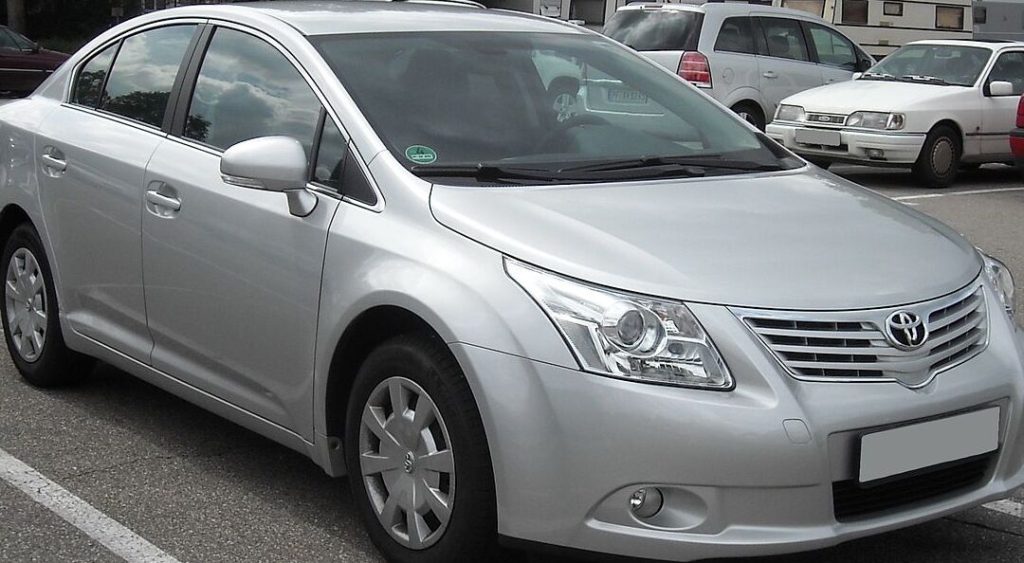
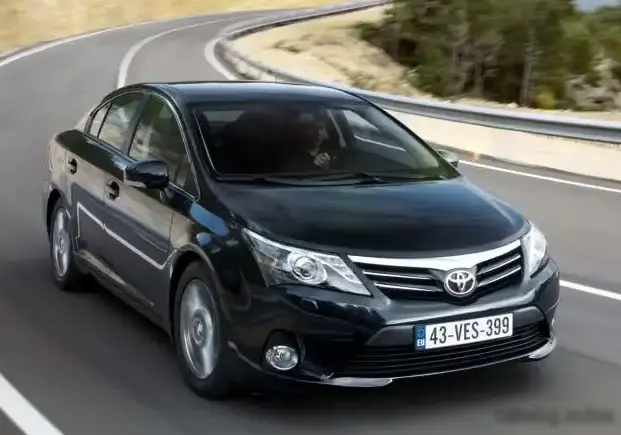
The Toyota Avensis III (facelift, introduced in 2012) 2.2 D-CAT 150 horsepower automatic variant was a key offering in Toyota’s European D-segment lineup. Produced from 2012 to 2015, this model aimed to strike a balance between fuel efficiency, comfortable cruising, and practicality for both family and business users. It was part of the broader Avensis III range (platform T27), designed to compete with vehicles like the Ford Mondeo, Vauxhall/Opel Insignia, and Volkswagen Passat. This specific configuration, pairing the 2.2-liter diesel engine with a six-speed automatic transmission, was positioned as a mid-range option, appealing to buyers who prioritized ease of driving over outright performance.
Powertrain & Engine Architecture
The core of this Avensis variant is the 2AD-FHV 2.2-liter inline-four cylinder diesel engine. This engine employs a common rail direct injection system, delivering fuel at extremely high pressure for optimized combustion efficiency. A turbocharger, coupled with an intercooler, is used to boost power and torque output, minimizing turbo lag and enhancing responsiveness. The engine features a double overhead camshaft (DOHC) valvetrain with four valves per cylinder, contributing to efficient gas exchange. The 2AD-FHV engine is generally considered a robust design, although it incorporates a diesel particulate filter (DPF) to comply with Euro 5 emissions regulations, which necessitates periodic maintenance. The six-speed automatic transmission is a conventional torque converter type, prioritizing smooth shifts and ease of use rather than the more aggressive performance characteristics of a dual-clutch transmission.
Driving Characteristics
The 150 horsepower and 340 Nm (250 lb-ft) of torque generated by the 2.2 D-CAT engine and automatic transmission combination provided a comfortable and capable driving experience. Acceleration from 0-60 mph took approximately 9.5 seconds, which was sufficient for everyday driving but didn’t offer particularly sporty performance. The automatic transmission, while smooth, wasn’t known for its particularly quick responsiveness. Compared to the manual transmission versions of the same engine, the automatic offered less driver engagement and slightly reduced fuel economy. When compared to higher-output variants, this version felt noticeably less energetic, especially when fully loaded or navigating steep inclines. However, the automatic transmission made it a more relaxing choice for longer journeys and urban commuting.
Equipment & Trim Levels
The 2.2 D-CAT automatic typically came equipped with a reasonable level of standard features. These included air conditioning, electric windows and mirrors, a CD/radio system with an auxiliary input, and alloy wheels. Higher trim levels, such as the ‘T Spirit’ or ‘Excel’ models, added features like leather upholstery, automatic climate control, a touchscreen infotainment system, parking sensors, and cruise control. Optional extras included satellite navigation, a sunroof, and upgraded audio systems. Interior upholstery was generally cloth on lower trims, with leather available on higher-spec models. The dashboard layout was functional and straightforward, prioritizing usability over stylistic flourishes.
Chassis & Braking
The Avensis III utilized a front-wheel-drive layout with independent McPherson strut suspension at the front and a double wishbone setup at the rear. This configuration provided a good compromise between ride comfort and handling. The front brakes were ventilated discs, while the rear brakes were solid discs. An Anti-lock Braking System (ABS) was standard equipment. Stabilizer bars were fitted to both the front and rear axles to minimize body roll during cornering. The suspension tuning was geared towards comfort, resulting in a relatively soft ride quality. The steering was light and easy to use, making it well-suited for urban driving conditions.
Market Reception & Comparison
The Toyota Avensis III 2.2 D-CAT automatic was generally well-received by automotive critics as a practical and reliable family car. It was praised for its comfortable ride, spacious interior, and fuel efficiency. However, it was often criticized for its somewhat uninspiring driving dynamics and relatively understated styling. Compared to other trims in the Avensis lineup, the 1.8-liter petrol versions offered lower running costs but significantly less performance. The higher-powered diesel variants provided more spirited acceleration but came at a higher purchase price. Fuel economy was competitive within its class, and the Avensis generally proved to be a reliable vehicle, although DPF issues could arise with infrequent long-distance journeys.
Legacy
The 2AD-FHV engine, when properly maintained, has proven to be a relatively durable powertrain. However, the DPF system requires attention, and neglecting regular servicing can lead to costly repairs. In the used car market, this Avensis variant represents a good value proposition for buyers seeking a comfortable, reliable, and fuel-efficient family car. While it may not offer the excitement of some of its rivals, its reputation for dependability and relatively low running costs make it a sensible choice. Parts availability remains good, and the Avensis continues to be a popular choice for those seeking a practical and affordable mid-size sedan.