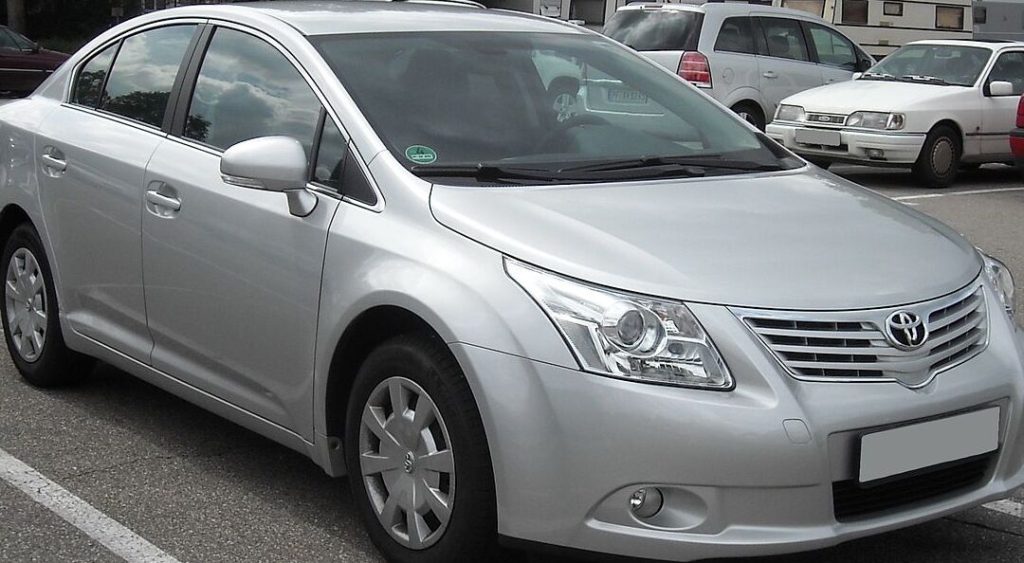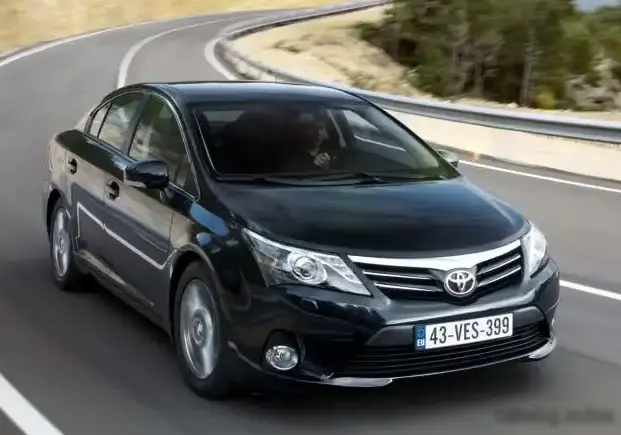
The Toyota Avensis III (facelift, introduced in 2012) 2.2 D-CAT 177 hp represents a significant iteration of Toyota’s D-segment offering, aimed primarily at the European market. Produced from 2012 to 2015, this variant occupied a mid-to-upper position within the Avensis lineup, bridging the gap between the more economical engine options and the flagship petrol models. It was designed to appeal to drivers seeking a balance of performance, fuel efficiency, and refinement in a practical, family-oriented package. The Avensis, in general, was Toyota’s attempt to directly compete with established European rivals like the Ford Mondeo, Vauxhall/Opel Insignia, and Volkswagen Passat.
Technical Specifications
| Brand | Toyota |
| Model | Avensis |
| Generation | Avensis III (facelift 2012) |
| Type (Engine) | 2.2 D-CAT (177 Hp) |
| Start of production | 2012 |
| End of production | 2015 |
| Powertrain Architecture | Internal Combustion engine |
| Body type | Sedan |
| Seats | 5 |
| Doors | 4 |
| Fuel consumption (urban) | 7.3-7.4 l/100 km (32.2 – 31.8 US mpg) |
| Fuel consumption (extra urban) | 4.8-4.9 l/100 km (49 – 48 US mpg) |
| Fuel consumption (combined) | 5.8-5.9 l/100 km (40.6 – 39.9 US mpg) |
| CO2 emissions | 153-155 g/km |
| Fuel Type | Diesel |
| Acceleration 0 – 100 km/h | 8.5 sec |
| Acceleration 0 – 62 mph | 8.5 sec |
| Acceleration 0 – 60 mph | 8.1 sec |
| Maximum speed | 220 km/h (136.7 mph) |
| Emission standard | Euro 5 |
| Weight-to-power ratio | 8.6 kg/Hp |
| Weight-to-torque ratio | 3.8 kg/Nm |
| Power | 177 Hp @ 3600 rpm |
| Torque | 400 Nm @ 2000-2800 rpm (295.02 lb.-ft. @ 2000-2800 rpm) |
| Engine layout | Front, Transverse |
| Engine Model/Code | 2AD-FHV |
| Engine displacement | 2231 cm3 (136.14 cu. in.) |
| Number of cylinders | 4 |
| Engine configuration | Inline |
| Cylinder Bore | 86 mm (3.39 in.) |
| Piston Stroke | 96 mm (3.78 in.) |
| Number of valves per cylinder | 4 |
| Fuel injection system | Diesel Commonrail |
| Engine aspiration | Turbocharger, Intercooler |
| Valvetrain | DOHC |
| Engine oil capacity | 5.9 l (6.23 US qt | 5.19 UK qt) |
| Coolant capacity | 7.4 l (7.82 US qt | 6.51 UK qt) |
| Kerb Weight | 1515-1595 kg (3340 – 3516.37 lbs.) |
| Max. weight | 2140 kg (4717.89 lbs.) |
| Max load | 545-625 kg (1201.52 – 1377.89 lbs.) |
| Trunk (boot) space | 509 l (17.98 cu. ft.) |
| Fuel tank capacity | 60 l (15.85 US gal | 13.2 UK gal) |
| Length | 4710 mm (185.43 in.) |
| Width | 1810 mm (71.26 in.) |
| Height | 1480 mm (58.27 in.) |
| Wheelbase | 2700 mm (106.3 in.) |
| Front track | 1550 mm (61.02 in.) |
| Rear track | 1550 mm (61.02 in.) |
| Front suspension | Independent type McPherson |
| Rear suspension | Double wishbone |
| Front brakes | Ventilated discs |
| Rear brakes | Disc |
| Tires size | 215/55 R17 |
| Wheel rims size | 7J x 17 |
INTRODUCTION
The 2012 facelift of the Toyota Avensis III brought with it revised styling, improved equipment levels, and refinements to the engine range. The 2.2 D-CAT engine, designated with the 2AD-FHV engine code, was a key component of this update. This engine offered a compelling blend of performance and economy, making it a popular choice for drivers covering long distances. The Avensis, positioned as a reliable and practical alternative to more flamboyant European competitors, aimed to provide a comfortable and well-equipped driving experience. This particular variant was generally available in SE, TR, and T2 trim levels, with increasing levels of standard equipment.
Powertrain & Engine Architecture
The 2.2 D-CAT engine is a four-cylinder, inline diesel engine featuring a common rail direct injection system and a turbocharger with intercooling. The 2AD-FHV code signifies a specific iteration of this engine, optimized for Euro 5 emissions standards. The common rail system, operating at very high pressures, allows for precise fuel delivery and contributes to both power output and fuel efficiency. The DOHC (Double Overhead Camshaft) valvetrain further enhances engine breathing and performance. The engine produces 177 horsepower at 3600 rpm and a substantial 400 Nm (295 lb-ft) of torque between 2000 and 2800 rpm. This torque output is particularly noteworthy, providing strong acceleration and effortless cruising. The engine was typically paired with a six-speed automatic transmission, although a six-speed manual was also available. The automatic transmission was designed for smooth shifts and optimized fuel economy, but it wasn’t known for being particularly sporty or responsive.
Driving Characteristics
The Avensis 2.2 D-CAT automatic delivers a comfortable and refined driving experience. The engine’s strong low-end torque makes it well-suited for everyday driving, providing ample power for overtaking and merging onto highways. While not a sports sedan, the 177 hp output provides adequate performance, with a 0-60 mph time of around 8.1 seconds. The automatic transmission, while smooth, can feel somewhat hesitant at times, particularly when downshifting. Compared to the manual transmission version, the automatic sacrifices some responsiveness. Compared to the lower-powered 1.6L and 1.8L petrol engines, the 2.2 D-CAT offers a significant performance advantage, but it comes at the cost of slightly higher running costs. The ride quality is generally good, absorbing bumps and imperfections in the road effectively.
Equipment & Trim Levels
The 2.2 D-CAT variant was typically well-equipped, even in base SE trim. Standard features often included air conditioning, alloy wheels, a touchscreen infotainment system, and a suite of safety features such as ABS, traction control, and multiple airbags. Higher trim levels, such as TR and T2, added features like leather upholstery, heated seats, a sunroof, and a more advanced navigation system. Optional extras included parking sensors, a rear-view camera, and premium audio systems. The interior design was functional and well-built, although it lacked the visual flair of some competitors.
Chassis & Braking
The Avensis III utilizes a front-wheel-drive layout with independent McPherson strut suspension at the front and a double wishbone suspension at the rear. This suspension setup provides a good balance of ride comfort and handling. The braking system consists of ventilated discs at the front and solid discs at the rear, providing adequate stopping power. ABS (Anti-lock Braking System) is standard, enhancing safety in emergency braking situations. The steering is electrically assisted, offering a light and easy driving experience. Stabilizer bars are fitted to both the front and rear axles to reduce body roll during cornering.
Market Reception & Comparison
The Avensis 2.2 D-CAT was generally well-received by automotive critics, who praised its fuel efficiency, comfortable ride, and reliability. However, some criticized its somewhat bland styling and the automatic transmission’s lack of responsiveness. Compared to rivals like the Ford Mondeo and Volkswagen Passat, the Avensis offered a more conservative driving experience but was often considered to be more reliable. Fuel economy was a strong point, with combined figures of around 40 mpg being achievable in real-world driving. The 2.2 D-CAT offered a better balance of performance and economy than the lower-powered petrol engines, making it a popular choice for fleet buyers and private drivers alike.
Legacy
The 2.2 D-CAT engine, while generally reliable, is known to require regular maintenance, particularly regarding the diesel particulate filter (DPF). Long-term reliability is generally good, but issues can arise with the turbocharger and fuel injectors if not properly maintained. On the used car market, the Avensis 2.2 D-CAT represents a good value proposition, offering a comfortable and well-equipped vehicle at an affordable price. However, potential buyers should carefully check the service history and ensure that the DPF has been properly maintained. The Avensis, while not a particularly exciting car, remains a practical and dependable choice for those seeking a reliable family sedan.