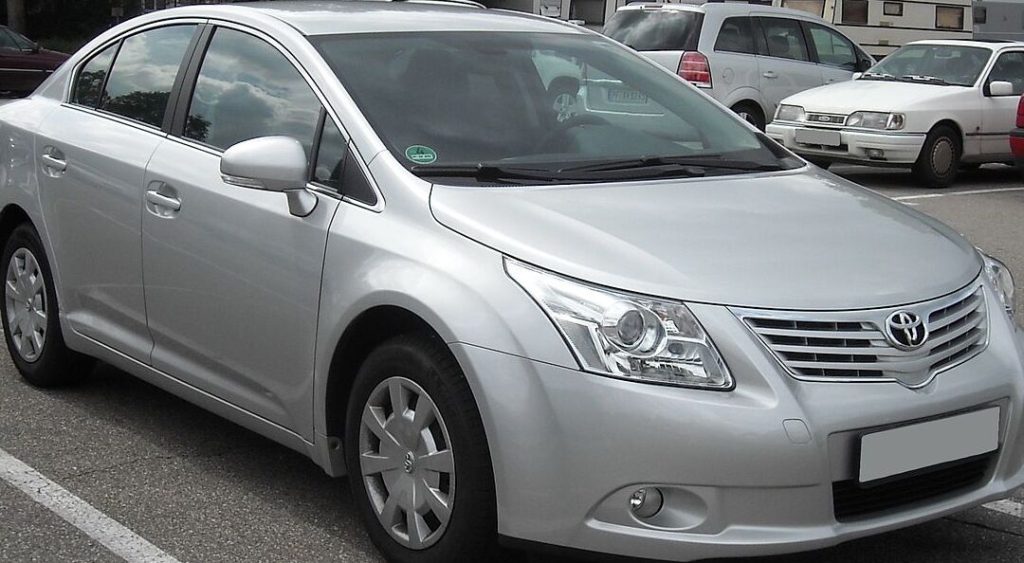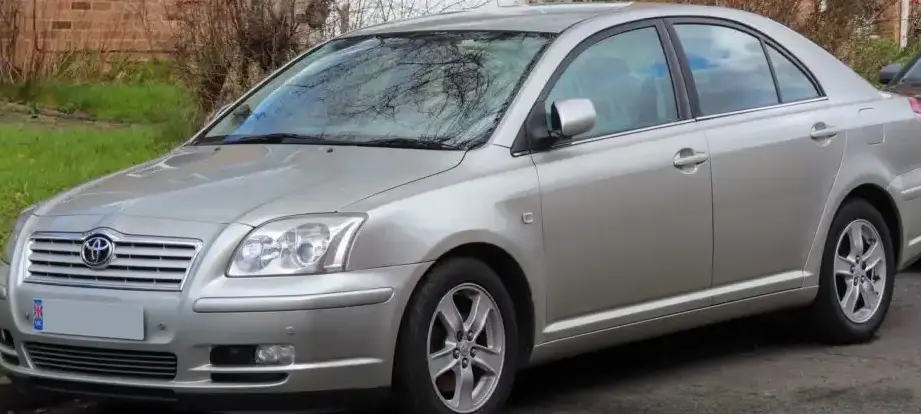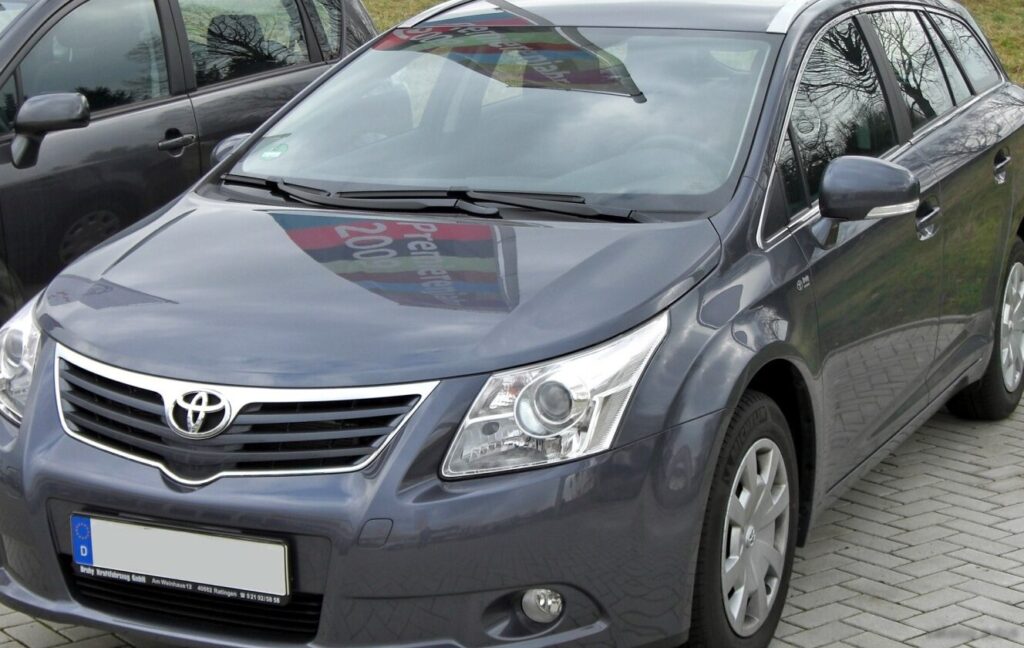
The Toyota Avensis III Wagon 1.6i (132 hp) was a mainstream family estate car produced between 2009 and 2011. Part of the T270 series Avensis, this variant occupied the entry to mid-level position in the wagon lineup, offering a balance of practicality, fuel efficiency, and affordability. It was primarily marketed in Europe, where the demand for wagons remained strong, and aimed at families and individuals needing a versatile vehicle for both daily commuting and longer journeys. This model represented Toyota’s commitment to providing reliable and well-equipped vehicles in the competitive D-segment.
Technical Specifications
| Brand | Toyota |
| Model | Avensis |
| Generation | Avensis III Wagon |
| Type (Engine) | 1.6i (132 Hp) |
| Start of production | 2009 |
| End of production | 2011 |
| Powertrain Architecture | Internal Combustion engine |
| Body type | Station wagon (estate) |
| Seats | 5 |
| Doors | 5 |
| Fuel consumption (urban) | 8.4 l/100 km (28 US mpg, 33.6 UK mpg, 11.9 km/l) |
| Fuel consumption (extra urban) | 5.4 l/100 km (43.6 US mpg, 52.3 UK mpg, 18.5 km/l) |
| Fuel consumption (combined) | 6.5 l/100 km (36.2 US mpg, 43.5 UK mpg, 15.4 km/l) |
| Fuel Type | Petrol (Gasoline) |
| Acceleration 0 – 100 km/h | 10.6 sec |
| Acceleration 0 – 62 mph | 10.6 sec |
| Acceleration 0 – 60 mph | 10.1 sec |
| Maximum speed | 195 km/h (121.17 mph) |
| Emission standard | Euro 5 |
| Weight-to-power ratio | 10.6 kg/Hp, 94.3 Hp/tonne |
| Weight-to-torque ratio | 8.8 kg/Nm, 114.3 Nm/tonne |
| Power | 132 Hp @ 6400 rpm |
| Power per litre | 82.6 Hp/l |
| Torque | 160 Nm @ 4400 rpm (118.01 lb.-ft. @ 4400 rpm) |
| Engine layout | Front, Transverse |
| Engine Model/Code | 1ZR-FAE |
| Engine displacement | 1598 cm3 (97.52 cu. in.) |
| Number of cylinders | 4 |
| Engine configuration | Inline |
| Cylinder Bore | 80.5 mm (3.17 in.) |
| Piston Stroke | 78.5 mm (3.09 in.) |
| Number of valves per cylinder | 4 |
| Fuel injection system | Multi-port manifold injection |
| Engine aspiration | Naturally aspirated engine |
| Valvetrain | DOHC |
| Engine oil capacity | 4.2 l (4.44 US qt | 3.7 UK qt) |
| Coolant capacity | 6.3 l (6.66 US qt | 5.54 UK qt) |
| Kerb Weight | 1400 kg (3086.47 lbs.) |
| Max. weight | 1950 kg (4299.01 lbs.) |
| Max load | 550 kg (1212.54 lbs.) |
| Trunk (boot) space – minimum | 543 l (19.18 cu. ft.) |
| Trunk (boot) space – maximum | 1609 l (56.82 cu. ft.) |
| Fuel tank capacity | 60 l (15.85 US gal | 13.2 UK gal) |
| Length | 4765 mm (187.6 in.) |
| Width | 1810 mm (71.26 in.) |
| Height | 1480 mm (58.27 in.) |
| Wheelbase | 2700 mm (106.3 in.) |
| Front track | 1550 mm (61.02 in.) |
| Rear track | 1540 mm (60.63 in.) |
| Minimum turning circle | 10.8 m (35.43 ft.) |
| Drivetrain Architecture | Front wheel drive |
| Number of gears | 6 gears, manual transmission |
| Front suspension | Independent type McPherson |
| Rear suspension | Double wishbone |
| Front brakes | Ventilated discs |
| Rear brakes | Disc |
| Assisting systems | ABS (Anti-lock braking system) |
| Steering type | Steering rack and pinion |
| Power steering | Electric Steering |
| Tires size | 205/60R16 |
INTRODUCTION
The Avensis III Wagon, launched in 2009, represented a significant evolution of Toyota’s D-segment offering. Building upon the success of its predecessors, the T270 series aimed to provide a more refined and spacious vehicle for European families. The 1.6i variant, producing 132 horsepower, was positioned as the entry point to the wagon range, appealing to buyers prioritizing fuel economy and practicality over outright performance. It served as a direct competitor to vehicles like the Ford Focus Estate, Volkswagen Passat Estate, and Opel/Vauxhall Insignia Estate.
Powertrain & Engine Architecture
The heart of the Avensis III Wagon 1.6i is the 1ZR-FAE engine, a 1.6-liter inline-four cylinder petrol engine. This engine utilizes multi-port fuel injection and a double overhead camshaft (DOHC) valvetrain, contributing to its relatively efficient operation. The 1ZR-FAE is a naturally aspirated engine, meaning it doesn’t employ turbocharging or supercharging. This design choice prioritized reliability and simplicity. The engine’s 132 horsepower peak is achieved at 6,400 rpm, while its 160 Nm (118 lb-ft) of torque is delivered at 4,400 rpm. This engine was paired with a six-speed manual transmission, offering a good balance between fuel efficiency and driver control. The transmission’s gear ratios were tuned to maximize fuel economy during highway cruising while still providing adequate acceleration for everyday driving.
Driving Characteristics
The 1.6i engine, coupled with the manual transmission, provided adequate, though not exhilarating, performance. Acceleration from 0 to 60 mph took around 10.1 seconds, and the top speed was approximately 121 mph. Compared to higher-powered Avensis variants, such as the 2.0-liter or diesel models, the 1.6i felt less responsive, particularly when fully loaded or tackling steep inclines. However, the engine was smooth and refined, and the manual gearbox offered precise shifts. The gear ratios were well-matched to the engine’s powerband, making it relatively easy to maintain momentum in various driving conditions. The focus was on providing a comfortable and predictable driving experience rather than sporty handling.
Equipment & Trim Levels
The Avensis III Wagon 1.6i typically came equipped with a respectable level of standard features. These included air conditioning, electric front windows, a CD player with auxiliary input, and ABS brakes. Higher trim levels, such as the ‘TR’ or ‘T Spirit’ offered additional features like alloy wheels, climate control, rear parking sensors, and a more sophisticated audio system. Interior upholstery was typically cloth, with options for upgraded materials on higher trims. The dashboard layout was functional and user-friendly, with logically placed controls. Optional extras included satellite navigation, leather seats, and a sunroof.
Chassis & Braking
The Avensis III Wagon featured an independent McPherson strut suspension at the front and a double wishbone suspension at the rear. This setup provided a comfortable ride quality, absorbing bumps and imperfections in the road surface effectively. The front brakes were ventilated discs, offering good stopping power, while the rear brakes were solid discs. The steering was electrically assisted, providing a light and responsive feel. The car’s weight of around 1400 kg (3086 lbs) contributed to its stable handling characteristics. The suspension was tuned for comfort rather than outright sportiness, prioritizing a smooth and predictable ride.
Market Reception & Comparison
The Avensis III Wagon 1.6i was generally well-received by automotive critics. It was praised for its reliability, spacious interior, and comfortable ride. However, some reviewers noted that the 1.6i engine lacked the punch of its larger counterparts. Fuel economy was a strong point, with the combined cycle figure of 6.5 l/100 km (36.2 US mpg) being competitive in its class. Compared to the 2.0-liter petrol and 2.2-liter diesel variants, the 1.6i offered lower running costs but sacrificed performance. The diesel models were particularly popular in Europe due to their superior fuel economy and torque.
Legacy
The Toyota Avensis III Wagon 1.6i has proven to be a reliable and durable vehicle. The 1ZR-FAE engine is known for its longevity, and the overall build quality of the Avensis is generally high. In the used car market, these models represent a good value proposition for buyers seeking a practical and dependable estate car. While not the most exciting vehicle to drive, the Avensis III Wagon 1.6i continues to be a popular choice for families and individuals needing a versatile and affordable vehicle. Maintenance costs are generally reasonable, and parts availability is good, contributing to its continued appeal.