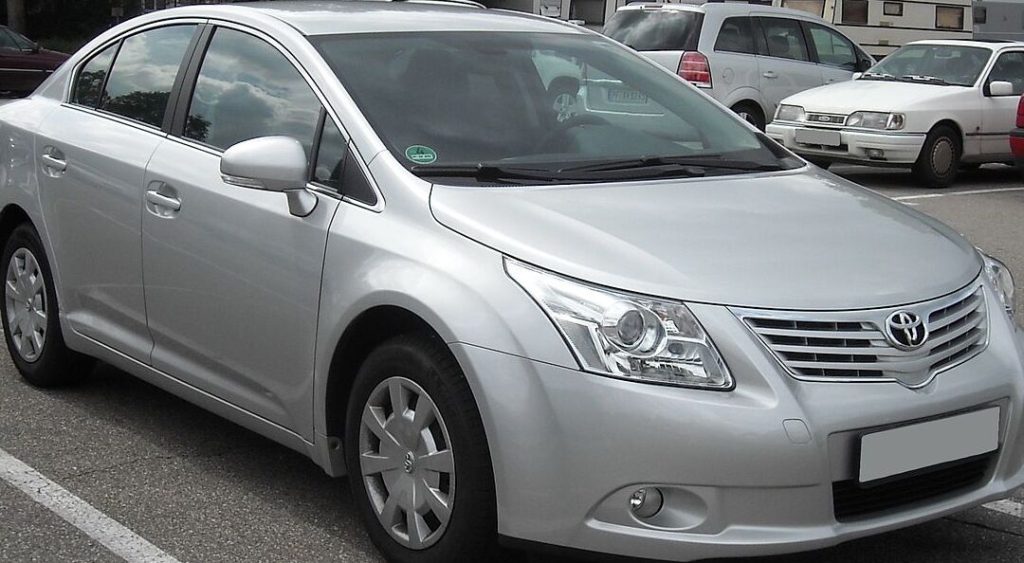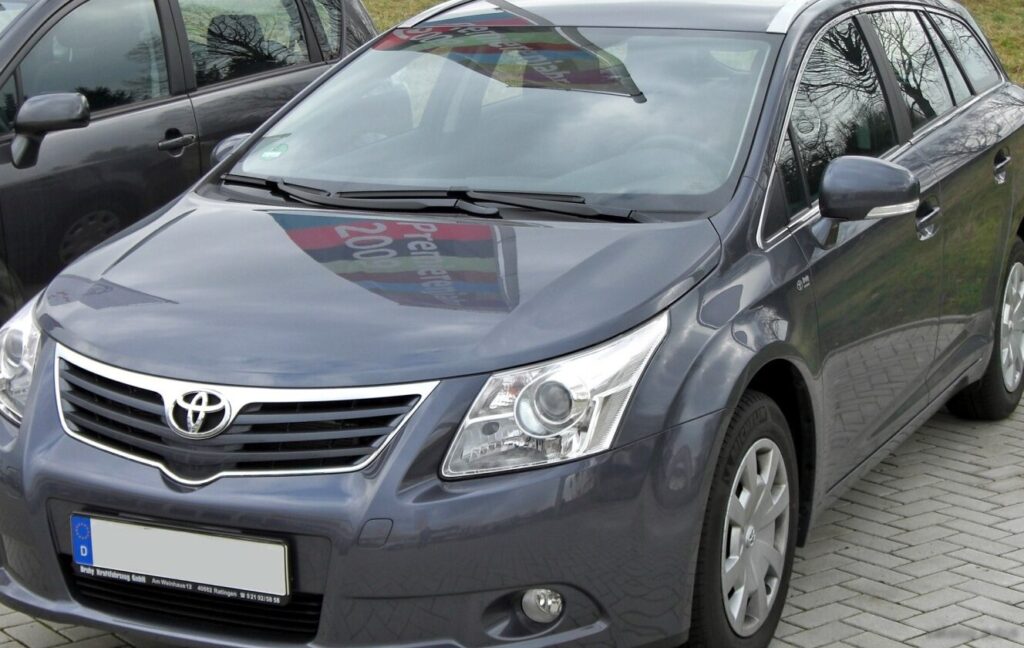
The Toyota Avensis III Wagon 1.8i (147 hp) was a front-wheel-drive station wagon produced between 2009 and 2011. Positioned as a mid-range offering within the Avensis III Wagon lineup, it aimed to provide a balance of fuel efficiency, practicality, and reasonable performance for family buyers. This variant was part of the T27 series Avensis, representing Toyota’s D-segment offering in the European market, competing with vehicles like the Ford Mondeo, Vauxhall/Opel Insignia, and Volkswagen Passat. The Avensis was never a major seller in the US market, but it represented Toyota’s commitment to a globally competitive vehicle.
Technical Specifications
| Brand | Toyota |
| Model | Avensis |
| Generation | Avensis III Wagon |
| Type (Engine) | 1.8i (147 Hp) |
| Start of production | 2009 |
| End of production | 2011 |
| Powertrain Architecture | Internal Combustion engine |
| Body type | Station wagon (estate) |
| Seats | 5 |
| Doors | 5 |
| Fuel consumption (urban) | 8.6 l/100 km (27.4 US mpg) |
| Fuel consumption (extra urban) | 5.4 l/100 km (43.6 US mpg) |
| Fuel consumption (combined) | 6.6 l/100 km (35.6 US mpg) |
| Fuel Type | Petrol (Gasoline) |
| Acceleration 0 – 100 km/h | 9.7 sec |
| Acceleration 0 – 62 mph | 9.7 sec |
| Acceleration 0 – 60 mph | 9.2 sec |
| Maximum speed | 200 km/h (124.27 mph) |
| Emission standard | Euro 5 |
| Weight-to-power ratio | 9.6 kg/Hp |
| Weight-to-torque ratio | 7.8 kg/Nm |
| Power | 147 Hp @ 6000 rpm |
| Torque | 180 Nm @ 4000 rpm (132.76 lb.-ft. @ 4000 rpm) |
| Engine layout | Front, Transverse |
| Engine Model/Code | 2ZR-FAE |
| Engine displacement | 1798 cm3 (109.72 cu. in.) |
| Number of cylinders | 4 |
| Engine configuration | Inline |
| Number of valves per cylinder | 4 |
| Fuel injection system | Multi-port manifold injection |
| Engine aspiration | Naturally aspirated engine |
| Valvetrain | DOHC |
| Engine oil capacity | 4.2 l (4.44 US qt | 3.7 UK qt) |
| Coolant capacity | 6.3 l (6.66 US qt | 5.54 UK qt) |
| Kerb Weight | 1405 kg (3097.49 lbs) |
| Max. weight | 2000 kg (4409.25 lbs) |
| Max load | 595 kg (1311.75 lbs) |
| Trunk (boot) space – minimum | 543 l (19.18 cu. ft.) |
| Trunk (boot) space – maximum | 1609 l (56.82 cu. ft.) |
| Fuel tank capacity | 60 l (15.85 US gal | 13.2 UK gal) |
| Length | 4765 mm (187.6 in.) |
| Width | 1810 mm (71.26 in.) |
| Height | 1480 mm (58.27 in.) |
| Wheelbase | 2700 mm (106.3 in.) |
| Front track | 1550 mm (61.02 in.) |
| Rear track | 1540 mm (60.63 in.) |
| Minimum turning circle | 10.8 m (35.43 ft.) |
| Drivetrain Architecture | Front wheel drive |
| Number of gears | 6 gears, manual transmission |
| Front suspension | Independent type McPherson |
| Rear suspension | Double wishbone |
| Front brakes | Ventilated discs |
| Rear brakes | Disc |
| Assisting systems | ABS (Anti-lock braking system) |
| Steering type | Steering rack and pinion |
| Power steering | Electric Steering |
| Tires size | 205/60R16; 215/55R17 |
Powertrain & Engine Architecture
The 1.8i variant of the Avensis Wagon utilized the 2ZR-FAE engine, a 1.8-liter (1798 cc) inline-four cylinder gasoline engine. This engine featured a double overhead camshaft (DOHC) valvetrain with four valves per cylinder, contributing to its relatively efficient breathing. Fuel delivery was handled by a multi-port fuel injection system. The 2ZR-FAE was known for its reliability and relatively smooth operation, though it wasn’t a particularly high-performance engine. The engine produced 147 horsepower at 6000 rpm and 180 Nm (132.76 lb-ft) of torque at 4000 rpm. This power was transmitted to the front wheels through a six-speed manual transmission. While an automatic transmission was available on other Avensis models, the 1.8i was primarily offered with the manual gearbox in many European markets.
Driving Characteristics
The Avensis 1.8i Wagon with the six-speed manual transmission offered a reasonably engaging driving experience, though it wasn’t designed for outright speed. Acceleration from 0-60 mph took around 9.2 seconds, and top speed was limited to 124.27 mph. The six-speed gearbox helped to keep the engine in its optimal power band, providing adequate acceleration for everyday driving. Compared to the more powerful 2.0-liter or 2.4-liter Avensis variants, the 1.8i felt less responsive, particularly when fully loaded or tackling steep inclines. However, the lighter engine weight contributed to better handling and a more balanced feel in corners. The gear ratios were tuned for fuel efficiency, making it a comfortable cruiser on highways.
Equipment & Trim Levels
The 1.8i trim level typically included standard features such as air conditioning, power windows, power mirrors, a CD player with auxiliary input, and ABS brakes. Higher trim levels, such as the T2 or T3, added features like alloy wheels, automatic climate control, a multi-function steering wheel, and upgraded audio systems. Optional extras included a sunroof, leather upholstery, and a navigation system. Interior upholstery was generally cloth, with a functional and durable design. The dashboard layout was straightforward and user-friendly, prioritizing practicality over stylistic flair.
Chassis & Braking
The Avensis Wagon featured an independent McPherson strut suspension at the front and a double wishbone suspension at the rear, providing a comfortable ride quality. The suspension was tuned for a balance between comfort and handling, absorbing bumps and imperfections in the road surface effectively. Braking duties were handled by ventilated discs at the front and solid discs at the rear. ABS (Anti-lock Braking System) was standard, enhancing safety during emergency braking situations. The steering was rack and pinion with electric power assistance, offering a light and precise feel.
Market Reception & Comparison
The Avensis 1.8i Wagon was generally well-received by automotive critics as a practical and reliable family car. However, it wasn’t considered particularly exciting to drive, and its performance was modest compared to some of its rivals. Fuel economy was a strong point, with combined fuel consumption figures of around 35.6 US mpg. Compared to the higher-powered Avensis variants, the 1.8i offered lower running costs and insurance premiums, making it an attractive option for budget-conscious buyers. The 1.9 TDI diesel variant was a popular alternative, offering superior fuel economy and torque, but at a higher purchase price.
Legacy
The Toyota Avensis III Wagon 1.8i has proven to be a durable and reliable vehicle in the used car market. The 2ZR-FAE engine is known for its longevity, and with regular maintenance, it can provide many years of trouble-free service. While not a collector’s item, well-maintained examples of the 1.8i Wagon remain a practical and affordable option for buyers seeking a spacious and reliable family car. Its reputation for dependability continues to make it a sensible choice for those prioritizing long-term ownership costs and minimizing the risk of mechanical issues.