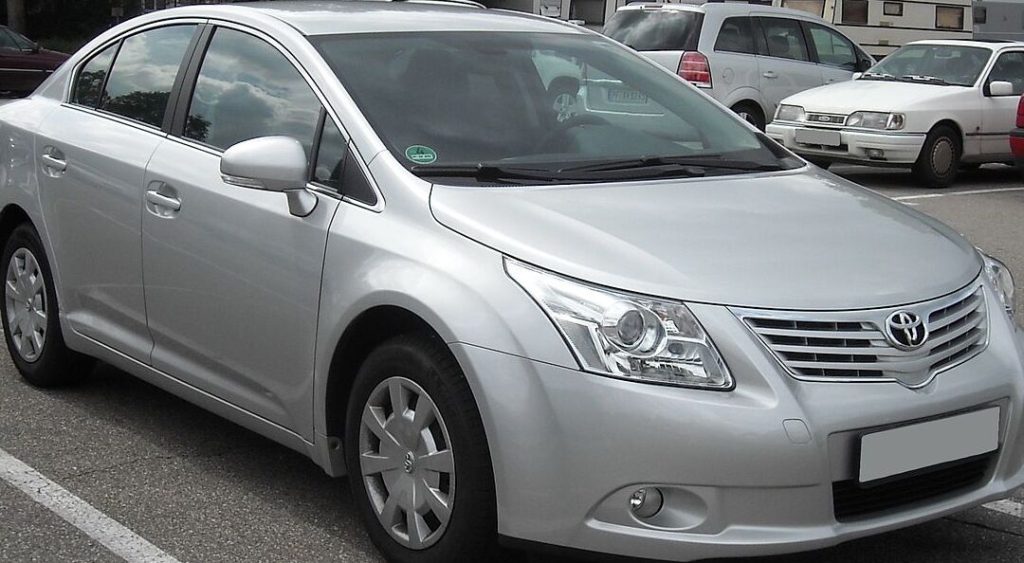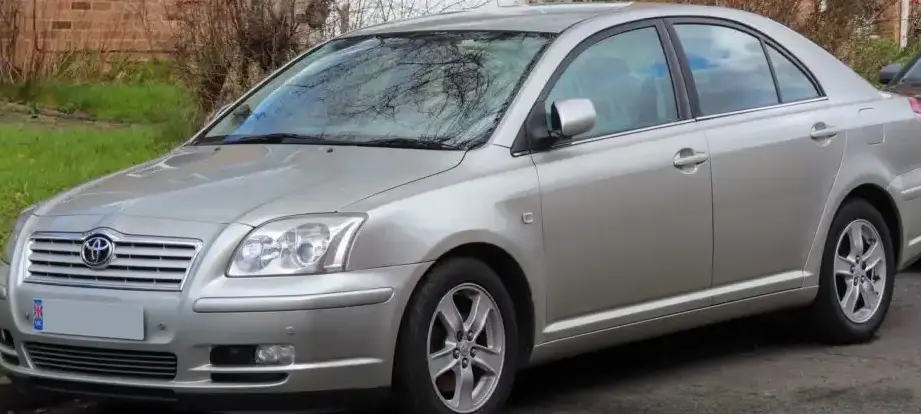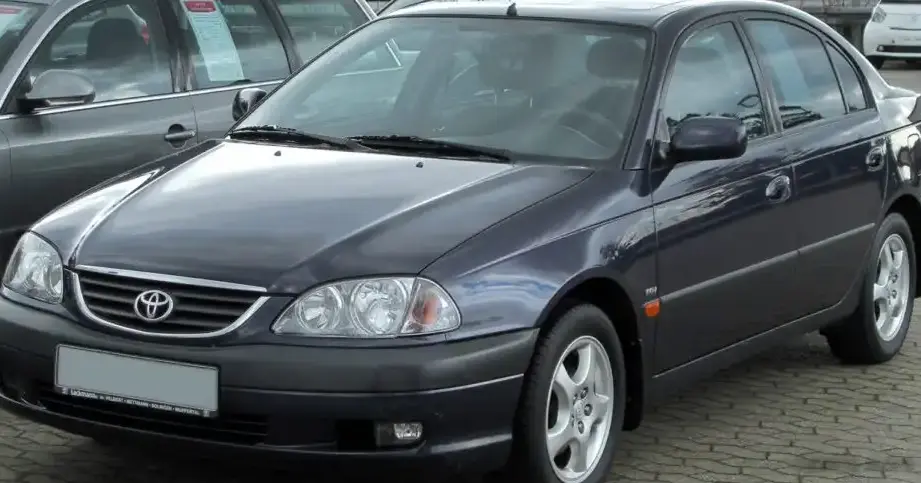
The Toyota Avensis (T22) 2.0L (128 hp) Automatic, produced between 1997 and 2003, represented a significant step forward for Toyota in the mid-size family car segment, particularly within the European market. Positioned as a comfortable and reliable option, this variant aimed to provide a balance between performance and fuel efficiency for drivers seeking an automatic transmission. The T22 generation Avensis was Toyota’s attempt to create a truly global car, designed to appeal to both European tastes and the practicality demanded by family buyers. This specific 2.0L automatic trim occupied a mid-range position in the Avensis lineup, offering more power than the base 1.6L models but remaining more accessible than the flagship 2.4L versions.
Technical Specifications
| Brand | Toyota |
| Model | Avensis |
| Generation | Avensis (T22) |
| Type (Engine) | 2.0 (128 Hp) Automatic |
| Start of production | 1997 |
| End of production | 2003 |
| Powertrain Architecture | Internal Combustion engine |
| Body type | Sedan |
| Seats | 5 |
| Doors | 4 |
| Fuel consumption (urban) | 12.4 l/100 km (19 US mpg, 22.8 UK mpg) |
| Fuel consumption (extra urban) | 7 l/100 km (33.6 US mpg, 40.4 UK mpg) |
| Fuel Type | Petrol (Gasoline) |
| Acceleration 0 – 100 km/h | 10.6 sec |
| Acceleration 0 – 62 mph | 10.6 sec |
| Acceleration 0 – 60 mph | 10.1 sec |
| Maximum speed | 200 km/h (124.27 mph) |
| Weight-to-power ratio | 10 kg/Hp |
| Weight-to-torque ratio | 7.2 kg/Nm |
| Power | 128 Hp @ 5400 rpm |
| Torque | 178 Nm @ 4400 rpm (131.29 lb.-ft. @ 4400 rpm) |
| Engine layout | Front, Transverse |
| Engine Model/Code | 3S-FE |
| Engine displacement | 1998 cm3 (121.93 cu. in.) |
| Number of cylinders | 4 |
| Engine configuration | Inline |
| Cylinder Bore | 86 mm (3.39 in.) |
| Piston Stroke | 86 mm (3.39 in.) |
| Compression ratio | 9.8:1 |
| Number of valves per cylinder | 4 |
| Fuel injection system | Multi-port manifold injection |
| Engine aspiration | Naturally aspirated engine |
| Valvetrain | DOHC |
| Engine oil capacity | 3.9 l (4.12 US qt | 3.43 UK qt) |
| Coolant capacity | 8 l (8.45 US qt | 7.04 UK qt) |
| Kerb Weight | 1285 kg (2832.94 lbs.) |
| Max. weight | 1800 kg (3968.32 lbs.) |
| Max load | 515 kg (1135.38 lbs.) |
| Trunk (boot) space – minimum | 500 l (17.66 cu. ft.) |
| Fuel tank capacity | 60 l (15.85 US gal | 13.2 UK gal) |
| Length | 4490 mm (176.77 in.) |
| Width | 1710 mm (67.32 in.) |
| Height | 1425 mm (56.1 in.) |
| Wheelbase | 2630 mm (103.54 in.) |
| Front track | 1480 mm (58.27 in.) |
| Rear track | 1450 mm (57.09 in.) |
| Drivetrain Architecture | Front wheel drive |
| Number of gears | 4 |
| Gearbox type | Automatic transmission |
| Front suspension | Spring Strut |
| Rear suspension | Coil spring |
| Front brakes | Ventilated discs |
| Rear brakes | Drum |
| Assisting systems | ABS (Anti-lock braking system) |
| Steering type | Steering rack and pinion |
| Power steering | Hydraulic Steering |
| Tires size | 195/60 R15 |
| Wheel rims size | 15 |
Powertrain & Engine Architecture
The heart of the Avensis 2.0 Automatic is the 3S-FE engine, a 1.998-liter inline-four cylinder gasoline engine. This engine is a naturally aspirated design, utilizing multi-port fuel injection and a double overhead camshaft (DOHC) valvetrain. The 3S-FE was a well-established engine within the Toyota lineup, known for its reliability and relatively smooth operation. The 9.8:1 compression ratio contributed to a good balance between power and fuel economy. Paired with this engine was a four-speed automatic transmission, designed for ease of use and comfortable cruising. This transmission, while not offering the sportiness of a manual gearbox, provided smooth shifts and was well-suited to the Avensis’s intended role as a family vehicle. The automatic transmission’s gear ratios were tuned for fuel efficiency and relaxed acceleration, prioritizing comfort over outright performance.
Driving Characteristics
The 128 hp and 131 lb-ft of torque delivered by the 2.0L engine and automatic transmission combination resulted in a 0-60 mph time of around 10.1 seconds. While not particularly quick by modern standards, this performance was adequate for everyday driving and highway merging. The automatic transmission, while smooth, did contribute to a slight reduction in responsiveness compared to the manual transmission equipped models. The gear ratios were spaced to prioritize fuel economy, meaning the engine often felt slightly strained during quick acceleration. Compared to the higher-output 2.4L Avensis, the 2.0L automatic felt noticeably less powerful, but it offered a more economical and relaxed driving experience. The suspension was tuned for comfort, providing a reasonably smooth ride over most road surfaces.
Equipment & Trim Levels
The 2.0L Automatic Avensis typically came equipped with a reasonable level of standard features. These included power windows, power steering, central locking, and an AM/FM radio. Higher trim levels offered options such as air conditioning, alloy wheels, a sunroof, and upgraded interior upholstery. Interior materials were generally durable and functional, though not particularly luxurious. The dashboard layout was straightforward and easy to use, prioritizing practicality over aesthetic flair. Optional extras often included a CD player and upgraded sound system.
Chassis & Braking
The Avensis T22 utilized a front-wheel-drive layout with a MacPherson strut front suspension and a coil spring rear suspension. This setup provided a comfortable ride and predictable handling. The front brakes were ventilated discs, offering good stopping power, while the rear brakes were drums, a cost-saving measure common in this class of vehicle. Anti-lock Braking System (ABS) was standard, enhancing safety. The steering was hydraulic power-assisted, providing light and easy steering feel.
Market Reception & Comparison
The Avensis 2.0 Automatic was generally well-received by automotive critics as a solid and reliable family car. It was praised for its comfortable ride, spacious interior, and Toyota’s reputation for dependability. However, it was often criticized for its somewhat uninspiring driving dynamics and relatively bland styling. Compared to rivals like the Ford Mondeo and Vauxhall/Opel Vectra, the Avensis offered a more refined and reliable experience, but lacked the sporting character of some competitors. Fuel economy was competitive for its class, and the automatic transmission was appreciated by drivers seeking convenience.
Legacy
The 3S-FE engine, when properly maintained, proved to be a remarkably durable powertrain. Avensis models equipped with this engine and automatic transmission continue to be found on the used car market today, often with high mileage and a testament to their longevity. While maintenance costs can increase with age, the 3S-FE is generally considered a relatively easy engine to work on. The four-speed automatic transmission, while not the most advanced, is also known for its reliability. The Avensis T22, and particularly the 2.0L Automatic variant, remains a popular choice for budget-conscious buyers seeking a dependable and practical family car.