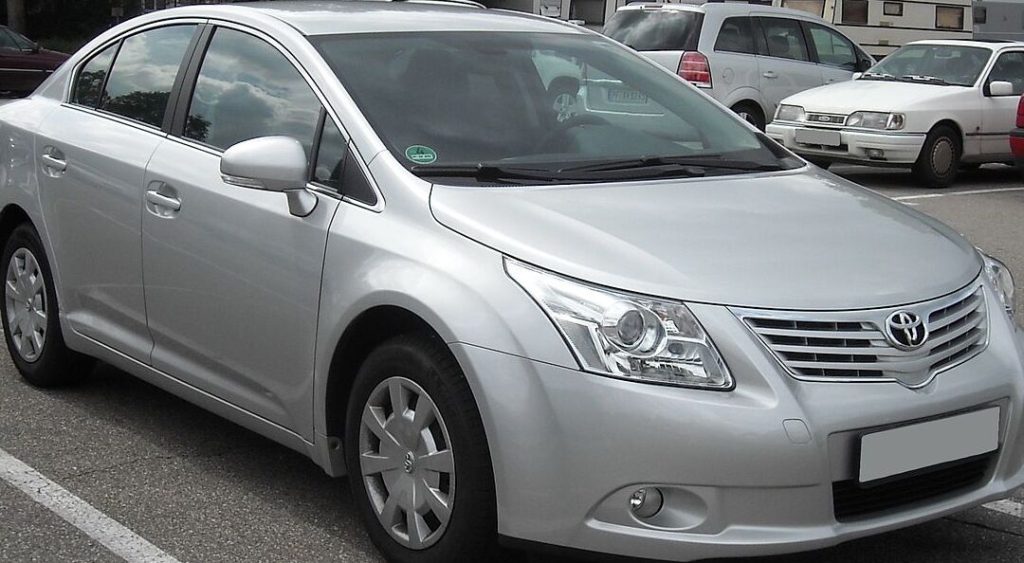
The Toyota Avensis Wagon (T22) 2.0, produced between 1997 and 2003, represented Toyota’s entry into the mid-size station wagon segment, primarily aimed at the European market. Positioned as a practical and reliable family vehicle, the T22 Avensis offered a compelling alternative to established European competitors like the Ford Mondeo and Volkswagen Passat. This specific 2.0-liter (128 hp) variant occupied a middle ground in the Avensis lineup, offering a balance between performance and fuel economy, appealing to buyers who didn’t require the larger engines but still desired a capable and comfortable vehicle. It was part of the broader T22 series, built on the Toyota K-platform, and shared components with the Carina E, representing a step up in refinement and features compared to its predecessor.
Technical Specifications
| Brand | Toyota |
| Model | Avensis |
| Generation | Avensis Wagon (T22) |
| Type (Engine) | 2.0 (128 Hp) |
| Start of production | 1997 |
| End of production | 2003 |
| Powertrain Architecture | Internal Combustion engine |
| Body type | Station wagon (estate) |
| Seats | 5 |
| Doors | 5 |
| Fuel consumption (urban) | 11.3 l/100 km (20.8 US mpg) |
| Fuel consumption (extra urban) | 6.6 l/100 km (35.6 US mpg) |
| Fuel Type | Petrol (Gasoline) |
| Acceleration 0 – 100 km/h | 9.5 sec |
| Acceleration 0 – 62 mph | 9.5 sec |
| Acceleration 0 – 60 mph | 9 sec |
| Maximum speed | 200 km/h (124.27 mph) |
| Weight-to-power ratio | 10.3 kg/Hp |
| Weight-to-torque ratio | 7.4 kg/Nm |
| Power | 128 Hp @ 5400 rpm |
| Torque | 178 Nm @ 4400 rpm (131.29 lb.-ft. @ 4400 rpm) |
| Engine layout | Front, Transverse |
| Engine Model/Code | 3S-FE |
| Engine displacement | 1998 cm3 (121.93 cu. in.) |
| Number of cylinders | 4 |
| Engine configuration | Inline |
| Cylinder Bore | 86 mm (3.39 in.) |
| Piston Stroke | 86 mm (3.39 in.) |
| Compression ratio | 9.8:1 |
| Number of valves per cylinder | 4 |
| Fuel injection system | Multi-port manifold injection |
| Engine aspiration | Naturally aspirated engine |
| Valvetrain | DOHC |
| Engine oil capacity | 3.9 l (4.12 US qt | 3.43 UK qt) |
| Coolant capacity | 7.6 l (8.03 US qt | 6.69 UK qt) |
| Kerb Weight | 1320 kg (2910.1 lbs.) |
| Max. weight | 1800 kg (3968.32 lbs.) |
| Max load | 480 kg (1058.22 lbs.) |
| Trunk (boot) space – minimum | 580 l (20.48 cu. ft.) |
| Trunk (boot) space – maximum | 1996 l (70.49 cu. ft.) |
| Fuel tank capacity | 60 l (15.85 US gal | 13.2 UK gal) |
| Length | 4570 mm (179.92 in.) |
| Width | 1710 mm (67.32 in.) |
| Height | 1500 mm (59.06 in.) |
| Wheelbase | 2630 mm (103.54 in.) |
| Front track | 1480 mm (58.27 in.) |
| Rear track | 1450 mm (57.09 in.) |
| Drivetrain Architecture | Front wheel drive |
| Number of gears | 5 |
| Gearbox type | Manual transmission |
| Front suspension | Spring Strut |
| Rear suspension | Coil spring |
| Front brakes | Ventilated discs |
| Rear brakes | Drum |
| Assisting systems | ABS (Anti-lock braking system) |
| Steering type | Steering rack and pinion |
| Power steering | Hydraulic Steering |
| Tires size | 195/60 R15 |
Powertrain & Engine Architecture
The heart of the Avensis Wagon 2.0 was the 3S-FE engine, a 1.998-liter, inline-four cylinder gasoline engine. This engine was a mainstay of Toyota’s lineup for many years, known for its reliability and relatively simple design. The 3S-FE featured a double overhead camshaft (DOHC) valvetrain with four valves per cylinder, contributing to its respectable power output for its displacement. Fuel delivery was handled by a multi-port fuel injection system, optimizing combustion efficiency. The engine produced 128 horsepower at 5400 rpm and 178 Nm (131 lb-ft) of torque at 4400 rpm. This power was transmitted to the front wheels through a five-speed manual transmission, although a four-speed automatic transmission was also available. The automatic transmission, while offering convenience, did slightly diminish acceleration and fuel economy compared to the manual version.
Driving Characteristics
The 2.0-liter Avensis Wagon with the manual transmission offered adequate performance for everyday driving. Acceleration to 60 mph took around 9.5 seconds, and top speed was approximately 124 mph. The engine felt responsive enough for overtaking maneuvers on the highway, but it wasn’t particularly sporty. The automatic transmission, while smooth, resulted in a noticeable decrease in responsiveness. Gear ratios were tuned for fuel efficiency rather than outright performance. Compared to the higher-output 2.2-liter engine available in some markets, the 2.0-liter felt less powerful, especially when fully loaded with passengers and cargo. However, the 2.0-liter offered a more refined driving experience than the smaller 1.6-liter engine, providing a better balance of power and fuel economy.
Equipment & Trim Levels
The Avensis Wagon 2.0 typically came equipped with a reasonable level of standard features. These included power windows, central locking, power steering, and an AM/FM radio. Higher trim levels, such as the GLS, added features like alloy wheels, air conditioning, a sunroof, and upgraded interior upholstery. Interior materials were generally durable and well-assembled, reflecting Toyota’s reputation for quality. The dashboard layout was functional and straightforward, prioritizing ease of use. Optional extras included a CD player, rear parking sensors, and leather seats.
Chassis & Braking
The Avensis Wagon featured a MacPherson strut front suspension and a coil spring rear suspension. This setup provided a comfortable ride, absorbing bumps and imperfections in the road effectively. The suspension was tuned for stability and predictability rather than sporty handling. Braking duties were handled by ventilated discs on the front wheels and drum brakes on the rear. Anti-lock Braking System (ABS) was standard, enhancing safety during emergency braking situations. The steering was rack and pinion, providing precise and responsive control. The relatively modest weight of the vehicle, around 1320 kg (2910 lbs), helped to contribute to its manageable handling characteristics.
Market Reception & Comparison
The Avensis Wagon 2.0 was generally well-received by automotive critics. It was praised for its reliability, practicality, and comfortable ride. However, some reviewers noted that the engine lacked the refinement and performance of some of its European rivals. Fuel economy was considered to be competitive, particularly on the highway. Compared to the 1.6-liter Avensis, the 2.0-liter offered a noticeable improvement in performance, making it a more suitable choice for drivers who frequently carried passengers or cargo. Compared to the larger 2.2-liter engine, the 2.0-liter was more affordable and offered slightly better fuel economy, but at the expense of some power.
Legacy
The Toyota Avensis Wagon (T22) 2.0 has proven to be a remarkably durable and reliable vehicle. Many examples are still on the road today, testament to Toyota’s engineering prowess. The 3S-FE engine is known for its longevity, and with proper maintenance, it can easily exceed 200,000 miles. In the used car market, the Avensis Wagon 2.0 represents a good value proposition, offering a spacious and practical vehicle at an affordable price. While it may not be the most exciting car to drive, its reputation for reliability and practicality makes it a popular choice for families and those seeking a dependable workhorse.