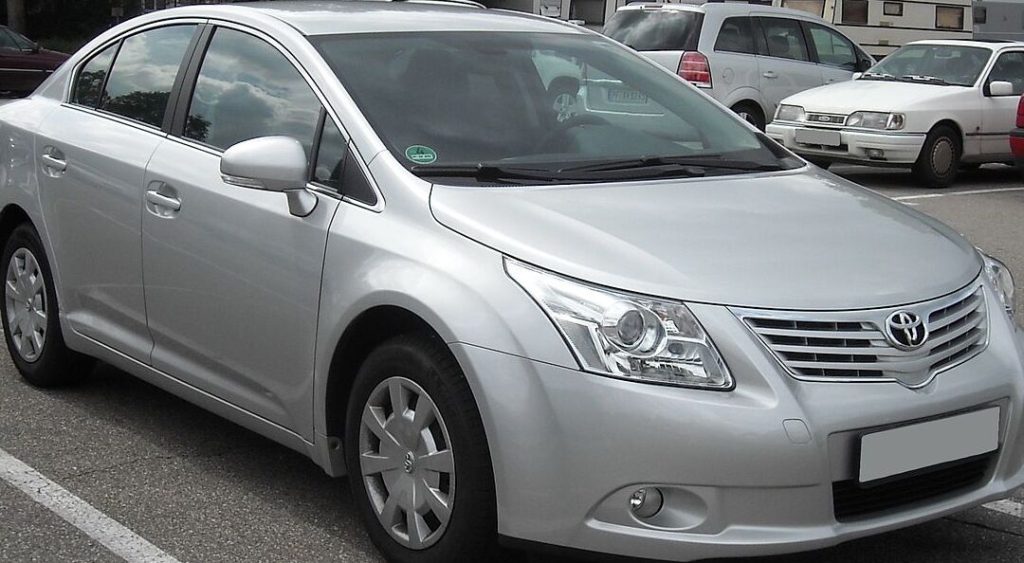
The Toyota Avensis Wagon (T22) 2.0 D-4D, producing 110 horsepower, was a key variant in the second-generation Avensis lineup, manufactured between 1999 and 2003. Positioned as a practical and fuel-efficient option within the range, it catered to buyers seeking a spacious estate car with the benefits of a modern diesel engine. The T22 generation Avensis represented Toyota’s continued push into the European mid-size market, aiming to provide a reliable and well-equipped alternative to established competitors. This particular 2.0 D-4D model offered a balance between performance and economy, making it a popular choice for families and those covering long distances.
Technical Specifications
| Brand | Toyota |
| Model | Avensis |
| Generation | Avensis Wagon (T22) |
| Type (Engine) | 2.0 D-4D (110 Hp) |
| Start of production | 1999 |
| End of production | 2003 |
| Powertrain Architecture | Internal Combustion engine |
| Body type | Station wagon (estate) |
| Seats | 5 |
| Doors | 5 |
| Fuel consumption (urban) | 7.5 l/100 km (31.4 US mpg) |
| Fuel consumption (extra urban) | 4.8 l/100 km (49 US mpg) |
| Fuel Type | Diesel |
| Acceleration 0 – 100 km/h | 11.6 sec |
| Acceleration 0 – 62 mph | 11.6 sec |
| Acceleration 0 – 60 mph | 11 sec |
| Maximum speed | 190 km/h (118.06 mph) |
| Weight-to-power ratio | 12.7 kg/Hp |
| Weight-to-torque ratio | 5.6 kg/Nm |
| Power | 110 Hp @ 4000 rpm |
| Torque | 250 Nm @ 2000 rpm (184.39 lb.-ft. @ 2000 rpm) |
| Engine layout | Front, Transverse |
| Engine Model/Code | 1CD-FTV |
| Engine displacement | 1995 cm3 (121.74 cu. in.) |
| Number of cylinders | 4 |
| Engine configuration | Inline |
| Cylinder Bore | 82.2 mm (3.24 in.) |
| Piston Stroke | 94 mm (3.7 in.) |
| Compression ratio | 18.6:1 |
| Number of valves per cylinder | 4 |
| Fuel injection system | Diesel Commonrail |
| Engine aspiration | Turbocharger |
| Valvetrain | DOHC |
| Engine oil capacity | 6.4 l (6.76 US qt | 5.63 UK qt) |
| Coolant capacity | 6.9 l (7.29 US qt | 6.07 UK qt) |
| Kerb Weight | 1395 kg (3075.45 lbs.) |
| Max. weight | 1830 kg (4034.46 lbs.) |
| Max load | 435 kg (959.01 lbs.) |
| Trunk (boot) space – minimum | 580 l (20.48 cu. ft.) |
| Trunk (boot) space – maximum | 1996 l (70.49 cu. ft.) |
| Fuel tank capacity | 60 l (15.85 US gal | 13.2 UK gal) |
| Length | 4570 mm (179.92 in.) |
| Width | 1710 mm (67.32 in.) |
| Height | 1500 mm (59.06 in.) |
| Wheelbase | 2630 mm (103.54 in.) |
| Front track | 1480 mm (58.27 in.) |
| Rear track | 1450 mm (57.09 in.) |
| Drivetrain Architecture | Front wheel drive |
| Number of gears | 5 |
| Gearbox type | Manual transmission |
| Front suspension | Spring Strut |
| Rear suspension | Coil spring |
| Front brakes | Ventilated discs |
| Rear brakes | Drum |
| Assisting systems | ABS (Anti-lock braking system) |
| Steering type | Steering rack and pinion |
| Power steering | Hydraulic Steering |
| Tires size | 195/60 R15 |
Powertrain & Engine Architecture
The heart of the Avensis 2.0 D-4D was the 1CD-FTV engine, a 1.995-liter inline-four cylinder diesel. This engine was a significant step forward for Toyota, utilizing a common rail direct injection system to deliver improved fuel efficiency and reduced emissions. The 1CD-FTV featured a turbocharger with an intercooler, boosting power output to 110 horsepower and 250 Nm (184 lb-ft) of torque. The engine employed a double overhead camshaft (DOHC) valvetrain with four valves per cylinder, optimizing breathing and contributing to its relatively smooth operation for a diesel. The five-speed manual transmission was the standard offering for this variant, providing a good balance between fuel economy and drivability. The engine’s design prioritized durability and low maintenance, a hallmark of Toyota engineering.
Driving Characteristics
The 2.0 D-4D with a manual transmission offered a practical and comfortable driving experience. While not a performance-oriented model, the engine provided sufficient power for everyday driving and overtaking maneuvers. The torque curve was relatively flat, delivering good pulling power from low engine speeds. This made it particularly well-suited for carrying passengers and luggage, or for towing light trailers. Compared to the higher-output petrol versions of the Avensis, the 2.0 D-4D prioritized fuel economy, achieving upwards of 49 mpg on the extra-urban cycle. The gear ratios in the five-speed manual were well-chosen, allowing for relaxed cruising at highway speeds. However, it wasn’t as responsive or engaging to drive as the higher-powered petrol models.
Equipment & Trim Levels
The Avensis 2.0 D-4D typically came with a reasonable level of standard equipment. This included central locking, electric front windows, power steering, and an anti-lock braking system (ABS). Higher trim levels, such as the GLS, added features like alloy wheels, air conditioning, a CD player, and upgraded interior trim. Interior upholstery was typically cloth, with options for more premium materials on higher-spec models. The dashboard layout was functional and straightforward, prioritizing ease of use. Optional extras included a sunroof, rear parking sensors, and a trip computer.
Chassis & Braking
The Avensis Wagon (T22) featured a MacPherson strut front suspension and a coil spring rear suspension. This setup provided a comfortable ride quality, absorbing bumps and imperfections in the road surface effectively. The front brakes were ventilated discs, offering good stopping power, while the rear brakes were drums. This configuration was typical for vehicles in this weight class during that era. The steering was a hydraulic rack and pinion system, providing precise and responsive handling. Stabilizer bars were fitted to both the front and rear axles to reduce body roll during cornering.
Market Reception & Comparison
The Toyota Avensis 2.0 D-4D Wagon was generally well-received by automotive critics. It was praised for its fuel efficiency, spacious interior, and comfortable ride. However, some reviewers noted that the engine lacked the refinement and performance of some of its competitors. Compared to other diesel estate cars of the time, such as the Ford Mondeo and Volkswagen Passat, the Avensis offered a strong value proposition, combining reliability with practicality. Its fuel economy was competitive, and its build quality was generally considered to be excellent. The manual transmission was favored by many drivers for its improved control and fuel efficiency compared to the available automatic option.
Legacy
The 1CD-FTV engine, found in the Avensis 2.0 D-4D, proved to be a durable and reliable unit. While early common rail diesels sometimes suffered from injector issues, the 1CD-FTV was generally considered to be a robust engine. Today, well-maintained examples of the Avensis 2.0 D-4D can still be found on the used car market, offering a cost-effective and practical option for those seeking a spacious estate car. Its reputation for reliability and fuel efficiency continues to make it a popular choice among budget-conscious buyers. The Avensis T22, and particularly the 2.0 D-4D variant, cemented Toyota’s position as a major player in the European mid-size car segment.